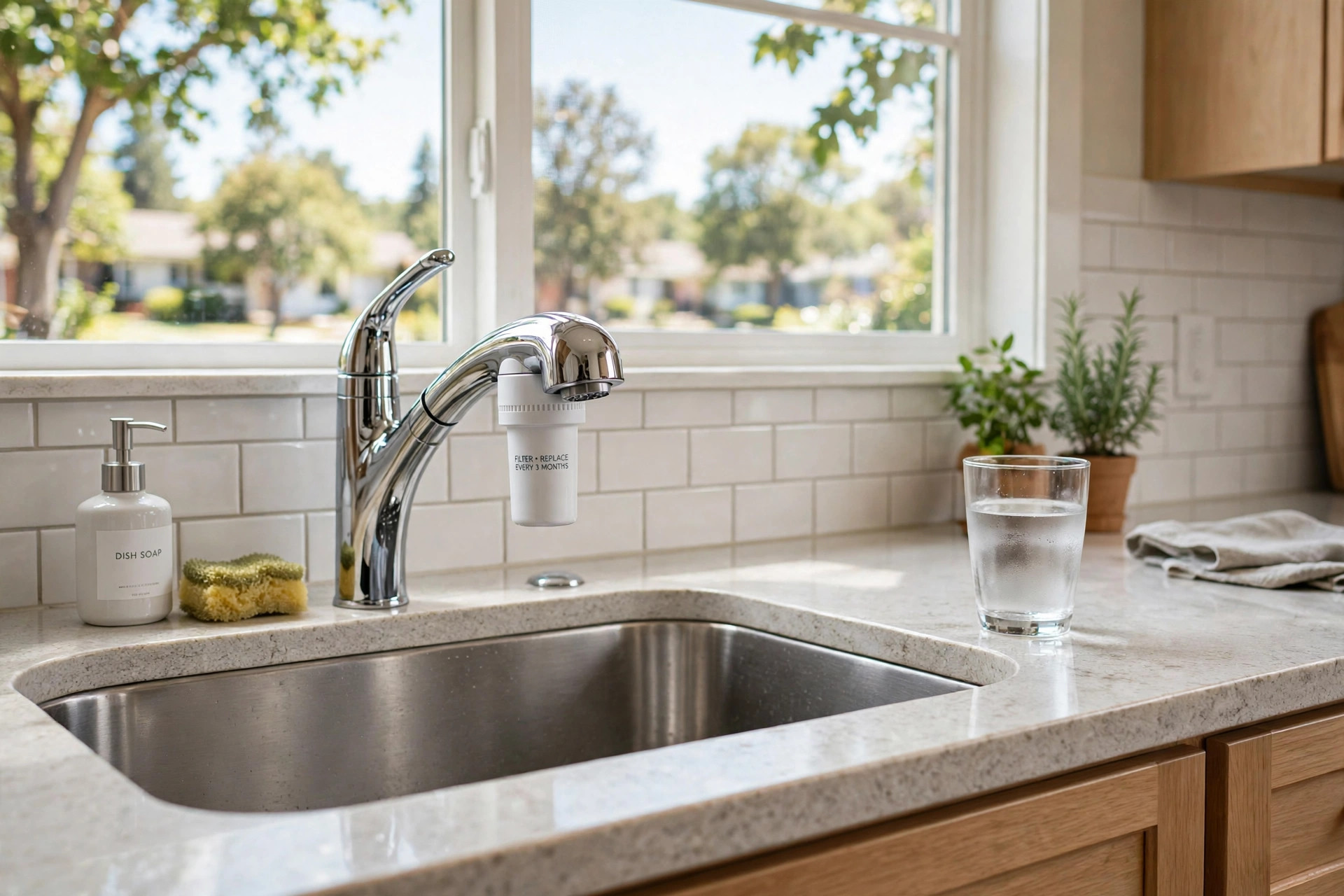

A kitchen tap can do more than fill a pot. With a small filter screwed onto the spout, it can also give cleaner drinking water on demand. This is what the best faucet water filter reviews 2026 USA are really about. Shoppers want a device that is simple to fit, easy to use, and honest about what it removes from the water. This guide walks through the choices in plain terms, so you can pick one with confidence.
Why a Faucet Water Filter Matters
Most American homes get water that has already been treated by a local utility. That treatment is meant to keep the water safe. Even so, many people do not like the taste of chlorine in their tap water. Others worry about lead from old pipes, or about rust and sediment that can drift through older plumbing. A faucet filter is a small, low-cost way to address these concerns right at the point of use.
The device attaches to the kitchen faucet. Water passes through a cartridge before it reaches the glass. The cartridge traps the things you do not want, and lets the water through. No plumber is needed. No hole is drilled in the counter. The whole job takes minutes, and a renter can take the filter along when moving to a new home.
Reviews matter here because the market is crowded. Dozens of models look much alike. They differ in how well they filter, how long the cartridges last, and whether they slow the flow of water. Reading the best faucet water filter reviews 2026 USA helps you see past the packaging and learn what owners say after months of use.
What to Look For When You Choose: Best Faucet Water Filter Reviews 2026 Usa
The first thing to check is the fit. Most faucet filters screw onto a standard kitchen spout. Some taps need one of the small adapters that come in the box. A few designer faucets have threads that do not match at all, so it pays to check the faucet type before you buy. The Environmental Protection Agency offers plain-language information about home drinking water, and it is a good starting point for any water question.
Next, look at what the filter is certified to reduce. Reputable models carry a certification mark from an independent testing body. The mark tells you the cartridge has been tested against a specific list of contaminants, such as lead, chlorine taste and odor, or certain chemicals. Do not trust vague claims like “purifies everything.” A good review will state exactly what the unit removes, and a good manufacturer will print those claims on the box.
Flow rate is the third factor. A filter slows water down. Some slow it a little. Others slow it a lot. If the flow becomes a thin trickle, filling a pot becomes a chore. Reviews from 2026 often mention this, because owners notice it every day. Look for models that balance strong filtration with a steady stream.
The cartridge life comes next. Most last about two to three months, or roughly 100 gallons of water. Some units have a small light or a manual dial that counts down the days. A clear change reminder is worth more than it sounds. An old, tired cartridge does not just filter poorly. It can also harbor growth if left too long.
Finally, think about the cost of the cartridges, not just the cost of the unit. The housing is cheap. The cartridges are the ongoing expense. A filter with low-cost replacement cartridges can be cheaper over two years than a fancy model with costly ones.
Types of Faucet Water Filters
There are three main designs on the market in 2026.
The first is the standard mount. This is the classic shape: a plastic housing that screws onto the faucet, with a lever that switches between filtered water and plain tap water. It is the most common type, and it is the one most reviews cover. It handles chlorine taste, odor, and basic sediment well.
The second is the metal housing model. It works the same way, but the body is made of metal, often chrome or brushed nickel. It costs more, but it suits a kitchen where looks matter. Owners who choose it usually do so because the plastic models look out of place next to a costly faucet.
The third is the advanced cartridge model. These use denser filter media to tackle a wider list of concerns, including lead and certain industrial chemicals. They cost more per cartridge and may slow the flow a bit more. They are worth a look if your home has old pipes or if your local water report raises a flag.
If a faucet filter feels too small for your needs, a best whole house water filter system usa treats every tap in the home. That is a bigger step, with bigger cost, but it is worth knowing about.
Cost and Price: What You Will Spend
A basic faucet filter unit in the United States in 2026 costs between fifteen and forty dollars. The housing itself is rarely the costly part. Replacement cartridges run from ten to thirty dollars each, and most need changing every two to three months. Over a full year, the typical owner spends between sixty and one hundred fifty dollars on cartridges.
Compare that with bottled water. A family that drinks a gallon a day can easily spend over two hundred dollars a year on bottled water, and it must be carried home. The faucet filter wins on cost and on waste. It also wins against whole house water filtration cost installed, which runs into the hundreds or thousands of dollars. The faucet filter is the cheapest serious option in the water aisle.
Watch for false economy. The cheapest cartridges sometimes have the shortest life. A cartridge that costs ten dollars but lasts six weeks is not cheaper than one that costs twenty dollars and lasts three months. Add it up over a year before you decide. The Home Depot and Lowe’s home pages both carry wide ranges of faucet filters, and their product listings make it easy to compare cartridge prices side by side.
Care and Upkeep
A faucet filter asks for little, but it does ask. The main task is the cartridge change. Mark the date on a calendar or use the built-in reminder. When the change comes due, unscrew the old cartridge, rinse the housing with clean water, and screw in the new one. Run water through it for the time the maker suggests, usually a few minutes, before you drink from it.
Keep the outside clean with a damp cloth. Do not use harsh cleaners on the housing, and do not put it in a dishwasher unless the maker says it is safe. If the filter has a lever, work it gently. Forcing it can crack the plastic.
If you will be away from home for a month or more, some makers suggest changing the cartridge when you return. A filter that sits wet and unused for weeks is not at its best. Fresh cartridge, fresh start.
Watch for leaks at the faucet joint. A slow drip usually means the washer is worn or the housing is not screwed on straight. Both are easy fixes. A drip left alone wastes water and can stain the sink.
Safety Facts to Know
A faucet filter is a helper, not a cure-all. It does not make unsafe water safe. If your water comes from a private well, or if your local authority has issued a boil notice, a faucet filter is not the answer. Have the water tested and follow official guidance.
Filters do not remove everything. Most models are not designed to remove bacteria, viruses, fluoride, or dissolved minerals. Read the fine print on the box to learn what your model does and does not do. The Aquasana homepage explains filtration stages in plain terms, and similar guides exist across the major filter brands.
Certification marks matter. Look for marks from independent testers on the box. These marks mean a lab has checked the claims. A model with no certification is asking you to take its word for it. Reviews in 2026 note this more often than before, and buyers are right to ask.
Lead deserves a special note. If your home has lead pipes or lead solder, a standard carbon filter may not be enough. Some advanced models are certified to reduce lead. If lead is your main worry, look for that certification by name, and consider testing your water first. Your state or local health office can tell you how to get a test.
Finally, never use a faucet filter with water that is hot. Hot water can damage the cartridge and wash trapped material back out. Switch to plain tap flow before you run hot water through the faucet.
How reviews are best used
No single review tells the whole story. The best way to use the best faucet water filter reviews 2026 USA is to read several and look for patterns. If five owners all say the cartridges last two months and not three, believe the five. If one owner says the flow is weak but ten say it is fine, the one may have odd water pressure. Patterns are the truth. Single stories are just stories.
Sites like This Old House and Family Handyman publish long-form reviews and guides that test products over weeks. Their findings carry more weight than a one-paragraph store review, and their guides often explain the science in simple terms.
Frequently Asked Questions
Do faucet water filters remove lead? Some do. It depends on the cartridge. Models with a certification for lead reduction have been tested to trap it. Basic models that only target chlorine taste and odor do not make that claim. Check the box for the word “lead” before you buy.
How often must the cartridge be changed? Most makers say every two to three months, or after about 100 gallons. Homes with heavy use may reach the limit sooner. Change it on time. A worn cartridge filters poorly.
Will a faucet filter fit my kitchen tap? Most fit standard threaded spouts, and the box usually includes adapters for common sizes. Some pull-out spray faucets and some designer taps do not accept them. Check the faucet type and the fit list on the box first.
Does a faucet filter slow the water down? Yes, a little. All filters add resistance. Good models keep a strong, steady stream. Poor ones reduce flow to a trickle. Flow rate is one of the most common complaints in owner reviews, so read that section carefully.
Is filtered tap water cheaper than bottled water? Yes, in nearly every case. The filter and a year of cartridges usually cost less than a year of bottled water for a drinking family. The filter also cuts the plastic waste.
Can I use a faucet filter on well water? You can, but with care. Well water should be tested first. A faucet filter handles taste, odor, and some chemicals, but it is not designed to make biologically unsafe water safe. If the test finds bacteria, you need treatment that targets bacteria, not just a faucet filter. For larger water problems, many owners look at a reverse osmosis system under sink reviews usa as the next step up.
A Final Word
A faucet water filter is one of the simplest upgrades a home can make. It costs little, fits in minutes, and turns the kitchen tap into a source of better-tasting water. Read the reviews with care, match the model to your water, change the cartridge on time, and the little device on your spout will earn its place. Brand homepages like Moen, Delta Faucet, and Kohler show current models and cartridge prices, and a quick look at Bob Vila rounds out the picture with independent buying advice. Start with the fit, end with the filter, and enjoy the glass.
References
Aquasana. (n.d.). Water filtration systems. https://www.aquasana.com Bob Vila. (n.d.). Home improvement advice. https://www.bobvila.com Delta Faucet. (n.d.). Kitchen and bathroom faucets. https://www.deltafaucet.com Family Handyman. (n.d.). DIY home repair and maintenance. https://www.familyhandyman.com Kohler. (n.d.). Bathroom and kitchen fixtures. https://www.kohler.com Lowe’s. (n.d.). Home improvement products. https://www.lowes.com Moen. (n.d.). Faucets and plumbing fixtures. https://www.moen.com The Home Depot. (n.d.). Home improvement products. https://www.homedepot.com This Old House. (n.d.). Home renovation guidance. https://www.thisoldhouse.com U.S. Environmental Protection Agency. (n.d.). Protecting human health and the environment. https://www.epa.gov
Was this guide helpful?

About Jennifer Lee
The My Garden US editorial team writes practical, in-depth home and garden guides for American homeowners — tested advice, no fluff.
You May Also Like

Backwater Valve Installation Cost for Basement: What Homeowners Pay in 2026
June 17, 2026 0 views
Running Toilet Fix Step by Step: A Practical USA Guide
April 11, 2026 0 views
Best Pump for Basement Bathroom Additions: A Plain Guide for Homeowners
August 12, 2026 0 views