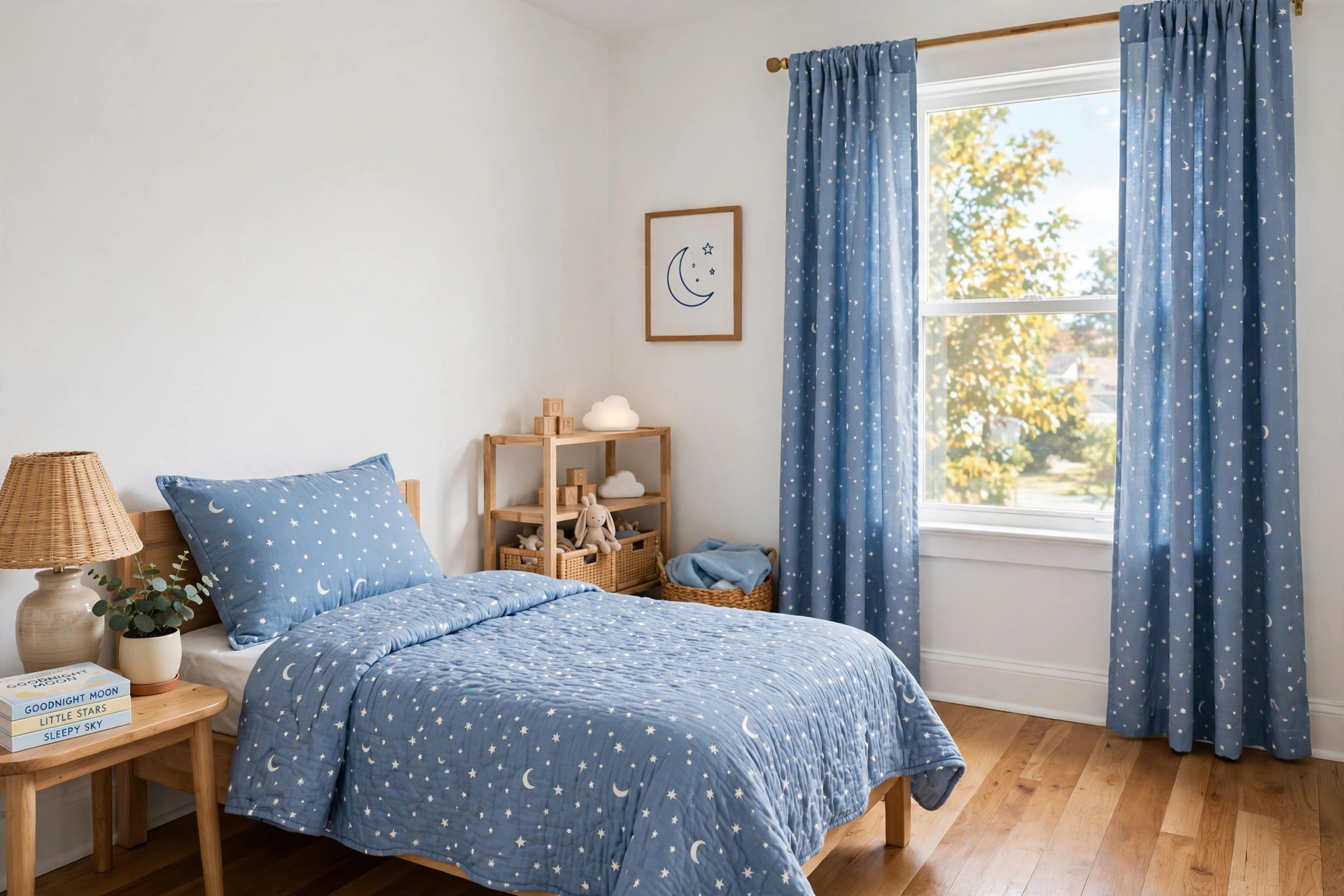

A toddler bedding set with curtains matching can turn a plain room into a place that feels calm and complete. The bed and the window wear the same fabric or the same pattern. The eye moves from one to the other and finds rest.
This guide explains what such a set includes, what to look for when you shop, what styles you can find, what you should expect to pay, and how to keep the fabric clean and safe through years of use.
Why a Matching Set Matters
A child’s room has many pieces. The bed, the rug, the walls, the window, the toys on the floor. When the largest fabric in the room, the bedding, and the next largest, the curtains, share a pattern, the room gains a quiet center. The bed and the window stop fighting for attention.
Child care writers have long said that a calm room helps a child settle at night. A toddler who has just left the crib often feels unsure. A room that looks planned and steady can make the new bed feel less strange.
There is a practical gain as well. Buying the bedding and the curtains as one set saves time. The colors are dyed in the same batch, and the pattern scale is planned to suit both a flat panel and a fitted sheet. For busy parents, this is a real kindness.
Many families start with a full nursery bedding set for a baby girl, then carry that look forward when the child grows. A matching toddler set with curtains is the natural next step.
What to Look For When You Shop: Toddler Bedding Set with Curtains Matching
A good set starts with the fabric. Cotton is the standard choice for toddler bedding, and for good reason. It breathes. It washes well. It feels soft against the skin. Look for a cotton percale or cotton twill with a thread count between 200 and 400. Above that range, the price rises but the comfort gain is small for a child.
Check the label for the fiber content of both the bedding and the curtains. Some sets use cotton for the bedding and a cotton-polyester blend for the curtains. That is fine. Curtains hang and take the sun, and a small share of polyester can help them hold their shape. What matters is that the bedding pieces that touch your child are mostly or fully cotton.
Look at the pattern scale. A large print that looks fine on a bedspread can overwhelm a small curtain panel. A fine print that reads well on curtains can vanish on a big quilt. The best sets choose a middle-scale motif, or they pair a main print on the bedding with a smaller version of the same print, or a plain tone pulled from the print, on the curtains. Hold the two fabrics near each other in the store, or open the listing photos side by side on your screen, and check that they sit well together.
Fit matters as much as looks. Toddler beds in the United States use a crib-size mattress in most cases, about 28 by 52 inches. Confirm that the fitted sheet in the set matches your mattress depth. Curtains come in set lengths, most often 63 or 84 inches. Measure your window before you order. A curtain that drags on the floor is a trip risk in a child’s room.
Stitching tells you how long the set will last. Turn the pieces over. The seams should be straight and tight, with no loose threads at the corners. The hem on the curtains should be even and at least an inch wide. A set that is well sewn will survive the many wash cycles that a toddler’s room demands.
Types and Styles You Can Find
Sets come in three broad types. The first is the printed set. One pattern covers the quilt, the sheets, and the curtains. Stars, dots, small animals, and simple stripes are the common prints. These sets give the strongest sense of match. They work best in a room with plain walls.
The second type is the tone-on-tone set. The bedding carries the print, and the curtains use one solid color drawn from that print. A quilt printed with blue sailboats might pair with plain navy curtains. This style is easy to live with for a long time. When the child outgrows the boats, new bedding can go on the bed while the navy curtains stay.
The third type is the theme set. The pattern tells a story, like a forest, the sea, or the sky at night. These sets often come with extras, such as a small throw pillow or a wall border in the same print. They make a strong impression in a plain room. They also date faster, so think about how long you want the theme to last.
Color choice follows the child more than the fashion of the year. Soft blues, greens, warm yellows, and gentle neutrals suit most rooms and most light. If your child loves a bright color, use it as an accent in the print, not as the base.
For families who want the room to suit any child, gender neutral nursery bedding ideas carry over well into the toddler years and can pass down to a younger sibling.
Shoppers who want to compare labels and maker claims can start at large home retailers. IKEA and Wayfair both carry wide ranges of children’s bedding with full fabric details on the listing page. Pottery Barn Kids offers matching sets in many of its nursery and toddler lines. Reading the product pages side by side is a plain, quick way to compare thread counts, fiber blends, and care terms.
Cost and Price
A toddler bedding set with curtains matching is a mid-range purchase. Most sets sold in the United States fall between 60 and 150 dollars. The low end of that range buys a simple printed set with a quilt, a fitted sheet, a pillowcase, and one pair of curtain panels. The high end buys a thicker quilt, a dust ruffle, a decorative pillow, and lined curtains.
The price follows the fabric and the work. A set with a fully lined quilt and curtains with a blackout backing costs more than a flat sheet set with plain panels. A brand name adds more. Licenses for well-known story characters add the most of all, and they fade from the child’s interest first.
Value is not the lowest price. It is the price per year of use. A set that costs 120 dollars and lasts four years costs 30 dollars a year. A set that costs 60 dollars and pills and fades in one year costs 60 dollars a year and leaves you shopping again. Read the reviews for words like “washed well” and “colors stayed.” Those words matter more than the sale price.
Watch for the pieces that are not in the box. Some listings show a bed skirt or a throw pillow in the photo but do not include it. Read the list of included pieces before you pay. If you need those extras, price them with the set so you know the true total.
Budget shoppers can check Target and Walmart for house-brand children’s sets at the low end of the price range. The fabric details are usually printed on the package or the listing, and the return terms are plain.
Care and Upkeep
Toddler bedding is washed often. Milk, juice, and the odd accident are part of life at this age. The care label is the rule. Most cotton sets wash in warm water and dry on low heat. Wash the set on its own the first two times, because deep colors can bleed. After that, wash it with like colors.
Wash the curtains with the bedding when you can. This keeps the colors fading at the same rate. If the curtains have a blackout backing, use low heat, since hot dryers can crack some backings.
Small repairs extend the life of a set. Restitch a loose hem the week you see it. Keep a spare fitted sheet in the same color family for sick nights.
Safety
The crib years come with strict bedding rules, and some of them carry into the toddler years. The U.S. Consumer Product Safety Commission sets the baseline for children’s sleep products, and its guidance is worth reading before you buy. For toddlers, the main points are simple.
Keep the sleep surface firm and mostly bare. A fitted sheet is fine. A quilt or comforter is fine for a toddler in most cases, but it should be light and sized to the bed, not trailing far over the sides. Skip loose pillows for the youngest toddlers. If the set includes a small decorative pillow, treat it as daytime decor and lift it off the bed at night.
Cords are the chief risk near curtains. Keep all cords, pulls, and tie-backs well out of a child’s reach. The safest choice is a cordless curtain or a curtain hung on rings that a child can slide by hand.
Place the bed away from the window where you can. A toddler who can reach the curtains can pull them down, and the rod with them. Wall anchors for the curtain rod add real safety for a few dollars. If the bed must sit near the window, choose a short curtain that ends at the sill, and keep the sill clear of toys the child might climb to reach.
Health and sleep guidance from the American Academy of Pediatrics through its HealthyChildren site covers safe sleep through the early years. The advice is steady and plain: a bare, firm sleep space, a cool room, and no loose soft goods near the face. A matching set can be lovely and still follow these rules. Let the beauty live in the pattern and the color, not in extra pieces on the bed.
Light and Sleep
Curtains do more than match the bedding. They manage the light, and light manages sleep. A room that stays bright past bedtime fights the child’s body clock. The classic advice from home writers at The Spruce is to treat the window as part of the sleep setup, not just as decor.
If your child naps in the day, think about how much light the set’s curtains block. A plain cotton panel dims a room but does not darken it. Many families add a blackout liner behind the pretty panels. Our guide to blackout curtains for nursery windows walks through the options in more detail.
Decorating Around the Set
Once the bedding and curtains are in place, the rest of the room should stay quiet. One matching set is the star. Walls in a soft white or a pale tone pulled from the fabric let the pattern show. A plain rug in a tone from the print grounds the bed. One or two small prints in tones from the fabric are enough for the walls. Parents who want more ideas can browse the room guides at What to Expect, which include checklists for planning the whole room at once.
FAQ
What pieces come in a typical set?
Most sets include a quilt or comforter, one fitted sheet, one pillowcase, and one pair of curtain panels. Some add a bed skirt, a decorative pillow, or a wall border. Read the listing’s piece list, since photos often show more than the box holds.
What size should I buy?
Match the sheet to your mattress. Most toddler beds take a crib-size sheet, about 28 by 52 inches. Measure your mattress depth too, since thick mattresses need deep-pocket sheets. Measure the window for the curtains, and note whether you want them to end at the sill or at the floor.
Is a matching set safe for a young toddler?
Yes, if you follow basic safe sleep rules. Use the fitted sheet on a firm mattress. Keep the quilt light and sized to the bed. Skip loose pillows for the youngest toddlers. Keep all curtain cords out of reach, and anchor the curtain rod to the wall.
Will the curtains fade faster than the bedding?
Often yes, because the curtains take the sun. Wash them with the bedding so the colors age together. A liner can take the sun’s wear in place of the pretty panels.
Can I mix the set with other patterns?
You can, but keep it small. One small extra pattern, like a striped rug, is enough. Let the set stay the lead. If you add a second large print, the room starts to feel busy, and the point of the match is lost.
How long will a set last?
With weekly washing, a well-made cotton set often lasts three to four years. That covers the toddler bed years for most children. Stitching fails first, then color, then the elastic in the fitted sheet. Buy the best stitching you can afford.
A Short Final Word
A toddler bedding set with curtains matching is a small choice that shapes a room. It gives the bed and the window one voice. It saves the parent the work of matching pieces by hand. It gives the child a room that feels settled at the end of the day.
Shop for fabric first, fit second, and pattern third. Keep the sleep space safe and the cords out of reach. Wash the pieces together so the colors age as one. Done with care, the set will serve through the toddler years and hand the room down to the next child in good shape.
References
American Academy of Pediatrics. (n.d.). HealthyChildren.org. https://www.healthychildren.org IKEA. (n.d.). Home furnishings. https://www.ikea.com Pottery Barn Kids. (n.d.). Kids furniture and decor. https://www.potterybarnkids.com Target. (n.d.). Retail store. https://www.target.com The Spruce. (n.d.). Home and garden advice. https://www.thespruce.com U.S. Consumer Product Safety Commission. (n.d.). Product safety information. https://www.cpsc.gov Walmart. (n.d.). Everyday low prices. https://www.walmart.com Wayfair. (n.d.). Furniture and home goods. https://www.wayfair.com What to Expect. (n.d.). Pregnancy and parenting guidance. https://www.whattoexpect.com
Was this guide helpful?

About Emily Rodriguez
The My Garden US editorial team writes practical, in-depth home and garden guides for American homeowners — tested advice, no fluff.
You May Also Like
The Best Kids Bed With Storage Drawers Underneath: A Simple Buying Guide
July 30, 2026 0 views
Nursery Storage Baskets for Diapers and Wipes: A Plain Guide for New Parents
September 18, 2026 0 views
Best Nursery Curtains Blackout for Daytime Naps
May 9, 2026 0 views