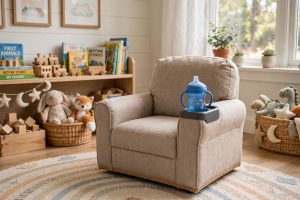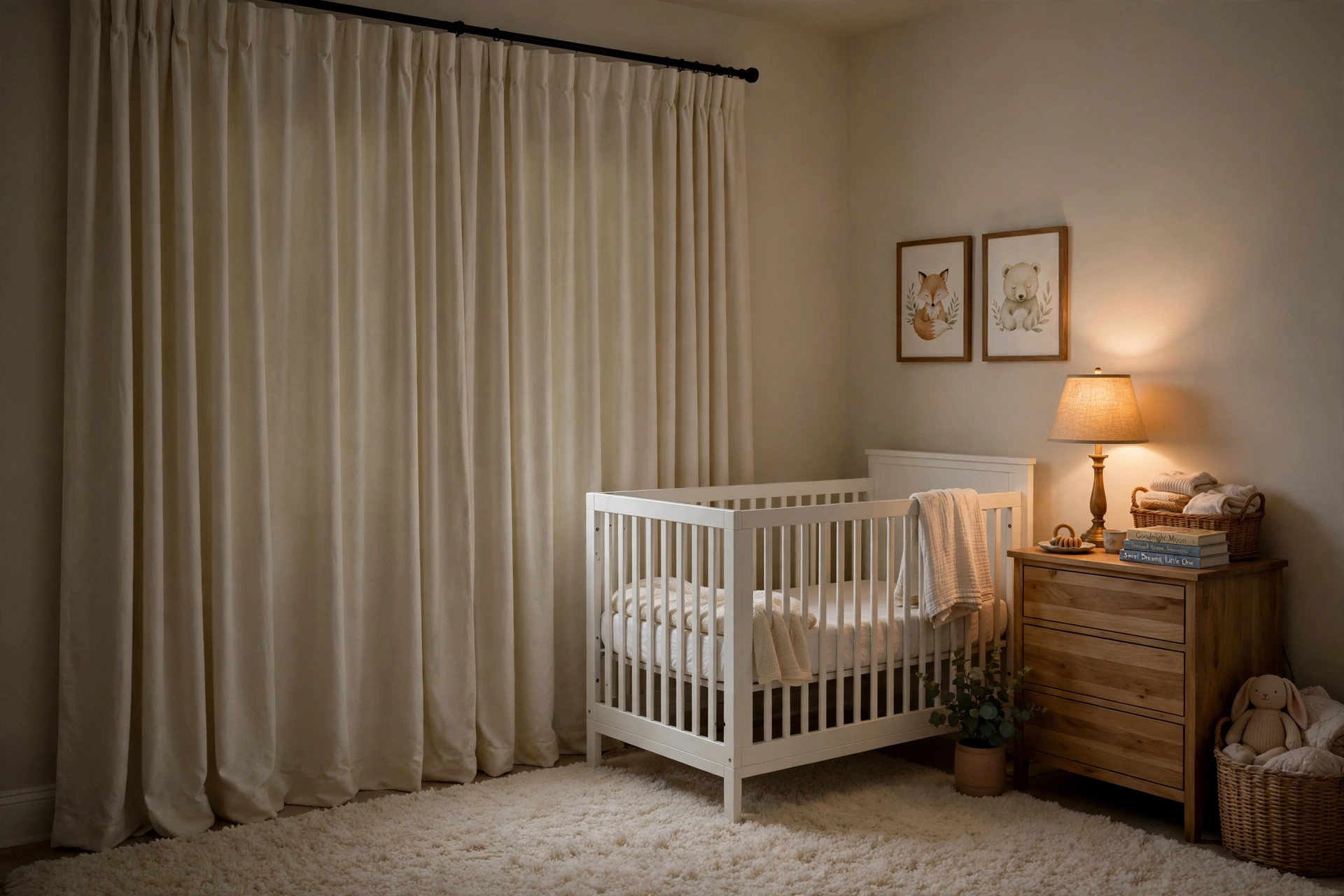

A baby who sleeps well during the day grows well and stays calm. Many parents find that daytime naps are hard because the nursery is too bright. The sun pours through the window in the afternoon. The child wakes early and cries. Finding the best nursery curtains blackout for daytime naps can solve this common problem.
Blackout curtains are window panels made to block nearly all outside light. They do more than ordinary drapes. Ordinary drapes soften light but let much of it pass. True blackout curtains stop it. When the room stays dark at noon, the baby sleeps as if it were night. This article explains why they matter, how to choose them, the types you can buy, what they cost, how to care for them, and how to keep them safe.
Why Daylight Makes Naps Short
Babies are very sensitive to light. A bright room tells the brain that it is time to wake. This is true even for young infants. During the day, street light, car headlights at dusk, and bright afternoon sun all reach the nursery window. A child may fall asleep in a lit room but wake after twenty or thirty minutes. The sleep is light and broken.
Darkness sends the opposite signal. It tells the body to rest. Many sleep experts note that a dark room supports the release of sleep hormones. A child who naps in a dark room often sleeps longer and wakes in a better mood. Parents notice the difference within a few days. The nursery becomes a place where the child expects rest.
Parents can read more about healthy infant sleep at HealthyChildren.org. The site gives clear advice on nap length and sleep habits for babies and toddlers.
What to Look for When Choosing: Best Nursery Curtains Blackout for Daytime Naps
Not all curtains sold as blackout curtains work the same way. Use this list before you buy.
Light-blocking power
Hold the fabric up to a bright light. A true blackout panel lets almost no light through. Some products claim to block light but allow a soft glow. That glow may still wake a light sleeper. Look for words like room darkening or blackout on the label. Room darkening panels block much light but not all of it. Full blackout panels are stronger.
Size and coverage
The curtain should cover the whole window and reach past the frame on each side. Light leaks in at the edges. A panel that is too narrow leaves gaps. Measure the window first. Add at least six inches of width on each side. Let the curtain fall to the sill or the floor. Longer panels seal the bottom edge better.
Fabric and weight
Heavier fabrics block more light. Many blackout curtains use three layers. The middle layer does the blocking work. Some panels have a foam or acrylic backing. That backing works well but may need gentler washing. Lighter blackout fabrics exist for summer. They cost less and still block most light.
Safety
Curtain cords are a known danger to small children. Long cords can wrap around a neck. The Consumer Product Safety Commission advises parents to use cordless window coverings in rooms where young children sleep or play. Choose blackout curtains with no cords. Rod-pocket or grommet panels are safe choices. If you already own corded shades, use a cord cleat high on the wall or replace them. More safety guidance for nurseries is also given at What to Expect.
Color and pattern
Dark colors block light a little better than light colors. Yet many parents prefer soft colors in a nursery. Modern blackout curtains come in cream, gray, sage, and pastel shades. The blackout layer sits behind the face fabric, so the color you see matters less. Pick a color that calms the room and fits the decor.
You can browse a wide range of nursery window panels at Wayfair and at IKEA. Both carry cordless blackout options in many sizes.
Rods and mounting
The rod matters as much as the panel. A sagging rod lets light leak at the top. Use a sturdy rod that extends past the window frame. Wrap-around rods are a good pick. They curve back to the wall and seal the sides. Mount the rod several inches above the window. Hang the panels high and wide. This blocks more light and makes the window look larger. Use strong anchors in drywall. The panels are heavy, and a toddler may pull on them.
When to buy
Buy the curtains before the baby arrives if you can. Hang them early and test the room at noon. Stand in the nursery and look for light leaks. Small leaks at the edges can be fixed with side panels or a wider rod. It is easier to fix these things before the nursery is in daily use.
Types and Options
Blackout curtains for the nursery come in several forms. Each has its own strengths.
Standard blackout panels
These are ready-made curtain panels sold in pairs. They hang on a rod. They are the simplest choice. Most are machine washable. Prices are low to mid range. They suit most windows and most budgets.
Thermal blackout curtains
Thermal panels add an insulating layer. They block light and also help keep the room cool in summer and warm in winter. A nursery that faces the afternoon sun stays cooler behind thermal panels. This type is heavier and may need a strong rod.
Portable blackout shades
These are stick-on or suction-cup shades that cover the window glass. They are useful for travel. Many parents keep one in the diaper bag. They also help in a rented home where drilling is not allowed. They do not look as nice as fabric panels, but they block light well.
Blackout liners
A liner is a plain blackout cloth that hangs behind your existing curtains. It adds light blocking to panels you already like. This is a good choice if you bought nursery drapes for looks and now need more darkness. Liners attach with hooks or clips.
Layered treatment
Some parents pair blackout curtains with a simple blind. The blind gives privacy during the day. The curtains close at nap time for full darkness. This pair also softens street noise a little. It is a common setup in city homes.
Cost and Price
Blackout curtains for a nursery are not costly. A basic pair of panels for one window often sells for fifteen to forty dollars. Thermal panels cost a bit more, usually thirty to sixty dollars. Premium brands with custom sizing can reach eighty dollars or more per window.
Most nurseries have one or two windows. A full setup for two windows often costs under one hundred dollars. That is a small price for better naps. Watch for sales at large home stores. Walmart and Home Depot carry budget-friendly blackout panels year round.
Custom-made curtains cost more but fit odd windows well. If your nursery has an arched or very wide window, custom sizing may be worth it. Portable shades are the cheapest option. A good travel shade costs ten to twenty dollars.
Care and Upkeep
Blackout curtains need regular care to stay fresh. Dust settles on fabric quickly in a child’s room. Vacuum the panels with a soft brush head once a month. This keeps dust out of the air the baby breathes.
Most machine-washable panels wash well in cold water on a gentle cycle. Do not use bleach. Bleach breaks down the backing layer. Air dry or tumble dry on low heat. Panels with foam backing do better with air drying. Check the label before you wash.
Steam the panels after washing to remove wrinkles. A hand steamer works fast. Keep the steamer away from the child. Hang the panels at once so folds do not set.
Inspect the panels twice a year. Look for loose threads near the baby’s reach. Trim them short. Check that hooks and rings are tight. Replace any part that comes loose.
Care tips for nursery fabrics also appear on The Spruce, which covers washing and upkeep for many home textiles.
Safety in the Nursery
Safety comes first in any nursery choice. Follow these rules for window coverings.
– Use cordless curtains or shades only. Never place a crib under a window with cords. – Mount curtain rods firmly. A falling rod can hurt a climbing toddler. – Keep curtain hems above the floor in the area where the child plays. Long hems can trip a new walker. – Choose fabrics labeled free of harsh chemicals when possible. Babies touch and mouth everything. – Keep small hooks, rings, and finials out of reach. They can be choking hazards.
Design ideas that keep safety in mind can be found at Pottery Barn Kids. Their nursery guides show safe layouts for windows and cribs.
For a complete nursery, pair darkening curtains with other key pieces. A convertible crib for a small nursery room saves space as the child grows. A nursery glider chair with an ottoman gives you a calm seat for feeding during night wakings. If your windows are large, compare panels made for the whole house at best blackout curtains for nursery windows USA.
Frequently Asked Questions
Do blackout curtains really help babies nap longer?
Many parents report longer naps after adding them. Darkness lowers light signals that wake the brain. It does not work for every child. Some babies sleep well in dim rooms without full blackout. Try them for a week and watch your child’s nap length.
Are blackout curtains safe for a newborn?
Yes, when they are cordless and mounted well. The fabric itself is safe. Keep the crib away from the window so the baby cannot grab the panels. Use rod-pocket or grommet styles with no cords.
Should the room be pitch dark or just dim?
A very dark room works best for most babies. You do not need total blackness. If you can read a book with some effort, the light level is fine. Aim for a room as dark as a movie theater during a film.
Can I use blackout curtains at night too?
Yes. They also block street lights and early morning sun. This helps the baby sleep later in the morning. Close them at bedtime as part of the night routine.
What if I rent and cannot drill into the walls?
Use tension rods inside the window frame. They need no screws. Portable suction-cup blackout shades also work. Command-style hooks hold light panels on some wall types. All of these come down clean when you move.
Will blackout curtains make my child afraid of the dark?
Most babies are not afraid of the dark. Fear of the dark often starts later, around age two or three. If your toddler seems uneasy, use a small night light. Place it far from the crib. It gives comfort without waking the child.
How many panels do I need per window?
Most panels are sold in pairs. One pair fits a standard window when the rod is wider than the frame. For wide windows, buy two pairs and overlap them. Measure first and read the width on the package.
A Final Word
The best nursery curtains blackout for daytime naps is the pair that fits your window, blocks nearly all light, and has no cords. You do not need the most costly brand. A well-sized, cordless, machine-washable pair will do the job for years. Darken the room, keep a steady nap routine, and your child will learn that the nursery means rest. Small changes like this make family days calmer and nights easier.
References
American Academy of Pediatrics. (n.d.). HealthyChildren.org. https://www.healthychildren.org IKEA. (n.d.). Home furnishings. https://www.ikea.com Pottery Barn Kids. (n.d.). Kids furniture and decor. https://www.potterybarnkids.com The Home Depot. (n.d.). Home improvement products. https://www.homedepot.com The Spruce. (n.d.). Home and garden advice. https://www.thespruce.com U.S. Consumer Product Safety Commission. (n.d.). Product safety information. https://www.cpsc.gov Walmart. (n.d.). Everyday low prices. https://www.walmart.com Wayfair. (n.d.). Furniture and home goods. https://www.wayfair.com What to Expect. (n.d.). Pregnancy and parenting guidance. https://www.whattoexpect.com
Was this guide helpful?

About Emily Rodriguez
The My Garden US editorial team writes practical, in-depth home and garden guides for American homeowners — tested advice, no fluff.
You May Also Like

Crib Rail Teething Guard Cover for Safety: A Parent’s Guide to Choosing the Right One
August 19, 2026 0 views
Nursery Diaper Caddy Organizer Portable: A Complete Guide
October 4, 2026 0 views
Best Nursery Glider With Ottoman Combo Set
February 16, 2026 0 views