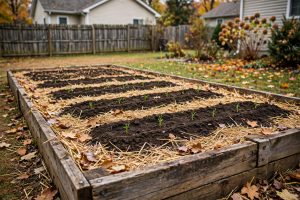

If you grow one vegetable this year, make it bell pepper. Known to botanists as Capsicum annuum, it suits zones 4 through 11 and goes from planting to harvest in roughly 60 to 90 days. Remember this and you are most of the way there: peppers demand warm soil – wait 2-3 weeks after last frost to transplant and use black plastic mulch in cool climates.
This guide covers the full season in plain terms — varieties, timing, soil, water, pests, and harvest. The USDA PLANTS database lists Capsicum annuum with its full background if you want the botanical fine print.
Why bother with bell pepper? Because it delivers a fast payoff by garden standards: roughly 60 to 90 days from planting to harvest. Few other plantings turn a packet of seed into this much food or color this quickly. Across zones 4 to 11, home gardeners grow it with steady success. Needs a long warm season; struggles to ripen below zone 4 without season extension.

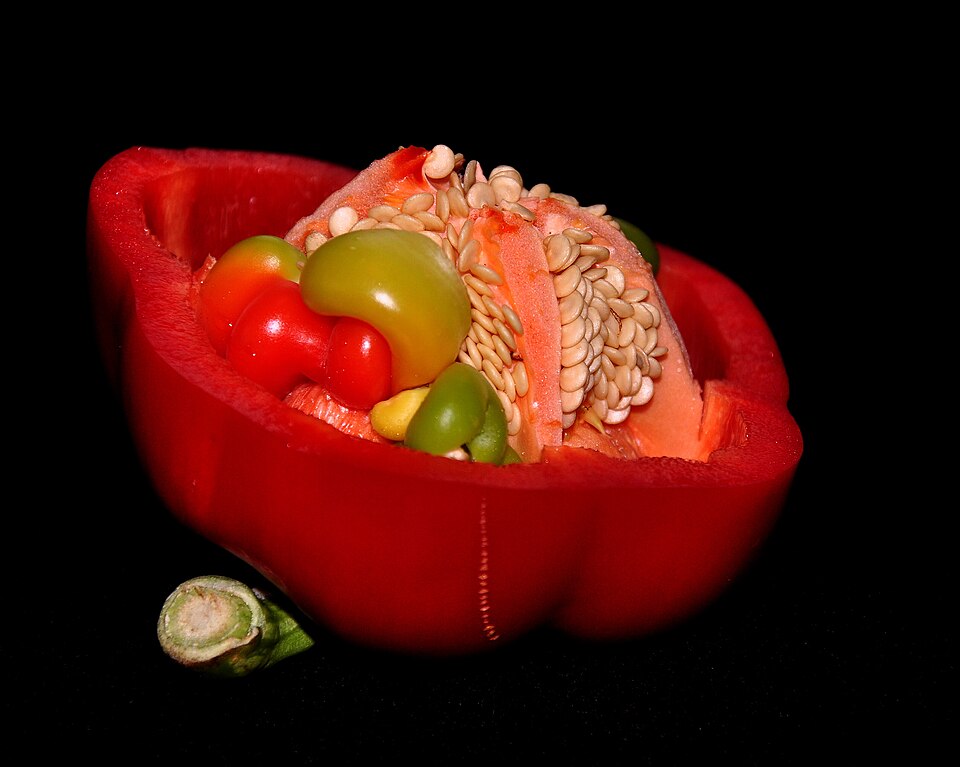
Photo: Wikimedia Commons
At a Glance
- Botanical name: Capsicum annuum
- Type: Vegetable
- USDA zones: 4 to 11
- Sun: Full sun
- Soil: Warm, fertile, well-drained soil
- Water: Even moisture; mulch to hold warmth
- Spacing: 18 inches apart
- Planting depth: 1/4 inch deep
- Days to maturity: 60 to 90 days
- How to start: Start indoors; buy transplants as a shortcut
Choosing a Variety
Bell peppers ripen from green to red, yellow, or orange, getting sweeter and more nutritious as they color. Blocky thick-walled types are best for stuffing; smaller lunchbox types suit snacking straight off the plant. In short-season areas, choose varieties listed under 70 days and start them early — peppers will not wait for your schedule. Compact varieties bred for containers do well in pots on a sunny patio. Look for disease resistance if bacterial spot has troubled your garden before. Grow at least one red-ripening type; most gardeners who taste a fully ripe homegrown bell never go back to store green ones. Our guide to growing tomatoes pairs well with this one if you are planning the bed. The Old Farmer’s Almanac variety guides add regional picks worth comparing.
When and How to Plant
Get the timing right and bell pepper nearly grows itself. Start seeds indoors about 8 weeks before your last spring frost.
Move transplants outside about 3 weeks after your last spring frost, once nights stay reliably warm.
Zones shift every date by weeks, so check your USDA zone planting dates on our planting calendar to pin yours down. The Old Farmer’s Almanac publishes frost-date tables worth bookmarking too.
Space plants 18 inches apart and place seed or roots 1/4 inch deep. Crowding invites disease and cuts yields, so resist the urge to squeeze in extras. Needs a long warm season; struggles to ripen below zone 4 without season extension. For regional timing detail, the UF IFAS Gardening Solutions is worth a read.
Soil and Sun
Sun first: full sun is non-negotiable for strong bell pepper plants. For soil, aim for warm, fertile, well-drained soil. A 2- to 3-inch layer of compost worked into the top 8 inches fixes most problems before they start.
Sandy soil dries fast — compost helps it hold water. Clay holds too much — compost and raised beds fix that. Either way, the Almanac planting calendar has solid guidance on preparing ground for bell peppers.
Watering and Feeding
The watering recipe for bell pepper is simple: even moisture; mulch to hold warmth. Deep, less-frequent soakings beat daily sprinkles; they push roots down where the soil stays cool and moist longer.
Mulch is the cheapest irrigation helper you own: 2 to 3 inches of straw or shredded leaves keeps soil moisture even between waterings. The Gardenia covers watering bell peppers through hot spells.
Go easy on fertilizer. Compost at planting time plus a modest mid-season feeding is plenty for bell peppers. Heavy nitrogen grows big soft plants that pests and disease love.
Care Through the Season
Mid-season care is where harvests are won or lost. Water evenly and mulch well; peppers hate drying out, and inconsistent moisture triggers blossom-end rot. Stake or cage plants once fruit sets, since branches snap under heavy loads. Watch for aphids, cutworms, and bacterial leaf spot, and avoid handling wet plants to limit disease spread. A side-dress of balanced fertilizer at flowering boosts yields. Walk the rows weekly — catching a pest or a dry spell early beats any rescue later.
Take this tip to heart: peppers demand warm soil – wait 2-3 weeks after last frost to transplant and use black plastic mulch in cool climates. It sounds small and it matters more than most products sold to gardeners. Our guide to growing jalapeno peppers makes a good companion read for the same bed. When pests show up, the Gardenia guides help you name them fast.
Do not overlook airflow. Plants packed too tightly stay wet longer after rain, and wet leaves are where fungal diseases start. Thin to the spacing in this guide even when seedlings look lonely — they will fill in faster than you expect.
Season by Season
Think of the year in four jobs. Spring: Start seeds indoors about 8 weeks before your last spring frost. Move transplants outside about 3 weeks after your last spring frost, once nights stay reliably warm. Get compost into the bed early and give transplants a week of hardening off. Summer: water deeply, mulch well, and scout for trouble weekly; harvest at peak and keep picking to prolong the season. Fall: gather the last of the crop. In mild-winter areas, a late planting can carry the harvest into cool weather; elsewhere, finish up before hard frost. Clear finished plants and protect the soil with mulch or a cover crop. Winter: sharpen tools, order seed, and plan rotations. In winter, rest: clean tools, order seed early for the best selection, and sketch next year’s bed plan while the garden sleeps.
Harvest
Nothing beats the flavor of bell pepper picked at the right moment. Here is how to tell when that moment arrives, and what to do next.
Harvest green peppers at full size, or leave them to ripen red, orange, or yellow for much sweeter flavor and more nutrition. Cut stems with shears rather than pulling fruit off. Store in the refrigerator for up to two weeks. Pro tip: lay black plastic mulch before transplanting to warm the soil and speed up slow plants. For another harvest-season read, see our guide to growing cucumbers. Cross-check ripeness signs with the University of Minnesota Extension harvest notes.
Storing and Preserving the Harvest
Eat fresh first — nothing you preserve will beat bell peppers picked at peak. Refrigerate what you cannot use right away; most vegetables hold several days to two weeks chilled. For the surplus, freezing is the simplest path: blanch cut pieces briefly in boiling water, plunge into ice water, drain well, and pack in freezer bags with the air pressed out. Frozen vegetables keep their quality for months and go straight into cooked dishes. Canning suits the harvest glut too — high-acid foods like tomatoes are safe in a water bath, but low-acid vegetables must go through a pressure canner; never guess at this, since botulism is odorless. Root types such as carrots store for months in a cool, humid spot, packed in damp sand. Label every bag or jar with the variety — by midwinter every frozen bag looks identical, and the label is the difference between a planned meal and a mystery.
Troubleshooting
Blossom-end rot comes from uneven watering; mulch and water evenly. Dropped blossoms mean cold nights or extreme heat — plants recover when weather settles. Aphids cluster on new growth; a hard spray of water knocks them off. Sunscald bleaches fruit where leaves were lost, so keep plants leafy. For help naming a mystery symptom, the USDA PLANTS database diagnostic pages are excellent.
Frequently Asked Questions
How long does bell pepper take to grow?
About 60 to 90 days from planting to harvest, depending on variety and weather. Warm seasons and good soil hit the early end of that range.
Can I grow bell pepper in containers?
Yes, in a roomy container — think 5 gallons or larger with drainage holes. Compact varieties do best in pots. In-ground plants still outperform pots, but a sunny patio works fine.
What is the hardest part of growing bell pepper?
Peppers demand warm soil – wait 2-3 weeks after last frost to transplant and use black plastic mulch in cool climates. Master that one point and most other problems never show up.
When should I plant bell pepper?
Work backward from your frost dates: Start seeds indoors about 8 weeks before your last spring frost. Move transplants outside about 3 weeks after your last spring frost, once nights stay reliably warm. Check your USDA zone planting dates on our planting calendar to pin down your exact window.
References
University of Minnesota Extension. (n.d.). Growing bell peppers in home gardens. https://extension.umn.edu/
Clemson Cooperative Extension. (n.d.). Bell Pepper. Home & Garden Information Center. https://hgic.clemson.edu/
Old Farmer’s Almanac. (n.d.). Planting calendar. https://www.almanac.com/planting-calendar
U.S. Department of Agriculture. (n.d.). Capsicum annuum. PLANTS database. https://plants.usda.gov/home
Was this guide helpful?

About My Garden US
The My Garden US editorial team writes practical, in-depth home and garden guides for American homeowners — tested advice, no fluff.
You May Also Like
Onion Sets Planting USA Online Deals: A Simple Guide for Home Gardeners
June 2, 2026 0 views
Fiddle Leaf Figs for Florida Homes: A Complete Guide for USA Growers
February 28, 2026 0 views
Snake Plants Indoor USA Online Deals: A Simple Guide to Buying Well
January 5, 2026 0 views