
Introduction
When a homeowner looks into a catalytic carbon vs activated carbon filter, the first question is simple. Which one should go in the house? Both are forms of carbon used in water filters. Both remove taste, odor, and many chemicals. But they are not the same. Each one handles certain water problems better than the other. This guide walks through the differences in plain terms so you can pick the right one for your home.
The short version is this. Regular activated carbon is the workhorse of home water filtration. It has served homes for decades. Catalytic carbon is a newer option. It costs more. It can handle harder jobs, such as removing chlorine and certain pesticides, with less contact time. But it is not needed in every house. Many families get fine results with a standard activated carbon filter and never need the upgrade.
Why This Comparison Matters: Catalytic Carbon vs Activated Carbon Filter
Water from a city supply or a private well can carry things you do not want to drink. City water often has chlorine or chloramine added to kill germs. Well water can have iron, sulfur smells, or farm chemicals. Both types of carbon can help. The wrong pick, though, wastes money. A filter that cannot handle your main problem still leaves bad taste and smell in the glass.
The catalytic carbon vs activated carbon filter debate matters because the two carbons work in different ways. Activated carbon pulls contaminants onto its surface. That process is called adsorption. Catalytic carbon also uses adsorption, but its surface is changed so it can trigger chemical reactions. Those reactions break down certain hard-to-remove substances. Knowing which job you need done tells you which carbon to buy.
How Activated Carbon Filters Work
The Basic Idea
Activated carbon starts as coal, wood, or coconut shells. Makers heat it and treat it with steam or acid. This opens up millions of tiny pores. One small scoop of the material has a surface area as large as a football field. Water flows through the pores. Chemicals in the water stick to the carbon surface. Clean water comes out the other side.
What It Removes Well
A standard activated carbon filter does a good job on common problems:
– Chlorine taste and odor – Bad smells from organic matter – Many pesticides – Some industrial solvents – Sediment and fine particles when paired with a prefilter
Millions of homes use under-sink carbon filters or countertop pitchers with this material. It is cheap. It is proven. For many city water supplies, it is all that is needed.
Its Limits
Regular activated carbon has limits. Chloramine, which many cities now use instead of chlorine, is much harder to remove. It takes longer contact time and often needs a larger tank. Some heavy pesticides also need more contact time than a small filter can give. When water flows too fast through a small carbon bed, these harder chemicals pass right through.
How Catalytic Carbon Filters Work
The Basic Idea
Catalytic carbon starts the same way as regular activated carbon. Then makers treat the surface a second time. This extra step changes the carbon’s chemistry. The surface can now spark reactions that break down chemicals instead of only catching them. The carbon acts as a catalyst, meaning it speeds up a chemical change without being used up itself.
What It Handles Better
Catalytic carbon stands out in a few jobs:
– Chloramine removal. Many cities add chloramine because it lasts longer in pipes than chlorine. Regular carbon removes it slowly. Catalytic carbon breaks it down much faster. A smaller tank can do the job. – Hydrogen sulfide. This is the gas that gives well water a rotten-egg smell. Catalytic carbon handles it well. – Certain pesticides and solvents. The extra surface chemistry gives it an edge on some chemicals that regular carbon only partly catches.
The Drawbacks
Catalytic carbon costs more, often twice as much as regular activated carbon. It is also harder to find. Most small under-sink filters and pitchers use regular carbon. Catalytic carbon shows up mainly in larger whole house tanks. For a home with simple chlorine taste issues, it adds cost without adding much benefit.
Catalytic Carbon vs Activated Carbon Filter: Side by Side
| Feature | Activated Carbon | Catalytic Carbon | |—|—|—| | Cost | Low | Moderate to high | | Chlorine removal | Excellent | Excellent | | Chloramine removal | Slow, needs large tank | Fast, smaller tank works | | Rotten-egg sulfur smell | Fair | Good | | Pesticide removal | Good | Very good | | Availability | Everywhere | Whole house systems mainly | | Filter life | Shorter for hard chemicals | Longer for the same jobs |
Think of it this way. Activated carbon is the right tool for a common job. Catalytic carbon is the right tool for a harder job. The catalytic carbon vs activated carbon filter question is answered by your water test, not by marketing claims.
What to Look for When You Shop
Start With a Water Test
Before you buy anything, test your water. A city utility must publish an annual water quality report. Well owners should use a lab test or a good home test kit. Look for these numbers: chlorine, chloramine, iron, sulfur, and total dissolved solids. This one step saves more money than any other part of the project. A guide to the best whole house water filter system usa can help you match a system to your test results once you have them.
Match the Carbon to the Problem
– Chlorine taste only: regular activated carbon is enough. – Chloramine listed by your city: catalytic carbon pays off, or use a very large regular carbon tank. – Rotten-egg smell: catalytic carbon usually works better. – Pesticides near farms: catalytic carbon has the edge, but check the maker’s test data.
Tank Size and Flow Rate
Carbon needs contact time with the water. A larger tank gives more time. Whole house tanks come in standard sizes, and bigger is better for hard jobs. Check the flow rate of your home. A house with several bathrooms and a big yard needs a larger system than a small apartment. Undersized filters let chemicals slip through even when the carbon type is right.
Backwash and Maintenance
Most whole house carbon tanks clean themselves with a backwash cycle. They rinse the carbon bed every few days to push out trapped dirt. Look for a system with an automatic backwash head. It saves you the chore of doing it by hand. Carbon media lasts three to five years in most homes. Then it is swapped for fresh material.
Types and Options on the Market
Granular Activated Carbon (GAC)
Loose carbon grains fill a tank or a cartridge. Water flows around the grains. GAC is cheap and easy to replace. It is the most common type in whole house systems. Both regular and catalytic carbon come in granular form.
Carbon Block Filters
Makers press carbon into a solid block. Water is forced through the dense block. Carbon blocks catch finer particles and give more contact time in a small space. They are common in under-sink units. Many buyers checking the best under sink water filter 2026 usa will see carbon block models listed. Most carbon blocks use regular activated carbon, not catalytic.
Whole House Tanks
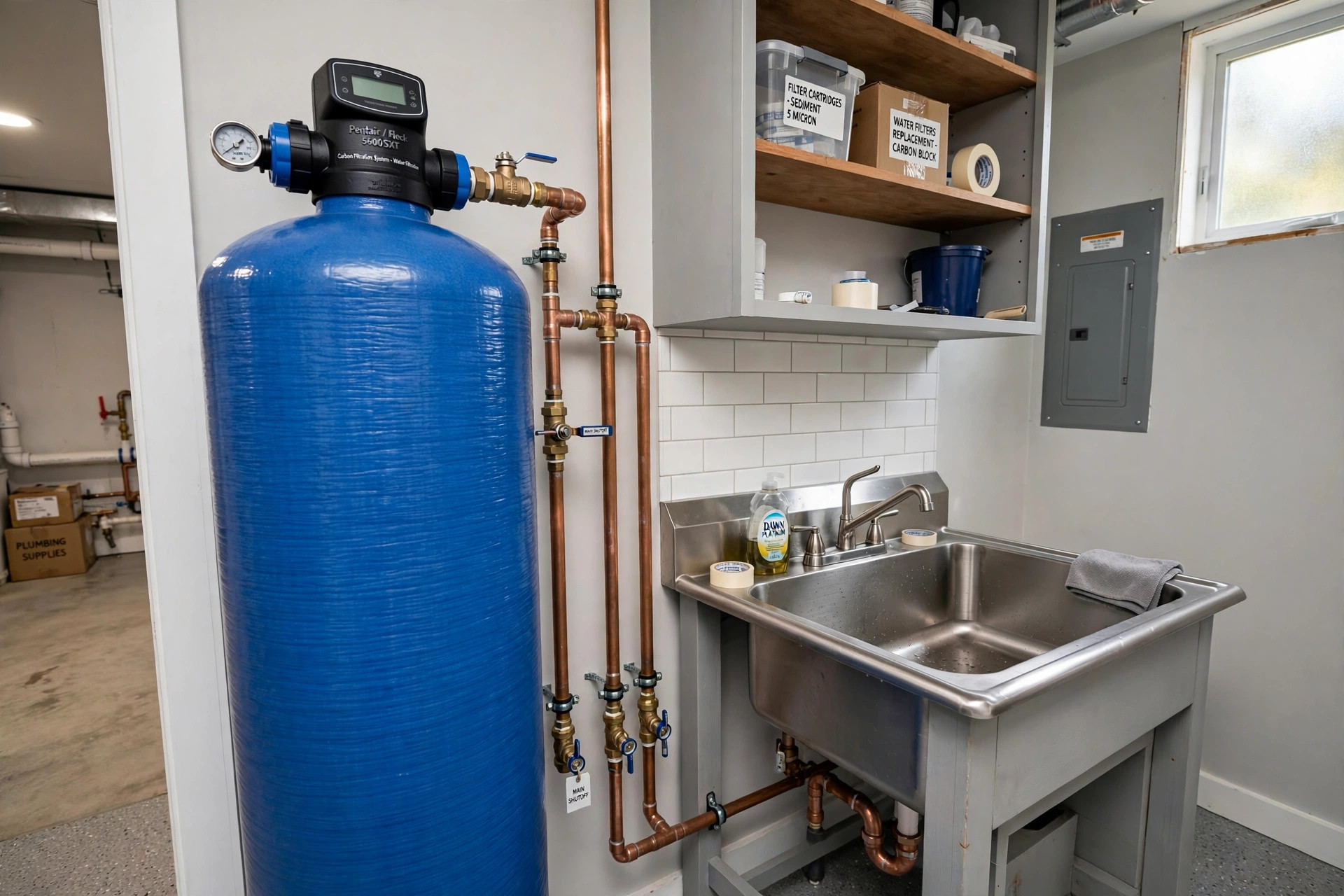
These are tall tanks, about the size of a water softener, that treat all water coming into the home. They hold a large bed of carbon. Both regular and catalytic carbon work in these tanks. Catalytic carbon is most often sold for this use because the larger size makes the higher price worthwhile.
Cost and Price Ranges
Prices vary by size and brand, but typical ranges help you plan:
– Under-sink carbon filter: 50 to 300 dollars for the unit, plus 30 to 80 dollars per filter change. – Whole house regular carbon tank: 600 to 1,500 dollars installed. – Whole house catalytic carbon tank: 1,000 to 2,500 dollars installed. – Replacement carbon media: 100 to 300 dollars for regular carbon, 250 to 500 dollars for catalytic carbon, every three to five years.
Catalytic carbon media costs roughly double. For a home on chloramine-treated city water, that extra cost often pays for itself because a smaller tank can do the job of a much larger regular carbon tank. For simple chlorine taste, the regular carbon option wins on value every time.
Care and Upkeep
Carbon filters need little daily care, but they do need attention:
1. Change cartridges on schedule. Under-sink filters usually need a new cartridge every six to twelve months. A worn-out filter can dump trapped chemicals back into the water. 2. Watch the backwash cycle. Whole house tanks should backwash every few days. If the drain line is clogged, the tank cannot clean itself. 3. Replace the media bed. After three to five years, carbon loses its punch. A service tech can refill the tank with fresh media. 4. Test the water yearly. A simple test tells you if the filter still works. If taste or smell returns, the carbon is spent. 5. Keep a prefilter in place. Sediment plugs up carbon beds. A cheap sediment prefilter extends the life of the carbon.
Safety Notes
Carbon filters are safe to use, but a few points deserve care:
– A carbon filter does not kill germs. If your water may have bacteria, you still need disinfection. Carbon alone is not enough. – Spent carbon can grow bacteria. The porous surface is a good home for germs. Change filters on time. – Do not use carbon-filtered water for fish tanks without extra treatment if chloramine is present. Even small amounts harm fish. – Follow the maker’s first-use flush steps. New carbon can release fine black dust. Flush until the water runs clear. – If you have lead pipes, carbon is only part of the answer. A review of the fluoride water filter for home reviews usa shows how different filters target different problems, and lead needs its own rated filter.
Frequently Asked Questions
Can I replace regular carbon with catalytic carbon in my existing tank?
Yes, in most cases. Both are granular media that work in standard tank sizes. The catalytic version costs more but drops right into the same tank. Check with the tank maker first, and use the same backwash settings.
Does catalytic carbon remove fluoride?
No. Neither type of carbon removes fluoride well. Fluoride needs reverse osmosis or a special alumina filter. Do not buy carbon for fluoride and expect results.
How do I know if my city uses chloramine?
Read your utility’s annual water quality report. It lists the disinfectant used. You can also call the water department. If you see chloramine on the report, catalytic carbon is worth a close look.
Will catalytic carbon last longer than regular carbon?
For the same job, yes, often it does. Because it breaks chemicals down instead of only catching them, it can stay effective longer on chloramine and sulfur. For plain chlorine taste, both last about the same.
Can I use a small under-sink unit with catalytic carbon?
Some units exist, but most small filters use regular activated carbon. Catalytic carbon needs enough contact time to do its work. In a tiny cartridge, water passes too fast. It shines in larger whole house tanks.
Is catalytic carbon safe for drinking water?
Yes. It is made for drinking water use and carries the same safety ratings as regular carbon. Look for products tested to NSF/ANSI standards. Reputable makers list these ratings on the box.
A Short Final Word
The catalytic carbon vs activated carbon filter choice comes down to one thing: what is in your water. Test it first. If you face plain chlorine taste, regular activated carbon is cheap, proven, and easy to find. If your city uses chloramine, or your well smells of sulfur, catalytic carbon earns its higher price with better results and longer life. Either way, pick a system sized for your home, keep up with filter changes, and retest your water each year. Clean water is a simple goal, and the right carbon makes it an easy one to reach.
For more background, see Delta Faucet, Kohler, and Aquasana. For more background, see This Old House, Family Handyman, and Moen. Buying guides are also published by U.S. Environmental Protection Agency and The Home Depot.
References
Aquasana. (n.d.). Water filtration systems. https://www.aquasana.com Delta Faucet. (n.d.). Kitchen and bathroom faucets. https://www.deltafaucet.com Family Handyman. (n.d.). DIY home repair and maintenance. https://www.familyhandyman.com Kohler. (n.d.). Bathroom and kitchen fixtures. https://www.kohler.com Moen. (n.d.). Faucets and plumbing fixtures. https://www.moen.com The Home Depot. (n.d.). Home improvement products. https://www.homedepot.com This Old House. (n.d.). Home renovation guidance. https://www.thisoldhouse.com U.S. Environmental Protection Agency. (n.d.). Protecting human health and the environment. https://www.epa.gov
Was this guide helpful?

About Lisa Anderson
The My Garden US editorial team writes practical, in-depth home and garden guides for American homeowners — tested advice, no fluff.
You May Also Like

Electric Tankless Water Heater Reviews USA: What Buyers Should Know
January 21, 2026 0 views
Jetted Tub vs Soaking Tub Comparison USA: A Simple Guide for Homeowners
May 27, 2026 0 views
The Best Toilet for Low Water Pressure USA: A Plain Guide
February 27, 2026 0 views