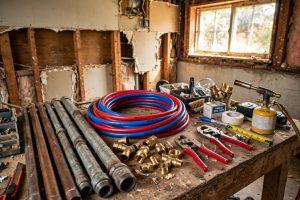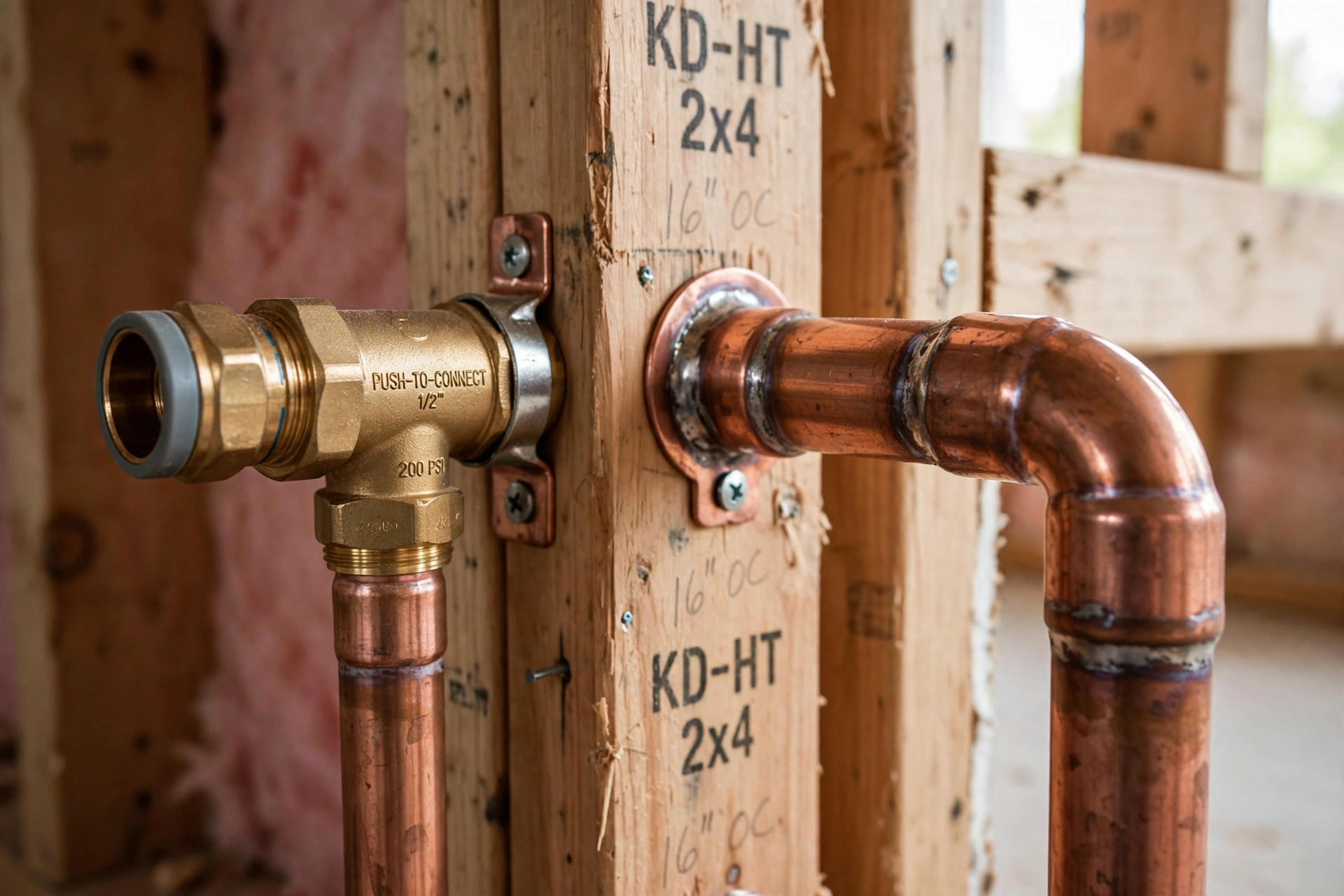

When a pipe must be cut and joined in an American home, two names come up first. SharkBite push-to-connect fittings and the old soldered copper joint. This sharkbite vs soldered copper comparison usa lays out both in plain words. No hype. No jargon. Just what each one is, what it costs, how long it lasts, and when each is the smart pick for your house.
Why the Joint Type Matters
Every plumbing system is only as strong as its joints. Pipes rarely fail in the middle of a straight run. They fail where two pieces meet. A bad joint drips. A drip rots wood, feeds mold, and ruins drywall. A joint that bursts can flood a room in an hour.
For a hundred years the soldered joint was the standard answer. A plumber cleaned two copper pieces, heated them with a torch, and fed in solder that melted into the seam. Done right, the joint became part of the pipe itself. It was a skill job. It took tools, practice, and an open flame inside your wall.
Then came the push-to-connect fitting. SharkBite is the best known brand. You cut the pipe square, push it into the fitting, and a set of stainless steel teeth grips it while an O-ring seals it. No torch. No solder. No waiting for a joint to cool. The question now is simple. Does the easy way hold up as well as the old way?
How Each Method Works: Sharkbite vs Soldered Copper Comparison Usa
SharkBite Push-to-Connect Fittings
A SharkBite fitting is a brass body with parts inside that do two jobs. Sharp steel teeth bite into the outside of the pipe and stop it from pulling out. A rubber O-ring presses tight around the pipe and stops water from leaking. The pipe needs one thing from you: a clean, square cut and a deburred edge.
Push the pipe in to the depth mark on the fitting and you are done. The joint holds right away. You can turn the water back on in seconds. The fitting works on copper, PEX, and CPVC, so it can join two different pipe materials in one step. It can even be removed with a small plastic release tool and used again.
Many how-to guides from This Old House and the Family Handyman show push-to-connect fittings used for quick repairs in tight spots, such as behind a sink or inside a finished wall where a torch would be risky.
Soldered Copper Joints
Soldering is a craft. The plumber cuts the pipe, reams the inside edge, and cleans the outside of the pipe and the inside of the fitting with sandpaper or a wire brush until the copper shines. Flux paste is brushed on. Flux keeps the copper clean while it heats and helps the solder flow.
The pieces are pushed together. The torch heats the fitting, not the solder. When the metal is hot enough, the solder wire touches the joint and melts, pulled into the seam by capillary action. The solder must ring the full joint. Then the joint cools undisturbed. Water can only flow after the joint is cool and the line is flushed to remove flux residue.
A good solder joint is metal fused to metal. There is no rubber to age and no teeth to wear. It is part of the pipe, and it can last as long as the copper around it.
What to Look for When You Choose
Pick your joint the way a plumber does: by the job in front of you.
Skill on hand. Soldering takes practice. A first-time solder joint often leaks and must be redone. SharkBite takes no practice. If you are fixing a pipe yourself for the first time, push-to-connect is the safer bet. For related guidance on do-it-yourself plumbing choices, see our look at best PEX fittings for DIYers.
Access and fire risk. A torch flame near wood studs, insulation, or old drywall is a fire risk. Many house fires start from a plumber’s torch. In a tight crawl space or inside a finished wall, SharkBite avoids the open flame entirely.
Pipe condition. Solder needs the line to be dry. Even a small trickle of water in the pipe will keep the joint from reaching soldering heat, and steam can blow the solder out. SharkBite can be pushed onto a wet pipe and even installed with water flowing.
Permanence. For a new home build or a full repipe that should last fifty years, soldered copper remains the gold standard among professionals. For a repair, a remodel tie-in, or a joint that may need to come apart later, push-to-connect wins on sense.
Code and resale. Both methods meet United States plumbing codes when the right listed fittings are used. SharkBite fittings carry standard approvals, so an inspector will pass them. Home buyers and appraisers generally do not object to either when the work is neat and leak free.
Types and Options
SharkBite is one brand of push-to-connect, but the shelf holds more. Other makers sell similar push fittings, and some plumbers prefer them for price. SharkBite also sells a Pro line rated for behind-wall use without access panels, plus slip repair couplings that span a cut-out section of pipe.
On the solder side, the fitting types are the old standbys: couplings, elbows, tees, and adapters, in wrot copper or cast brass. Solder itself comes in lead-free wire, required by law for drinking water lines since 1986. The EPA’s drinking water rules are the reason lead solder is no longer legal in potable plumbing.
Pipe material matters too. SharkBite joins copper to PEX to CPVC. Soldering works on copper only. If your house mixes materials, push-to-connect is the bridge between them. For a full repipe decision, read our PEX vs copper repipe pros and cons before you commit.
Cost and Price
Per fitting, SharkBite costs much more than a soldered joint. A single 1/2-inch SharkBite coupling often sells for eight to fifteen dollars at Home Depot or Lowe’s. A copper sweat coupling plus solder and flux for the same joint costs about one to two dollars in material.
But material is only half the bill. Soldering needs a torch, fuel, flux, solder, sandpaper, a reamer, a fire cloth, and often a fire extinguisher close by. A basic torch kit runs thirty to eighty dollars. Then there is labor. A plumber bills for the time spent draining the line, drying the pipe, heating, soldering, and cooling each joint. On a big job with many joints, labor dwarfs fitting cost.
For one or two repairs, SharkBite is cheaper all in. You buy the fitting and a fifteen-dollar pipe cutter and you are done in minutes. For a whole house with hundreds of joints, soldered copper wins on total cost, and most plumbers will quote it that way. Our PEX vs copper plumbing cost comparison breaks down full-system numbers in more detail.
A rough rule of thumb used by many pros: under five joints, push-to-connect. Over twenty joints, solder. Between five and twenty, it comes down to access, fire risk, and who is doing the work.
Care and Upkeep
Neither joint asks for much once it is in the wall, but they age in different ways.
A SharkBite joint depends on its O-ring. Rubber seals harden over decades, especially in hot water lines. The maker’s rated life is long, and the fittings carry a long warranty, but no rubber seal is forever. In an accessible spot, such as under a sink or in a basement, check the fitting once a year for white crust or green stains that signal a slow weep.
A soldered joint has no rubber and no moving parts. Once the solder has set, there is nothing to wear out. The enemies of soldered copper are outside the joint: acidic water that pits copper from the inside, and stray electrical current that eats pinholes. If your water is acidic, a whole-house treatment unit matters more than the joint type. Guidance on water quality and testing is available from Aquasana and major fixture makers like Moen, Kohler, and Delta Faucet.
For either joint, keep pipe straps snug so the line does not move, and never hang weight from a joint. In freezing climates, insulate pipes in exterior walls no matter how they are joined.
Safety
Safety is where the two methods differ most.
Soldering means an open flame, sometimes over a thousand degrees, inside your home. Wood studs can smolder for hours and catch fire after the plumber has left. Pros keep a spray bottle, a fire cloth, and an extinguisher within reach, and they stay on site for thirty minutes after the last joint to watch for smoke. If you solder near finished walls, this is not optional.
SharkBite removes the flame, the hot metal, and the flux fumes. There is no burn risk to the installer and no charred wood. The fitting itself is lead free and approved for drinking water.
One caution applies to both: always shut off the water and drain pressure before cutting a line, and test every joint under full pressure before you close up a wall. A five-minute pressure check saves a five-thousand-dollar flood.
Frequently Asked Questions
Do SharkBite fittings last as long as soldered copper? A soldered joint can last fifty years or more, as long as the copper pipe itself. SharkBite fittings are rated for decades of service and carry a maker’s warranty, but they rely on a rubber O-ring that will age faster than solid metal. For a repair or a remodel, the difference is small. For a new build meant to last a lifetime, soldered copper has the longer proven record.
Can SharkBite fittings be used behind walls? Yes, when the fitting is listed for concealed use. SharkBite’s standard fittings are approved for behind-wall installation with no access panel under United States codes. Still, many plumbers prefer soldered joints in hidden spots simply because there is nothing inside them that can age.
Can you solder a pipe that has water in it? Not well. Water in the pipe absorbs the torch heat and keeps the joint below soldering temperature, and steam can push the solder out of the seam. Pros stop the trickle with a bread plug or a jet sweat tool, or they drain the line fully. This is the most common reason a do-it-yourself solder joint fails, and it is a case where push-to-connect is the easier fix.
Are SharkBite fittings code approved in the USA? Yes. Listed push-to-connect fittings meet the same plumbing codes as soldered joints and are accepted by inspectors in all fifty states. Keep the packaging or a photo of the listing mark in case an inspector asks.
Which is better for a homeowner doing one repair? For a single repair, SharkBite is usually the better pick. It needs no torch, no flame watch, and no skill beyond a square cut. Buy the fitting, cut, push, and turn the water on. Save soldering for larger projects where you can practice, or hire a licensed plumber for the day.
A Short Final Word
This sharkbite vs soldered copper comparison usa comes down to one line. Soldered copper is the stronger, cheaper, longer-lived joint for big permanent work in skilled hands. SharkBite is the faster, safer, simpler joint for repairs and tight spots. Most American homes will see both over the years: solder where the plumber built it, push-to-connect where someone fixed it fast. Pick by the job, do the work neatly, and test every joint before the wall closes.
References
Aquasana. (n.d.). Water filtration systems. https://www.aquasana.com Delta Faucet. (n.d.). Kitchen and bathroom faucets. https://www.deltafaucet.com Family Handyman. (n.d.). DIY home repair and maintenance. https://www.familyhandyman.com Kohler. (n.d.). Bathroom and kitchen fixtures. https://www.kohler.com Lowe’s. (n.d.). Home improvement products. https://www.lowes.com Moen. (n.d.). Faucets and plumbing fixtures. https://www.moen.com The Home Depot. (n.d.). Home improvement products. https://www.homedepot.com This Old House. (n.d.). Home renovation guidance. https://www.thisoldhouse.com U.S. Environmental Protection Agency. (n.d.). Protecting human health and the environment. https://www.epa.gov
Was this guide helpful?

About David Wilson
The My Garden US editorial team writes practical, in-depth home and garden guides for American homeowners — tested advice, no fluff.
You May Also Like
Polybutylene Pipe Replacement Cost USA: What Homeowners Should Know
April 14, 2026 0 views
Best Bidet Toilet Seat Reviews USA 2026: A Plain Guide for Homeowners
July 16, 2026 0 views
Sewer Gas Smell in Bathroom: Proven Solutions USA Homeowners Trust
September 23, 2026 0 views