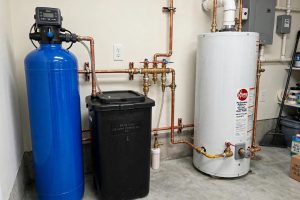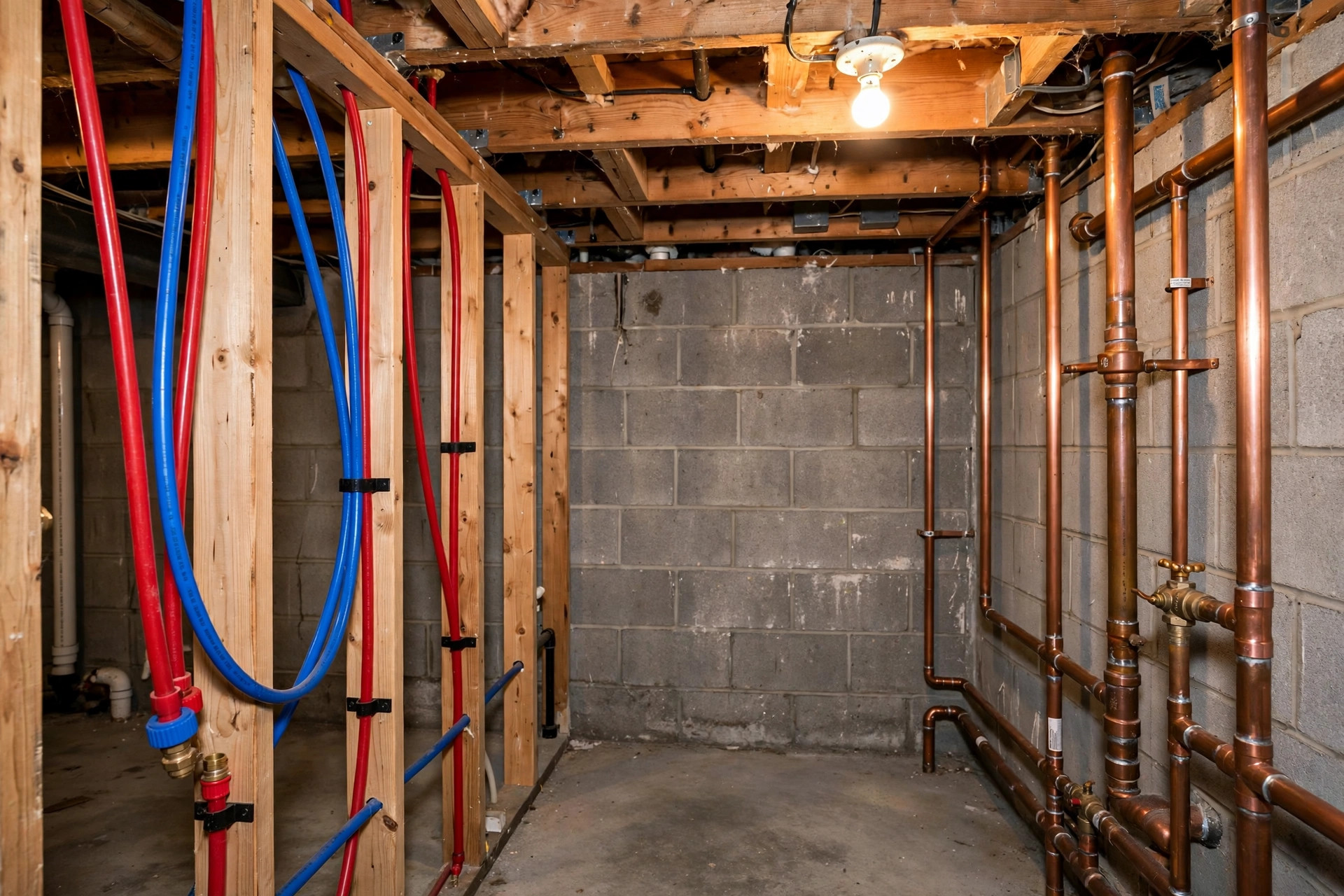

Every home has pipes. They sit behind walls. They sit under floors. They carry clean water in and waste water out. Most home owners never think about them until a leak appears. Then the question comes fast: what kind of pipe should go in, and what will it cost.
The two main choices in the USA are PEX and copper. PEX is a bendable plastic tube. Copper is a hard metal pipe. Both carry drinking water. Both meet code in most states. But they differ in price, in labor, and in how long they last. This pex vs copper plumbing cost comparison usa looks at both options with plain numbers. It is written for the year 2026, but the ideas hold for any year. Read it before you call a plumber. You will make a better choice.
Why This Choice Matters
Plumbing is one of the most costly parts of a home project. A full repipe can run into the thousands. Pick the wrong material and you pay twice: once at the store, and once again when the pipes fail early.
Cost is not only about the pipe itself. Labor often costs more than the material. Some pipes take twice as long to install. That labor shows on the final bill. A smart owner looks at the full picture: pipe price, fitting price, labor hours, tools, and the life of the system.
Water quality matters too. Some water eats metal pipes from the inside. Some water stains fixtures. The right pipe for your water saves repair money for years. Before you decide, test your water. The Environmental Protection Agency keeps plain guides on safe drinking water at home.
What to Look for When You Compare: Pex vs Copper Plumbing Cost Comparison Usa
Do not compare pipe by price per foot alone. That number misleads. A cheaper pipe can need pricey fittings. A dear pipe can need fewer hours of labor. Look at the whole job.
First, ask about the water in your area. Hard water leaves scale. Acidic water can eat copper. Ask a local plumber what your town uses. If your home runs on well water, read up on bacteria in well water treatment options USA before you pick a pipe.
Second, look at the size of the job. A small repair is not the same as a full repipe. For a short fix, the labor gap between PEX and copper is small. For a whole house, it is large.
Third, think about who does the work. PEX needs special tools, but it goes in fast. Copper needs skill with a torch, and solder work is slow. Some do-it-yourself owners can run PEX on their own. Few should solder copper without practice.
Fourth, check local code. Most US cities allow both PEX and copper for drinking water. A few places still limit one or the other. Check with your local building office before you buy.
The Two Options, Explained
PEX: The Bendable Plastic Tube
PEX stands for cross-linked polyethylene. It is a flexible plastic pipe. It comes in red for hot water, blue for cold, and white for either. It bends around corners, so it needs fewer joints. Fewer joints mean fewer places to leak.
PEX resists freeze damage better than copper. It can swell a bit when water freezes and then return to shape. Copper often splits in the same freeze. In cold states, this is a real point in favor of PEX.
The weak points of PEX are sunlight and rodents. UV light breaks PEX down, so it must not sit in the sun. It is made for indoor use or buried lines. Rats and mice can chew it, though this is rare. Some brands add taste or smell guards, and major retailers stock the common sizes and fittings.
Copper: The Classic Metal Pipe
Copper pipe has been in US homes for nearly a century. It is rigid and strong. It handles heat well. It resists bacteria growth on its surface. Plumbers trust it, and buyers often see it as a sign of quality work.
Copper pipe comes in types K, L, and M. Type M is thin and cheap. Type L is the common choice for homes. Type K is thick and dear. Most home jobs use type L for water lines.
Copper keeps its shape for decades. It does not sag between supports. It can take high heat near a water heater or a boiler. It is also fully recyclable, which some owners like.
The weak points of copper are cost and corrosion. Copper prices move with the metal market and have climbed over the years. Acidic or low-pH water can eat the inside of copper pipe and cause pinhole leaks. Solder joints need heat and skill, and a bad joint leaks.
Cost and Price: The Full Breakdown
Now the heart of this pex vs copper plumbing cost comparison usa: the money. All prices below are rough 2026 US ranges. Your town may differ. Get two or three local quotes for the exact job.
Material Cost per Foot
For half-inch pipe, the common home size:
– PEX tubing: about $0.30 to $0.60 per foot – Copper type L pipe: about $2.50 to $5.00 per foot
That is a large gap. Copper costs roughly five to eight times more per foot than PEX. For a whole-house repipe that needs 500 feet of pipe, PEX tubing alone may cost $200 to $300. Copper pipe alone may cost $1,500 to $2,500.
But fittings change the math. PEX fittings cost more per piece than copper elbows in many cases. A PEX system needs special rings, clamps, or expansion fittings. A brass PEX fitting can cost $2 to $5 each. Copper fittings are often $1 to $3 each. Still, PEX needs fewer fittings because it bends. So the fitting total often stays lower with PEX.
Labor Cost
Labor is where PEX wins the biggest. A trained plumber can run PEX two to three times faster than copper. Copper work means cutting, cleaning, fluxing, heating, and soldering every joint. PEX work means pushing a tube, sliding a ring, and crimping. It is simple and fast.
Plumber labor in the USA often runs $75 to $150 per hour, depending on the state. A whole-house repipe with PEX might take one to two days. The same house in copper might take three to five days. For a 2,000-square-foot home, that labor gap can add $2,000 to $5,000 to the copper bill.
For small repairs, the gap shrinks. Fixing one short run of pipe takes about the same time either way. The material cost then rules the choice.
Total Job Cost Examples
Here are ballpark totals for common jobs in 2026:
– Whole-house repipe, 2-bath home, PEX: $4,000 to $8,000 – Whole-house repipe, 2-bath home, copper: $8,000 to $15,000 – New build rough-in, 2,500 sq ft, PEX: $3,000 to $6,000 – New build rough-in, 2,500 sq ft, copper: $7,000 to $12,000 – Small repair, 10 feet, PEX: $200 to $400 – Small repair, 10 feet, copper: $300 to $600
These are ranges, not promises. Old homes with tight crawl spaces cost more. Homes with slab floors cost more. Always get a written quote. Many owners start their price research at home improvement stores and then confirm with local plumbers.
Tools and DIY Cost
If you do the work yourself, tool cost matters. A basic PEX crimp tool kit costs $50 to $150. An expansion tool kit can cost $200 to $400. A copper soldering kit with torch, solder, and flux costs $50 to $100. But PEX mistakes are cheap to fix, while copper mistakes waste pricey pipe.
Do-it-yourself PEX is common in the USA. Many owners run their own PEX lines and pass inspection. Do-it-yourself copper is less common because solder work takes practice. Guides from This Old House show both methods in plain steps.
How Long Each Pipe Lasts
A pipe that lasts twice as long can be worth twice the price. So how do they compare.
– PEX: rated life of 40 to 50 years. Real-world data is still growing, since PEX has been in US homes since the 1980s. Early systems still work fine. – Copper: rated life of 50 to 70 years, sometimes more. Many homes built in the 1960s still run on their first copper pipes.
Copper wins on proven life. But the gap is smaller than it looks. Most owners move or remodel before either pipe fails. And copper fails early in the wrong water. Pinhole leaks from acidic water can kill a copper system in 15 to 20 years. In that same water, PEX sails past 40 years.
Think of it this way. In neutral, clean city water, copper may outlast PEX by a decade or more. In harsh well water, PEX often wins. Match the pipe to the water, not to the myth.
Care and Upkeep
Both pipes need little care once installed. But a few habits keep them healthy.
Keep PEX out of sunlight. Even indoor PEX near a bright window should be shielded. Check the pressure. Very high water pressure strains any pipe. A pressure regulator set near 60 psi helps. Add water leak sensors for the basement near the water heater and the main lines. A small sensor can catch a leak before it ruins a floor.
For copper, watch for green stains in sinks. Green or blue-green marks can mean copper is wearing thin. Watch for white crust on joints, which can mark a slow leak. If your water tastes metallic, test it. Water treatment systems from makers like Aquasana can fix the pH and protect copper.
Insulate hot water lines in both cases. It saves energy and keeps water hot at the tap. In cold regions, insulate all pipes in unheated spaces. PEX survives freezes better, but no pipe likes ice.
Safety Notes
Water safety is the first job of any pipe. Both PEX and copper are approved for drinking water in the USA when marked with NSF or ANSI certification. Look for the NSF/ANSI 61 mark on the pipe. This mark means the pipe passed tests for safe drinking water contact.
Copper leaches small amounts of copper into water, mostly in the first months. This is normal and stays far below health limits in most cases. PEX can leach small amounts of plastic compounds early on. Studies find levels well below safety limits. Run new pipes for a few minutes before drinking from them in the first weeks.
Never burn or melt pipe scraps indoors. Never use lead solder on drinking water lines. US law has banned lead solder in drinking water systems since 1986. Buy lead-free solder only.
Torch work with copper is a fire risk. Keep a fire extinguisher near. Keep wood, paper, and cloth clear of the flame. Many house fires start from careless soldering. If you are not sure, hire a pro.
FAQ
Is PEX cheaper than copper for a full repipe?
Yes, clearly. For a full-house repipe, PEX usually costs 40 to 60 percent less than copper when you count both material and labor. The savings come from cheaper tubing and much faster installation. Small repairs show a smaller gap.
Does PEX last as long as copper?
Copper has the longer proven record, 50 to 70 years. PEX is rated for 40 to 50 years and early systems still work well. In acidic or harsh water, PEX often outlasts copper because copper corrodes. In clean city water, copper usually lasts longer.
Can I mix PEX and copper in one house?
Yes. This is common. Many owners keep old copper where it works and add PEX for new runs. Special transition fittings join the two. A plumber or a fitting maker like Moen or Delta can point you to the right adapters. Mixing is a good way to cut cost on a partial repipe.
Which pipe is better for well water?
PEX, in most cases. Well water often has low pH or high mineral content. Low pH eats copper and causes pinhole leaks. PEX does not corrode, so it handles well water better. Test your water first, then decide.
Does PEX affect water taste?
Some owners notice a slight plastic taste from new PEX in the first weeks. It fades with use. Flushing the lines helps. If taste stays, a filter fixes it. Copper can give a metallic taste in new lines too, which also fades.
Will copper pipes raise my home value?
Some buyers like seeing copper. Real estate agents may call it a quality sign. But appraisers do not add real value for copper over PEX in most markets. A new PEX system in good shape beats an old, failing copper system every time.
A Short Final Word
This pex vs copper plumbing cost comparison usa comes down to one line: PEX costs much less and goes in faster, while copper has the longer proven life in clean water. For most US homes in 2026, PEX is the smart money choice, above all for full repipes. Copper still earns its place in clean city water, in high-heat spots, and in homes where the owner wants the classic metal.
Match the pipe to your water, your budget, and your home. Get local quotes. Check your water quality. If you plan other upgrades at the same time, look at WaterSense toilet rebates near you for 2026 to save on the full bath project. For hands-on repair guides, Family Handyman keeps a deep library. And fixture makers such as Kohler publish care guides that pair well with any new pipe system. Choose once, choose well, and your pipes will serve you for decades.
References
Aquasana. (n.d.). Water filtration systems. https://www.aquasana.com Delta Faucet. (n.d.). Kitchen and bathroom faucets. https://www.deltafaucet.com Family Handyman. (n.d.). DIY home repair and maintenance. https://www.familyhandyman.com Kohler. (n.d.). Bathroom and kitchen fixtures. https://www.kohler.com Lowe’s. (n.d.). Home improvement products. https://www.lowes.com Moen. (n.d.). Faucets and plumbing fixtures. https://www.moen.com The Home Depot. (n.d.). Home improvement products. https://www.homedepot.com This Old House. (n.d.). Home renovation guidance. https://www.thisoldhouse.com U.S. Environmental Protection Agency. (n.d.). Protecting human health and the environment. https://www.epa.gov
Was this guide helpful?

About Michael Thompson
The My Garden US editorial team writes practical, in-depth home and garden guides for American homeowners — tested advice, no fluff.
You May Also Like

Toilet Auger vs Plunger Comparison: Which Tool Clears Clogs Best in USA Homes
June 3, 2026 0 views
Best Basement Dehumidifier With Pump USA: A Plain Guide for Dry, Healthy Basements
September 7, 2026 0 views
Whole House Water Filtration Cost Installed: What Homeowners Should Know
March 17, 2026 0 views