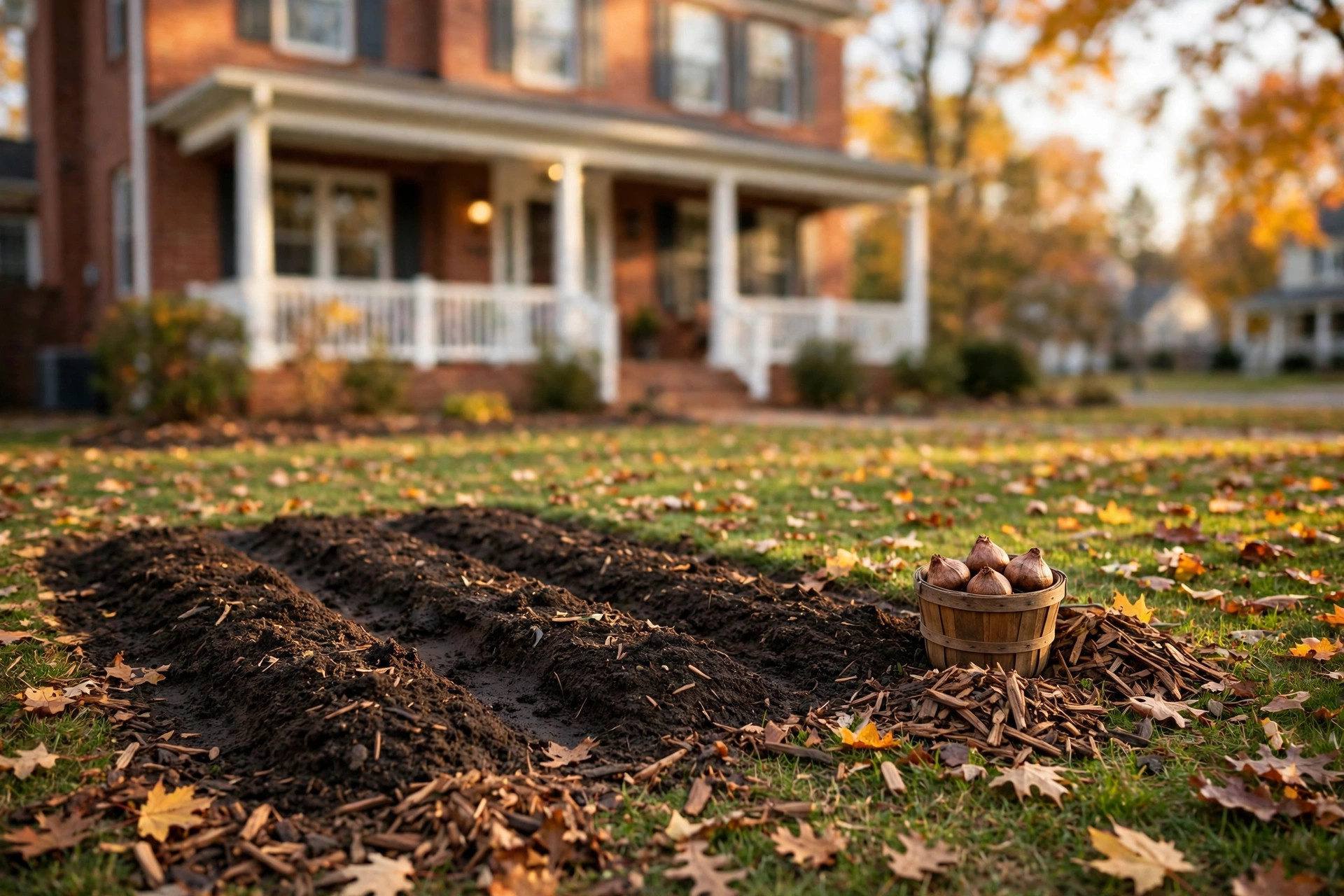

A strong tulip bed in spring does not happen by luck. It happens in the fall, when the ground is still soft and the air is cool. This tulip bulbs fall american homes guide gives you every step in plain order: when to plant, how to pick good bulbs, how deep to set them, and how to care for them through the cold months. No hard words. No guesswork.
Why Fall Planting Matters
Tulips are hardy bulbs. They need a period of cold to form a flower bud for spring. If you plant them in the spring, they may leaf out but they will not bloom well. The fall gives them what they need: soil warm enough to grow roots, followed by winter cold that wakes the bloom inside the bulb.
When you set bulbs in autumn, the roots spread out for several weeks before the ground freezes. That root system feeds the shoot that rises in March or April. A bulb with weak roots gives a short stem and a small flower. A bulb with strong roots gives a tall stem and a full bloom.
Timing also affects your work. Fall soil is easy to dig. It has soaked up rain all season. Spring soil can be wet and packed. It is harder to work and easier to harm. Plant in the fall and you do the job once, when the job is easy.
Another point is price. Bulb sellers ship in the fall. The stock is fresh. If you wait until spring, the best kinds are sold out. You are left with poor stock or high prices. Order early and plant on time.
When to Plant in the Fall: Tulip Bulbs Fall American Homes Guide
The right time is after the summer heat has passed but before the ground freezes. For most of the country, that means mid-September through early November. Watch your night lows. When night air stays near 40 to 50 degrees, it is time to plant.
In the far north, start as early as late August. The ground there freezes fast. In the warm south, wait until late October or even November. Bulbs need soil under 60 degrees to root well. If you plant too early in warm soil, the bulb may rot.
A simple rule works well: plant your bulbs about six weeks before the first hard frost. That gives roots time to form. You can check local frost dates on a garden calendar for your county. A local garden how-to site also lists fall dates by state.
Do not rush. A week of cool air makes a real change in soil heat. Do not wait too long either. Frozen soil will stop your work. Keep a note of the date on your seed packet and mark it on a home calendar for next year.
How to Choose Good Tulip Bulbs
A good bulb is firm and heavy for its size. It should feel like a small, tight onion. Skip bulbs that are soft, light, or moldy. Look at the skin. A few dry flakes are fine. Deep cuts or dark spots are not.
Size matters more than most people think. Bulb size is sold by circumference, often 11 to 12 centimeters for top grade. Larger bulbs hold more food. They give larger blooms in the first year. If you buy small bulbs to save money, expect smaller flowers.
Pick kinds that fit your home. For a bed that blooms at one time, choose one kind in one color. For a bed that blooms for weeks, mix early, mid, and late kinds. Early kinds bloom in March. Mid kinds in April. Late kinds in May. A plant breeder page lists bloom times for many kinds.
Buy from sellers who pack bulbs well. Bulbs should arrive cool and dry. If a box sits in a hot truck, the bulbs suffer. Reputable seed houses such as Burpee and Park Seed ship at the right time of year. A family nursery guide also ships bulbs with planting notes.
For those who want a full tulip bulbs fall buying guide usa, bulb grades and pack counts are worth a close look before you check out. A tulip bulbs fall for sale usa page can also help you compare price per bulb.
Where to Plant Around the Home
Tulips need sun. Pick a spot that gets at least six hours of direct sun in spring. Keep in mind that trees are bare in early spring. A spot that will be shady in summer is often sunny enough in April. That gives you more room to plant than you think.
Good drainage is just as vital. Bulbs rot in standing water. Low spots in the yard are risky. If your whole lot is heavy clay, plant in a raised bed or a deep pot. A bed raised six inches above the grade drains much better.
Think about the view from the house. Plant where you see the flowers from the front door, the kitchen window, or the porch. Beds along the walk or near the mailbox get seen by you and by neighbors. Group bulbs in odd numbers: seven, nine, or eleven in a drift. Single bulbs scattered here and there look weak.
Mix tulips with daffodil bulb packs buying guide usa picks if you want a longer show. Daffodils bloom just before tulips in many states. They also keep deer away from the tulips, which deer love to eat.
Types and Options to Know
Not all tulips act the same. The main groups are worth learning so you buy the right one for your plan.
Single Early Tulips
These bloom first, often in March. The flowers are cup-shaped and simple. They stand 10 to 14 inches tall. They suit small beds and pots near the front steps.
Darwin Hybrid Tulips
These are the tall, strong kinds you see in parks. They stand up to wind and rain. The flowers are large. They return for a second or third year better than most kinds. If you want the most bloom for your work, start here.
Triumph Tulips
These bloom mid-season with neat, sturdy flowers. They come in the widest range of colors. They are a safe pick for most American yards.
Double Late Tulips
These bloom late and look like small peonies. They are showy but heavy. In windy spots they may fall over. Plant them in a sheltered bed.
Species Tulips
These are small wild kinds. They naturalize well, which means they come back year after year and spread. They suit rock beds and the edges of lawns where you want a low touch of color.
A perennial nursery carries several of these groups with clear photos. The federal farm research page also has notes on bulb crops and plant hardiness zones that help you match a kind to your state.
Step by Step: How to Plant
You need a trowel or a bulb planter, a rake, mulch, and the bulbs. That is all. Follow these steps in order.
1. Loosen the soil to eight inches deep. Pull out weeds and old roots. 2. Mix in compost if the soil is poor. A shovel of compost per square foot is enough. 3. Dig each hole three times as deep as the bulb is tall. For most tulips that is six to eight inches. 4. Set the bulb pointy end up. The flat end goes down. 5. Space bulbs four to six inches apart. Crowded beds bloom stronger in year one but fade faster. 6. Cover with soil and press it down with your hand. 7. Water the bed well. Roots need moist soil to start. 8. Spread two to three inches of mulch over the top. Shredded bark or straw works well.
Planting depth is the most common error. Shallow bulbs freeze or get eaten. Deep bulbs are safe and stand up straight. When in doubt, plant one inch deeper than you think.
Mark the bed with small stakes or a garden tag. In spring it is easy to forget where bulbs sit. You do not want to dig into them by accident.
Cost and Price: What to Expect
Bulb prices vary by kind and pack size. Common single early bulbs often run 60 cents to one dollar each in packs of ten or twenty-five. Named kinds and rare colors cost more: one to two dollars each.
A bag of 100 bulbs of a good Darwin hybrid often costs 50 to 70 dollars. That sounds like much, but it fills a bed about three by six feet. Per square foot, tulips are one of the cheapest spring flowers.
Add the cost of extras. A bag of compost runs about five dollars. A bale of straw mulch runs six to ten dollars. A bag of bulb fertilizer costs about eight dollars and treats several beds.
Buy in bulk when you can. Small packs at a big box store cost more per bulb than mail-order bags. A home garden supplier comparison can show the gap in price per bulb. That said, check shipping dates before you order. Late shipping in a warm zone can mean planting in soil that is still too warm.
Care and Upkeep Through Fall and Winter
After planting, water once a week if rain does not fall. Stop watering after the ground starts to freeze. The mulch holds in the soil heat and keeps the freeze line from heaving the bulbs up.
Keep the bed free of fallen leaves that mat down. A thick mat of wet leaves blocks air and holds rot. Rake them off and put your mulch back in place.
In winter, do not walk on the bed. Frozen soil compacts and can harm the roots below. If you get heavy snow, that is fine. Snow is a good blanket for bulbs.
In early spring, watch for the first shoots. If a late frost comes after shoots are up, cover the bed with a light sheet at night. Remove it in the morning. Most tulips can take a light frost once they are up, but a hard freeze can spot the petals.
After the bloom fades, cut the flower head off but leave the leaves. The leaves feed the bulb for next year. Let them yellow and die back on their own. This is the step most gardeners skip, and it is the reason their tulips fade after one year.
Safety Notes for Homes with Kids and Pets
Tulip bulbs are not safe to eat. All parts of the plant hold a bitter toxin called tulipalin. It can upset the stomach if chewed. The bulbs hold the most.
If you have small children, teach them that garden bulbs are not food. Keep unplanted bulbs in a closed box out of reach. In the yard, plant bulbs in beds that toddlers do not play in.
Dogs and cats may dig up bulbs. The same toxin can sicken a pet. Fence off new beds with short wire mesh until the ground settles. Watch dogs when they are in the yard for the first weeks after planting.
Skin can also react. Some people get red, itchy hands from handling bulbs for a long time. Wear gloves when you plant. Wash your hands after the job.
When you use fertilizer, follow the label rate. More is not better. Excess fertilizer can burn roots and run off into storm drains. Keep bags locked away from children and pets.
FAQ
How late can I plant tulip bulbs in the fall?
You can plant as long as you can get a shovel into the ground. If the top inch is frozen but the soil below is soft, dig deeper and plant. Bulbs planted very late may bloom a week or two later in spring, but they still bloom.
Do I need to chill tulip bulbs before planting?
In most of the country, no. Winter gives the bulbs the cold they need. In the warmest zones, where winter nights stay above 45 degrees, chill bulbs in the fridge for eight to ten weeks before planting. Keep them away from fruit, which gives off gases that harm bulbs.
Why did my tulips bloom once and never come back?
Three causes are common. The leaves were cut too soon, so the bulb starved. The bed stayed too wet in summer, so the bulb rotted. Or the kind was a showy double that is weak by nature. Darwin hybrids and species tulips return best.
Can I plant tulips in pots?
Yes. Use a deep pot, at least ten inches tall, with drain holes. Set bulbs pointy end up, closer together than in the ground. Water and store the pot in an unheated garage or against the house. Bring it out in early spring.
How many bulbs do I need for a bed?
For a full look, plan about 25 to 35 bulbs per square yard. A three-by-six-foot bed needs about 50 to 75 bulbs. Drifts look best with at least seven bulbs of one kind in a group.
Should I add fertilizer at planting time?
A light dusting of bulb fertilizer in the hole helps, but it is not required in good soil. Compost mixed into the bed feeds bulbs well. Do not use fresh manure. It can burn roots and carry disease.
A Short Final Word
Planting tulip bulbs in the fall is one of the best deals in home gardening. An hour of easy work in October buys weeks of color in April. Follow the steps in this tulip bulbs fall american homes guide: plant at the right time, pick firm bulbs, set them deep, and let the leaves finish their work in spring. Your yard will thank you when the snow melts and the first red and yellow cups open to the sun.
References
Burpee. (n.d.). Seeds, plants, and gardening supplies. https://www.burpee.com Gardening Know How. (n.d.). Gardening guides and plant care. https://www.gardeningknowhow.com Gurney’s Seed & Nursery Co. (n.d.). Seeds, plants, and garden supplies. https://www.gurneys.com National Institute of Food and Agriculture. (n.d.). Agricultural research and extension. https://www.nifa.usda.gov Park Seed. (n.d.). Seeds, plants, and gardening supplies. https://www.parkseed.com Proven Winners. (n.d.). Plants and gardening inspiration. https://www.provenwinners.com The Old Farmer’s Almanac. (n.d.). Gardening calendars and advice. https://www.almanac.com The Spruce. (n.d.). Home and garden advice. https://www.thespruce.com White Flower Farm. (n.d.). Plants, bulbs, and garden supplies. https://www.whiteflowerfarm.com
Was this guide helpful?

About Lisa Anderson
The My Garden US editorial team writes practical, in-depth home and garden guides for American homeowners — tested advice, no fluff.
You May Also Like
Peat Pots for Seedlings: A Plain Guide to Buying in the USA
January 8, 2026 0 views
Heirloom Vegetable Seeds for California Homes: A Plain Growing Guide
June 16, 2026 0 views
Pothos Plants Bulk for Sale USA: A Practical Guide
April 1, 2026 0 views