The American chestnut was once the king of eastern forests - until blight wiped it out a century ago. But gardeners can still grow chestnuts: blight-resistant Chinese chestnuts produce delicious nuts on tough, adaptable trees, and they bear within a few years. Learning how to grow chestnuts starts with planting the right species and remembering that a single tree bears nothing - you need two for pollination.
Table of Contents
Table of Contents

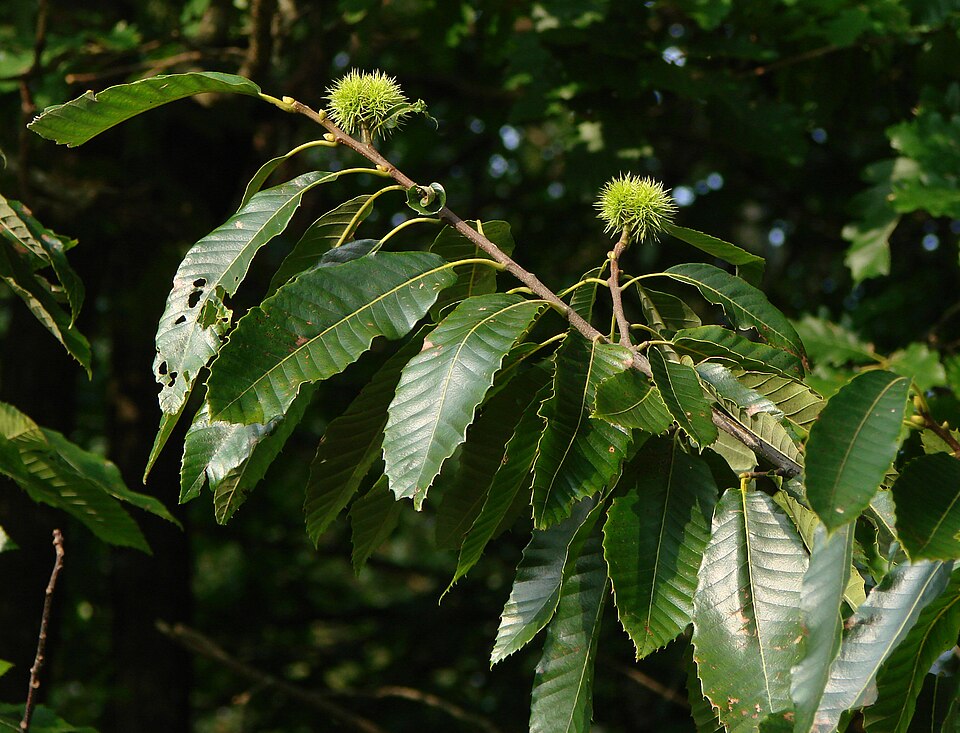
Photo: Wikimedia Commons
Chestnuts (Castanea mollissima, Chinese chestnut) suit zones 5 through 9 and need full sun with well-drained, slightly acidic loam. They are not self-fertile - plant two different varieties or get no nuts. Check the USDA zone planting dates on our planting calendar to time spring planting.
Choosing Varieties
When it comes to how to grow chestnuts, getting the details right makes all the difference.

Many homeowners find that how to grow chestnuts is easier than they expected once they know the basics.
Plant Chinese chestnuts, not American ones - the native species remains functionally extinct from blight and will not survive to bear, while the Chinese species resists the disease. Named varieties offer larger, sweeter nuts than seedlings: Colossal produces huge nuts and is widely planted; Bouche de Betizac is a European-Japanese hybrid with excellent flavor and fewer nuts per burr (easier peeling); Precoce Migoule ripens early, useful in shorter seasons.
Buy grafted trees of two different varieties for cross-pollination - seedlings vary in nut quality and take longer to bear. A reputable nut-tree nursery sells compatible pairs and can advise on pollination; this is a purchase worth making from a specialist, not a big-box store. Two trees are the minimum; three or four give better pollination and bigger harvests. If you also grow hazelnuts, you already understand the two-variety rule - chestnuts play by the same pollination law. Gardenia.net profiles chestnut varieties for home orchards.
When and How to Plant
Many homeowners find that how to grow chestnuts is easier than they expected once they know the basics.
The key to how to grow chestnuts is choosing the right approach for your space and budget.
Plant in spring after the last frost, spacing trees 30 to 40 feet apart - chestnuts grow into broad, spreading trees 40 to 60 feet tall and wide, so give them room. Choose a site with full sun and good air drainage; frost pockets damage the spring flowers and reduce the crop.
Dig a hole twice as wide as the root ball but no deeper, set the tree at the same depth it grew in the nursery, and water deeply. Chestnuts develop deep taproots, so transplant only young trees - large specimens establish poorly. Mulch three inches deep in a wide ring, keeping mulch away from the trunk, to hold moisture and suppress weeds while the young tree establishes. Stake only in windy sites. Clemson Cooperative Extension covers nut-tree spacing and siting. The Old Farmer's Almanac includes chestnuts among worthwhile nut trees for home plantings where space allows.
Planting Cheat Sheet
- Plant in spring, 30–40 feet apart, in full sun.
- Buy TWO different grafted varieties (not self-fertile).
- Choose Chinese chestnut - blight-resistant.
- Slightly acidic, well-drained loam; mulch and water well.
Soil and Sun
The key to how to grow chestnuts is choosing the right approach for your space and budget.
With a little planning, how to grow chestnuts can fit even a busy schedule.
Full sun for the heaviest crops, in well-drained, slightly acidic loam. Chestnuts tolerate a range of soils but demand drainage - roots in standing water decline. A pH between 5.5 and 6.5 is ideal; they are one of the fruit-and-nut trees that genuinely prefer acidic ground, unlike walnuts which want it richer and more neutral.
Do not plant in heavy, limy, or waterlogged soil - chestnuts simply will not thrive there, and no amount of care overcomes a bad site. If your ground is alkaline, chestnuts struggle; this is a tree for naturally acidic regions, which fortunately covers much of the eastern US. A soil test before planting is cheap insurance: if the pH is above 7, choose a different nut tree rather than fighting the soil for decades. Work compost into the planting area but skip the lime; feeding the soil's acidity, not fighting it, is the approach. The USDA PLANTS Database notes chestnut's soil preferences.
Watering and Feeding
With a little planning, how to grow chestnuts can fit even a busy schedule.
Before you start, it helps to understand how how to grow chestnuts works in real homes.
Water deeply the first two seasons so the taproot establishes - then taper off. Irrigate during dry spells in the first three years to size up the young trees; drought-stressed youngsters grow slowly and bear late. Once established, chestnuts are fairly drought-tolerant, though nut fill is better with steady moisture in dry summers.
Mulch young trees generously - it holds moisture, suppresses weeds, and feeds the soil as it breaks down. Feed lightly, if at all; a balanced fertilizer in spring helps young trees in poor soil, but mature chestnuts in decent ground need nothing. Too much nitrogen pushes soft growth at the expense of nuts. Pale, weak young trees may want feeding; established trees rarely do.
Care Through the Season
Before you start, it helps to understand how how to grow chestnuts works in real homes.
A good plan for how to grow chestnuts saves time, money, and frustration.
Prune off low branches to develop a clear trunk - this makes mowing under the tree possible and lifts the burrs (which are spiny) to a manageable height. Prune in late winter when the structure is visible, removing crossing branches and thinning crowded interior growth. Chestnuts need less pruning than most fruit trees; an open, natural form is fine.
Watch for chestnut weevil in the nuts - the larvae eat the kernels, leaving a tiny exit hole as the calling card. Prompt daily gathering reduces damage enormously, since weevils attack fallen nuts left on the ground; a nut picked up within hours of falling is usually clean, while one left for days is likely compromised. Good sanitation (no nuts left to rot under the tree) is the main control in home plantings, and it works - weevil pressure drops dramatically in orchards where every fallen nut is collected. Chestnuts are relatively low-maintenance once established - no spray schedule, no complicated training system, just annual pruning and harvest.
Because the trees are wind-pollinated, plant the varieties near each other - within 100 feet - and avoid siting where buildings block the breeze during bloom. The flowers are not showy (long, pale catkins), but the pollination they accomplish determines your fall harvest. If one variety consistently bears poorly while the other crops well, the poor bearer may be blooming out of sync - note the bloom dates for a season and replace with a better-matched variety if needed.
Living With the Burrs
Chestnut burrs are formidably spiny - harvesting means dealing with them. Wear heavy leather gloves, gather daily as the burrs split and drop, and use tongs or a nut wizard-style roller to collect without handling every burr. Keep the area under the trees mowed short so fallen nuts are easy to spot. Children and pets learn quickly to respect the burrs; site the trees away from play areas and paths where bare feet roam.
Harvest
A good plan for how to grow chestnuts saves time, money, and frustration.
For most people, how to grow chestnuts comes down to a few smart choices.
Expect nuts three to five years after planting grafted trees - fast for a nut tree. Harvest in fall as the spiny burrs split and drop: gather daily, wearing heavy gloves, before weevils find the nuts. Nuts left on damp ground mold quickly, and every day of delay feeds the weevil population.
Cure the nuts for about two weeks in a cool, airy spot before eating - curing sweetens them noticeably, converting starches to sugars the way curing sweetens winter squash. Spread them in a single layer, turn occasionally, and be patient; rushed nuts taste starchy and bland. Score the flat side of each nut with an X, then roast at moderate heat until the shells peel back; fresh-roasted chestnuts, eaten warm, are one of autumn's great pleasures. Properly cured and dried chestnuts keep for weeks refrigerated, or longer frozen.
Boiled chestnuts, peeled and added to stuffings and stews, are the traditional winter use - rich, sweet, and nothing like the bland canned kind. The Old Farmer's Almanac has chestnut roasting and storage tips.
Troubleshooting
For most people, how to grow chestnuts comes down to a few smart choices.
If you are new to how to grow chestnuts, start with the simplest option and build from there.
Tree flowers but sets no nuts. A single tree, or two of the same variety - chestnuts are not self-fertile. Plant two different grafted varieties near each other.
Young tree grows slowly. Drought stress, poor drainage, or alkaline soil. Water the first years, ensure drainage, and check pH - chestnuts want acidic ground.
Wormy nuts. Chestnut weevil. Gather daily, leave no nuts on the ground, and destroy infested nuts (do not compost them).
Cankers on the trunk. Could be blight on a susceptible tree - this is why you plant Chinese chestnut. On resistant varieties, cankers are usually minor; prune out affected wood.
Nuts are small. Seedling tree, drought during nut fill, or too many nuts for the tree's size. Grafted varieties, steady water, and patience (young trees size up with age) solve it.
Deer browse the young trees. Protect with tubes or fencing until the trunk is above browse height; deer love young chestnut shoots.
For gardeners in zones 5 through 9 with room for big trees and acidic soil, learning how to grow chestnuts brings back a taste of the old American forest - sweet, roasty nuts from tough, blight-resistant trees that ask little and give for generations. It is a legacy planting: the trees you plant today will feed your grandchildren, and their grandchildren after them, for a century or more. Plant two Chinese varieties, gather daily in fall with heavy gloves, and roast them fresh - there is nothing else quite like it in the home orchard.
References
If you are new to how to grow chestnuts, start with the simplest option and build from there.
When it comes to how to grow chestnuts, getting the details right makes all the difference.
USDA National Agricultural Library. (n.d.). Fruit and tree nut resources. U.S. Department of Agriculture. https://www.nal.usda.gov/
Missouri Botanical Garden. (n.d.). Castanea mollissima. https://www.missouribotanicalgarden.org/
Clemson Cooperative Extension. (n.d.). Chestnut. Clemson University. https://hgic.clemson.edu/
Old Farmer's Almanac. (n.d.). Growing nut trees. Yankee Publishing. https://www.almanac.com/
When it comes to how to grow chestnuts, getting the details right makes all the difference.
Was this guide helpful?

About My Garden US
The My Garden US editorial team writes practical, in-depth home and garden guides for American homeowners — tested advice, no fluff.