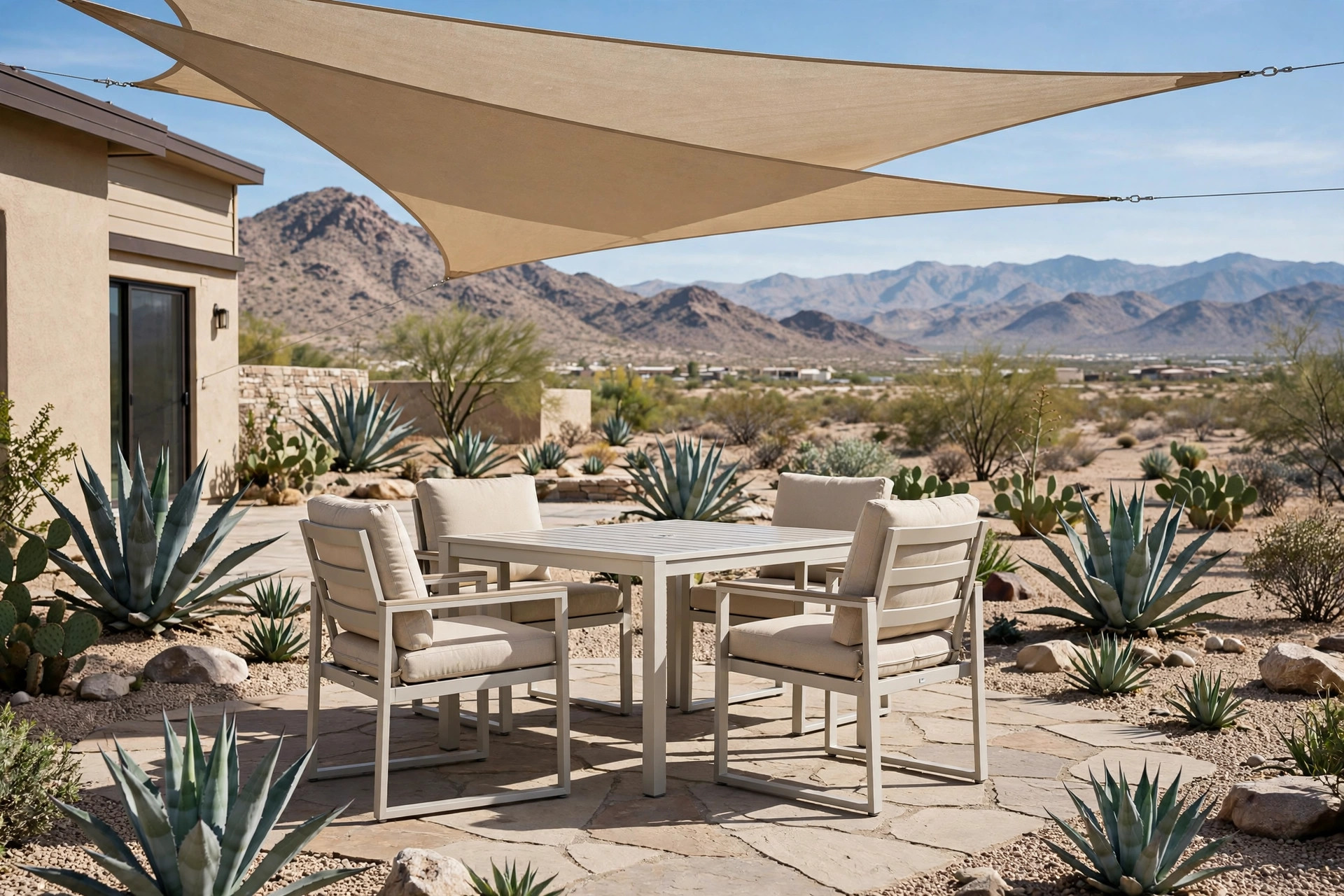

Summer in the desert is not a joke. From June to September, afternoon air in Phoenix, Las Vegas, and Tucson can sit above 105 degrees for days at a time. The sun beats down for fourteen hours. Surfaces get hot enough to burn skin. Most people learn this the hard way: they buy a nice-looking patio set in spring, and by August the cushions are faded, the finish is cracked, and the chairs are too hot to touch. This is why patio furniture for desert climate reviews matter. Reviews from buyers in hot, dry states tell the true story of how a set performs after one full summer, not just how it looks in the showroom.
The lesson is simple. Desert furniture is not the same as ordinary outdoor furniture. It must face three enemies at once: extreme heat, intense ultraviolet light, and very dry air. In this guide, you will learn which materials survive, which ones fail, what buyers report in their reviews, how much a good set costs, and how to keep it in shape for years.
Why Desert Heat Destroys Ordinary Patio Furniture
Heat does slow, quiet damage. Plastic resin softens and warps when it sits in direct sun day after day. Low-cost steel frames heat up like a stovetop and can cause real burns. Cheap wicker dries out, turns brittle, and snaps. Dark fabrics fade in a single season, and foam cushions break down when the temperature swings from 110 degrees at noon to 80 degrees at night.
Ultraviolet light is the other enemy. The desert sky offers almost no cloud cover, so UV exposure is far higher than in most parts of the country. UV breaks down paint, powder coating, and fabric dyes. A red cushion can turn pink by late July. Reviews from desert buyers repeat this warning again and again: buy for UV resistance first, and comfort second.
Dry air causes its own problems. Natural wood loses moisture fast in the desert and can split along the grain. Glue joints dry out and loosen. This does not mean wood is a bad choice. It means you must pick the right wood and oil it on a regular schedule.
What to Look for in Desert-Ready Patio Furniture: Patio Furniture for Desert Climate Reviews
When you read reviews, watch for the same points that experienced desert buyers raise. These are the traits that separate a set that lasts five years from one that lasts one.
Frame Materials That Survive
Powder-coated aluminum is the favorite frame material in desert reviews. It does not rust. It stays cooler to the touch than steel. It is light enough to move under shade during the hottest part of the day. Look for a thick, well-baked powder coat, because thin coatings chip and expose the metal beneath.
Wrought iron and steel have old-fashioned appeal and great wind resistance, which matters when desert gusts arrive. But they get very hot. If you choose iron, pick a light color and plan on cushions. Cast aluminum gives you the look of iron without the weight and with better heat behavior.
High-density polyethylene, often called HDPE lumber, gets strong reviews for desert use. It is made to imitate wood, but it never needs oiling and never splinters. Good HDPE sets carry long warranties against fading and cracking. Polywood is one well-known maker of this type of furniture, and buyers often cite it when they compare long-term results.
Fabrics, Weaves, and Finishes
Sunbrella and similar solution-dyed acrylic fabrics are the standard answer in reviews. The color is mixed into the fiber itself, not printed on top, so fading is far slower. A cushion that uses solution-dyed fabric can keep its color through several desert summers.
Avoid thin polyester prints and cotton blends. They look bright in the store and fade fast at home. Wicker should be all-weather resin wicker woven over aluminum, never natural rattan, which dries out and breaks in low humidity.
Light colors are a practical choice. A white or sand-colored table stays far cooler than a black one. Many reviewers say this single choice made the biggest difference in daily use.
Types of Patio Furniture That Work in Hot Climates
Desert buyers tend to choose from a few proven styles. Each has strengths worth knowing before you shop.
Deep-seating sets with thick cushions are popular for covered patios. Under a roof or shade sail, the cushions are shielded from direct sun, so the set lasts much longer. Reviews warn, however, that the same cushions fail quickly if the set sits in open sun.
Dining sets get heavy use in the desert during the mild months, from October through April. Cast aluminum dining sets are a safe pick: they resist heat, they are heavy enough for wind, and they wipe clean after dust storms. If you host large family dinners, an affordable outdoor dining table for eight can be a practical way to seat everyone without buying two sets.
Sling chairs and chaise lounges earn praise because they have no cushions to fade or soak up heat. The sling fabric is usually vinyl-coated polyester, which dries fast after a rare rain and stays cooler than foam. Mesh slings are the coolest option of all on a 110-degree afternoon.
Shade structures deserve a mention. Many reviewers say a cantilever umbrella or a shade sail did more for comfort than any chair upgrade. Shade cuts the surface temperature of furniture by twenty degrees or more, and it doubles the life of fabrics.
Cost and Price: What Reviews Say
Prices vary widely, and reviews help you see what the money buys. A basic four-piece resin conversation set often sells for 300 to 600 dollars. Buyers say these sets look fine at first but show wear after one hard summer. They suit renters and anyone who plans to replace furniture often.
Mid-range sets of 800 to 1,800 dollars form the heart of desert reviews. Powder-coated aluminum frames with solution-dyed cushions sit in this range. Buyers report three to five years of good service when the set is covered or shaded. This is the price band where most desert homeowners find the best value.
Premium sets of 2,500 dollars and up, from brands like Frontgate and similar makers, earn praise for build quality and long warranties. Reviewers say the finishes hold up better and replacement parts are easy to order. For a patio that gets daily use, the higher price often pays for itself.
Do not forget the cost of protection. A set of weatherproof patio furniture covers heavy duty adds 60 to 150 dollars but can add years to the life of any set. Reviewers who cover their furniture between uses report far less fading.
Care and Upkeep in a Desert Climate
Desert care is different from care in humid regions. You are not fighting mold. You are fighting sun and dryness.
Wash frames with mild soap and water once a month during summer. Dust and grit build up fast after windstorms, and grit scratches finishes when chairs are moved. A soft cloth is enough. Avoid pressure washers on wicker and powder coat, because high pressure can force water into seams and strip thin finishes.
Cover furniture whenever it is not in use. This one habit matters more than any product choice. A cover blocks UV and keeps surface temperatures down. Many reviewers buy their covers from the same store as the furniture; Lowe’s and Home Depot both stock covers sized for common sets.
Oil natural wood twice a year. Teak is the classic desert wood because it handles sun and dryness better than pine or cedar. A teak patio set maintenance tips guide can walk you through the oiling schedule step by step. Even oiled teak will turn silver-gray in the desert sun, which many owners like, but the oil keeps the wood from splitting.
Store cushions indoors or in a deck box during the hottest months if the set sits in full sun. Bring them out in the evening when the patio cools. This small effort is the difference between cushions that last two seasons and cushions that last six.
Safety in Extreme Heat
Desert furniture can be a safety hazard in ways that surprise newcomers. Metal tables and dark armrests can reach 160 degrees or more in direct sun. That is hot enough to cause a burn in seconds. Teach children not to sit on uncovered metal, and keep a light-colored outdoor rug under the seating area to cut heat.
Glass tabletops deserve caution. Tempered glass handles heat well, but a cheap glass top on a dark metal frame can expand and crack. Reviews occasionally report this failure after the first heat wave. Buying from a maker with a real warranty, such as those rated by Consumer Reports, gives you someone to call if a top fails.
Fire safety matters too. In dry desert regions, a stray spark from a grill or fire pit can land on a faded, dried-out cushion and smolder. Keep cooking equipment away from seating, and never leave a fire pit burning unattended. Consumer Reports publishes safety notes on outdoor products that are worth a read before summer begins.
Pets need thought as well. Dogs will lie on a hot patio and burn their paws on dark decking or metal chair feet. Provide a shaded spot with a cool surface, and check the temperature of any surface your pet touches.
Frequently Asked Questions
What is the best material for patio furniture in a desert climate? Powder-coated aluminum and HDPE lumber get the best reviews. Aluminum stays cooler than steel, resists rust, and handles wind. HDPE lumber never needs oiling and resists fading and cracking. Both do well under covers during the hottest months.
Do I need special cushions for desert heat? You need solution-dyed acrylic fabric, the kind sold under names like Sunbrella. It resists fading far better than printed polyester or cotton. Store cushions out of the sun when not in use, and they will last several seasons even in Phoenix or Palm Springs.
How do I keep patio furniture cool in 110-degree heat? Shade is the answer. A patio cover, shade sail, or large umbrella drops surface temperatures by twenty degrees or more. Light-colored furniture also stays cooler than dark furniture. Many reviewers move their set under shade for the afternoon and bring it back out in the evening.
Will wicker furniture survive in the desert? All-weather resin wicker over an aluminum frame does well. Natural rattan does not. The dry air makes natural fibers brittle, and they break within a season or two. Check reviews for the exact wicker type before you buy.
Where can I find reliable patio furniture for desert climate reviews? Start with buyer reviews from hot states on retailer sites like Wayfair and IKEA, where you can filter for reviews from Arizona, Nevada, and Texas. Independent test labs like Consumer Reports add measured results. Home and garden guides at The Spruce and HGTV round out the picture with care and styling advice.
How long should desert patio furniture last? A mid-range aluminum set with good cushions should give three to five years with covers and shade. Premium sets can last eight years or more. Cheap resin sets may last only one summer. Reviews agree that covers and shade matter more than brand names for lifespan.
A Final Word
Desert patios reward careful buyers. The sun is honest: it shows every weakness in a season. Read the reviews from people who live with the heat, choose aluminum or HDPE frames, insist on solution-dyed fabrics, and cover everything when you are done. Do that, and your patio will be the cool, welcoming spot it was meant to be, even when the thermometer passes 110.
References
Consumer Reports. (n.d.). Product reviews and ratings. https://www.consumerreports.org Frontgate. (n.d.). Outdoor furniture and decor. https://www.frontgate.com HGTV. (n.d.). Home and garden ideas. https://www.hgtv.com IKEA. (n.d.). Home furnishings. https://www.ikea.com Lowe’s. (n.d.). Home improvement products. https://www.lowes.com Polywood. (n.d.). Outdoor furniture. https://www.polywood.com The Home Depot. (n.d.). Home improvement products. https://www.homedepot.com The Spruce. (n.d.). Home and garden advice. https://www.thespruce.com Wayfair. (n.d.). Furniture and home goods. https://www.wayfair.com
Was this guide helpful?

About Jennifer Lee
The My Garden US editorial team writes practical, in-depth home and garden guides for American homeowners — tested advice, no fluff.
You May Also Like

How to Clean Polywood Outdoor Furniture: A Simple Guide
February 5, 2026 0 views
Outdoor Serving Cart With Cooler Reviews: How to Pick the Right One
September 12, 2026 0 views
How to Clean Wicker Patio Furniture
April 16, 2026 0 views