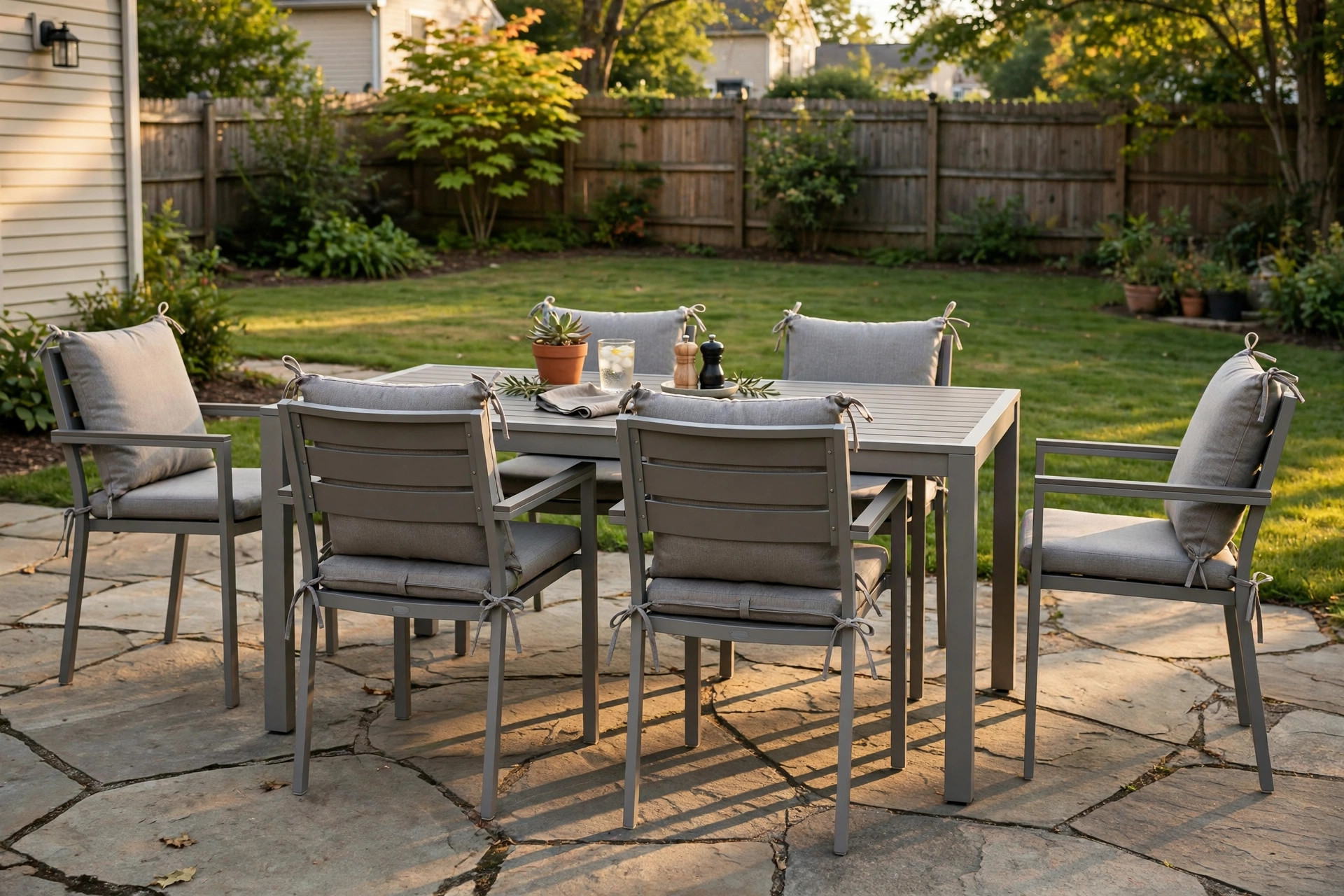

An outdoor dining chairs stackable set of six is one of the most useful purchases a household can make for a patio, deck, or backyard. Six chairs seat a family with room for guests. They stack into one neat pile when the meal is over. They free up floor space, and they go back out again in seconds when company arrives. This guide explains what these sets are, how to pick a good one, what they cost, and how to keep them in shape for years.
Why Six Stackable Chairs Matter
Most American families eat outside at least part of the year. A four-chair set often leaves two people standing when neighbors drop by. An eight-chair set crowds a small deck. Six hits the middle. It fits a standard rectangular or round table. It gives each diner elbow room. And the stackable design is what makes six chairs practical. Six loose chairs take up a large corner of the garage. Six stacked chairs take up the floor space of one.
Stacking also keeps the chairs in better condition. A chair that stands in rain all summer fades, swells, or rusts, depending on its material. A stacked set can move under a roof or into a shed in one trip. That single habit adds years to the life of the set.
What to Look For When You Choose: Outdoor Dining Chairs Stackable Set of Six
Not all sets are built the same. A few details separate a set that lasts from a set that sags by the second summer.
Material Choices
The most common materials are steel, aluminum, plastic resin, wicker, and wood. Each has trade-offs.
Powder-coated steel is strong and cheap. It holds heavy diners without flexing. Its weakness is rust. If the coating chips and the bare metal sees rain, rust follows. Check that welds look clean and coated.
Aluminum is lighter than steel and will not rust. It is the best pick for people who plan to move chairs in and out often. It dents more easily than steel, but it shrugs off wet weather.
Resin, a heavy outdoor plastic, is the easiest material to clean. A hose and a brush are enough. Good resin chairs resist fading in sun. Cheap resin turns chalky and brittle after a few seasons in strong light.
Wicker, now mostly a weatherproof resin weave over an aluminum frame, looks warm and classic. It suits porches and covered patios. Full sun and standing water are harder on it, so covered use is best.
Wood, usually teak or eucalyptus, looks beautiful and ages to a silver gray. It is heavy, so stacking wooden chairs takes effort. Wood needs oil or sealer once a year to keep its color and stop small cracks.
Size and Comfort
Seat height for dining chairs should run about 17 to 19 inches from the floor. That height pairs with tables 28 to 30 inches tall. Seat width of 17 to 20 inches gives an adult enough room. Seat depth near 16 to 18 inches supports the legs without pressing behind the knees.
Back height matters for comfort. A low back suits casual meals. A higher back supports long evening talks. Armrests feel restful but add width, and armed chairs stack taller. Many buyers mix four plain chairs with two armed ones at the table ends.
Sit in the chair before buying, if you can. A chair that looks fine in a photo may have a flat seat or an edge that digs into legs. Comfort is the test no picture can replace.
Types of Sets on the Market
Shoppers will find four main styles.
The first is the simple metal bistro set style: lightweight, often sold with a small table, and easy to stack tall. It suits apartments and small balconies.
The second is the sling style. A fabric sling hangs between two side frames. The sling gives a little, which many people find comfortable without cushions. Slings dry fast after rain. Sun is their main enemy, and replacement slings are usually easy to order.
The third is the classic dining chair shape in resin or wood. It looks like an indoor dining chair built for weather. It pairs well with larger tables and a best round patio dining set for four, if you plan to split seating between two tables.
The fourth is the cushioned set. The frames are metal or wicker, and thick cushions add comfort. Cushions make meals longer and kinder to backs. They also demand dry storage. A stack of six chairs with six cushions is really two storage jobs, not one.
When choosing among styles, think about how you eat outside. Quick breakfasts suit simple chairs. Long holiday dinners suit cushions. A household that hosts often may pair its six chairs with an affordable outdoor dining table for eight, keeping two extra seats for crowded evenings.
Cost and Price
Prices vary wide by material and build. A basic resin set of six can run near one hundred dollars on sale. A mid-range powder-coated steel or aluminum set often runs between two hundred and five hundred dollars. Teak or high-end wicker sets of six can pass a thousand.
A few rules help you read price tags. First, price per chair tells more than the total. Divide the total by six to compare sets fairly. Second, watch what is included. Some sets include cushions, some do not. A set that looks cheap may need another hundred dollars of cushions to sit well. Third, check the warranty. A one-year warranty is standard. Three or five years on the frame suggests the maker trusts its own build.
Sales cluster around holidays: Memorial Day, the Fourth of July, and Labor Day clear out inventory. Fall clearance can drop prices sharply, though color and style choices thin out. Buying early in spring gives the best selection at full price.
Shoppers on a tight budget should not overlook secondhand sets. Thrift stores, estate sales, and local online listings often carry sturdy metal or teak chairs at a fraction of retail. Check each chair for wobble, rust at the welds, and cracked resin before paying. Replacement feet, touch-up paint, and new sling fabric are cheap and widely sold, so a sound frame is what matters most. A used set with solid bones and a little cleaning often outlasts a brand-new cheap set.
When you compare prices, add in the hidden costs. Delivery fees for bulky sets run high, and assembly time has value too. A set that ships in one box with simple assembly may beat a slightly cheaper one that needs an afternoon with a wrench.
Care and Upkeep
Outdoor chairs last longest with small, regular care. A monthly rinse with a garden hose removes pollen and dust. A bucket of warm water with mild dish soap handles most stains. Skip bleach and harsh solvents; they fade finishes and weaken plastics.
Metal frames deserve a yearly check. Look for chips in the coating, especially at feet and joints. Touch up small chips with outdoor paint or a clear rust inhibitor before rust starts. A coat of car wax on aluminum once a season sheds water and keeps the shine.
Wooden chairs need oil or sealer once a year, applied on a dry day. Sand lightly before oiling so the finish soaks in even. Let each coat dry fully before stacking the chairs, or the faces will stick together.
Resin and wicker want mainly shade and rinsing. Do not stack resin chairs in full sun for weeks on end; heat can warp lower chairs under the weight. Move the stack into shade or under cover when it is not in use.
Cushions need the most attention. Store them dry, indoors if possible. When you leave them out, stand them on edge so water drains. Wash removable covers in the machine on gentle, and let them air dry.
Good covers save work. Weatherproof patio furniture covers heavy duty options exist in fitted sizes for stacked chair piles, and a cover cuts cleaning time in half across a season.
Safety
Outdoor dining chairs are simple objects, but a few safety points are worth stating.
Check weight ratings. Most adult outdoor chairs are rated for 250 pounds, though many hold more. Heavy-duty models rate to 300 or 350 pounds. A chair that flexes or rocks under a guest is past its safe life.
Stacking has its own risks. A stack of six chairs is heavy, especially in steel. Lift with the knees, not the back, and set the stack on level ground. Keep stacks out of the path of children and pets; a tall stack can tip if climbed.
Check feet and caps. Plastic feet keep metal off wet patios and stop sliding. Replace missing feet so the chair does not wobble or scratch decks.
Place chairs away from fire pits, grills, and heaters. Resin melts near heat, and fabric slings can catch sparks. A few feet of distance removes the risk.
For families with small children, look for rounded edges and stable bases. Teach children not to rock back on two legs. The Consumer Product Safety Commission publishes guidance on safe outdoor furniture use that is worth a read.
Frequently Asked Questions
How much space does a stacked set of six need?
About the footprint of one chair, roughly two feet by two feet, and four to five feet tall depending on the model. Measure your storage spot before you buy, and check the maker’s stated stacked height.
Can stackable chairs stay outside all winter?
Most can, but they do better covered or stored. Aluminum and good resin handle winter well. Steel needs dry storage to avoid rust at chipped spots. Wood benefits most from indoor storage. If storage is tight, a fitted cover is the next best thing.
Do I need cushions?
Not always. Sling chairs and shaped resin seats are comfortable bare. Flat wooden or metal seats are kinder with a cushion. If you buy cushions, choose ones with ties and quick-dry filling, and plan where to store them.
How do I stop metal chairs from rusting?
Keep the coating intact. Touch up chips as soon as you see them. Store the chairs dry. Do not let them sit in puddles. A yearly coat of wax on aluminum and rust inhibitor on steel joints goes a long way.
What table size fits six chairs?
A rectangular table 60 to 72 inches long seats six comfortably. A round table 48 to 60 inches across does the same. Leave about 24 inches of table edge per diner, and two to three feet of walking space behind each chair.
Are expensive sets worth it?
Often, yes, if the price pays for thicker metal, better welds, or real teak. A cheap set replaced every three years costs more over a decade than one good set. But a mid-priced aluminum set can last a decade with care, so the top tier is not required for a good result.
A Final Word
An outdoor dining chairs stackable set of six is a small investment that pays back in easy summers. Choose a material that matches your climate and your patience for upkeep. Check sizes against your table. Store the stack dry. Do those three things, and six chairs will serve hundreds of meals without complaint.
Retailers like IKEA and Wayfair carry wide selections in every style and price band, and Consumer Reports tests outdoor furniture so you can compare models before you buy.
References
IKEA. (n.d.). Outdoor furniture. https://www.ikea.com Wayfair. (n.d.). Patio furniture. https://www.wayfair.com Consumer Reports. (n.d.). Outdoor furniture buying guide. https://www.consumerreports.org U.S. Consumer Product Safety Commission. (n.d.). Home safety guidance. https://www.cpsc.gov
Was this guide helpful?

About James Carter
The My Garden US editorial team writes practical, in-depth home and garden guides for American homeowners — tested advice, no fluff.
You May Also Like

Best Outdoor Floor Cushions for Kids
June 14, 2026 0 views
Best Outdoor TV Cover for Patio: A Complete Buyer’s Guide
August 7, 2026 0 views
Best Outdoor Bench for Garden Reviews: A Practical Buyer’s Guide
September 19, 2026 0 views