
Introduction
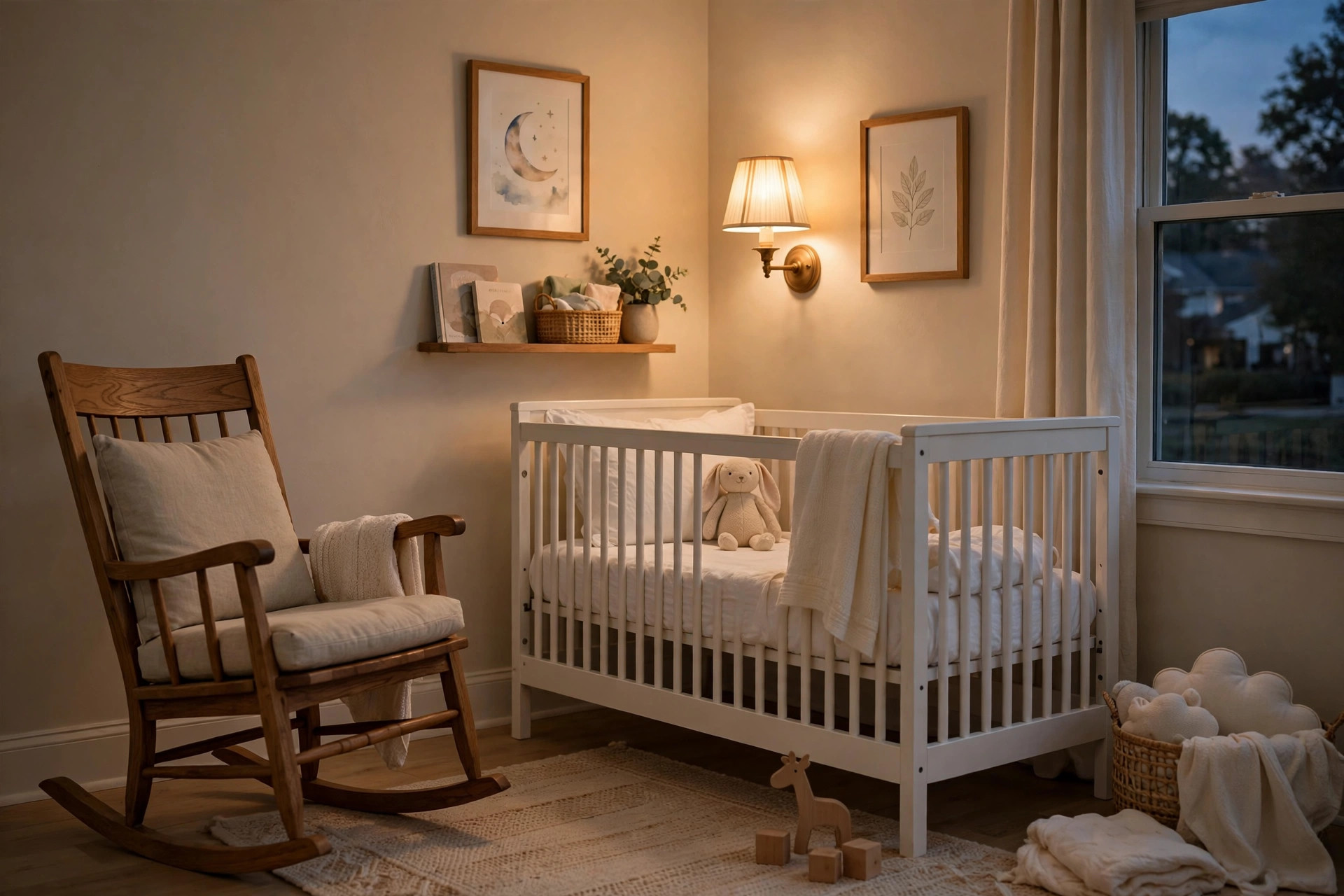
A nursery wall sconce for soft ambient light is one of the best tools a new parent can buy. It gives just enough light for night feedings and diaper changes. It does not wake the baby with a hard glare. It does not wake the parent either. Many parents learn this lesson the hard way. They turn on the bright ceiling light at two in the morning. The baby cries. The room feels cold and stark. A soft wall sconce changes the whole mood of the room. It makes the nursery feel calm at night. It gives the parent a place to sit, feed, and rock in peace. This guide will walk you through why soft light matters, how to choose the right sconce, what types are out there, what it costs, and how to keep it safe.
Why Soft Light Matters in a Nursery: Nursery Wall Sconce for Soft Ambient Light
A baby’s sleep is fragile. A bright light can wake a sleeping child in seconds. It can also make it harder for the child to fall back asleep. The same is true for the parent. A strong overhead light at night tells the brain it is time to wake up. This makes the return to bed harder for everyone. A nursery wall sconce for soft ambient light solves this problem in a simple way. It puts a gentle pool of light exactly where you need it. The rest of the room stays dark and quiet.
Soft ambient light also helps with the daily rhythm of the baby. Doctors have long noted that light plays a part in sleep patterns. A calm, dim room at night teaches the baby the difference between night and day. Over time, this helps the child sleep in longer stretches. A wall sconce is perfect for this because it stays in one place. The light is the same every night. The baby learns that this soft glow means rest and comfort.
There is also a comfort factor for the parent. Night feedings can last an hour or more in the early months. Sitting in a dark room is not practical. Sitting under a bright light is miserable. A soft sconce gives enough light to see the baby’s face, check the latch, and read the clock. It does all this without hurting tired eyes. Many parents say the room felt warmer and calmer the day they added a sconce.
Finally, a sconce adds to the look of the room. A pretty sconce on the wall adds to that care. It becomes part of the room’s design by day and a working light by night.
What to Look for When You Choose
Brightness and Color Temperature
The most important trait of a nursery sconce is that it can stay dim. Look for a fixture that works with a dimmable bulb or has a built-in dimmer. Many models now come with touch dimming or a pull chain with several levels. You want a low glow for sleeping times and a slightly stronger glow for diaper changes.
Color temperature matters too. It is measured in kelvin. Warm white light falls near 2700K. This is the color of an old-style lamp bulb. It feels soft and restful. Cool white light near 4000K or higher feels like daylight. It is too harsh for a nursery at night. Choose a bulb rated at 2700K or lower. Some bulbs go down to 2200K, which gives a warm amber tone. That is a fine choice for a nursery wall sconce for soft ambient light.
Safety Ratings and Materials
The fixture must be safe around children. Look for a UL or ETL listing on the product. This shows the fixture passed standard safety tests. For more on nursery safety rules, the federal guidance at the Consumer Product Safety Commission is a useful starting point. Choose shades made of fabric, metal, or glass that will not melt or crack with heat. The shade should be closed or shielded on top so a toddler cannot drop a toy inside the fixture or touch a hot bulb. Corded plug-in models should have cords routed well out of reach, ideally behind furniture or inside a cord cover.
Mounting and Wiring
There are two main kinds of sconce. Hardwired sconces connect directly to the house wiring. They need a wall switch box and some basic electrical work. They look clean because no cord shows. They are also fixed in place. Plug-in sconces mount to the wall with screws or brackets and plug into a nearby outlet. They are easy to move and easy to install. They do have a cord to manage. Many parents choose plug-in models for a nursery because they require no electrician. If you plan a full room remodel, a hardwired sconce with a wall dimmer is a fine long-term choice. Retailers such as The Home Depot and Lowe’s carry both types in their nursery lighting sections.
Types and Styles of Nursery Sconces
The range of styles is wide. The right one depends on the look of your room.
A swing-arm sconce is a favorite for nursing chairs. The arm pulls out from the wall and moves the light where you need it. It is a good match for a nursery glider setup. When the feeding is done, you push the arm back flat against the wall. This type is practical and easy to live with.
A shaded sconce looks like a small lamp mounted on the wall. The fabric shade softens the light and spreads it evenly. Linen shades in white, cream, or gray fit most nursery color schemes. These give the most classic look.
An up-light sconce sends light toward the ceiling, which bounces down as a soft, even wash with no direct glare. A down-light sconce sends light downward onto a chair or changing table, which helps during diaper changes while the rest of the room stays dark.
A modern globe or orb sconce uses a frosted glass ball. The glow is even and calm. These suit a modern nursery with clean lines. Inspiration for styles can be found in the nursery lighting ideas at The Spruce, which covers both classic and modern options.
For families who want a smart setup, some sconces pair with a plug-in smart dimmer. You can lower the light from your phone without leaving the chair.
Cost and Price
A nursery wall sconce for soft ambient light can fit most budgets. A basic plug-in sconce with a fabric shade costs between 25 and 60 dollars. These are simple, safe, and do the job well. Mid-range models with dimmers, swing arms, or nicer finishes run from 60 to 150 dollars. High-end designer sconces from specialty shops can cost 150 to 400 dollars or more. These often have better materials and finer details.
Keep the full cost in mind. A plug-in model has no install cost. A hardwired model may need an electrician. That can add 100 to 250 dollars depending on your area and the state of your wiring. The bulb is a small added cost. A good LED bulb lasts for years and costs little to run.
For a first nursery, the 40 to 80 dollar range is the sweet spot. You get a safe, dimmable, good-looking fixture without overspending.
Where to Place Your Sconce
Placement makes a big difference. The best spot is beside the nursing or rocking chair. Mount it at about shoulder height when seated, roughly 48 to 55 inches from the floor. This puts the light near your hands and the baby without shining in anyone’s eyes. If you pair the sconce with a rocking chair for small nursery spaces, the two become the heart of your night routine.
A second good spot is above or beside the changing table. A soft down-light there lets you see clearly during changes. Keep the fixture well out of the baby’s reach. As the child grows and stands in the crib, anything near the crib becomes a target. Mount sconces high enough and far enough that a curious toddler cannot grab or pull them.
Some parents place a sconce on each side of a crib for a balanced look. This is fine for design, but think about function first. The light near the chair is the one you will use every night. If you only buy one, put it by the chair. A pair of blackout curtains for the nursery also pairs well with a dim sconce, since together they give you full command of the room’s mood.
Installation Basics
A plug-in sconce is a simple job. You will need a pencil, a level, a drill or screwdriver, and the mounting hardware that comes in the box. Mark the spot on the wall and use a level so the fixture hangs straight. Drive in the anchors or screws, hang the fixture, and plug in the cord. Route the cord down the wall and behind furniture. A stick-on cord cover makes the run neat and keeps little hands away from it.
A hardwired sconce is a bigger task. Turn off the power at the breaker before you touch any wires. If a wall box already exists, the job is short. Connect the wires by color, mount the bracket, and attach the fixture. If there is no box, most parents hire an electrician. It is fast work for a professional and it keeps the home’s wiring safe.
For more step-by-step lighting guidance, the project articles at Bob Vila cover both plug-in and hardwired fixtures. The health site What to Expect also has practical notes on setting up a calm nursery for sleep.
Care and Upkeep
A wall sconce needs little care. Dust the shade once a month with a dry cloth or a soft brush. Fabric shades collect dust, which dulls the light over time. A quick wipe keeps the glow bright. Glass shades can be wiped with a damp cloth. Always let the bulb cool before you touch it.
Check the cord and plug twice a year. Look for wear, cracks, or loose prongs. If anything looks worn, replace the cord or the fixture. Check the mounting screws once a year as well. A firm tug should show no movement.
Replace the bulb when it starts to flicker or dim. Use the same warm color temperature as before. Keep a spare bulb in the nursery drawer so you are never stuck without light at night.
Safety
Safety comes first in any nursery. The Consumer Product Safety Commission reminds parents to keep all nursery products in good repair and out of a child’s reach. Mount the sconce high enough that a standing toddler in the crib cannot touch it. Keep cords behind furniture or inside covers so they cannot become a strangulation risk. Never run a cord across the crib or the changing table.
Use LED bulbs. They stay cool to the touch, which lowers the burn risk if a child ever reaches the shade. Make sure the shade is made for the bulb size you use. An oversized bulb inside a small shade can trap heat. Follow the wattage limit printed on the fixture.
Keep the fixture away from curtains, bedding, and other soft goods. If you use a plug-in model, plug it into a grounded outlet and do not overload the outlet with adapters. Pediatric health guidance from HealthyChildren.org stresses a safe sleep area; lighting should support that goal, not add new risks.
Frequently Asked Questions
Is a wall sconce better than a table lamp for a nursery?
A sconce is fixed to the wall, so it cannot be knocked over. It keeps the side table clear for bottles, books, and a phone. It also directs light more precisely where you need it.
What brightness level is best for night feedings?
Aim low. A glow of about 100 to 200 lumens is enough to see by without waking the baby. A dimmer is the best tool here. You can turn the light up for a diaper change and turn it back down for feeding and rocking.
Can I use a smart bulb in a nursery sconce?
Yes, as long as the fixture accepts standard bulbs. A smart bulb lets you dim the light and change its warmth from your phone. Set a schedule so the light drops to its lowest setting after bedtime.
Should the sconce match the rest of the nursery decor?
It helps, but function comes first. A white or cream shade fits nearly any theme, from woodland to modern. Many parents also pair the lighting with a nursery night light with a dimmer for extra flexibility during the first months.
Are plug-in sconces safe for a baby’s room?
Yes, when they are installed with care. Mount the fixture firmly. Route the cord where the child cannot reach it. Use a cord cover for a clean look. Choose an LED bulb so the fixture stays cool. These steps make a plug-in sconce just as safe as a hardwired one for nursery use.
How many sconces does a nursery need?
One good sconce by the nursing chair covers most needs. A second sconce over the changing table is a nice extra. More than two is rarely needed in a small room. It is better to have one well-placed dimmable sconce than three bright ones.
A Final Word
A nursery wall sconce for soft ambient light is a small purchase with a large effect. It makes night feedings calmer. It protects the sleep of both baby and parent. It adds warmth and style to the room. Choose a dimmable model with warm light. Mount it by the chair, out of the child’s reach. Keep the cord tidy and the bulb cool. With those simple steps, you will have a light you use every single night for years. Few nursery items earn their keep this well.
References
American Academy of Pediatrics. (n.d.). HealthyChildren.org. https://www.healthychildren.org Bob Vila. (n.d.). Home improvement advice. https://www.bobvila.com Lowe’s. (n.d.). Home improvement products. https://www.lowes.com Pottery Barn Kids. (n.d.). Kids furniture and decor. https://www.potterybarnkids.com The Home Depot. (n.d.). Home improvement products. https://www.homedepot.com The Spruce. (n.d.). Home and garden advice. https://www.thespruce.com U.S. Consumer Product Safety Commission. (n.d.). Product safety information. https://www.cpsc.gov What to Expect. (n.d.). Pregnancy and parenting guidance. https://www.whattoexpect.com
Was this guide helpful?

About James Carter
The My Garden US editorial team writes practical, in-depth home and garden guides for American homeowners — tested advice, no fluff.
You May Also Like

Choosing the Right Nursery Pendant Light for Ceiling Decor
February 19, 2026 0 views
Nursery Glider Replacement Cushions for Comfort: A Parent’s Guide
May 7, 2026 0 views
Best Nursery Curtains for Light Blocking Naps
August 11, 2026 0 views