
Introduction
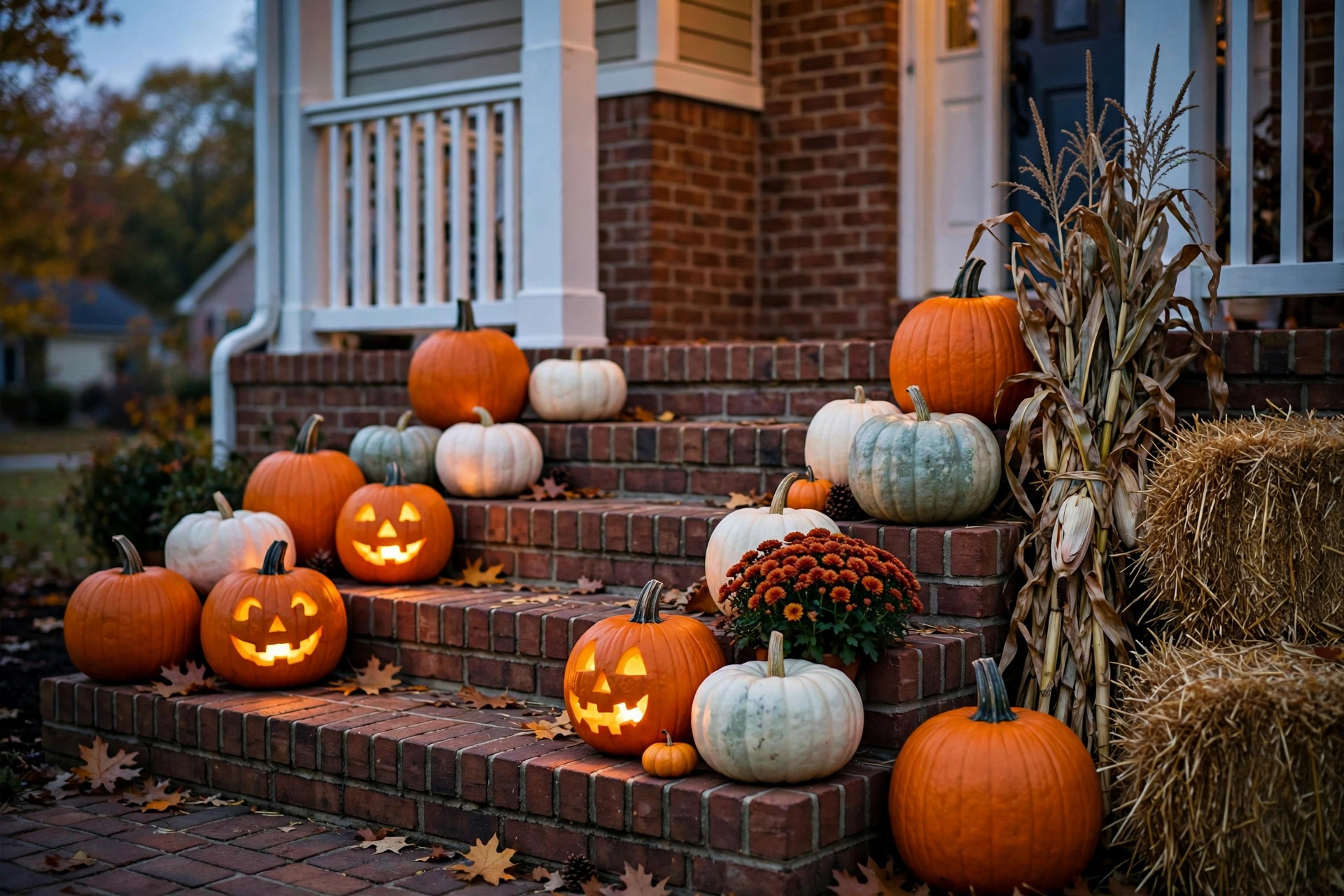
Halloween pumpkin decorations for porch steps USA families choose each fall turn an ordinary entryway into a warm seasonal welcome. Long before the candy bowl comes out, the front steps set the mood for trick or treat night. A row of pumpkins, large and small, tells visitors that the house behind them takes part in the fun of the season.
The porch is the first place a guest meets. It is also the last place seen when they leave. That is why so many American homes give their front steps special care in October. Some families stack real pumpkins in piles by the door. Others prefer pumpkins made of plastic or foam that never rot. Many mix the two. A good display needs no great skill and no large sum of money. It needs only a little planning and a clear eye for color and shape.
This guide walks through the choices in plain order. It covers why the steps matter, how to pick pumpkins, what styles exist, what they cost, how to keep them fresh, and how to keep the display safe. By the end, any reader should be able to build a porch display that looks fine from the street and holds up through the night of the thirty first.
Why the Porch Steps Matter at Halloween: Halloween Pumpkin Decorations for Porch Steps Usa
The porch steps are the center of the Halloween stage. Children walk up them to ring the bell. Neighbors glance at them as they pass. A plain bare step says nothing. A step dressed with pumpkins says that the house is open, friendly, and ready for the night.
Psychology aside, there is a practical reason too. Steps give a natural frame. They rise in tiers, and each tier can hold a different size or color of pumpkin. The eye moves from the ground to the door in a steady climb. A gardener might think of it as a kind of terrace planting, only the plants are orange and round.
Porch steps also catch the late October light. The low sun of autumn warms orange tones and deep shadows at the same time. A display that looks flat in a shop will look rich and full on real steps in the evening sun. Add a warm lantern or a string of small lights, and the steps will carry the whole front of the house.
Many towns now hold informal porch contests. Streets compete for the best block. Even where no contest exists, a dressed porch lifts the whole neighborhood. It is a small act of care that costs little and gives much.
How to Choose Pumpkin Decorations for Porch Steps
Choosing pumpkins starts with a simple measure: know your steps. Count how many steps you have and measure the depth of each tread. A deep porch step can hold a large pumpkin of fifteen inches across. A shallow step does better with medium and small sizes. Leave room for feet. Guests must still climb safely in the dark.
Real Pumpkins or Faux Pumpkins
Real pumpkins are the classic choice. They smell of autumn, they feel honest in the hand, and they cost less at the start of the season. Their weakness is time. A cut pumpkin lasts about a week in warm weather. Even an uncut one will soften after a few weeks. In the South, where October days can still reach seventy degrees, this matters.
Faux pumpkins made of plastic, resin, or foam solve the time problem. They keep their shape for years. Many look nearly real from a few feet away. They can be lit with small electric lights instead of real candles, which is safer. Their weakness is cost. A single good faux pumpkin may cost as much as a dozen real ones.
Most homes settle on a mix. Real pumpkins fill out the bulk of the display. A few faux pumpkins anchor the scene and can be used again next year. This mix gives the best of both worlds, as the fine outdoor holiday styling ideas found across the country often show.
Size, Shape, and Color
Look for variety. A row of identical round orange pumpkins looks flat. Mix sizes from small pie pumpkins of four inches to large ones of a foot or more. Mix shapes too. Tall pumpkins, squat pumpkins, and the bumpy warted kinds all add interest.
Color is the second tool. The classic orange is the base, but white pumpkins, called ghost pumpkins or lumina, add a clean contrast. Green gray heirloom kinds add depth. A few dark green or pale yellow gourds scattered among the orange will make the whole display richer. Small gourds, corn stalks, and bales of hay are natural partners.
When you shop, turn each pumpkin in your hand. Check the bottom for soft spots. Lift it and feel its weight. A heavy pumpkin for its size is a sound one. A light, hollow feeling often means the flesh has begun to dry or rot.
Styles and Layouts for Porch Steps
There is no single right style. The best choice depends on the house and the family. Below are five layouts that work well on American porches, from simple to bold.
The Classic Stack
Line each step with three to five pumpkins, largest at the bottom and smallest at the top. Keep the line close to the rail or the wall so the center of each step stays clear for feet. This layout suits narrow porches and looks tidy from the street. It takes about twelve pumpkins for a three step porch.
The Harvest Pile
Group pumpkins in loose piles at the base of the steps and on the wide landing by the door. Mix in corn stalks tied with twine, a hay bale, and some mums in pots. This look is full and farmhouse warm. It suits wide porches and brick fronts. Be careful not to block the path.
The Lantern Row
Place a carved jack o lantern on each step, one per step, with a battery light inside each. When night falls, the steps glow in a steady line. This is the most striking look for the actual night of Halloween. Carve simple faces so the light reads well. The carving and lighting tips shared by many home guides suggest cutting the bottom of the pumpkin open rather than the top, which keeps the stem intact and the light more even.
The White and Neutral Scheme
Use only white, cream, and pale green pumpkins. Add silver or gray lanterns and a natural wreath on the door. This calm scheme suits modern homes and gray or blue siding. It stands out on a street of orange displays because it is different.
The Friendly Monster Theme
Build a theme around one large pumpkin carved as a face, with smaller pumpkins as its friends around it. Add a witch hat on one, a pair of black cat figures, and a welcome mat. Children love this look. Keep the faces friendly rather than frightening if your street has many small children.
Cost and Price Guide
Pumpkin decor prices in the United States follow a clear pattern. Early October prices are highest. Prices fall in the last ten days before Halloween as sellers clear stock. Faux decor prices stay steady but drop in November sales.
– Small real pumpkins, under six inches: two to five dollars each. – Medium real pumpkins, six to twelve inches: five to twelve dollars each. – Large real pumpkins, over twelve inches: twelve to thirty dollars each. – White or heirloom pumpkins: often a dollar or two more than orange. – Small gourds and mini pumpkins: one to three dollars each, often sold in bags. – Basic plastic faux pumpkins: eight to twenty dollars each. – High detail resin faux pumpkins: twenty to fifty dollars each. – Corn stalks, tied bundles: five to fifteen dollars per bundle. – Hay bales, small: eight to twenty dollars each. – Battery tea lights and small LED lights: five to fifteen dollars for a pack.
A full three step porch display of real pumpkins can be built for thirty to eighty dollars. A display built mostly of quality faux pieces may run one hundred fifty to three hundred dollars, but it will last many seasons. The large home stores, whose seasonal decor departments stock wide ranges each fall, often beat small shops on price for the basics. Craft stores like the well known craft retailer carry more unusual colors and finishes for those who want something different.
Shop early for the best choice of shapes. Shop late for the best prices. If you buy real pumpkins early, keep them in a cool dry place until the display goes up.
Care and Upkeep Through the Season
Real pumpkins need some care to look good through the month. Start by washing them. Wipe each pumpkin with a damp cloth and let it dry in the air. Some gardeners wipe the skin with a weak mix of water and household bleach, one tablespoon per gallon, to slow mold. Let the pumpkin dry fully before it goes on the steps.
Keep pumpkins off wet surfaces. A wet step or a muddy porch will rot the bottom of a pumpkin fast. Set pumpkins on a small board, a mat, or a saucer. Turn them a quarter turn every few days so no one side sits in damp shade too long.
Shade helps. Direct sun ages pumpkins fast, even in October. If your porch faces south and gets strong sun, place the largest pumpkins under the overhang and the smaller ones where the shade is deepest. Morning sun is gentler than afternoon sun.
Carved pumpkins need more care. Once a pumpkin is cut, it dries out. Rub a thin layer of petroleum jelly on the cut edges to slow the drying. Keep carved pumpkins in the shade during the day and light them only in the evening. A carved pumpkin in warm weather may last five to seven days. Carve them in the last week of October so they are fresh for the holiday.
Faux pumpkins need only a quick wipe with a damp cloth at the start and end of the season. Store them in a dry place over winter, away from heavy items that could dent them. Many families keep them in the same boxes they came in.
When the season ends, real pumpkins should not go in the trash if the town offers another way. Many cities now run pumpkin compost programs in early November. A plain unpainted pumpkin can also be cut up and placed in the garden, where it will break down and feed the soil. Faux pieces simply go back in storage.
Safety on the Steps
A beautiful display must also be a safe one. The porch steps are a walking surface first and a stage second. Every decoration must respect that order.
Keep the center of each step clear. Place pumpkins near the rails or the walls, never in the middle of the walking path. Children in costumes cannot see their feet well. A pumpkin in the path is a trip waiting to happen.
Light the steps well. A dark porch is a risk for older visitors and small children. Use a bright porch light on Halloween night. Small solar or battery lights along the edges of the steps help too. The federal consumer safety agency reminds families each year that most Halloween injuries come from falls, not from fright, and a well lit porch is the simplest guard.
Never use real candles in pumpkins on or near steps. A costume brushed against a lit jack o lantern can catch fire in seconds. Battery operated LED lights give the same glow with none of the risk. They also stay cool, so they will not dry out the pumpkin from inside.
Check the weather. High winds can roll round pumpkins down steps and into the street. On windy nights, set the largest pumpkins on the ground and bring small ones inside. Heavy rain will soak hay bales and make steps slick. A wet straw mat by the door gives visitors safe footing.
Finally, think about the smallest visitors. Some children are afraid of very scary faces. Keep the display friendly on the steps themselves and save the spooky figures for the yard if you wish. A warm welcome is the whole point of the porch.
Frequently Asked Questions
How early can I put out Halloween pumpkin decorations for porch steps?
Most American homes put the display up in the first or second week of October. Faux pumpkins can go out as early as late September. Real uncarved pumpkins last three to four weeks in cool shade, so early October works. Carved jack o lanterns should wait until the last week.
How many pumpkins do I need for a standard porch?
A three step porch looks full with ten to fifteen pumpkins of mixed sizes. A single step or a small stoop needs only three to five. Wide porches with landings can take twenty or more, plus corn stalks and mums. It is better to start with fewer and add more than to crowd the steps.
Can real pumpkins stay outside in the rain?
Light rain does no great harm, but standing water does. Keep pumpkins off puddled spots and tilt them slightly so water runs off the top. Long heavy rains will shorten their life. If a long storm is coming, move the best pumpkins under cover for the day.
Are white pumpkins real or painted?
Both exist. True white pumpkins, like the Lumina and Casper kinds, grow white naturally. They are real pumpkins with pale flesh. Some shops also sell orange pumpkins painted white. Painted ones look fine but cannot be eaten, and the paint may peel in rain. If you want a white display, buy true white pumpkins when you can.
How do I keep squirrels from chewing my pumpkins?
Squirrels and chipmunks love pumpkin flesh. A light spray of hot pepper spray on the outside helps. Some gardeners rub the skin with a little petroleum jelly mixed with cayenne. The most reliable guard is to bring the best pumpkins inside at night, though this is work. Faux pumpkins, of course, need no guard at all.
What should I do with the pumpkins after Halloween?
Uncarved pumpkins that are still sound can be cooked. Painted or carved ones should be composted. Many towns collect pumpkins for compost in early November. Do not leave old pumpkins to rot on the steps. They will stain the wood or concrete and draw insects.
A Final Word
Halloween pumpkin decorations for porch steps USA homes display each year are a simple American pleasure. They ask little and give much. A few pumpkins on the steps turn a house into a home that takes part in the life of the street. The work is honest, the cost is modest, and the reward is the sight of children climbing toward a warm lit door on the last night of October.
Start small if this is your first year. A half dozen pumpkins, a light or two, and a clean mat will do. Next year, add corn stalks or a hay bale. The year after, try carving. Each October the display can grow a little, and each October it will feel a little more like yours. That is how traditions are made, one pumpkin at a time.
For more seasonal ideas, see our guides to easter yard signs for outdoor spring display, best new years eve backdrop for photo booth, and easter table runner for spring brunch party. Craft shoppers can also browse the seasonal project ideas and holiday room inspiration at major home retailers, while bargain hunters often find good basics at the big discount chains and the large warehouse style stores. For porch repair and setup advice before the season, the home improvement guides are worth a look.
References
Country Living. (n.d.). Country home and lifestyle. https://www.countryliving.com HGTV. (n.d.). Home and garden ideas. https://www.hgtv.com Lowe’s. (n.d.). Home improvement products. https://www.lowes.com Michaels. (n.d.). Arts and crafts supplies. https://www.michaels.com Target. (n.d.). Retail store. https://www.target.com The Home Depot. (n.d.). Home improvement products. https://www.homedepot.com The Spruce. (n.d.). Home and garden advice. https://www.thespruce.com U.S. Consumer Product Safety Commission. (n.d.). Product safety information. https://www.cpsc.gov Walmart. (n.d.). Everyday low prices. https://www.walmart.com Wayfair. (n.d.). Furniture and home goods. https://www.wayfair.com
Was this guide helpful?

About Lisa Anderson
The My Garden US editorial team writes practical, in-depth home and garden guides for American homeowners — tested advice, no fluff.
You May Also Like
Best Fall Door Mat for Entryway Harvest Welcome
July 3, 2026 0 views
Best Halloween Black Cat Decorations for Porch: A Complete Buying Guide
April 24, 2026 0 views
Christmas Mailbox Cover for Holiday Curb Appeal
September 15, 2026 0 views