What Is a Home Security System Installation?
A home security system installation is the work of fitting alarms, cameras, sensors, and controls in a house. The aim is simple. It protects the home and the people in it. In the USA, most homes use a mix of parts. Door sensors. Window sensors. Motion sensors. One or two cameras. A central panel or a phone app.
The home security system installation cost usa homeowners pay depends on the type of system. A small do-it-yourself kit costs a few hundred dollars. A full wired system fitted by a company can cost a few thousand dollars. Monthly monitoring fees add to the total over time.
Why the Cost of Installation Matters: Home Security System Installation Cost Usa
A security system is only useful if it works well. Poor fitting leads to false alarms. False alarms lead to fines in many US cities. A well-fitted system runs quietly in the background. It gives peace of mind.
Cost also shapes what you buy. If you know the true price range, you can plan your budget. You can compare quotes from installers. You can decide if a DIY kit is enough or if you need a pro.
Types of Home Security Systems
There are three main types. Each has its own home security system installation cost usa range.
DIY Wireless Systems
These kits come in a box. You stick sensors on doors and windows. You place cameras yourself. No wires to run. Popular names include SimpliSafe and Ring. The kit price runs from about $150 to $600. There is no labor cost because you do the work. Many kits offer an optional monthly plan. That plan costs about $10 to $30 per month. You can read reviews of popular brands on Consumer Reports before you buy.
Professionally Installed Wireless Systems
A company sends a technician to your home. The tech places sensors and cameras. The tech tests each one. Companies like ADT and Vivint work this way. The installation fee often runs from $99 to $299. The equipment cost adds $500 to $2,000. Monthly monitoring costs $30 to $60. Check ADT and SimpliSafe to compare current offers.
Wired Systems
A wired system uses cables run through walls. Installers often fit these in new homes or during a remodel. The cameras and sensors are very steady. They do not rely on Wi-Fi. But the labor is heavy. Wires must be hidden in walls and attics. The home security system installation cost usa average for a wired setup runs from $800 to $2,500 for a medium home. Large homes can pass $3,500.
What the Installation Usually Includes
A standard install covers the basics. Here is what most US installers provide.
– A control panel or smart hub – Three to six door and window sensors – One motion sensor – One or two cameras – A yard sign and window stickers – A test of every device
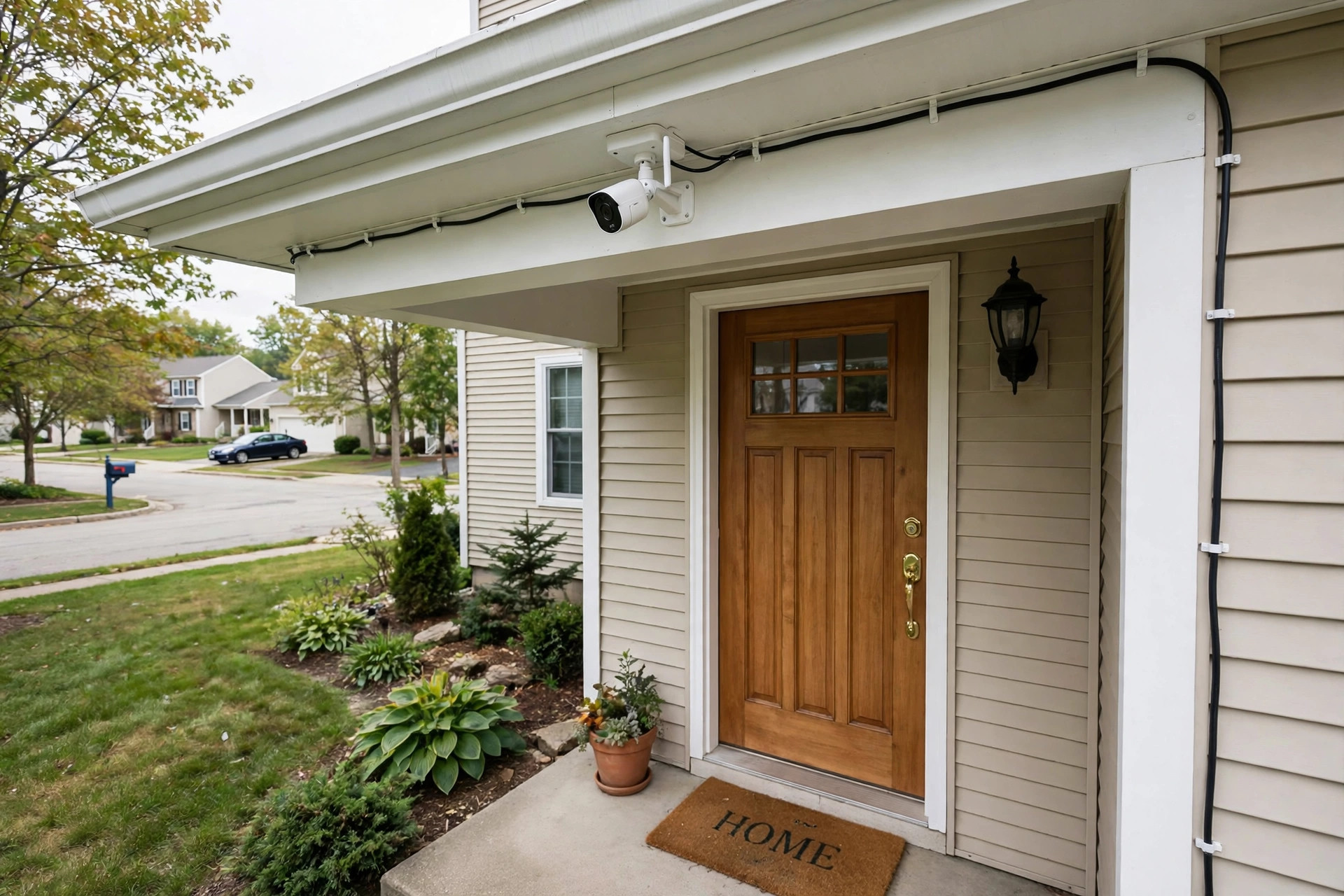
Cameras add the most cost. A video doorbell or a floodlight camera needs power and a good view of the entry. Some homeowners add one for the front porch and one for the back yard.
Home Security System Installation Cost USA: Price Breakdown
The table below shows typical prices in 2026 dollars.
| Item | DIY Range | Pro Install Range | |—|—|—| | Basic starter kit | $150–$400 | $500–$1,200 | | Extra cameras (each) | $50–$200 | $150–$400 | | Video doorbell | $80–$250 | $200–$450 | | Labor / install fee | $0 | $99–$299 | | Monthly monitoring | $0–$30 | $25–$60 | | Whole-home total | $200–$800 | $1,000–$3,500 |
These are broad ranges. Prices shift by city. Labor in New York or San Francisco costs more than in a small town in Ohio.
Factors That Change the Price
Several things push the cost up or down.
Home size. A two-bedroom apartment needs fewer sensors than a five-bedroom house. Each extra door and window adds a sensor.
Wiring. Wireless systems are cheap to fit. Wired systems need an electrician or a low-voltage tech. That labor is the biggest cost driver.
Camera count. Each camera adds equipment cost and labor. Four-camera homes are common in the suburbs.
Smart features. Face detection, package alerts, and voice control add to the price. A basic alarm panel is cheap. A full smart home hub is not.
Monitoring. Self-monitoring through a phone app costs nothing. A 24-hour call center that phones the police costs a monthly fee. Tech reviewers at CNET and PCMag compare monitoring plans in detail.
How to Choose the Right System
Start with your home. Walk around it. Count the ground-floor doors and windows. Note dark corners and the path to the front door. This list tells you how many sensors you need.
Next, decide who fits it. If you are handy, a DIY kit saves the labor fee. Most kits take one to two hours to set up. If your home is large or you want wired cameras, hire a pro.
Ask for at least two quotes. A good installer visits the home or asks for photos. Be wary of a quote given sight unseen. Read the contract. Look for the length of the monitoring term. Many pro plans lock you in for 36 months.
Think about where you will place the control panel. It should sit near the main door but out of sight from windows. A thief who sees the panel knows the brand and may know how to defeat it. Bedrooms and home offices are good spots for indoor cameras if you want them, but many families skip indoor cameras for privacy.
For doorbell cameras, you may also want to check our guide on smart doorbell installation cost near me to compare prices for that single device.
DIY vs Professional Installation
DIY kits win on price. You pay for the box and nothing more. You can move the system when you move house. The weak point is support. If a sensor fails, you fix it.
Professional installation wins on ease. The tech does the hard work. The company watches the system day and night. The weak point is the contract. Monthly fees add up. Three years of a $45 plan is $1,620.
If you live far from town, a cellular security camera with no Wi-Fi can be a smart add-on. It works where broadband is weak.
Ongoing Costs After Installation
The install is only the first bill. Plan for these running costs.
– Monitoring fees: $0 to $60 per month – Extra cloud storage for video: $3 to $15 per month – Batteries for wireless sensors: $20 to $50 per year – Service calls: $75 to $150 per visit – False alarm fines: $50 to $200 per false call in some cities
False alarms are more common than people think. A loose sensor or a low battery can set the siren off at night. Many police departments charge after the first free false alarm. Ask your city what the rule is. Register your alarm with the city if the law requires it.
Do not forget tax and permit fees. Some installers add sales tax on top of the quote. A few cities charge a yearly alarm permit of $25 to $50. These small sums matter when you compare two quotes side by side.
Some homeowners skip monthly fees. They use local storage cameras and check alerts on their phones. This cuts the long-term cost to near zero.
Care and Upkeep
A security system needs small, steady care. Test the alarm once a month. Press the test button on the panel. Walk past each motion sensor. Make sure the app gets the alert.
Clean camera lenses twice a year. Dust and spider webs blur the picture. A soft cloth and a little water are enough. Check battery levels in the app each season. Change weak batteries before they die.
Keep the software up to date. Makers send updates that fix bugs. An old app can miss alerts. If your system links to smoke alarms, test those too. The U.S. Consumer Product Safety Commission reminds homeowners to keep all safety devices in working order.
Safety Notes
Fit cameras where they watch entries, not private rooms. Never point a camera into a neighbor’s windows. Some states limit audio recording. Check your state law before you turn on a microphone.
Mount outdoor cameras out of reach. A camera at eight to ten feet sees faces well and is hard to grab. Use the screws and brackets in the box. A loose camera falls in the first storm.
If you hire an installer, ask for proof of a license. Many states require alarm companies to hold a license. Ask how they store your video. A clear answer is a good sign.
FAQ
How much does a home security system installation cost in the USA on average? Most American homes pay between $200 and $800 for a DIY kit and between $1,000 and $2,500 for a professional install. Monthly monitoring adds $25 to $60 if you choose it.
Is professional installation worth the extra cost? It is worth it for large homes and wired systems. The tech places each device in the best spot and tests it. For a small flat, a DIY kit often does the same job for less.
Can I install a home security system myself? Yes. Most wireless kits need no tools beyond a screwdriver and a phone. The maker’s app walks you through each step. Most people finish in under two hours.
Does a security system lower home insurance? Often, yes. Many US insurers give a discount of 5 to 20 percent for a monitored alarm. Ask your agent what proof they need.
How long does installation take? A DIY kit takes one to two hours. A pro install takes two to four hours for a standard home. A full wired system can take a full day.
Do I need Wi-Fi for a security system? Most wireless systems need Wi-Fi for the app and video. Some use a cellular link instead. Wired alarm panels can work with a phone line or a cellular module.
A Final Word
The home security system installation cost usa buyers face is wide, but it is easy to plan. Know your home. Count your doors. Pick DIY or pro. Get two quotes. Keep up the small maintenance. A modest system, well fitted, protects a home for years.
References
ADT. (n.d.). Home security and automation. https://www.adt.com CNET. (n.d.). Technology news and reviews. https://www.cnet.com Consumer Reports. (n.d.). Product reviews and ratings. https://www.consumerreports.org Google Store. (n.d.). Smart home devices. https://store.google.com PCMag. (n.d.). Technology product reviews. https://www.pcmag.com Ring. (n.d.). Smart home security devices. https://www.ring.com SimpliSafe. (n.d.). Home security systems. https://www.simplisafe.com U.S. Consumer Product Safety Commission. (n.d.). Product safety information. https://www.cpsc.gov
Was this guide helpful?

About James Carter
The My Garden US editorial team writes practical, in-depth home and garden guides for American homeowners — tested advice, no fluff.