
A broken garage door opener can ruin a morning. You press the button and nothing moves. Or the door shudders halfway up and stops. When the motor dies, most homeowners do not want to guess at repairs for weeks. They search for garage door opener installation cost near me and want a straight answer: what will a new opener and the labor to fit it actually cost? This guide gives that answer. It covers typical price ranges, the factors that move the price up or down, and how to pick an installer you can trust. It also covers simple care steps and safety points that keep a new opener working well for years.
Why Installation Cost Matters to Homeowners
The garage door is the largest moving part of most American homes. It often opens and closes several times a day. It carries the weight of a heavy door, guards the cars and tools inside, and gives family members a main way in and out of the house. A good opener does this work quietly and safely. A bad one is loud, slow, or unsafe.
Price matters because the bill has two parts. The first part is the opener itself. The second part is the labor to install it. Many people price only the unit at the store and feel shocked when the final bill arrives. Others accept the first quote they hear and pay far more than their neighbor paid for the same work. A little knowledge closes that gap. When you know the normal range for your area, you can read quotes with a clear eye and ask better questions.
Smart openers add another reason to study cost. Many modern units connect to a phone app, send alerts when the door is left open, and work with voice controls. These features change both the unit price and the work the installer must do. A short video doorbell with app alerts works the same way: the device is simple, but the setup takes time. Reviews at CNET note that buyers often undervalue this setup time when they plan a budget.
How to Choose a Good Installer: Garage Door Opener Installation Cost near Me
Start with local reputation. Ask neighbors who they used. Read recent reviews on more than one site. A company that has served your town for years has a name to protect, and that name is worth more to them than one extra sale.
Get at least three written quotes. Each quote should list the opener brand and model, the parts included, the labor charge, and the warranty. A quote that says only “install opener: $400” tells you nothing. Ask for the breakdown in writing before any work begins.
Check licenses and insurance. Many states and cities require a license for garage door work. Ask for proof. An installer who cannot show it should not be on your short list. Insurance matters too. If a heavy door or spring slips during the work, you want the damage covered by their policy, not yours.
Ask about the springs. Most garage door openers fail early because the door springs are old or badly set. A good installer checks the springs as part of the visit. Some will refuse to fit a new opener to a door with worn springs, because the motor will burn out quickly. That refusal is a sign of an honest tradesman, not a lazy one.
Ask what the installer does with the old unit. Some haul it away for free. Others charge a fee or leave it in your garage. Settle this before the work starts.
Also compare the installer with the option of a larger home security system installation. Some home security firms bundle garage door control into their packages. For some families, a bundle costs less than two separate jobs. Reviewers at PCMag suggest comparing bundled and separate quotes side by side.
Types of Garage Door Openers
Chain drive openers are the oldest common type. A metal chain pulls the door up and down. They are strong and low in price. They are also the loudest. They suit a detached garage where noise does not matter.
Belt drive openers use a rubber belt instead of a chain. They are much quieter. Most attached garages do well with a belt drive, because the motor noise does not carry into the rooms above. They cost more than chain drives but less than many people expect.
Screw drive openers use a threaded steel rod. They have fewer moving parts, which means less to break. They can be slow in very cold weather, so they are less common in northern states.
Direct drive openers mount the motor on the track and move along it. They are quiet and smooth, but they cost the most. Some brands combine this design with battery backup, so the door still works during a power cut.
Smart openers are not a drive type. They are a feature set. Many chain and belt units now come with Wi-Fi, phone apps, and voice control. A smart doorbell installation near you follows the same pattern: the hardware is familiar, but the app changes how you use it. When you compare prices, check whether the “smart” label adds real features or just a new remote.
Horsepower matters less than it used to. Old guides talked about half-horsepower versus three-quarter-horsepower motors. Modern ratings use different numbers, but the rule is the same: heavier and wider doors need stronger motors. A single-car door is light. A wide double door of wood or steel needs more power. Your installer should match the motor to the door, not to the lowest price.
Garage Door Opener Installation Cost Near Me: What It Costs
For most American homes, a basic garage door opener installation costs between $250 and $550 in total. That figure covers a standard chain drive unit and a normal install on a door in good shape. Prices near large cities often sit at the top of this range. Rural areas often sit near the bottom.
A mid-range belt drive install with smart features usually costs $350 to $650. The opener itself costs more, and the setup takes longer because the app must be linked to your phone and Wi-Fi. Battery backup adds about $75 to $150 to the unit price in most stores.
A premium install can run $500 to $900 or more. This covers a direct drive unit, a heavy double door, new springs, or extra wiring work. If the installer must add a power outlet near the ceiling, that job alone can add $100 to $200. New tracks, rollers, or spring work can add several hundred more.
Labor alone, when you supply the opener yourself, often runs $150 to $300. This option suits buyers who found a good price on the unit at a store. Check first that your installer will fit a unit they did not sell. Many will, but the warranty terms often change. The installer usually warrants only the labor, while the store or brand handles the unit.
Four factors move the price most:
1. Drive type. Chain is cheapest. Belt is in the middle. Direct drive is dearest. 2. Smart features. Wi-Fi, apps, and voice control add to both the unit price and the setup time. 3. Door condition. Old springs, bent tracks, and worn rollers add repair work to the job. 4. Local rates. Labor costs in San Francisco are not labor costs in Des Moines. This is why “near me” is in the search. Always get local quotes.
Watch for extras on the bill. Old unit removal can cost $25 to $75. New safety sensors, if your old door lacks them, can add $50 to $100. A keypad for outside the garage often costs $40 to $80 with fitting. These are fair charges when listed openly. They are not fair when they appear only after the work is done.
Consumer Reports at consumerreports.org advises buyers to compare the total price, not just the unit price, before choosing a brand. A cheap unit with dear labor is no bargain.
Care and Upkeep
A new opener lasts longer with small, regular care. Once every three months, stand back and watch the door run through a full cycle. Listen for grinding or scraping. Watch for jerks or uneven movement. Catching a small problem early is cheap. Catching it late is not.
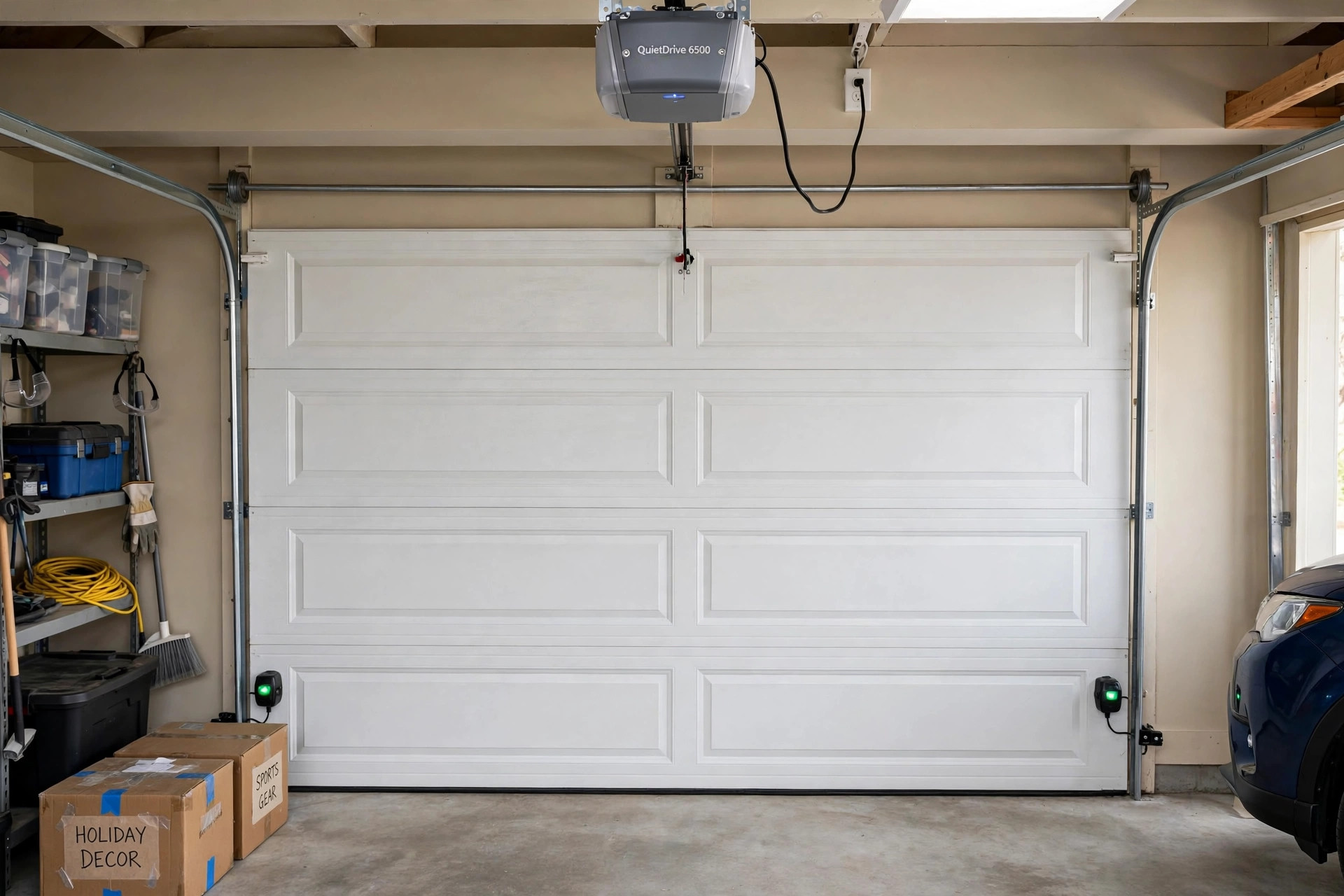
Wipe the photo-eye sensors twice a year. These small sensors sit near the floor on each side of the door. Dust on the lens can make the door reverse for no reason. A soft cloth is enough.
Grease the moving parts once or twice a year. Use a silicone or lithium grease made for garage doors. Do not use thick motor oil. It attracts dust and gums up the track. A light touch is better than a heavy one.
Test the auto-reverse monthly. Put a roll of paper towels on the floor under the door. Close the door with the button. It should touch the roll and reverse at once. If it crushes the roll or keeps pressing down, call for service. This test takes one minute and guards your family and your cars.
Keep the remote and keypad codes private. If you move into a house with an existing opener, clear the old codes and set new ones. The steps are in the manual and take only minutes. A keypad lock for your garage door is worth little if the old owner still knows the code. Tech news at The Verge has covered how often people forget this simple step.
Change remote batteries once a year. Weak batteries cause short range and missed signals, which many owners mistake for a dying motor.
Safety
Garage doors are heavy. Springs are under high tension. The opener itself connects to your home wiring. Treat all three with respect.
Never let children play with the opener remote or the wall button. Teach them that the garage door is not a toy. Keep remotes out of reach of small hands.
Never stand under a moving door. Never reach through the doorway while the door is in motion. These rules sound plain, but most garage injuries come from breaking them.
Do not adjust springs yourself. Torsion springs store enough force to cause grave injury. This is one of the few jobs that belongs to a trained hand, every time. The Consumer Product Safety Commission lists garage door injuries among the common home injuries that good maintenance can prevent.
Unplug the opener before any cleaning or minor work near the motor. It takes seconds and removes the risk of a surprise start.
If your opener was made before 1993, it may lack modern safety sensors. Consider replacing it. The cost of a new unit is small next to the risk of a door without an auto-reverse.
FAQ
How long does installation take?
A standard install takes one to two hours when the door is in good shape. New wiring, spring work, or a heavy double door can push it to three or four hours. Ask the installer for a time estimate with the quote.
Can I install a garage door opener myself?
Some homeowners do, and the manuals are clear. But the work includes wiring, heavy lifting, and spring checks. If you are not sure about any step, hire a pro. The labor charge is less than a hospital bill or a ruined door.
How long will a new opener last?
Most last 10 to 15 years with light care. Belt drives often run longest because they have fewer parts that grind. The best smart garage door opener models reviewed by tech writers tend to last as long as plain units, since the smart parts rarely fail before the motor.
Should I repair or replace my old opener?
If the unit is under 10 years old and the problem is small, like a dead sensor or a worn gear, repair is usually the cheaper path. If it is over 15 years old, lacks safety sensors, or needs a repair that costs half the price of a new unit, replace it.
Does a smart opener work during a power cut?
Only with battery backup. Without it, the app and the motor both go dark. Most brands sell backup as a built-in feature or an add-on. If storms are common where you live, treat backup as a need, not a luxury. The Google smart home store lists backup as a key feature for buyers to check.
Will a new opener make my door quieter?
A belt drive will, if the noise comes from the drive itself. If the noise comes from worn rollers, loose hardware, or a thin metal door, a new opener alone will not fix it. Ask the installer to find the real source of the noise before you buy.
A Short Final Word
The cost of garage door opener installation near you depends on the drive type, the smart features, the state of your door, and local labor rates. Most homeowners pay a few hundred dollars in total. The way to pay a fair price is simple: get three written quotes, check licenses, and compare the full bill, not just the unit. Then keep the new opener safe and sound with a few minutes of care each season. A door that opens at the touch of a button, day after day, is one of the quiet comforts of a well-kept home.
Related guides on this site include best video doorbell without subscription usa, ring vs nest doorbell comparison 2026 usa, and best wireless doorbell camera reviews usa.
References
ADT. (n.d.). Home security and automation. https://www.adt.com CNET. (n.d.). Technology news and reviews. https://www.cnet.com Consumer Reports. (n.d.). Product reviews and ratings. https://www.consumerreports.org Google Store. (n.d.). Smart home devices. https://store.google.com PCMag. (n.d.). Technology product reviews. https://www.pcmag.com Ring. (n.d.). Smart home security devices. https://www.ring.com SimpliSafe. (n.d.). Home security systems. https://www.simplisafe.com The Verge. (n.d.). Technology news and reviews. https://www.theverge.com U.S. Consumer Product Safety Commission. (n.d.). Product safety information. https://www.cpsc.gov
Was this guide helpful?

About David Wilson
The My Garden US editorial team writes practical, in-depth home and garden guides for American homeowners — tested advice, no fluff.
You May Also Like
Freeze Alarm for Vacation Home Reviews USA: What to Know Before You Buy
January 25, 2026 0 views
Best Smart Garage Door Opener Reviews USA
September 24, 2026 0 views
Smart Home for Elderly Parents Checklist USA: A Room-by-Room Guide for Families
May 27, 2026 0 views