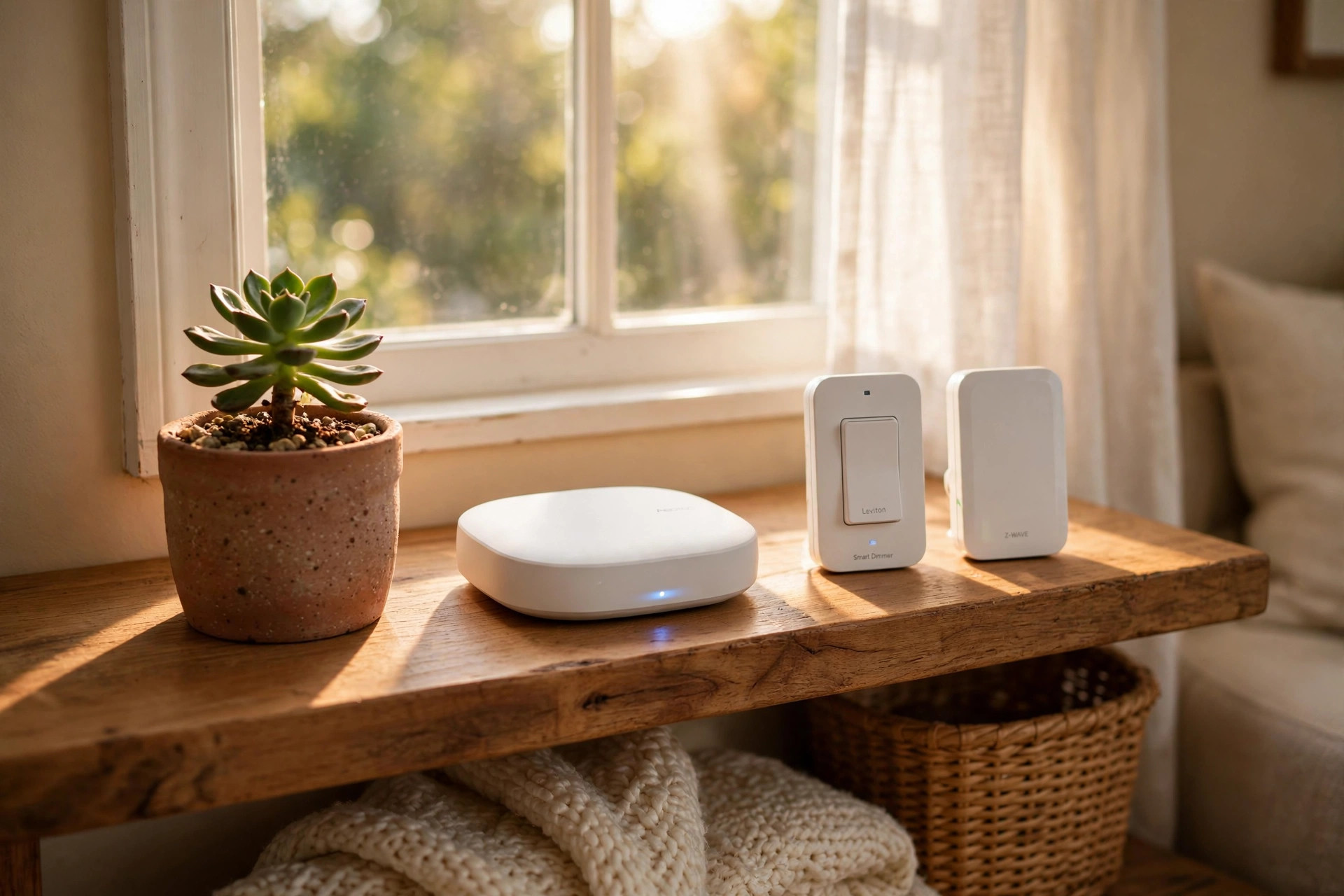

If you are reading the best zwave controller reviews 2026 usa shoppers trust, you likely own a few smart devices already. Maybe you have smart locks, light switches, or motion sensors. Each one works on its own. But you want them to work together. That is the job of a Z-Wave controller. It is a small box or stick that speaks the Z-Wave radio language to your devices. It lets you control them from one app. It also lets you set rules, such as locking the doors and dimming the lights at 10 p.m.
This guide compares the main options sold in the United States in 2026. It explains what to look for before you buy. It also covers price ranges, setup steps, and safety notes. The goal is simple. Help you pick the right controller for your home and your budget.
Why a Good Z-Wave Controller Matters
A Z-Wave controller is the brain of a Z-Wave network. Without one, each device is an island. With one, your devices form a team. The controller sends commands and receives status reports. It keeps the time for your schedules. It stores your automation rules. Many models also let you control your home from your phone when you are away.
Range is one of the biggest reasons to choose Z-Wave. Each Z-Wave device that plugs into wall power acts as a repeater. It passes signals to the next device. This builds a mesh network. In a large American home, a strong mesh can cover two floors and a garage. But the quality of the mesh depends on the controller. A good controller manages routes well. It finds the best path for each signal. A weak one drops messages and causes delays.
Reliability is another reason. Many Z-Wave controllers process rules locally. This means your lights still follow their schedules even if the internet goes down.
Privacy matters too. Some controllers keep your data inside your home. They do not send your daily habits to distant servers. If that appeals to you, look for a controller that works fully offline. Tech publications such as PCMag and CNET often note which hubs require a cloud account and which do not.
How to Choose a Z-Wave Controller: Best Zwave Controller Reviews 2026 Usa
Shopping for a controller is easier when you know the key features. The sections below list what to check.
Range and Radio Strength
Look for a controller with a recent Z-Wave chip. The newer 700 and 800 series chips offer longer range than older 500 series chips. They also use less power. In open space, 800 series radios can reach much farther than earlier models. Through walls, the difference is smaller but still real. Also check the antenna design. Some hubs use internal antennas. Others offer an external antenna for better reach in big homes.
Keep the hub in a central spot on the main floor, away from metal cabinets. A hub buried in a basement corner will struggle.
Device Compatibility
Count your devices before you buy. Make a list of every Z-Wave switch, sensor, lock, and thermostat you own or plan to buy. Then check that the controller supports them. Most good hubs support hundreds of Z-Wave devices. But new products sometimes need a firmware update first. Check the maker’s compatibility list. Z-Wave device makers such as Aeotec and Fibaro publish which controllers work with their products.
Also check the Z-Wave region. The United States uses a specific radio frequency. A controller sold for Europe will not talk to American devices. Buy only US models. Reputable sellers list the region clearly.
Local Control vs Cloud Control
This choice shapes your daily experience. Local controllers run rules inside your home. They respond fast and work during internet outages. Cloud controllers route commands through the maker’s servers. They are often easier to set up. But they stop working when the connection fails. If you travel often, pick a local controller that also offers secure remote access through its app.
Ease of Setup
Some controllers aim at beginners. They guide you step by step. They pair devices with one tap. Others aim at hobbyists. They offer deep settings but expect you to learn the terms. Be honest about your comfort level. A powerful hub you cannot set up is worse than a simple hub you can.
Look for clear phone apps and plain-language help pages. Video tutorials help too. If you are new to all this, the best smart home hub for beginners usa article explains the first steps without jargon.
Automation and Rules
Check what the controller can do on its own. Good ones let you build rules like these: turn on the porch light at sunset; lock the back door when the motion sensor is quiet for one hour; send an alert if a water sensor detects a leak. Some hubs also support scenes. A “Good Night” scene might lock doors, close the garage, and dim the halls with one tap.
Check limits too. Cheap hubs may allow only a few rules. Better ones allow dozens or hundreds. If you plan to grow your system, buy room to grow.
Main Types of Z-Wave Controllers
Not all controllers look alike. Here are the four common types sold in the USA.
Dedicated Z-Wave Hubs
These are boxes made for one job: running a Z-Wave network. They often run everything locally. They tend to be fast and dependable. Homeowners who value privacy and reliability favor this type. Setup takes a little more patience. But once running, these hubs rarely need attention.
Multi-Protocol Smart Home Hubs
These hubs speak Z-Wave plus other languages, such as Zigbee or Wi-Fi. They are a good pick if your home mixes device types. One app controls everything. The trade-off is depth. A multi-protocol hub may lack some advanced Z-Wave settings. For most families, though, the convenience wins. If you are weighing the big names, the smartthings vs hubitat comparison 2026 usa article walks through the two most popular choices.
USB Z-Wave Sticks
A USB stick is a small radio that plugs into a computer or a home server. Paired with free or low-cost software, it becomes a full controller. This route is the cheapest. It is also the most hands-on. It suits people who enjoy tinkering. You supply the computer, the software, and the time. In return you get full control and no monthly fees.
Security Panel Controllers
Some home security systems include a Z-Wave radio. The panel arms the alarm and also controls lights and locks. This type suits homeowners who want one system for safety and comfort. Companies such as SimpliSafe and ADT sell systems with smart home features. Check whether their Z-Wave support is full or limited. Some panels allow only basic on and off commands.
What 2026 Reviews Say About Top Picks
Reviewers in 2026 agree on a few points. First, controllers with 800 series chips lead on range and battery life for sensors. Second, local processing is now a standard demand, not a luxury. Third, setup quality varies widely. The best-reviewed hubs pair devices quickly and explain each step.
For pure Z-Wave performance, dedicated hubs earn the highest marks. Reviewers praise their stable meshes and fast response times. They note that these hubs handle large networks, fifty devices or more, without slowing down. They also praise the privacy angle. No account is required for daily use on many models.
Multi-protocol hubs earn praise for convenience. Reviewers like controlling Z-Wave locks, Zigbee bulbs, and Wi-Fi cameras from one screen. They note that voice assistants pair well with these hubs. If your home already mixes brands, this type saves you from juggling five apps. Shoppers curious about the Zigbee side can read the best zigbee hub for smart home usa guide for a fair look at that option.
Security panel controllers get mixed reviews as Z-Wave hubs. Reviewers praise the all-in-one idea. They criticize limited automation options. A panel that only turns lights on and off will disappoint a power user. But for a homeowner who mainly wants an alarm with a few smart touches, it is enough.
Across all types, reviewers give the same advice. Test pairing with your key devices in the first week. If your main lock or thermostat will not join the network, send the hub back. Sites like Consumer Reports and The Verge update their smart home coverage through the year.
Cost and Price Ranges
Prices in the USA in 2026 fall into clear bands. USB Z-Wave sticks cost the least, often between thirty and sixty dollars. You supply the computer and software. Dedicated Z-Wave hubs usually cost between one hundred and two hundred dollars. Multi-protocol hubs sit in the same range, sometimes a little higher. Security panels with Z-Wave radios cost more, often two hundred dollars and up, plus any monitoring fees.
Watch for hidden costs. Some hubs charge a monthly fee for remote access or advanced features. Others are free forever. Ask before you buy. Also budget for a few extra Z-Wave devices. A mesh network works best with several powered repeaters. Two or three smart plugs in key spots can fix dead zones for a modest cost.
Where you buy matters too. Big retailers like Ring brand stores and general electronics outlets stock the popular models. Buying from an authorized seller protects your warranty. Keep the receipt. Most makers offer at least a one-year warranty.
Care and Upkeep
A Z-Wave controller needs little care. Still, a few habits keep it running well.
Keep the firmware updated. Makers release updates that fix bugs and add device support. Do not unplug the hub during an update.
Back up your settings. Many hubs offer a backup feature. Use it before big changes. If a hub fails, a backup lets you restore your whole network on a replacement. Store the backup file somewhere safe, not only on the hub itself.
Give the hub good air flow. Do not stack it under a hot cable box. Heat shortens the life of electronics. A shelf with open space works fine.
Check your mesh twice a year. Open the app and look for devices with weak signals. Move a repeater closer or add a smart plug between the hub and the weak device. Small fixes prevent big headaches.
If you add many devices at once, pair them near the hub first. Then move them to their final spots. This keeps the pairing clean and fast.
Safety Notes
Smart home gear is low voltage and generally safe. Still, follow a few rules.
Buy only certified products. In the USA, look for FCC marks on the box. Certified radios meet federal standards. The U.S. Consumer Product Safety Commission also publishes general guidance on home product safety. Uncertified imports may use the wrong frequency. They can also interfere with other devices.
Use a surge protector. A power spike can kill a hub. A basic surge strip costs little and protects your investment.
Secure your network. Change the default password on the hub’s app. Keep your home Wi-Fi password strong. An intruder on your Wi-Fi could reach some smart devices. The Google Store and other big sellers remind buyers to enable two-step verification where offered.
Think about locks with care. A smart lock is convenient. But always keep a physical key or another way in. Batteries die. Electronics fail. A backup entry method is basic common sense.
If a device gets hot, smells odd, or shows burn marks, unplug it at once. Do not keep using it. Contact the maker. Faulty gear is rare, but quick action prevents damage.
Frequently Asked Questions
Do I need the internet for a Z-Wave controller to work?
It depends on the model. Many controllers run rules locally and work fine without the internet. You lose remote access from your phone while away. Cloud-based hubs need the connection for most functions. Check the product page before you buy.
How many devices can one Z-Wave controller handle?
Z-Wave networks support over two hundred devices in theory. In practice, most home hubs handle fifty to one hundred with ease. Very large homes may need a second hub or careful repeater placement. Start with your main devices and add more over time.
Will a Z-Wave controller work with my existing smart lock?
Probably yes, if the lock uses Z-Wave and the US frequency. Check the controller’s compatibility list for your exact lock model. Pair the lock close to the hub for the best result. Some locks need a secure pairing step, so follow the app’s prompts carefully.
What is the difference between Z-Wave and Zigbee?
Both are low-power radio standards for smart homes. Z-Wave uses a lower frequency that passes through walls well in US homes. Zigbee uses a higher frequency and is common in light bulbs. Many homes use both. A multi-protocol hub can manage each side by side.
Can I control my Z-Wave devices with Alexa or Google Assistant?
Yes, in most cases. The controller links to the voice assistant through its app. You can then say things like “lock the front door.” Note that voice commands travel through the cloud, even on local hubs.
Should I buy a 700 or 800 series Z-Wave controller in 2026?
Buy an 800 series model if the price is close. It offers better range and lower power use. A 700 series hub still works well and may cost less on sale. Avoid old 500 series models unless the price is very low.
A Final Word
The best Z-Wave controller is the one that fits your home, your devices, and your patience for setup. Power users will love a dedicated local hub. Busy families may prefer a multi-protocol hub with an easy app. Tinkerers can save money with a USB stick. Buy a US model with a recent chip, test it in the first week, and keep the firmware fresh. Do that, and your smart home will run quietly in the background for years.
References
ADT. (n.d.). Home security and automation. https://www.adt.com Aeotec. (n.d.). Smart home devices. https://www.aeotec.com CNET. (n.d.). Technology news and reviews. https://www.cnet.com Consumer Reports. (n.d.). Product reviews and ratings. https://www.consumerreports.org Fibaro. (n.d.). Smart home system. https://www.fibaro.com Google Store. (n.d.). Smart home devices. https://store.google.com PCMag. (n.d.). Technology product reviews. https://www.pcmag.com Ring. (n.d.). Smart home security devices. https://www.ring.com SimpliSafe. (n.d.). Home security systems. https://www.simplisafe.com The Verge. (n.d.). Technology news and reviews. https://www.theverge.com U.S. Consumer Product Safety Commission. (n.d.). Product safety information. https://www.cpsc.gov
Was this guide helpful?

About Emily Rodriguez
The My Garden US editorial team writes practical, in-depth home and garden guides for American homeowners — tested advice, no fluff.
You May Also Like
Smart Home WiFi Network Setup Guide USA: A Plain Plan for a Strong Home
August 28, 2026 0 views
Motion Sensor Flood Light Reviews 2026 USA: What Really Works
May 15, 2026 0 views
Nanit vs Owlet Camera Comparison 2026 USA: Which Baby Monitor Wins?
February 12, 2026 0 views