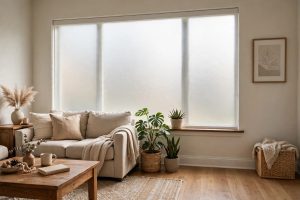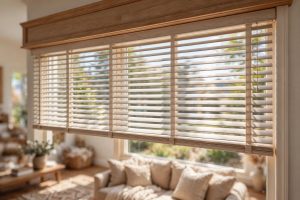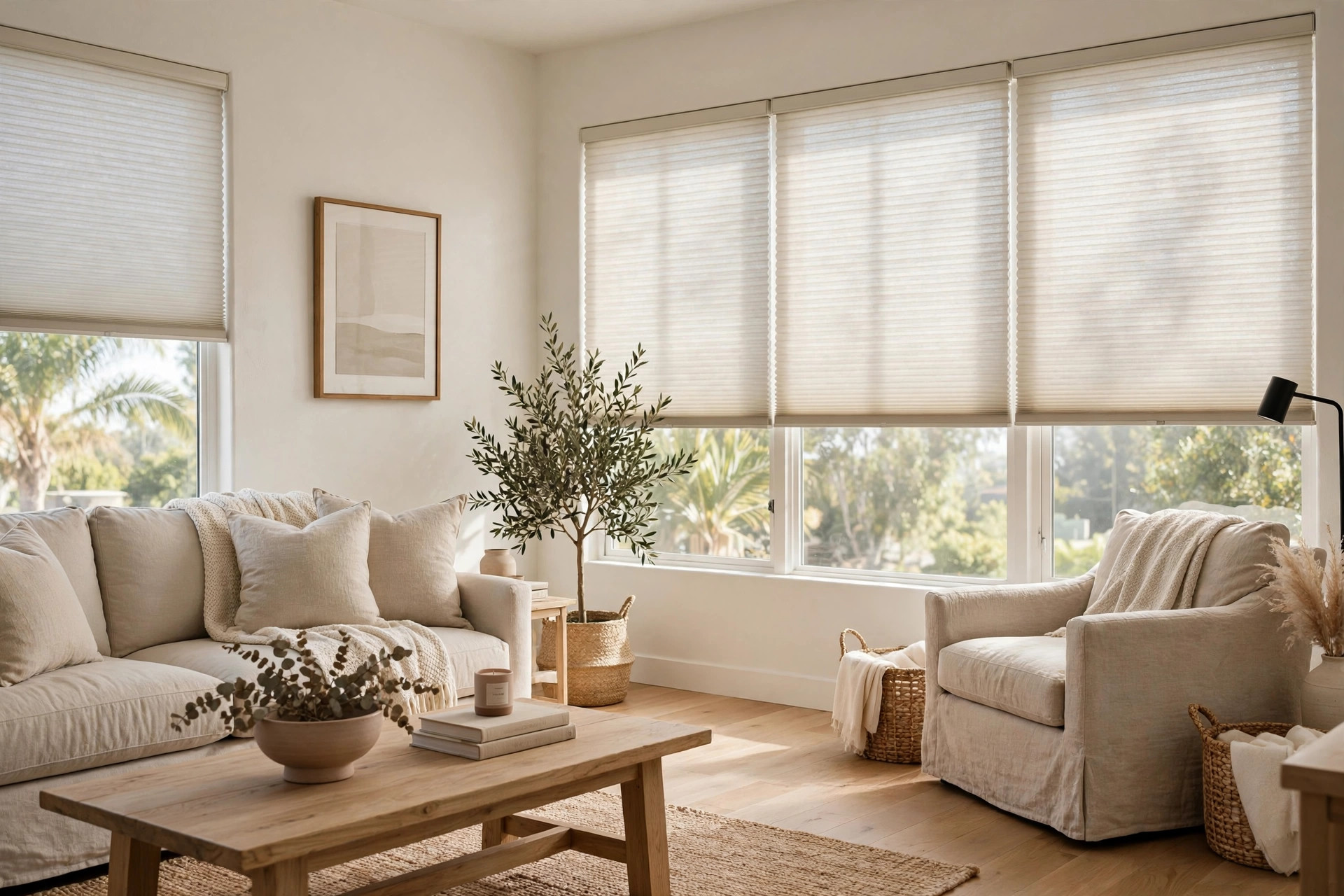
California sun is strong for much of the year. In summer it pushes heat through bare windows and makes air conditioners work hard. In winter the cool air finds its way in through thin glass. A good window treatment stands between your home and the weather. When you buy energy efficient window treatments online in California, you get more choice than most local stores can offer, and you can compare prices from your own living room.
This guide explains what makes a window treatment energy efficient, which types work best, and how to order with confidence over the internet.
Why It Matters
Windows are a weak point in every house. Heat moves through glass fast. On a hot August afternoon in Fresno or Riverside, an uncovered south-facing window can feel like an open oven door. On a cold December night in Sacramento, the same window can feel like a wall of ice.
Energy efficient window treatments slow this movement of heat. They trap a layer of air between the room and the glass. Still air does not conduct heat well, so the room stays closer to the temperature you want. Your heater runs less. Your air conditioner runs less. Many homeowners see their monthly power bills drop after they cover their windows properly. The U.S. Department of Energy publishes plain guidance on energy efficient homes, and it names window coverings as one of the cheapest ways to steady indoor temperatures.
California homes have another reason to care. Time-of-use electricity rates are common here. Power costs more during the late afternoon, exactly when the sun is pouring through west-facing windows. Shades that block that afternoon heat cut use during the most expensive hours. Over a year the savings add up.
There is also the matter of comfort. A room with bare windows has hot spots and cold spots. You sit near the window and feel the chill or the glare. Covered windows make the whole room feel even. Furniture and wood floors fade less when strong light is filtered through good shades.
What to Look For: Buy Energy Efficient Window Treatments Online in California
Shopping online means you cannot touch the fabric. You have to read. Three details matter most.
First, look for how well the product stops heat. Some makers publish an R-value, a number that shows resistance to heat flow. A higher number is better. Single honeycomb cellular shades rate higher than flat roller shades. Thermal curtains with foam backing rate higher than plain cotton panels.
Second, check the light control. Some energy efficient shades block nearly all light. Others filter it and keep the room bright. Think about each room before you buy. Bedrooms often need full darkness. Living rooms often need soft light.
Third, read the mounting and fit details. An inside mount looks neat but leaves small gaps at the edges where air slips through. An outside mount covers more of the frame and seals better against heat. For the best energy performance, pick an outside mount or pick shades that close tight against the frame.
When you buy energy efficient window treatments online in California, product pages usually include swatch samples. Many sellers mail small fabric samples for free. Order them. Hold the sample up to your own window. You will learn more from a two-inch square of real fabric than from a dozen photos.
Types of Energy Efficient Window Treatments
Not every shade saves energy the same way. Here are the types most California shoppers order.
Cellular Shades
Cellular shades, also called honeycomb shades, are the workhorse of energy efficient windows. Their folded cells trap air in pockets. Double-cell versions trap two layers of air and rate even higher. They come in light-filtering and blackout fabrics, and in single or double cells.
Cordless cellular shades are especially popular now. They rise and fall with a simple push or pull, so there are no cords hanging down. Guides to the top rated cordless cellular shades for american homes explain why families with children and pets prefer them. Reviews of decor products on The Spruce often rank them high for both looks and insulation.
Thermal Curtains
Thermal curtains are heavy drapes with a foam or rubber backing. They hang like normal curtains but block drafts and heat far better. They suit rooms where you want a soft fabric look, such as living rooms and master bedrooms.
For the strongest result, hang thermal curtains close to the wall and let them fall to the floor. A valance or cornice over the top stops warm air from rising behind the curtain and spilling into the room. Shoppers comparing thermal energy efficient window treatments for sale will find many curtain options with these features listed.
Insulated Roller Shades
Roller shades are a single sheet of fabric that rolls up and down. Insulated versions use thicker fabric or add a reflective backing that bounces heat back out the window. They are simple, modern, and easy to clean. They do not insulate as well as cellular shades, but they cost less and suit wide windows.
Solar Shades
Solar shades are woven screens that block glare and ultraviolet light while keeping the view. They are common in California rooms with a nice view of the hills or the coast. They cut heat but do not add much insulation at night. Many homeowners pair them with curtains for a day-and-night system.
Shutters and Blinds With Insulating Design
Plantation shutters fit inside the window frame and create a solid barrier when closed. Wood and faux wood both work. The close fit is their strength. Some online sellers of home improvement goods, such as The Home Depot and Lowe’s, carry shutters in standard sizes that ship fast.
Cost and Price
Prices vary widely. A basic light-filtering cellular shade for a standard window often costs between forty and ninety dollars when ordered online. Double-cell blackout versions run higher, often ninety to one hundred eighty dollars per window. Thermal curtains usually cost fifty to one hundred fifty dollars per panel, and most windows need two panels.
Custom sizes cost more than stock sizes. Online sellers charge for wider widths, longer drops, and special fabrics. Still, online prices usually beat local showroom prices for the same product, because online sellers run leaner shops.
Shipping is a factor in California. Many large window covering retailers offer free shipping on orders over a set amount. Check the policy before you order. Returns matter too. Some sellers charge restocking fees on custom orders, so measure twice. Wayfair and IKEA both run large online catalogs where you can compare prices across many styles before you decide.
Installation costs are separate. If you hire help, expect to pay per window. Homeowners who want a professional result can look into reliable window treatment installation services in california before the boxes arrive.
Measuring and Ordering Online
Good results start with good measurements. Use a steel tape measure, not a cloth one. Measure each window in three places: top, middle, and bottom for width; left, center, and right for height. Write down the smallest width and the largest height. Windows are rarely square, and a shade cut too wide will not fit.
Most online ordering forms ask whether you want an inside or outside mount. Inside mounts need the exact window opening size. Outside mounts need the size of the area you want covered, usually two to three inches beyond the frame on each side.
Read the product specifications before you pay. Check the minimum mounting depth. Check whether the shade includes brackets and screws. Check the lead time. Stock shades ship in days. Custom shades can take two to four weeks.
If you are nervous about measuring, some retailers offer virtual help. Design shows on HGTV have made measuring tutorials popular, and many seller sites now include video guides that walk you through each step.
Care and Upkeep
Energy efficient shades last longer when they are kept clean. Dust cellular shades with a vacuum brush attachment once a month. Never soak them in water. Spot clean stains with a damp cloth and mild soap, then let the shade dry fully open.
Thermal curtains can be washed on a gentle cycle if the care label allows it. Foam-backed curtains may need a dry cleaner. Always check the label first. Heat from a hot dryer can damage the insulating backing.
Roller and solar shades wipe clean with a damp sponge. Faux wood shutters can be dusted or wiped with a damp cloth. Real wood shutters should be kept dry and treated with wood polish once a year.
Check cords and mechanisms once a year. Cordless systems have few parts to fail, but springs wear out over time. Most good sellers offer replacement parts for years after the sale.
Safety
Window covering cords have injured children for decades. The U.S. Consumer Product Safety Commission has issued strong warnings about them and now pushes the industry toward cordless designs. When you order online, choose cordless lifting systems for any room where a child or pet spends time.
California homes often have sliding glass doors and wide windows where long cords dangle within reach. Cordless shades, motorized shades, and curtains on rods all remove this danger. If you already own corded shades, buy cord cleats and wrap the cords high out of reach until you replace them.
Motorized shades are worth a look for hard-to-reach windows. They run on small batteries or plug-in power and move with a remote or a phone app. They cost more, but they are safe and convenient.
Frequently Asked Questions
How much money can energy efficient window treatments save?
Savings depend on your home, your climate, and your current windows. Homes with old single-pane glass see the biggest gains. Federal energy guidance notes that good window coverings can cut heat loss and heat gain through windows by a large share. Many California homeowners report noticeably lower summer cooling bills after covering west and south windows. Look up products with recognized energy saving ratings to compare options with confidence.
Are cellular shades better than thermal curtains?
Each has strengths. Cellular shades insulate better per inch of depth because of their trapped air cells. They also look neat and modern. Thermal curtains look softer and suit formal rooms. Many homeowners use both: shades for daily use and curtains for style and extra draft control at night.
Can I order custom sizes online in California?
Yes. Most major online sellers ship custom window treatments to every California address. You enter your measurements on the order form, pick your fabric and options, and the shade is made to order. Delivery takes longer than stock sizes, often two to four weeks, so plan ahead if you are preparing for summer heat.
Do energy efficient window treatments block too much light?
Not if you choose well. Light-filtering fabrics glow softly and keep the room bright while still slowing heat. Top-down bottom-up shades are a clever option: they open from the top to let daylight in while the lower half stays covered for privacy and insulation. Order free fabric samples and test them in your own rooms before you buy.
Are cordless window treatments hard to install?
Most are not. A cordless cellular shade usually mounts with two or three brackets and a few screws. The tools needed are a drill, a screwdriver, and a level. Most buyers finish a window in twenty to thirty minutes. If you prefer not to do it yourself, professional installers are easy to find in most California cities.
A Short Final Word
Windows will always be the leakiest part of a house. But they do not have to be. A well-chosen shade or curtain holds back the summer heat and the winter chill, trims the power bill, and makes every room feel calmer and more even.
Online shopping gives California homeowners the widest choice at fair prices. Measure with care, read the specifications, order fabric samples, and pick cordless for safety. Do that, and the simple act of covering your windows will pay you back for years.
References
Blinds.com. (n.d.). Window blinds, shades, and shutters. https://www.blinds.com ENERGY STAR. (n.d.). Energy efficient products. https://www.energystar.gov HGTV. (n.d.). Home and garden ideas. https://www.hgtv.com IKEA. (n.d.). Home furnishings. https://www.ikea.com Lowe’s. (n.d.). Home improvement products. https://www.lowes.com The Home Depot. (n.d.). Home improvement products. https://www.homedepot.com The Spruce. (n.d.). Home and garden advice. https://www.thespruce.com U.S. Consumer Product Safety Commission. (n.d.). Product safety information. https://www.cpsc.gov U.S. Department of Energy. (n.d.). Energy efficiency and renewable energy. https://www.energy.gov Wayfair. (n.d.). Furniture and home goods. https://www.wayfair.com
Was this guide helpful?

About James Carter
The My Garden US editorial team writes practical, in-depth home and garden guides for American homeowners — tested advice, no fluff.