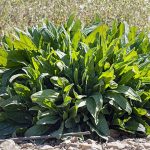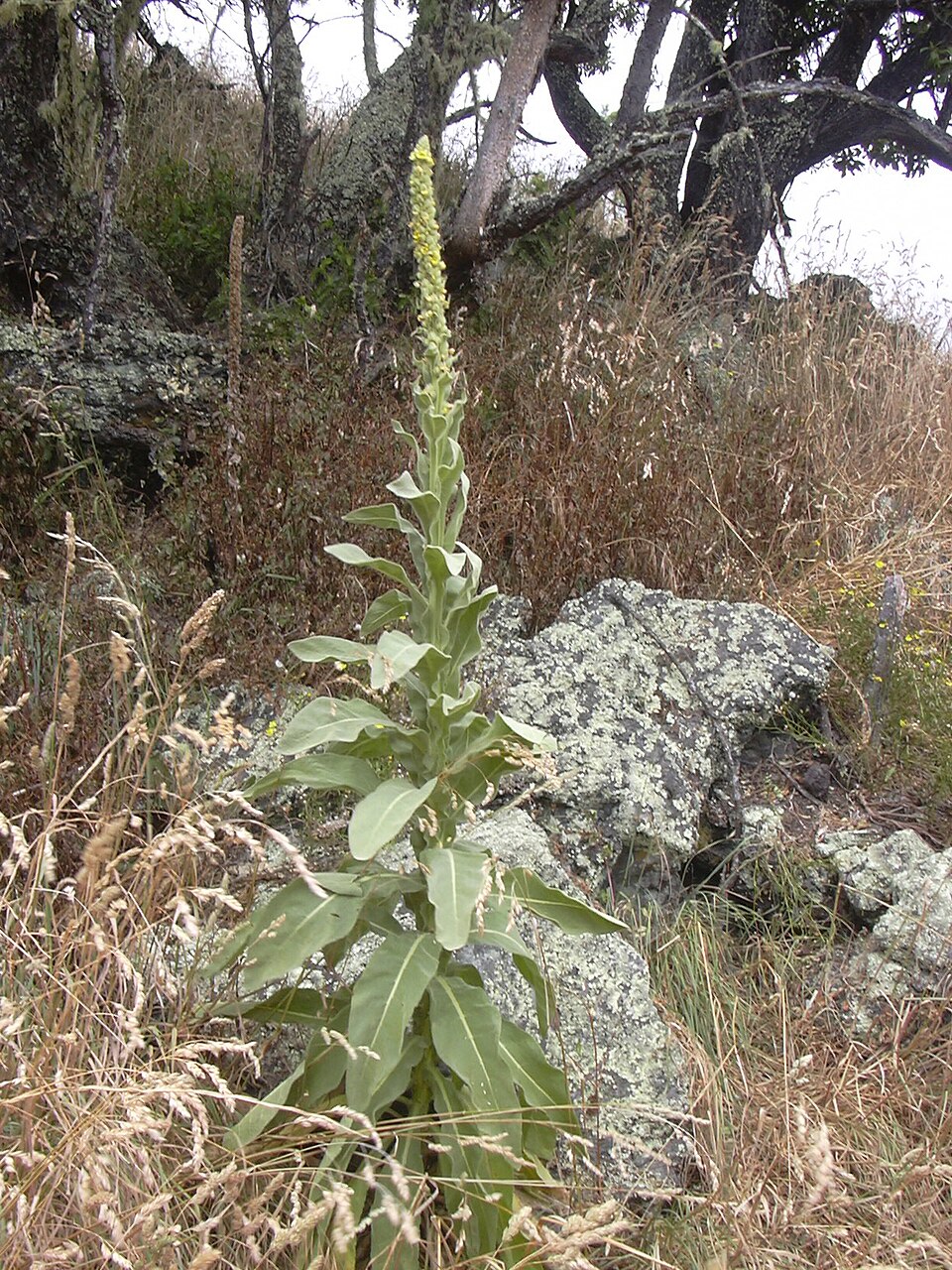
Mullein is the plant that thrives where nothing else will. Its first year is a low rosette of big, fuzzy, silver-green leaves; its second year is a towering spike of yellow flowers that can reach six feet. It grows in gravel, along roadsides, and in the poorest corners of the garden, asking nothing and giving architectural drama plus harvestable leaves and flowers.
Table of Contents
Table of Contents
This guide explains how to grow mullein in home gardens. It is a biennial hardy in zones 3 through 9: rosette the first year, flower spike the second, then seeds that start the cycle again. Sow it on the surface, thin it, and leave it alone. One plant self-sows into a permanent patch. comfrey and borage share the low-maintenance herb corner.

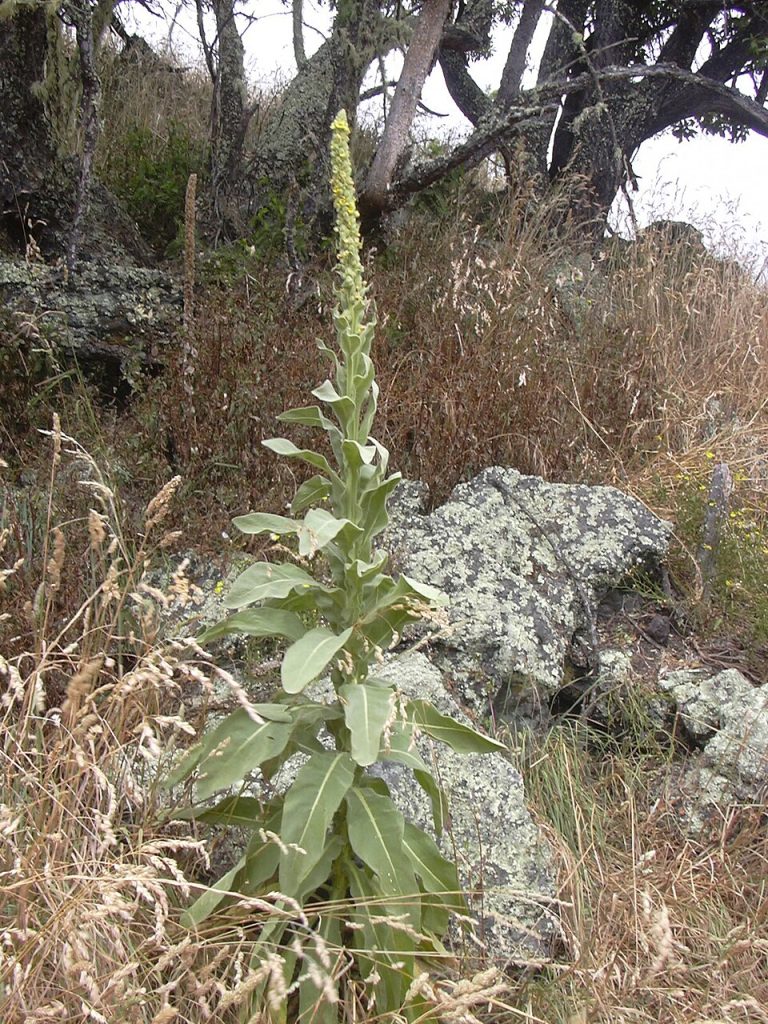
Photo: Wikimedia Commons
Getting Started
When it comes to how to grow mullein, getting the details right makes all the difference.
Many homeowners find that how to grow mullein is easier than they expected once they know the basics.
The common mullein is Verbascum thapsus, the tall, fuzzy biennial of roadsides and poor soils. Ornamental verbascums, like Verbascum chaixii or the Cotswold hybrids, offer showier flowers in white, pink, and purple for the flower border, but common mullein is the one grown for harvest.
Buy seed from an herb supplier; one packet lasts years. There are no named varieties of common mullein to choose between. The USDA PLANTS Database lists Verbascum thapsus with its wide distribution.
For the flower border, ornamental Verbascum chaixii or the Cotswold hybrids offer showier blooms in white, pink, and purple, though common mullein is the one grown for harvest. Grow both if you have room. The University of Minnesota Extension perennial guides list ornamental verbascums.
When and How to Plant
Many homeowners find that how to grow mullein is easier than they expected once they know the basics.
The key to how to grow mullein is choosing the right approach for your space and budget.
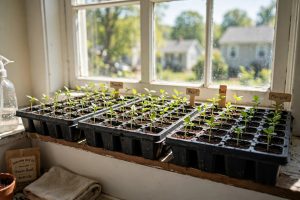
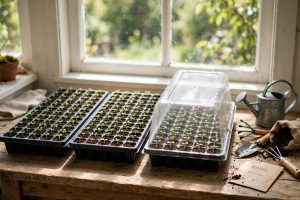
Sow mullein seeds on the soil surface in full sun, pressing them in without covering. They need light to germinate, and the plant develops a deep taproot, so direct sowing beats transplanting. Thin seedlings to about eighteen inches apart once they are a few inches tall.
Sow in spring after the soil warms, or let an existing plant self-sow. check your USDA zone planting dates to time spring sowing for your area. Choose the poorest, sunniest spot you have; mullein sulks in rich, pampered beds. Gravelly, well-drained ground is perfect. The Lady Bird Johnson Wildflower Center notes its pioneer habit on poor soils.
Sow in the poorest, sunniest spot available; mullein sulks in rich, pampered beds. Gravelly soil, a slope, or the edge of the driveway suits it. The Clemson Cooperative Extension poor-soil plant guides recommend mullein for tough sites.
Soil and Sun
The key to how to grow mullein is choosing the right approach for your space and budget.
With a little planning, how to grow mullein can fit even a busy schedule.
Mullein wants full sun and well-drained soil, even poor or gravelly soil. This is the rare plant that does worse in good ground; rich soil and fertilizer make it floppy, short-lived, and prone to rot. The worse the soil, within reason, the better the mullein.
Drainage is the one requirement. Wet winter soil kills the rosette. A slope, a gravel bed, or the edge of the driveway suits it. A neutral to slightly alkaline pH is fine. Do not amend the planting spot; save your compost for plants that appreciate it. The Missouri Botanical Garden confirms its tolerance of poor soils.
A gravel mulch suits mullein better than bark or straw. Spread an inch of coarse gravel around the rosettes; it keeps the crown dry, suppresses weeds, and reflects heat up into the plant, which mullein enjoys. Organic mulches hold moisture against the crown and can rot it over winter, so skip them here. The gravel also marks the rosettes clearly, which helps you avoid hoeing them by accident in spring when everything is small and green. In the wild, mullein colonizes gravelly roadsides and rocky ground, so the gravel mulch simply recreates its favorite habitat.
One bag of pea gravel mulches a whole patch, and it never needs replacing. For a plant that thrives on neglect, a permanent mineral mulch is the fitting choice.
Watering and Feeding
With a little planning, how to grow mullein can fit even a busy schedule.
Before you start, it helps to understand how how to grow mullein works in real homes.
Water only in severe drought once plants are established. Mullein is deeply drought tolerant thanks to its taproot, and overwatering is the main way gardeners kill it. New seedlings need a little steady moisture until rooted, then leave them alone.
Never fertilize. Fertilizer produces soft, floppy growth that flops over and dies back early. If the rosette is green and growing, it needs nothing. This is genuinely a plant that thrives on neglect. chamomile nearby appreciates similar lean treatment. The Clemson HGIC lists mullein among herbs for poor soils.
Care Through the Season
Before you start, it helps to understand how how to grow mullein works in real homes.
A good plan for how to grow mullein saves time, money, and frustration.
There is almost no care beyond thinning and containment. It is a biennial: the first season it forms a low rosette of fuzzy leaves, and the second it sends up the tall yellow flower spike. Leave the spike standing and it self-sows freely; one stalk can scatter thousands of seeds.
To keep mullein where you want it, cut the flower spike as the last blooms fade, before seeds ripen. Pull unwanted rosettes while small, since the taproot deepens fast. Few pests bother the woolly leaves. The Gardenia.net biennial guides cover deadheading for self-sowers.
Cut the flower spike as the last blooms fade to control self-sowing; one stalk scatters thousands of seeds. Pull unwanted rosettes while small, since the taproot deepens fast. The USDA National Agricultural Library weed-management references note the same timing for seed-bearing biennials.
Harvest
A good plan for how to grow mullein saves time, money, and frustration.
For most people, how to grow mullein comes down to a few smart choices.
Gather leaves from first-year rosettes for drying, picking the cleanest outer leaves before the flower stalk rises. Dry them quickly in a warm, airy place out of direct sun. Collect open flowers on dry mornings for infused oil, picking every day or two during bloom.
Harvest modestly from any single plant so it stays vigorous. Wear gloves; the leaf hairs irritate some people's skin. The Old Farmer's Almanac herb drying guides cover technique.
Troubleshooting
For most people, how to grow mullein comes down to a few smart choices.
If you are new to how to grow mullein, start with the simplest option and build from there.
Rotted rosettes in winter mean wet soil. Move future sowings to sharper drainage and never mulch the crown heavily. Floppy, weak growth means the soil is too rich; sow in poorer ground next time and do not feed.
Mullein taking over is a containment issue, not a plant problem. Cut spikes before seeds ripen and pull volunteers young. If plants die over winter in zone 9 or warmer, heat likely prevented the rosette stage; mullein needs a cool season as a biennial. In hot regions, treat it as a curiosity rather than a reliable perennial. No flowers in year one is normal; it is a biennial, and the spike comes in year two.
The Biennial Rhythm
If you are new to how to grow mullein, start with the simplest option and build from there.
When it comes to how to grow mullein, getting the details right makes all the difference.
Understanding mullein means understanding biennials. In the first season, the plant does nothing dramatic: it forms a low rosette of big, fuzzy, silver-green leaves and builds a deep taproot. No flowers, no height, just a quiet rosette gathering strength. Many gardeners mistake this patience for failure. It is not.
In the second season, the rosette sends up the towering flower spike, sometimes six feet tall, studded with yellow blooms that open a few at a time for weeks. After flowering, the plant sets thousands of seeds and dies, and the seeds start the cycle again. To keep a permanent patch, let one plant seed each year while pulling extras; you will always have first-year rosettes and second-year spikes in rotation. Harvest leaves from first-year rosettes before the stalk rises, when they are at their best. Work with the rhythm instead of against it, and mullein becomes a self-renewing resident that asks nothing. The UF IFAS Gardening Solutions biennial guides explain the two-year cycle.
Harvesting Leaves and Flowers
When it comes to how to grow mullein, getting the details right makes all the difference.
Many homeowners find that how to grow mullein is easier than they expected once they know the basics.
Mullein's harvest comes in two parts, each with its own timing. The leaves are best gathered from first-year rosettes, before the flower stalk rises. Pick the cleanest outer leaves on a dry morning, choosing undamaged ones free of dust and insects. Dry them quickly in a warm, airy place out of direct sun; slow drying in humidity invites mold. Crumble the dried leaves and store in sealed jars.
The flowers are collected in the second year, picked fresh as they open. Gather them on dry mornings every day or two during bloom, since each flower lasts a day. Use them fresh for infused oil: fill a jar loosely with blossoms, cover with a light oil, and let it steep in a warm spot for a few weeks before straining. Only pick what you need and leave plenty for the bees, which work the spike steadily.
Wear gloves for both harvests; the leaf hairs irritate some people's skin. Harvest modestly from any single plant so it stays vigorous enough to set the seed that continues the patch. A few rosettes and one flowering spike supply a household with dried leaf and flower oil for the year.
Mullein is gardening at its simplest: scatter seed on poor, sunny ground, thin the rosettes, and stand back. Year one gives fuzzy foliage, year two gives a towering spike of yellow bloom, and the seeds start it all again. Control the self-sowing and it is a permanent, zero-care resident of the toughest corner of your garden.
References
Clemson Cooperative Extension. (n.d.). HGIC: Herbs for poor soils. https://hgic.clemson.edu/
Missouri Botanical Garden. (n.d.). Verbascum thapsus. https://www.missouribotanicalgarden.org/
USDA PLANTS Database. (n.d.). Verbascum thapsus. https://plants.usda.gov/home
Lady Bird Johnson Wildflower Center. (n.d.). Native plant database. https://www.wildflower.org/plants/
Was this guide helpful?

About My Garden US
The My Garden US editorial team writes practical, in-depth home and garden guides for American homeowners — tested advice, no fluff.