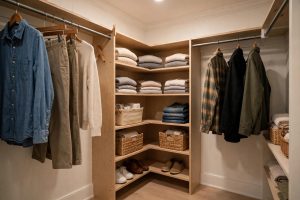
Not every home has room for a shoe rack. Maybe the entryway is a narrow hallway. Maybe the closet is already full. Maybe you just do not want a clunky rack dominating the room. Whatever the reason, you can store shoes without a shoe rack and keep every pair easy to find. If you want to store shoes without a shoe rack, start with the basics below.
Table of Contents
Table of Contents
- Store Shoes without a Shoe Rack: Start by Editing the Collection
- Use Bins and Baskets by the Door
- Try a Storage Bench or Ottoman
- Go Vertical: Walls, Doors, and Closet Rods
- Slide Them Under the Bed
- Stack Clear Boxes in the Closet
- Repurpose Furniture You Already Own
- Contain the Entryway Pile
- Seasonal Rotation Keeps It Manageable
- Match the Method to the Shoe
- References
The trick is to match the storage to the shoe and the spot. Daily sneakers need grab-and-go access by the door. Dress shoes need protection in the closet. Boots need upright support. One solution rarely fits all pairs, so mix and match the methods below.
Store Shoes without a Shoe Rack: Start by Editing the Collection
When it comes to store shoes without a shoe rack, getting the details right makes all the difference.
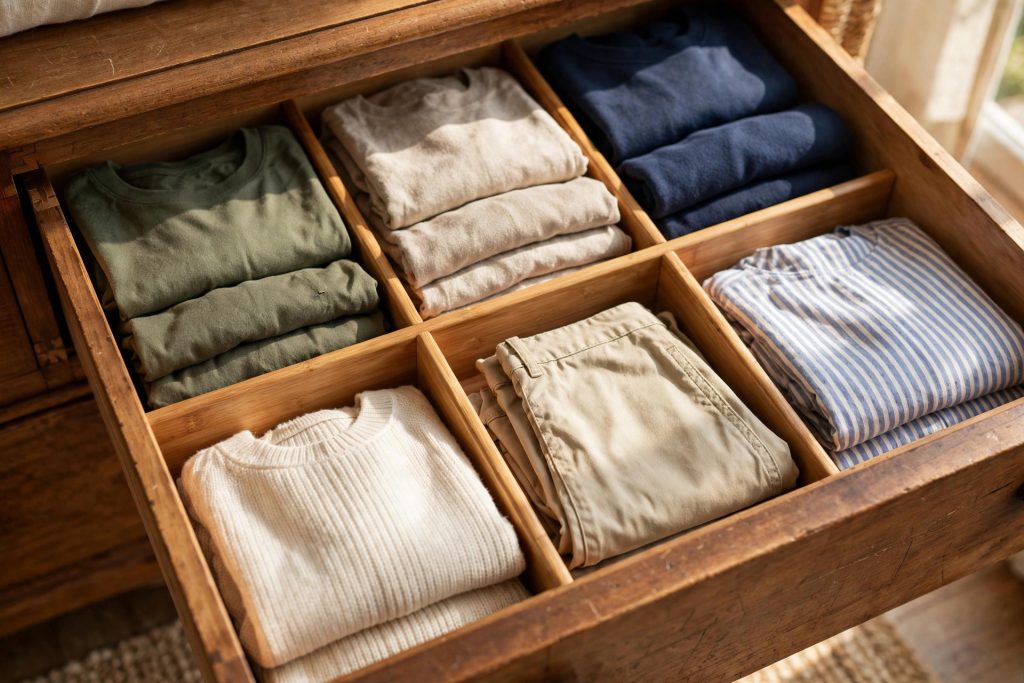
Many homeowners find that store shoes without a shoe rack is easier than they expected once they know the basics.
Before finding homes for shoes, make sure every pair deserves one. Line up all your shoes and be honest. Worn-out soles, broken straps, and pairs that hurt your feet are not storage problems. They are trash or donation decisions.
Keep a realistic number per person for daily access. Most people rotate among a handful of pairs: daily sneakers, work shoes, a dress pair, sandals or casual shoes, and seasonal boots. Everything beyond the rotation can live in longer-term storage. Fewer shoes need less storage, and the pairs you keep get better care.
Clean shoes before storing them anywhere long term. Wipe off dirt, let them dry fully, and stuff toes with paper to hold their shape. Dirty shoes stored in bins transfer grime to everything around them.
Use Bins and Baskets by the Door
Many homeowners find that store shoes without a shoe rack is easier than they expected once they know the basics.
The key to store shoes without a shoe rack is choosing the right approach for your space and budget.
A sturdy basket or bin by the entry beats a shoe pile every time. Each family member gets one bin. Shoes go in the bin, not beside it. The rule is simple enough for kids to follow, and the entry stays clear.
Choose bins with structure. Soft bags collapse and spill. Rigid bins with low sides make it easy to toss shoes in and pull pairs out. A boot tray inside or under the bin catches water and mud in wet weather. SpongeHacks' small-space guide recommends stackable trays for rainy days: pull out both trays when the weather turns, stack them when it clears.
Label bins if the household is big. A piece of tape with a name stops the morning mix-up. For more on labeling systems that stick, see our guide to clear storage bins with lids.
Try a Storage Bench or Ottoman
The key to store shoes without a shoe rack is choosing the right approach for your space and budget.
With a little planning, store shoes without a shoe rack can fit even a busy schedule.
A bench with hidden storage is the hardest-working entry furniture. You sit to put on shoes, and the shoes live underneath or inside. A hinged-top bench swallows several pairs out of sight. An open bench with a low shelf keeps daily pairs accessible underneath.
Place the bench where the shoes actually come off. If everyone kicks off shoes in the hallway, the bench belongs in the hallway, not the living room. Measure the space first. A bench that blocks the walkway creates a new problem while solving the old one. Diydontshy highlights slim benches with under-seat trays as ideal drop zones for tight entryways.
An ottoman with a lift-up top works the same way in a living room or bedroom. It stores off-season pairs while doubling as a footrest or extra seat.
Go Vertical: Walls, Doors, and Closet Rods
With a little planning, store shoes without a shoe rack can fit even a busy schedule.
Before you start, it helps to understand how store shoes without a shoe rack works in real homes.
Floor space is precious. Wall space is free. A row of sturdy hooks on the wall holds bags, and the same idea works for shoes with the right hardware. Wall-mounted slatted racks keep soles off the floor and preserve walkways. For heels, a slim ledge shelf with a small front lip lines stilettos up neatly.
The back of a closet door is prime territory. An over-the-door pocket organizer holds a dozen pairs of flats, sandals, and sneakers without using a single inch of floor. Hang it on a bedroom or closet door. Heavy boots will sag the pockets, so reserve door organizers for light pairs.
A hanging fabric organizer on the closet rod turns dead air into cubbies. These need no tools and fold flat when you move. Use the cubbies for shoes and the side pockets for socks, polish, and laces. Nestsorted's shoe storage guide notes that hanging organizers work best for light and medium shoes, since heavy leather pairs can make fabric shelves sag.
Slide Them Under the Bed
Before you start, it helps to understand how store shoes without a shoe rack works in real homes.
A good plan for store shoes without a shoe rack saves time, money, and frustration.
The gap under the bed is often the largest unused space in a bedroom. Flat under-bed boxes hold sandals, flats, and off-season pairs out of sight. Measure the clearance and buy boxes that slide easily. Boxes with wheels or handles pull out without a struggle.
Reserve under-bed storage for pairs you do not wear daily. Digging under the bed every morning gets old fast. Seasonal rotation works perfectly here: sandals under the bed in cold months, boots under the bed in warm months. AweDeco's shoe storage ideas recommend under-bed organizers and boot shapers for protecting seasonal footwear out of sight.
Avoid storing fine leather shoes under the bed long term. Stale air and dust dull leather. Keep good leather pairs in the closet in breathable bags instead.
Stack Clear Boxes in the Closet
A good plan for store shoes without a shoe rack saves time, money, and frustration.
For most people, store shoes without a shoe rack comes down to a few smart choices.
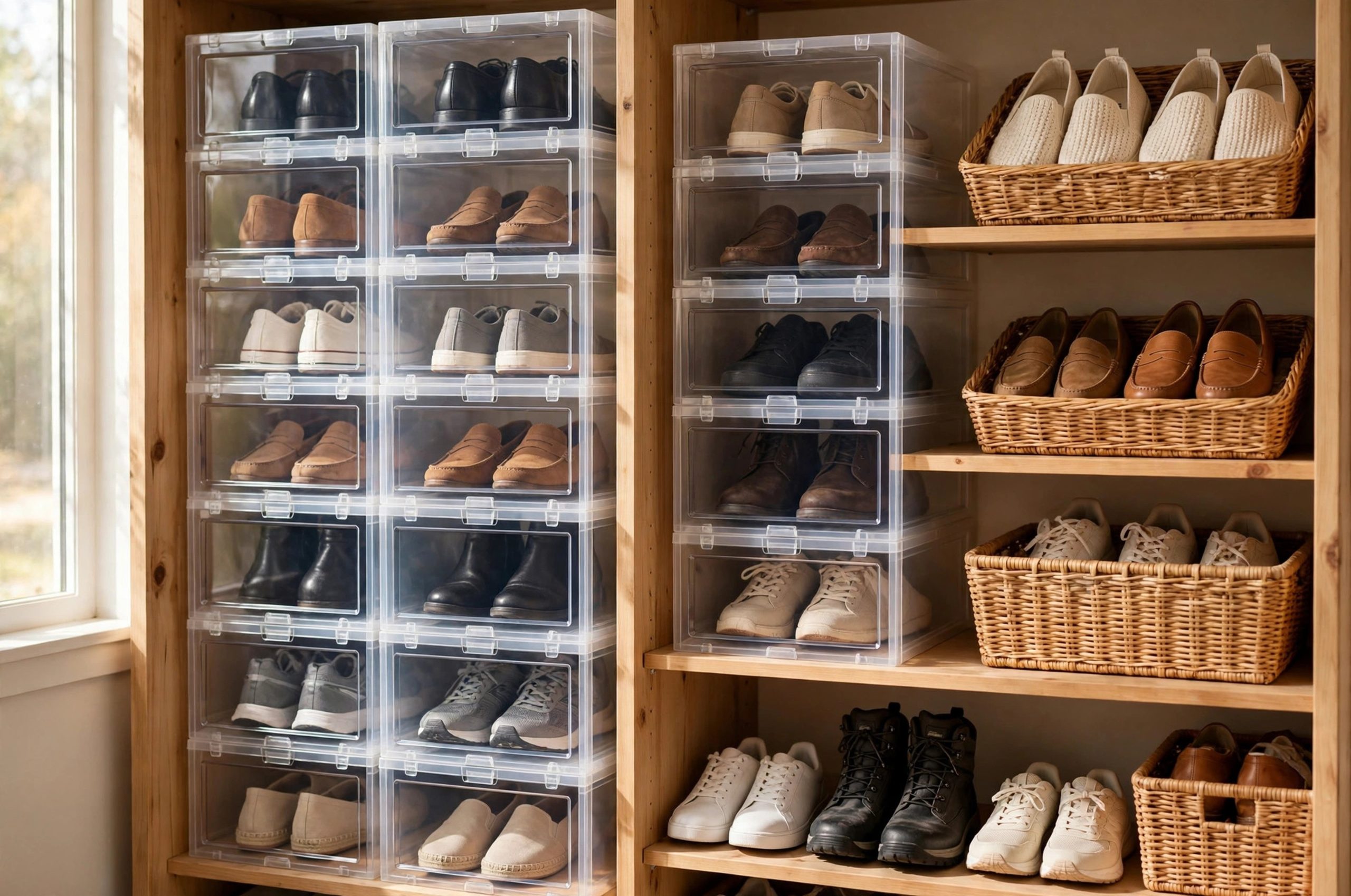
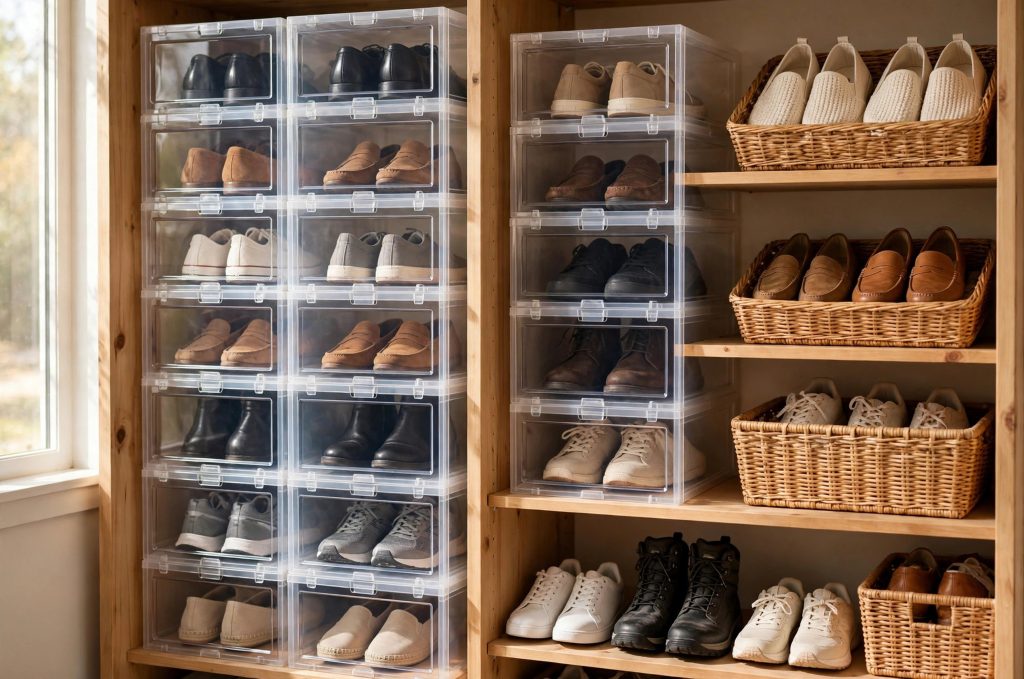
Clear stackable shoe boxes turn a messy closet floor into a tidy wall of shoes. You see every pair without opening anything. Boxes with front-opening doors are worth the extra cost because you never have to unstack to reach the bottom pair.
This method suits sneakers, flats, and special-occasion pairs you want to keep clean and in shape. It is less ideal for tall boots, which need upright storage. For boots, use boot shapers or pool noodles cut to length inside the shaft, and stand them in a bin or on a closet shelf.
Do not stack boxes more than three or four high. Tall stacks tip. Anchor them against a wall or inside a closet where they cannot fall on anyone. Vivian Lou's shoe storage roundup covers stacking boxes, hanging organizers, and rolling racks from years of real-world testing.
Repurpose Furniture You Already Own
For most people, store shoes without a shoe rack comes down to a few smart choices.
Look around with fresh eyes. A bookcase with cube compartments holds shoes perfectly. A low dresser with deep drawers swallows pairs out of sight. A wooden crate on its side becomes a cubby. An old ladder leaned against the wall displays shoes on its rungs with rustic charm.
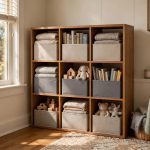
Cube storage units are especially versatile. Each cube holds two to four pairs, and fabric bins inside the cubes hide the shoes entirely for a cleaner look. Closet America's shoe storage guide suggests repurposing crates, ladders, and PVC cubbies as creative small-closet solutions, plus rotating shoes seasonally to keep the active collection small.
A tension rod mounted low in a closet creates a heel bar. Hang heels by their straps from the rod. It costs almost nothing and keeps delicate shoes from getting crushed.
Contain the Entryway Pile
If you are new to store shoes without a shoe rack, start with the simplest option and build from there.
The entryway is where shoe storage succeeds or fails. Set a hard limit: each person keeps two pairs by the door. Everything else lives in its long-term home. Enforce the limit for two weeks and it becomes habit.
A washable rug or mat under the shoe zone defines the area and catches dirt. When shoes creep past the mat, everyone sees it. The visual boundary does the enforcing for you.
For wet climates, keep a dedicated boot tray by the door from the first rainy stretch through the last. Boots drip, and hardwood floors do not forgive. A tray with raised edges contains the mess. Vessi's small-space shoe guide recommends benches with under-storage and rolling trays as the core of a working entryway system.
Seasonal Rotation Keeps It Manageable
When it comes to store shoes without a shoe rack, getting the details right makes all the difference.
Twice a season, rotate. Pack away the off-season pairs in labeled bins or under-bed boxes. Bring out the current season's shoes. While you rotate, inspect each pair. Worn soles, broken eyelets, and stretched elastic mean repair or replace.
This rotation is also the moment to declutter. Shoes you skipped all season will be skipped next season too. Donate pairs in good condition. Recycle the rest through textile recycling programs.
For closet-wide seasonal systems, our guide to closet organizer systems covers rods, shelves, and cubbies. Fabric storage cubes make good seasonal shoe containers on closet shelves.
Match the Method to the Shoe
Many homeowners find that store shoes without a shoe rack is easier than they expected once they know the basics.
Different shoes need different care. Sneakers and canvas shoes are forgiving: bins, boxes, and cubbies all work. Leather dress shoes need shape and air: store with shoe trees or stuffing, never crushed. Heels need separation so they do not scuff each other. Boots need upright support to prevent shaft collapse. Sandals and flip-flops can hang from pegs or live in a single bin.
Kids' shoes multiply fast. Give each child one bin for daily pairs and rotate the rest. Label everything. Small shoes vanish into couch cushions and car seats, so a single home base per child saves daily searches.
You do not need a shoe rack to have organized shoes. You need a home for every pair, a limit on the entryway, and a rotation routine. Bins by the door, boxes in the closet, hooks on the wall, and boxes under the bed cover every situation. Pick the mix that fits your space, edit the collection honestly, and the shoe pile becomes a thing of the past. A little care goes a long way when you store shoes without a shoe rack.
References
AweDeco. (n.d.). Stylish shoe storage ideas for small spaces. https://awedeco.com/shoe-storage-ideas/
Closet America. (n.d.). How to organize shoes in any closet size? https://www.closetamerica.com/shoe-storage-ideas-small-closets-custom-solutions/
coohom. (n.d.). Shoes piling up? Small entryway shoe storage fixes. https://www.coohom.com/article/shoe-storage-solutions-for-small-spaces-creative-practical-ideas
Diydontshy. (n.d.). Shoe storage ideas for bedroom to maximize space. https://diydontshy.com/shoe-storage-ideas-for-bedroom/
Nestsorted. (n.d.). Shoe storage ideas for small spaces: 15 smart ways. https://nestsorted.com/shoe-storage-ideas-for-small-spaces/
Simple Living Mama. (n.d.). Clever shoe storage ideas for small spaces at home. https://simplelivingmama.com/clever-shoe-storage-ideas-for-small-spaces-at-home/
SpongeHacks. (n.d.). The genius shoe storage hack that instantly makes a small space feel bigger. https://www.spongehacks.com/shoe-storage-ideas-small-spaces/
Vessi. (n.d.). Small space shoe storage ideas to help tidy your house. https://vessi.com/blogs/the-forecast/small-space-shoe-storage-ideas-to-help-tidy-your-house
Vivian Lou. (n.d.). Simple shoe storage ideas. https://www.vivianlou.com/blogs/high-heels-without-the-hurt/92874627-simple-shoe-storage-ideas
Was this guide helpful?

About My Garden US
The My Garden US editorial team writes practical, in-depth home and garden guides for American homeowners — tested advice, no fluff.
You May Also Like
A Guide to Stackable Makeup and Cosmetics Organizers with Free Shipping
June 9, 2026 2 views
Bookcases With Storage Doors Price Comparison USA
January 22, 2026 0 views
Basement Shelving Units Reviews and Buying Guide
July 21, 2026 2 views