Table of Contents
Table of Contents
- Choosing a Variety
- When and How to Plant
- Timing your sowing
- Spacing, depth, and days to harvest
- Soil and Sun
- Light needs
- Building good soil
- Watering and Feeding
- Watering routine
- Feeding
- Care Through the Season
- Companions and Placement
- Harvest
- Troubleshooting
- Through the Seasons
- Spring
- Summer
- Fall and Winter
- Quick Answers
- Garden Design Ideas
- Keep Growing
- References
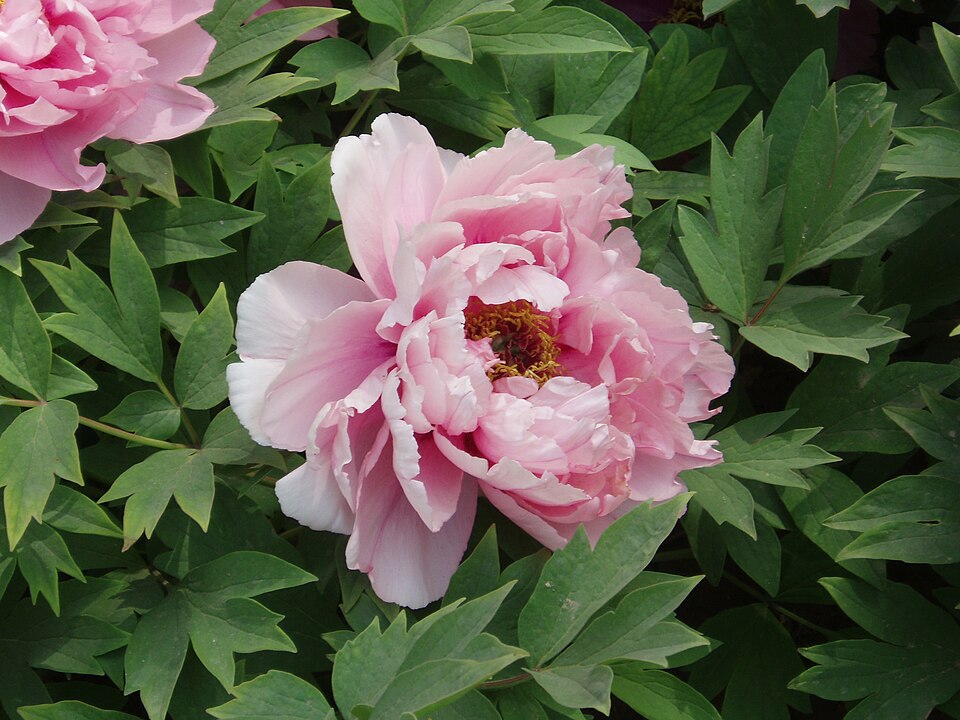
Photo: Wikimedia Commons
Peonies are the heirloom flower - huge, fragrant, ruffled blooms on plants that can outlive the gardener who planted them. A peony planted today may still be blooming fifty years from now, which makes siting a deliciously serious decision. They are not difficult, but they are particular about two things: the eyes (buds) must sit no more than two inches deep, and the plant needs real winter cold. Get those right and peonies are nearly indestructible. Learning how to grow peonies is mostly learning patience - they sulk the first year and typically bloom in their second or third season.
The USDA PLANTS entry for Paeonia lactiflora confirms its long-lived perennial nature. This guide covers root planting depth, siting for decades, ants, support, and cutting. For a quick botanical overview, see the USDA PLANTS entry for Paeonia lactiflora.
Choosing a Variety
When it comes to how to grow peonies, getting the details right makes all the difference.

Many homeowners find that how to grow peonies is easier than they expected once they know the basics.
Herbaceous peonies (Paeonia lactiflora types) die back each winter and are the classic garden plant; intersectional (Itoh) hybrids offer unusual colors and stronger stems at a higher price. For fragrance, old doubles like Sarah Bernhardt and Festiva Maxima remain unmatched. Single and Japanese forms attract more pollinators and hold up better in rain. The Old Farmer's Almanac guide to peonies recommends buying large, healthy bare roots with three to five eyes in fall - fall planting is traditional and best. Choose the site for decades: peonies resent moving and punish transplanting with years of sulking.
When and How to Plant
Many homeowners find that how to grow peonies is easier than they expected once they know the basics.
The key to how to grow peonies is choosing the right approach for your space and budget.
Timing your sowing
Peony is almost always planted from nursery stock, bare-root plants, or divisions rather than seed. Set plants out around your last spring frost when the soil is workable and warming. Plant at the same depth the plant grew in its pot, firm the soil gently, and water it in well.
Spacing, depth, and days to harvest
The first season is mostly about roots and establishment; the real payoff begins in the second season, so plant with patience.
Nursery plants establish fastest when set out on a cloudy day or in the evening, giving roots a night to settle before facing sun. Water them in deeply - the first watering is the most important one.
Frost-date charts from a ZIP-code planting calendar help if you are new to reading your zone.
Soil and Sun
The key to how to grow peonies is choosing the right approach for your space and budget.
With a little planning, how to grow peonies can fit even a busy schedule.
Light needs
Choose the sunniest spot you have. Full sun, six-plus hours, is what makes this plant productive.
Building good soil
For soil, aim for rich, well-drained soil. Work in a few inches of compost before planting; it loosens heavy ground and feeds sandy ground in one move.
Hardy in zones 3 through 8, it fits most of the country. If you garden at the cold edge of the range, a sheltered microclimate near a wall buys you a few degrees of safety.
A two-inch mulch of straw or shredded bark does triple duty: it conserves water, suppresses weeds, and moderates soil temperature. Keep mulch a finger's width from stems to prevent rot.
Soil testing labs listed through the University of Minnesota Extension can confirm your pH before you plant.
Watering and Feeding
With a little planning, how to grow peonies can fit even a busy schedule.
Before you start, it helps to understand how how to grow peonies works in real homes.
Watering routine
Regular, even watering is the goal. Letting plants wilt and then drowning them stresses them and invites trouble.
Feeding
Never fertilize heavily - excess nitrogen causes weak stems and fewer flowers. Compost in fall is enough. It is not a heavy feeder. Rich soil plus compost is enough - save the strong fertilizer for the hungriest vegetables.
Morning watering is the rule: leaves dry fast in rising sun, denying fungal diseases the damp nights they love. Drip irrigation or a soaker hose waters roots without wetting leaves at all.
Irrigation basics from Clemson's Home & Garden Information Center apply to all of these schedules.
Care Through the Season
Before you start, it helps to understand how how to grow peonies works in real homes.
A good plan for how to grow peonies saves time, money, and frustration.
Through the season, water deeply during dry spells; otherwise peonies are remarkably self-sufficient. Never fertilize heavily - excess nitrogen causes weak stems and fewer flowers. Support heavy double blooms with peony rings or grow-through supports placed early, before buds swell. Cut foliage to the ground after it dies back in fall to prevent botrytis, but never cut it in summer - the leaves feed next year's blooms. Ants on buds are harmless; they are after the nectar, not the flower, and the buds open fine without them. The Missouri Botanical Garden plant finder confirms ants neither help nor harm blooming. Space three feet apart for air flow.
Companions and Placement
A good plan for how to grow peonies saves time, money, and frustration.
For most people, how to grow peonies comes down to a few smart choices.
Design peonies into drifts with Bearded Iris, Daylily, and Garden Phlox for a border that changes from spring to fall. Odd-numbered groupings look natural, and repeating the same plants along the bed ties it together. Consider bloom sequence: early, middle, and late performers in each section keep color coming for months. Give each plant its mature footprint, mulch well, and edge the bed crisply - a clean edge makes even a casual planting look intentional. Deadhead spent blooms to stretch the show.
Harvest
For most people, how to grow peonies comes down to a few smart choices.
If you are new to how to grow peonies, start with the simplest option and build from there.
Cut blooms at the soft marshmallow-bud stage - buds that give slightly when squeezed - for the longest vase life, up to ten days. Cut in the morning, strip lower leaves, and condition in deep water; the Missouri Botanical Garden plant finder notes proper cutting stage doubles vase life. For the biggest show flowers, remove side buds on each stem so all energy goes into one enormous bloom. Do not expect flowers the first year; peonies sulk after planting and typically bloom in their second or third season. Once established, a plant gives armloads of cut flowers every spring for decades.
Troubleshooting
If you are new to how to grow peonies, start with the simplest option and build from there.
When it comes to how to grow peonies, getting the details right makes all the difference.
No flowers on an established plant almost always means planted too deep - lift in fall and reset the eyes one to two inches below the surface. Buds that brown and fail to open signal botrytis; improve air flow, clean up fall foliage, and avoid overhead watering. Flopping stems need support rings placed earlier next spring. In zones 9 and warmer, peonies fail for lack of winter chill - they need 500+ hours below 40°F, as the USDA National Agricultural Library's resources confirm. A plant that sulks after moving is normal; peonies can take two years to forgive a transplant. Never divide a happy peony unless you must; they bloom best undisturbed.
Through the Seasons
When it comes to how to grow peonies, getting the details right makes all the difference.
Spring
Spring is cleanup and renewal: cut back dead foliage, divide congested clumps, and set out new plants. Stake tall growers early, before the rush of growth makes it awkward. Top-dress with compost and refresh mulch. Watch for slugs on young shoots - spring is their season too.
Summer
Summer is the payoff: deadhead spent blooms to stretch the show, water through dry spells, and cut flowers for the house in the morning. Watch for the pests noted above, and stake any stems the wind threatens. A mid-season trim of leggy plants brings fresh growth and sometimes a second flush.
Fall and Winter
In fall, leave some seed heads standing for birds and winter interest, then cut the rest back after hard frost. Mulch crowns in cold regions once the ground freezes. This is the time to move or divide anything in the wrong spot - the garden forgives fall transplants.
Quick Answers
How long does peonies take to grow?
The first season is about establishment; expect the real harvest to begin in the second season. Perennials reward patience.
What zones can I grow peonies in?
Zones 3 through 8. Inside that range it is hardy and reliable; outside it, grow as an annual or in containers.
How much sun does peonies need?
Full sun. Give it the sunniest spot you have; shade-grown plants disappoint.
How far apart should I plant peonies?
About 36 inches apart. Crowding stunts plants and invites disease, so give each one its room - the harvest is bigger, not smaller, for the space.
Garden Design Ideas
Peonies are lifetime plants - site them as specimens, in a dedicated row for cutting, or as an informal flowering hedge along a drive. Their lush foliage looks good all season, so they carry the border even out of bloom. Pair with bearded irises and columbines for the spring sequence, and underplant with low groundcovers. Give each plant its three feet and never move it; a peony planted right blooms for fifty years. Cut generously for the house - the plant makes more buds than it can open well, and cutting is good for it. Browse more plant profiles at Gardenia.net's plant profiles for ideas.
Keep Growing
How to grow peonies: eyes shallow, sun, good drainage, no heavy feeding, patience. Plant them once, plant them right, and they will outbloom everything else you own. For planting dates, check your USDA zone planting dates and pair them with other long-lived perennials - our guides to how to grow bearded irises, how to grow daylilies, and how to grow garden phlox bloom in succession around them.
References
- Missouri Botanical Garden. (n.d.). Peony. https://www.missouribotanicalgarden.org/
- Old Farmer's Almanac. (n.d.). Growing peonies in home gardens. https://www.almanac.com/
- U.S. Department of Agriculture. (n.d.). Peony (Paeonia lactiflora) plant profile. https://plants.usda.gov/home
- Lady Bird Johnson Wildflower Center. (n.d.). Peony. https://www.wildflower.org/plants/
Was this guide helpful?

About My Garden US
The My Garden US editorial team writes practical, in-depth home and garden guides for American homeowners — tested advice, no fluff.
You May Also Like
When to Divide Iris Bulbs for Bigger Blooms
October 23, 2026 17 views
Pothos Plants Bulk USA Online Deals: A Practical Guide for Buyers
March 8, 2026 17 views
How to Grow Hydrangeas: Planting & Care Guide
October 28, 2026 18 views