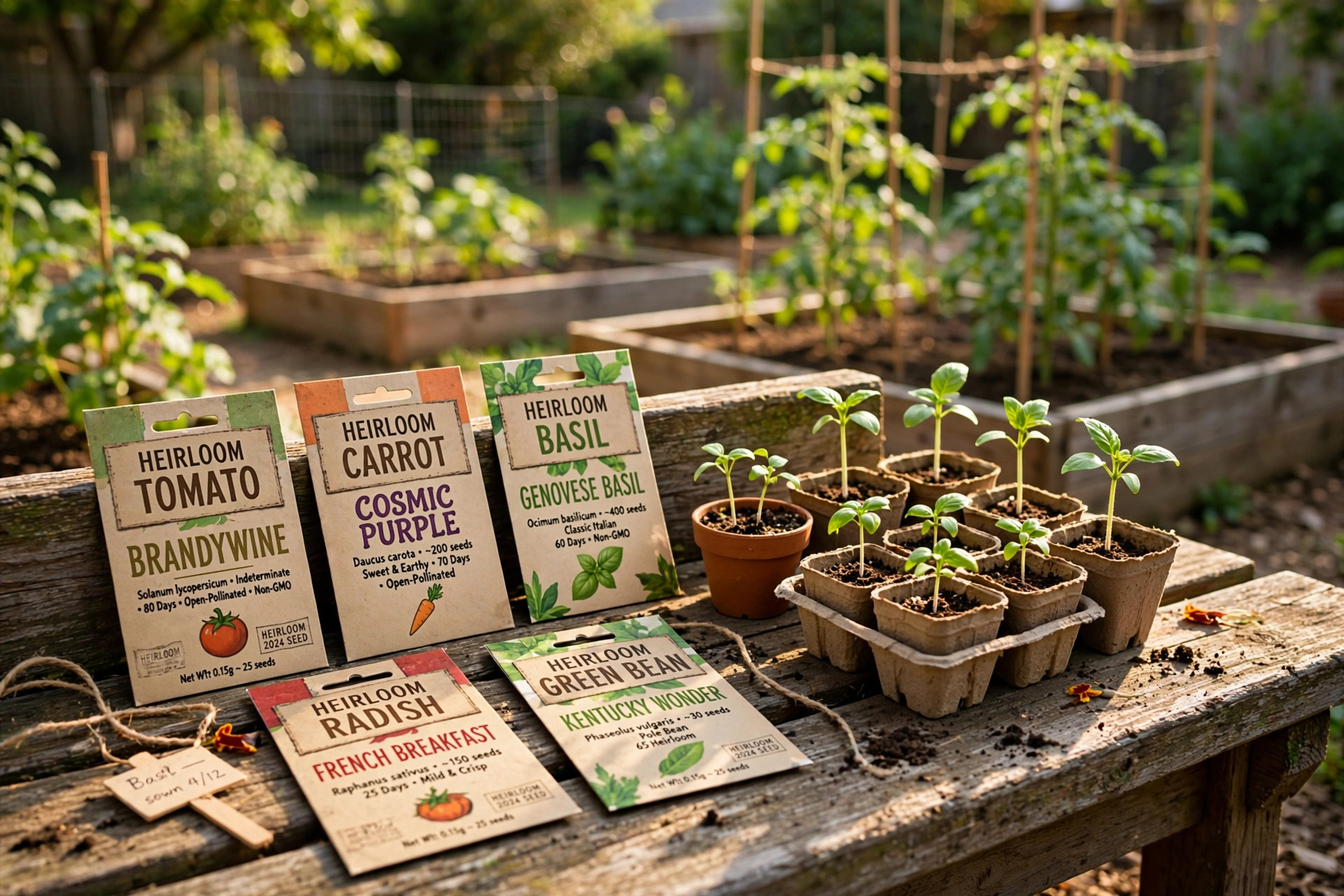

This heirloom vegetable seeds American homes guide was written for any American home gardener who wants to grow food the old way. Heirloom seeds come from open-pollinated plants. Gardeners and farmers have saved them for fifty years or more. Many go back much further. These seeds grow true to type. That means the plants that come up will look and taste like the plants their seeds came from.
A home garden can be a small raised bed, a row along a fence, or a set of pots on a patio. In each case, heirloom vegetable seeds give steady results and fine flavor. This guide explains what heirloom seeds are, how to pick the right ones, how to start and care for them, what they cost, and how to save seeds for next year. It also answers common questions and lists trusted sources for seed packets and growing advice, such as Burpee and Park Seed.
Why Heirloom Seeds Matter for American Homes
Heirloom vegetables were grown by earlier generations because they worked. They ripened well in local soil and weather. They resisted common plant diseases of their region. They tasted good at the table. When you plant heirloom vegetable seeds in an American home, you keep those old traits alive in your own yard.
Hybrid seeds are different. They are bred from two parent lines. They often give high yields in one season, but seeds saved from hybrid plants do not grow true. Heirloom seeds are open-pollinated. Bees, wind, and other natural means pollinate them. Seeds saved from heirloom plants grow into plants like their parents. That makes them ideal for home gardeners who want to save seeds year after year.
There is also the matter of flavor. Many heirloom tomatoes, beans, and peppers were kept because people loved their taste. Home gardeners do not need vegetables that survive a long truck ride. They need vegetables that taste good fresh from the vine. Heirloom varieties deliver that.
How to Choose the Right Heirloom Vegetable Seeds: Heirloom Vegetable Seeds American Homes Guide
Choosing seeds is the first real step. The seed packet tells you most of what you need to know. Read it before you buy.
Know Your Growing Zone
The United States has many climates. A tomato that thrives in Georgia may struggle in Minnesota. Look for the USDA hardiness zone or the days to maturity on the packet. Days to maturity tell you how long the plant needs from sowing or transplanting to harvest. If your frost-free season is 120 days, choose varieties that mature in 100 days or fewer. This leaves room for a slow spring.
Seed companies often note which varieties suit short seasons or hot climates. Garden sites such as The Spruce publish regional growing guides that can help you match varieties to your area.
Check the Packet Details
A good seed packet lists several facts:
– The variety name and whether it is open-pollinated. – Days to germination and days to maturity. – Planting depth and spacing. – Sun and water needs. – The year the seed was packed.
Buy fresh seed when you can. Seed kept cool and dry stays viable for years, but germination rates fall with age. Onion seed, for example, keeps for only about one year. Tomato and pepper seed can last four to six years under good storage. Seed houses like Gurneys print packed-for dates on every packet so you know how fresh your seed is.
Open-Pollinated and Non-GMO Labels
True heirloom seeds are always open-pollinated. Many packets also carry a non-GMO statement. Genetically modified vegetable seed is not sold to home gardeners in the United States, so a non-GMO label on garden seed is more of a reassurance than a warning. What matters most is the word open-pollinated, which tells you the seeds will grow true and can be saved.
For a deeper look at seed labels and what they mean, see this heirloom vegetable seeds buying guide usa written for American shoppers.
Popular Heirloom Varieties for Home Gardens
Some heirloom varieties have been grown in American home gardens for a century or more. These are safe first choices for beginners.
Tomatoes
Brandywine is a famous heirloom tomato. It gives large, pink-red fruit with rich flavor. It needs a long, warm season. Mortgage Lifter is another large-fruited favorite with a long history in American gardens. For shorter seasons, try Stupice or Manitoba. Cherry types like Matt’s Wild Cherry produce small fruit in great numbers and ripen early.
Beans and Peas
Kentucky Wonder is a pole bean grown since the 1860s. It gives long, tender pods over many weeks. For peas, Lincoln and Green Arrow are old shelling peas that do well in cool spring weather.
Peppers and Squash
California Wonder is a classic sweet bell pepper for home gardens. Jimmy Nardello is an old Italian frying pepper with sweet, thin-walled fruit. For summer squash, Costata Romanesco is an Italian ribbed zucchini with excellent flavor. Winter squash lovers often choose Waltham Butternut, which stores for months.
Lettuce and Greens
Black Seeded Simpson is a leaf lettuce grown since the 1850s. It is fast, hardy, and slow to bolt. For cooking greens, Georgia Southern collards have fed Southern families for generations.
Nursery growers such as Monrovia and White Flower Farm focus mainly on plants, but their growing advice applies to vegetables as well. Seed houses like Burpee and Park Seed carry many of the varieties named above.
How to Start Heirloom Seeds Indoors
Starting seeds indoors gives you a head start on the season. It is simple work that needs only a few supplies, and a look at this seed starting trays buying guide usa will help you pick the right trays and domes.
1. Fill clean trays or pots with seed starting mix. Use a light, soil-free mix, not heavy garden soil. 2. Plant each seed at the depth shown on the packet. 3. Water gently so the mix is moist but not soaked. 4. Cover the tray with a clear dome until seeds sprout. This holds in moisture. 5. Keep the tray warm, between 70 and 80 degrees Fahrenheit. A heat mat helps. 6. Give strong light the moment seedlings appear. Simple shop lights hung a few inches above the plants work well. 7. Remove the cover after sprouting. Water from the bottom when the surface feels dry.
Tomatoes, peppers, and eggplants benefit most from indoor starting. They need six to eight weeks indoors before the last frost. Beans, peas, squash, and cucumbers grow fast and are usually sown directly in the garden.
Hardening Off
Before moving seedlings outside, harden them off. This means getting them used to outdoor sun, wind, and cool nights. Set them outside in shade for a few hours each day. Over seven to ten days, give them more sun and more time. Then transplant on a cloudy day or in the evening to reduce shock.
Planting and Care Through the Season
Good soil is the base of every good garden. Have your soil tested through your local extension office every few years. Most vegetables grow best in soil with a pH between 6.0 and 7.0. Add compost each year. A two- to three-inch layer worked into the top few inches of soil feeds plants and improves soil structure.
Water deeply and less often rather than a little every day. Most vegetables need about one inch of water per week from rain or watering. Water at the base of the plants. Wet leaves invite disease. Mulch with straw or shredded leaves to hold moisture and block weeds.
Feed plants lightly. Too much fertilizer grows big leaves and little fruit. A balanced organic fertilizer or side dressing of compost at flowering time is enough for most heirloom vegetables. Rotate crops from year to year. Do not plant tomatoes where tomatoes, peppers, or potatoes grew the year before.
Watch for pests each week. Pick off tomato hornworms by hand. Use row covers to protect young plants from flea beetles. A strong spray of water knocks aphids off leaves. Advice sites like Gardening Know How offer step-by-step fixes for common garden pests and diseases.
Trellis vining crops. Pole beans, peas, and cucumbers give cleaner fruit and take less space when grown up a trellis or fence. Stake tall tomatoes or grow them in sturdy cages. Good air flow around plants keeps leaves dry and reduces blight.
What Heirloom Seeds Cost
Heirloom vegetable seeds are among the cheapest garden supplies. A standard packet costs between one and six dollars. Most packets hold enough seed for a home garden, and many hold far more than a small garden needs. One packet of tomato seed can start more plants than most families can use.
Because heirloom seeds grow true, you can save your own seeds and skip buying packets next year. A single healthy tomato gives hundreds of seeds. One bean plant gives dozens. After the first season, your seed cost can drop to nearly nothing. Buying from heirloom vegetable seeds for sale usa listings is the common first step, and saving seeds from your harvest is the step that pays off for years.
Larger seed collections and bulk packs cost more up front but bring the per-variety price down. If you garden with friends or neighbors, split bulk packs to share the cost.
Saving Your Own Heirloom Seeds
Seed saving is the heart of the heirloom tradition. It is also simple.
For dry seeds like beans, peas, and lettuce, let some pods or heads dry fully on the plant. Pick them on a dry day. Shell or thresh the seeds, spread them on a screen to finish drying, and store them in paper envelopes.
For wet seeds like tomatoes and cucumbers, ferment the seeds to remove the gel coat. Squeeze seeds and pulp into a jar with a little water. Let it sit for two to three days, stirring daily. Good seeds sink. Rinse them in a strainer, spread them on a plate to dry for a week, and store them.
Pepper and eggplant seeds can be scraped out and dried directly. Squash seeds are scooped from ripe fruit, rinsed, and dried.
Label every envelope with the variety name and the year. Store seeds in a cool, dry place. A sealed jar in the refrigerator works well.
Plant breeders at companies like Proven Winners develop new varieties each year, but the old heirloom lines remain valuable precisely because home gardeners can save and replant them without loss of quality.
Common Problems and Simple Fixes
Even careful gardeners meet problems. Most have simple fixes.
Seeds fail to sprout. Old seed, cold soil, or planting too deep are the usual causes. Check the packet date and plant at the right depth.
Blossom end rot on tomatoes. Dark, sunken spots on the bottom of the fruit come from uneven watering. Water evenly and mulch to hold moisture.
Plants wilt in midday heat. Some wilting on hot afternoons is normal and the plants recover by evening. If they stay wilted in the morning, check for stem damage from cutworms or disease.
Safety and Good Practice
Gardening is safe work, but a few habits keep it safer. Wear gloves when handling soil, compost, and rough materials. Wash hands and produce before eating. Keep fertilizers and pest products in their original containers, locked away from children and pets. Follow label directions exactly. More is not better.
Some plants can irritate skin. Tomato leaves bother some people. Wear long sleeves if you are sensitive. Take care in the sun. Wear a hat, drink water, and rest during the hottest hours. Home safety guidance from the USDA National Institute of Food and Agriculture also reminds gardeners to store all garden chemicals out of reach of children.
Buy seeds and plants from trusted sellers. Established seed houses test their seed for germination and keep varieties true to name. This protects you from mislabeled packets and poor germination.
Frequently Asked Questions
Are heirloom seeds harder to grow than hybrid seeds?
No. Heirloom seeds grow the same way as other seeds. They need the same soil, water, and light. Expect a little variation in size and ripening time. That is normal and part of their charm.
How long do heirloom seeds stay good?
It depends on the vegetable. Onion seed lasts about one year. Bean, pea, and tomato seed often last four to six years when stored cool and dry. Test old seed by sprouting ten seeds in a damp paper towel. If seven or more sprout, the packet is still worth planting.
Can I grow heirloom vegetables in containers?
Yes. Choose compact or dwarf varieties for pots. A five-gallon container suits one tomato or pepper plant. Use a quality potting mix, water often, and feed lightly through the season.
Do heirloom plants need more pest control?
Not as a rule. Good practices matter more than the seed type: rotate crops, space plants for air flow, mulch, and scout for pests weekly. Healthy soil grows plants that resist problems.
Where should I buy heirloom vegetable seeds?
Buy from established seed companies with germination testing and clear variety descriptions. Look for companies that list days to maturity and growing notes on each packet. The external sources linked in this guide are good starting points.
Can I save seeds from grocery store vegetables?
Sometimes, but it is a gamble. Many store vegetables are hybrids and will not grow true. For reliable results, start with named heirloom seed from a trusted seller and save seeds from your own harvest.
A Final Word
An heirloom vegetable garden connects your home to a long line of gardeners. The seeds you plant this spring may have been saved by hands like yours for a hundred years. Choose varieties that fit your climate, start them with care, feed the soil, and save the best seeds for next year. The work is simple, the cost is low, and the reward is food with real flavor from your own ground.
References
Burpee. (n.d.). Seeds, plants, and gardening supplies. https://www.burpee.com Gardening Know How. (n.d.). Gardening guides and plant care. https://www.gardeningknowhow.com Gurney’s Seed & Nursery Co. (n.d.). Seeds, plants, and garden supplies. https://www.gurneys.com Monrovia. (n.d.). Plants for home gardens. https://www.monrovia.com National Institute of Food and Agriculture. (n.d.). Agricultural research and extension. https://www.nifa.usda.gov Park Seed. (n.d.). Seeds, plants, and gardening supplies. https://www.parkseed.com Proven Winners. (n.d.). Plants and gardening inspiration. https://www.provenwinners.com The Spruce. (n.d.). Home and garden advice. https://www.thespruce.com White Flower Farm. (n.d.). Plants, bulbs, and garden supplies. https://www.whiteflowerfarm.com
Was this guide helpful?

About Robert Taylor
The My Garden US editorial team writes practical, in-depth home and garden guides for American homeowners — tested advice, no fluff.
You May Also Like
Tulip Bulbs Fall California Homes USA: A Simple Planting Guide
June 1, 2026 0 views
Succulent Variety Packs Deals Near Me: A Full Buying Guide
June 2, 2026 0 views
Finding Morning Glory Seeds Deals Near Me: A Practical Buying Guide
June 6, 2026 0 views