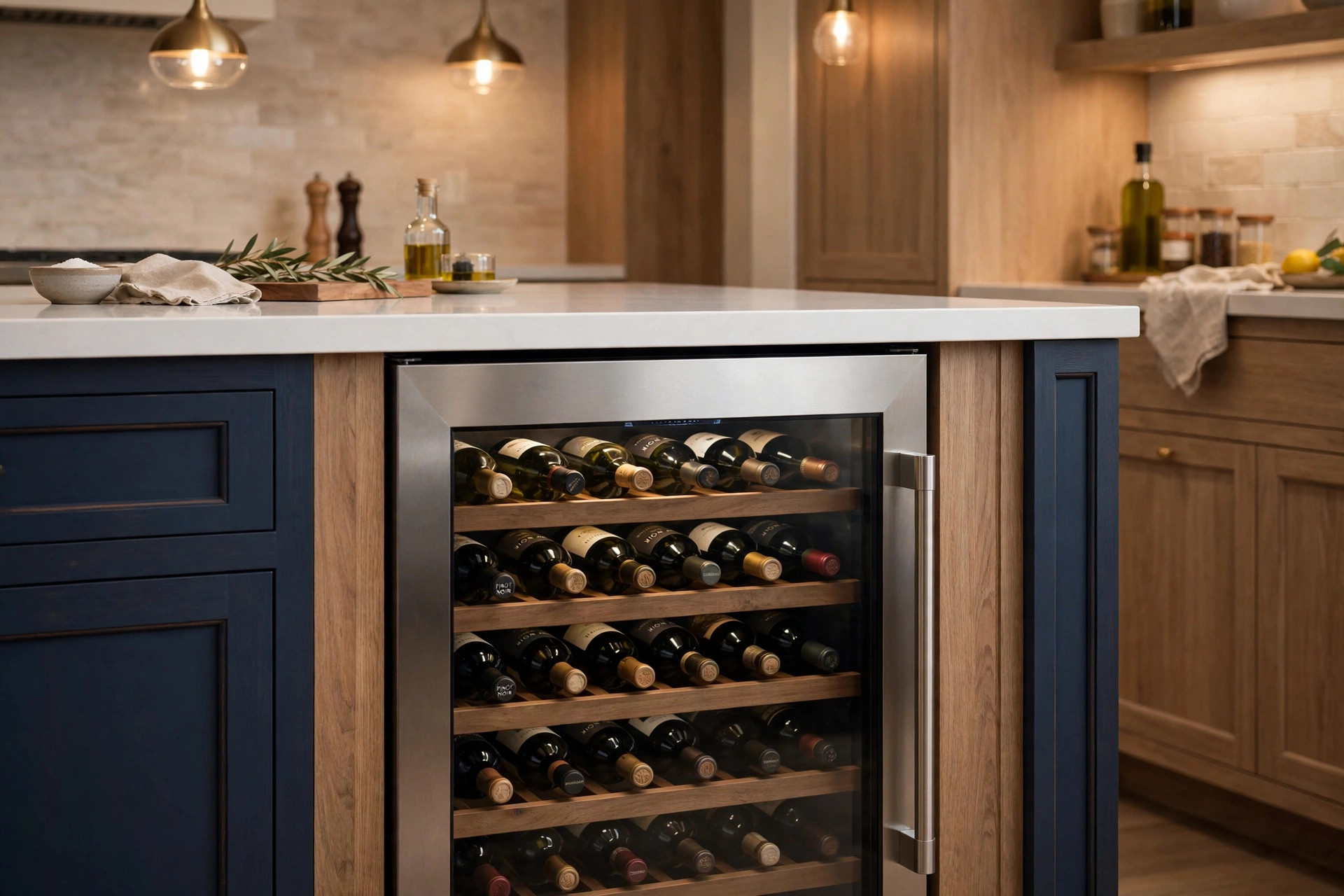

A wine collection deserves a proper home. If you are shopping for under counter wine fridges for sale usa, you have many choices. These slim units slide under a kitchen counter or into a bar island. They hold red and white bottles at the right temperature. They look neat and built in. This guide walks you through the main points so you can buy with confidence.
Why a Built-In Wine Fridge Matters
Wine is sensitive. Heat, light, and shaking can all harm it. A regular kitchen fridge is too cold for long storage. It also dries the air, which can shrink corks. An under counter wine fridge solves this problem. It keeps a steady temperature between 45 and 65 degrees. That range suits both red and white wine.
Under counter models fit where a full-size wine cellar cannot. They use the wasted space below the counter. Many American homes now add a small bar corner in the kitchen. A built in wine cooler fits that spot well. It also adds value to a home. Buyers in 2026 notice a neat bar setup. It makes the kitchen feel finished.
Energy use is modest. Most units use about as much power as a small kitchen appliance. Look for models listed by ENERGY STAR. That label marks units that use less power than standard models. Over a year, the savings add up. A quiet unit can run in an open-plan kitchen without bothering anyone.
How to Choose the Right Unit: Under Counter Wine Fridges for Sale Usa
Measure Your Space First
Before you buy, get the tape measure. Under counter wine fridges for sale usa come in standard widths. The most common size is 24 inches wide. Slim 15-inch models exist for tight spots. Height is usually 34 inches to match counter height. Depth matters too. A front-venting model can sit flush with cabinets.
Measure three things. First, the width of the opening. Second, the height under the counter. Third, the depth from the front edge to the back wall. Write these numbers down. Keep them on your phone when you shop. A unit that is even half an inch too wide will not fit. Built-in models need very little side clearance because they vent from the front. Freestanding units need space on the sides and back, so check the manual.
Single Zone or Dual Zone
Single-zone fridges hold one temperature. They suit people who drink mostly one kind of wine. A red wine lover can set the unit to 58 degrees and leave it. Dual-zone fridges have two sections. Each section has its own control. You can keep whites at 48 degrees and reds at 60 degrees. That flexibility costs more but pleases most drinkers.
Think about your habits. If you host dinners, a dual zone helps. Guests like both red and white. If you only collect red, a single zone saves money. Large families also like dual zones. One side can hold wine and the other can hold drinks for kids. Some units even have a small top shelf for other bottles.
Noise and Vibration
A wine fridge runs a compressor. Cheap models hum loudly. That hum can bother you in an open kitchen. Look for units rated under 40 decibels. That level is close to a quiet library. Brands like Whirlpool and Bosch publish noise ratings in their specs.
Vibration matters for wine. Steady shaking can stir up sediment in old bottles. Good units have a rubber mount on the compressor. This small part cuts the shake. Thermoelectric models make no vibration at all. But they only suit cool rooms. In a hot garage, they struggle. For a kitchen, a compressor model is the safe pick.
Look and Finish
The fridge will be seen every day. Most under counter wine fridges for sale usa come in stainless steel. Black stainless is also popular. Glass doors show your bottles, which looks nice. But glass lets in light. Good models use tinted glass that blocks most UV rays. Wood shelves look warm and hold bottles still. Metal shelves are easier to wipe clean.
Check the door swing. Some kitchens need a left-hinge door. Others need a right-hinge. Many models let you flip the door. The handle style should match your other appliances. If your kitchen has bar handles, pick a fridge with the same style. A small detail like this makes the whole kitchen look planned.
Types and Options Worth Knowing
Standard built-in units are the most common type. They install under a counter and vent from the front. Outdoor-rated models cost more. They can handle rain and heat on a patio bar. If you only need one for the kitchen, skip the outdoor rating.
Wine and beverage centers hold both wine and cans. They have shelves for bottles and racks for cans. These suit parties. A true wine-only fridge has sloped shelves that cradle each bottle. That shape keeps the cork wet, which is what collectors want.
Smart models connect to a phone app. You can check the temperature from the couch. The app sends an alert if the door stays open. This is a nice extra, not a need. Focus first on size, zones, and noise. Add smart features only if the budget allows.
Some shoppers also plan a full kitchen refresh at the same time. If that is your case, our stainless range hood buying guide helps you match finishes across appliances.
What It Will Cost
Prices for under counter wine fridges for sale usa vary widely. Small 15-inch single-zone units start around $300. Mid-size 24-inch models run $600 to $1,200. Dual-zone units with glass doors and wood shelves reach $1,500 or more. Premium brands cost $2,000 and up.
What raises the price? Size is the first factor. A larger unit holds more bottles. Dual zones cost more than single zones. Wood shelves and stainless doors add cost. Smart controls add a bit more. Installation is another cost. If a plumber or cabinet maker must cut the counter opening, expect a few hundred dollars.
Sales help. Big stores like The Home Depot and Lowe’s run sales in spring and around holidays. GE Appliances often lists its own sales on its site. Check prices online first, then check the local store. Some stores match online prices. Delivery fees vary. Many units are heavy, so free delivery is worth asking about.
Set a budget before you shop. Then list the features you must have. Buy the best unit that fits both lists. A cheap unit that hums all day is no bargain. Read buyer reviews on sites like Consumer Reports. Real user reviews often mention noise and long-term reliability. Many buyers also check local stock before ordering online. A store near you may have the exact model on the floor. Seeing it in person helps you judge the finish and the door feel.
Care and Upkeep
A wine fridge needs little care. Wipe the shelves twice a year. Warm water and mild soap are enough. Do not use strong cleaners. They can leave a smell that wine absorbs through the cork. Pull the unit out once a year and vacuum the back coils. Dust on the coils makes the compressor work harder.
Check the door seal now and then. Close the door on a dollar bill. If the bill pulls out easily, the seal is weak. A weak seal lets cold air escape. Replacement seals are cheap and easy to fit. Keep the fridge level. Use a small bubble level on top. An unlevel unit can make the door close poorly.
Humidity matters inside the unit. The ideal range is 50 to 70 percent. Most units hold this range on their own. If your home is very dry in winter, place a small bowl of water inside. Check it monthly. If your home is very damp, wipe any mold from the shelves right away.
Leave space around the vent. Do not push boxes against the front grille. The unit needs air flow to cool. A blocked vent makes the compressor run hot and shortens its life. Teach kids not to hang on the glass door. The hinges are strong but not built for that weight.
Safety
Wine fridges are safe when used right. Plug the unit into its own outlet if you can. A shared outlet with a microwave can trip the breaker. Keep the cord away from water. Do not use an extension cord as a long-term fix. If the cord must run far, have an electrician add an outlet.
The glass door is tempered glass. It is strong but can break if hit hard. Keep heavy pots away from the door when you cook nearby. Clean spills right away. Wine stains the floor if left. If the unit has a lock, use it when small children visit. A lock stops curious hands from pulling out glass bottles.
Place the fridge on a flat, solid floor. A wobbly unit can tip if a child pulls the door. Most models have small feet you can adjust. Turn them until the unit sits firm. Follow the setup steps in the manual. Guides on This Old House also show how to install built-in appliances safely.
Frequently Asked Questions
What size wine fridge fits under a standard counter?
A 24-inch wide unit fits most standard openings. Standard counter height is about 34.5 inches with the top. Check your opening before you buy. Slim 15-inch models fit narrow gaps beside cabinets. For more on matching kitchen appliances, see our gas range buying guide.
Can I put a freestanding wine fridge under the counter?
No, not safely. Freestanding models need air space on the sides and back. Trapped heat will overwork the compressor. Buy a built-in or front-venting model for under counter use. The box or manual will say “built-in ready.”
What temperature should I set for red and white wine?
Set red wine between 58 and 65 degrees. Set white wine between 45 and 50 degrees. A dual-zone unit handles both at once. If you have one zone, pick 55 degrees as a middle ground. Serve reds a bit cool and let them warm in the glass.
How many bottles does a 24-inch unit hold?
Most 24-inch units hold 40 to 60 bottles. Shelf design changes the count. Wide shelves hold fewer bottles. Slide-out racks make it easy to reach the back row. Count your current collection and add room to grow. Most buyers wish they had bought a bigger unit.
Do under counter wine fridges use a lot of electricity?
No. Most use 100 to 200 kilowatt-hours per year. That is less than a full-size fridge. An ENERGY STAR model uses even less. The yearly cost is usually under $30. Home advice sites like Bob Vila confirm these low running costs in their appliance guides.
How long does a wine fridge last?
A good unit lasts 8 to 12 years. Clean the coils yearly and keep the vent clear. Heavy heat and dust shorten the life. When you plan other kitchen updates, our French door refrigerator guide covers full-size fridges that can pair with a wine unit.
A Short Final Word
Buying an under counter wine fridge is a simple project with a big payoff. Measure your space. Pick single or dual zone. Check noise ratings. Set a budget. With these steps, the under counter wine fridges for sale usa become easy to compare. Your bottles will rest at the right temperature, and your kitchen will look its best.
References
Bob Vila. (n.d.). Home improvement advice. https://www.bobvila.com Bosch. (n.d.). Home appliances. https://www.bosch-home.com Consumer Reports. (n.d.). Product reviews and ratings. https://www.consumerreports.org ENERGY STAR. (n.d.). Energy efficient products. https://www.energystar.gov GE Appliances. (n.d.). Kitchen and home appliances. https://www.geappliances.com Lowe’s. (n.d.). Home improvement products. https://www.lowes.com The Home Depot. (n.d.). Home improvement products. https://www.homedepot.com This Old House. (n.d.). Home renovation guidance. https://www.thisoldhouse.com Whirlpool. (n.d.). Home appliances. https://www.whirlpool.com
Was this guide helpful?

About Robert Taylor
The My Garden US editorial team writes practical, in-depth home and garden guides for American homeowners — tested advice, no fluff.
You May Also Like

Kitchen Pantry Cabinets California Homes USA: A Practical Guide
July 8, 2026 0 views
Pot Filler Faucets for Texas Homes: A Practical Guide
April 2, 2026 0 views
Dishwasher Third Rack Texas Homes USA: A Practical Guide
February 21, 2026 0 views