
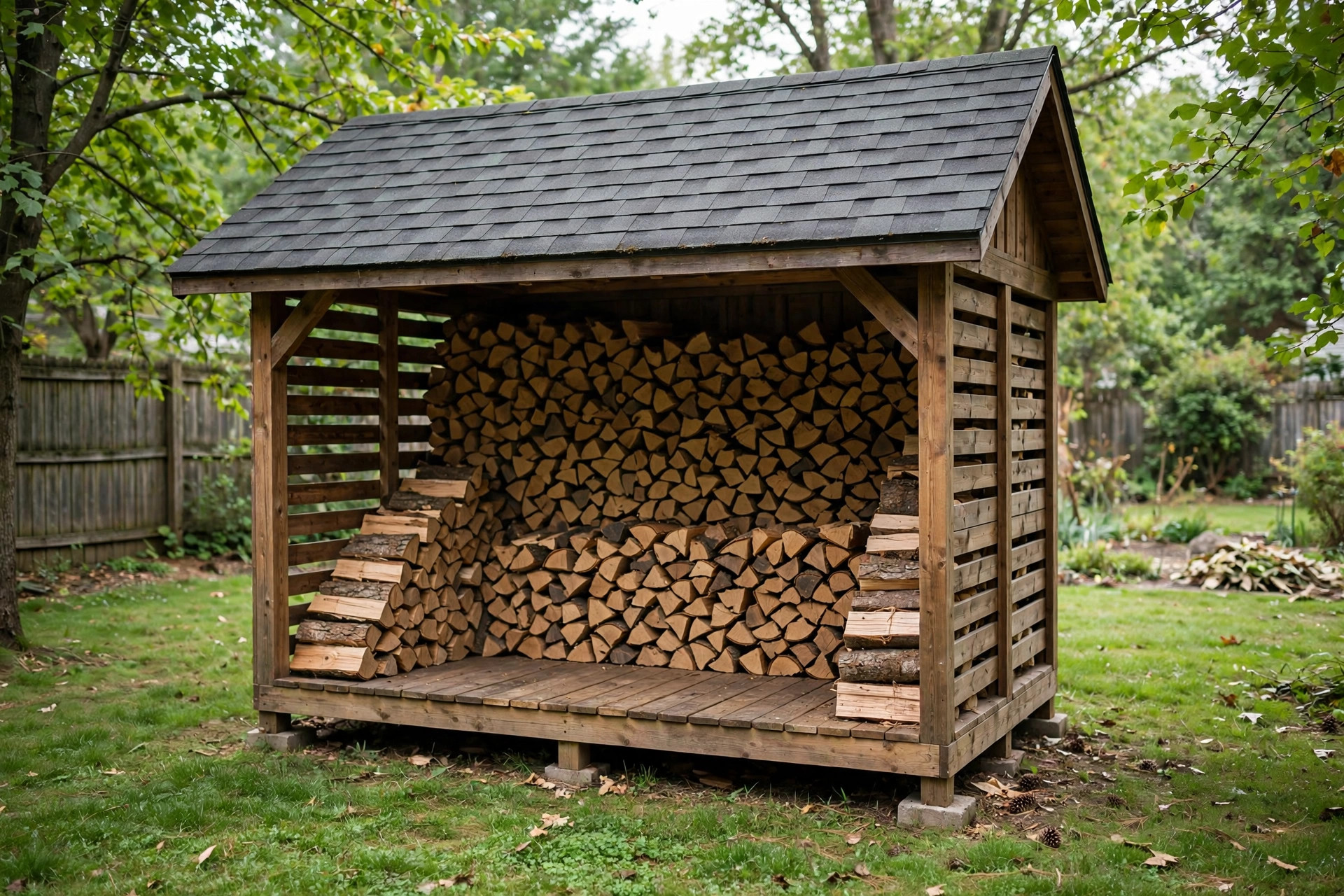

An outdoor firewood storage sheds price comparison usa shows how wide the market is. Prices run from under one hundred dollars to several thousand. Materials range from simple plastic boxes to large steel sheds with wood floors. This guide walks through the choices so you can match a shed to your woodpile and your budget.
Why It Matters
Firewood left on open ground goes bad fast. Rain soaks into the ends. Snow buries the stack. Ground contact invites insects and rot. Wood that burns poorly also creates more smoke and more creosote in the chimney. A proper shed solves all of this at once.
Storage is not a small detail for anyone who heats with wood. The EPA notes that dry, seasoned wood burns cleaner and safer than damp wood. A shed is the simplest way to keep seasoning wood dry while it waits. It also keeps the woodpile tidy and off the soil, which keeps pests away from the house.
Many wood burners keep two kinds of fuel on hand: seasoned logs for the stove and a small backup supply for a wood burning fire pit or pellet stove. A shed with separate bays works well for both.
What to Look For: Outdoor Firewood Storage Sheds Price Comparison Usa
Size and Capacity
Measure your woodpile before you shop. Most makers rate sheds by cord capacity. A full cord is a stack four feet high, four feet wide, and eight feet long. Half-cord and quarter-cord sheds suit occasional fire pit users. Serious wood stove owners often need two or four cords.
Give yourself room to grow. A shed that fits this year’s wood exactly will feel small next winter. One extra half cord of space costs little and saves you from buying a second shed later.
Ventilation
Air flow matters more than perfect dryness. Wet wood dries through moving air. A shed with open sides or louvered vents lets wind pass through the stack. Sealed boxes trap moisture and grow mold. Look for roof overhangs that shed rain without sealing the walls shut.
Roof and Floor
A solid roof is the heart of any firewood shed. Metal roofs last the longest. Treated wood floors keep the bottom row of logs off damp soil. Some small sheds sit on rails instead of floors, which also works as long as the rails lift the wood several inches.
Doors and Access
Front access makes life easier. You will reach into this shed in rain, snow, and dark. A low front edge or an open design lets you pull logs from the top of the pile without climbing. Deep sheds with back walls force you to reach far, which gets old by February.
Where to Place the Shed
Placement shapes how well the shed works. Sun and wind are your friends. A south facing spot dries wood faster than a shaded corner. Morning sun burns off dew, and an open side to the prevailing wind pulls moisture out of the stack.
Keep the shed away from low ground. Rain collects in dips and hollows, and water can sit under the floor even when the roof is sound. A slight rise or a gravel pad solves this. Level the ground first. A shed that leans slowly works its joints loose.
Think about your daily path in winter. You will carry wood in cold weather, often after dark. A shed close to the back door saves steps. The trade off is the ten foot rule for safety and pests. Find a spot that is near the house but not against it.
Check the view from the street and from your own windows. A tidy shed with a neat stack looks good. A lopsided stack behind a tilted roof does not. Small extras like a gravel edge and a mown border make the shed look planned rather than accidental.
Delivery access matters too. Wood arrives by truck, often in a dump bed or on a trailer. The truck needs room to back in and drop the load. Place the shed where a delivery truck can reach it without crossing a soft lawn that will turn to mud in rain.
Types and Options
Resin and Plastic Sheds
Molded resin sheds are the lowest price choice. They weigh little, resist rot, and need no painting. Small models hold a quarter to a half cord and cost roughly 100 to 350 dollars. They suit renters and small yards. The This Old House guides on outdoor storage note that plastic sheds last well but can look plain next to a wood fence.
Steel and Metal Sheds
Galvanized steel sheds cost more and hold more. A two-cord steel shed with a metal roof often runs 400 to 1,200 dollars. Steel stands up to heavy snow and needs little care. Check the gauge. Thicker panels resist dents and wind. Thin budget panels can rattle in storms.
Wooden Firewood Sheds
Wood sheds look best in most yards. Cedar and pressure treated lumber resist weather for many years. Kits run 500 to 2,500 dollars for one to four cords. Custom built sheds cost more but match the house. Family Handyman publishes shed plans for handy owners who want to build their own for less than the cost of a kit.
Firewood Racks With Covers
A rack with a fabric cover is not a true shed, but it fills a gap. Racks cost 40 to 150 dollars and hold a quarter to a half cord. They work well near a back door for a week of wood. For full winter storage, step up to a shed with walls and a real roof.
Cost and Price Comparison
Here is how the main options compare across the USA.
– Small resin box (1/4 cord): 100 to 350 dollars. Best for patios and small decks. – Covered rack (1/4 to 1/2 cord): 40 to 150 dollars. Best for short term storage. – Metal shed (1 to 2 cords): 400 to 1,200 dollars. Strong value for full winter wood. – Wood shed kit (1 to 4 cords): 500 to 2,500 dollars. Best looks, most assembly. – Large custom shed (4+ cords): 2,000 to 5,000 dollars or more. Built to last decades.
Prices shift by region. Shipping costs push prices higher in rural areas and in the Northeast. Local lumber yards sometimes beat big box prices on wood kits. Home Depot and Lowe’s carry wide ranges online, which makes side by side shopping easy.
Buy once if you can. A cheap shed that leaks costs more than it saves when a full cord of good wood goes soft. Consumer Reports testing methods show that build quality matters more than brand name in simple outdoor structures.
Season matters for price too. Sheds sell at full price in fall when everyone remembers winter is coming. Spring and early summer often bring sales. Buying early also gives you time to assemble the shed before wood delivery day.
Care and Upkeep
A good shed needs little care, but not zero care. Sweep out bark and debris each spring. Wet bark holds moisture against the floor. Check the roof after heavy storms. Clear leaves from the back corners where damp pockets form.
Treat wooden sheds every two to three years. A fresh coat of stain or sealant keeps water out and wood strong. Tighten bolts on metal sheds once a year. Wind works fasteners loose over time.
Stack wood with bark side up on the top row and leave small gaps between rows. Rotate stock so the oldest wood burns first. The Spruce firewood guides recommend keeping a six inch gap behind the shed for air to move freely.
Safety
Firewood sheds sit near the house but should not touch it. Keep the shed at least ten feet from the home and away from flammable structures. Termites and carpenter ants love woodpiles. A gap of open ground between the pile and the foundation makes inspection easy.
The CPSC advises care with anything stored around the home that can draw pests or fire. Never store treated lumber or painted wood in the shed. Burning those materials releases harmful smoke. Burn only clean, seasoned firewood in stoves, fireplaces, and outdoor fire pits.
Keep a path clear to the shed in winter. Slips on ice near a woodpile are common. A simple gravel pad under and around the shed helps with drainage and footing.
Frequently Asked Questions
How big a shed do I need for one winter?
Most wood stove homes burn three to five cords per winter. A household with a wood burning fireplace insert as a supplement may need only one or two cords. Count your actual use for one season, then add half a cord of margin.
Is a metal or wood shed better for firewood?
Metal sheds cost less per cord and last longer with no painting. Wood sheds look better and can be repaired with basic tools. Both work well if they have a real roof, a raised floor, and good air flow. Choose by budget and by how the shed will look in your yard.
Can I store firewood in a regular garden shed?
You can, but firewood sheds work better. Garden sheds seal tight, which traps moisture. Firewood needs open sides or vents. A garden shed also takes floor space that wood does not need. Many owners keep tools in the garden shed and logs in an open firewood shed.
How long does firewood last in a shed?
Seasoned firewood stays good for two to three years in a dry, aired shed. After that it starts to lose heat value and dry out too much. Very dry, old wood burns fast and hot. Burn the oldest wood first each fall.
Do I need a permit for a firewood shed?
Most small firewood sheds need no permit. Rules change at larger sizes, often around 100 to 120 square feet. Check local code before you build. Homeowners associations may have their own rules about shed size and placement.
What is the cheapest way to store firewood outdoors?
The cheapest method is a simple rack with a tarp over the top, often under 60 dollars. It works in a pinch. A Bob Vila review of outdoor storage notes that tarps trap moisture if they touch the wood, so hang the tarp like a roof rather than wrapping the pile.
A Short Final Word
An outdoor firewood storage sheds price comparison usa comes down to cord capacity, roof quality, and air flow. Small resin boxes suit casual users. Metal and wood sheds suit serious wood burners. Buy in spring, size up by half a cord, and keep the shed ten feet from the house. Dry wood burns cleaner, heats better, and makes the whole winter easier.
Related guides on this site include high efficiency gas log sets for sale, freestanding electric stoves reviews and buying guide, and buy tile fireplace surrounds online in texas.
References
Bob Vila. (n.d.). Home improvement advice. https://www.bobvila.com Consumer Reports. (n.d.). Product reviews and ratings. https://www.consumerreports.org Family Handyman. (n.d.). DIY home repair and maintenance. https://www.familyhandyman.com Heatingandcooling. (n.d.). Home and garden information. https://www.heatingandcooling.com Homedepot. (n.d.). Home and garden information. https://www.homedepot.com/c/outdoor_decor Lowe’s. (n.d.). Home improvement products. https://www.lowes.com Napoleon. (n.d.). Fireplaces, grills, and heating products. https://www.napoleon.com The Home Depot. (n.d.). Home improvement products. https://www.homedepot.com The Spruce. (n.d.). Home and garden advice. https://www.thespruce.com This Old House. (n.d.). Home renovation guidance. https://www.thisoldhouse.com U.S. Consumer Product Safety Commission. (n.d.). Product safety information. https://www.cpsc.gov U.S. Environmental Protection Agency. (n.d.). Protecting human health and the environment. https://www.epa.gov
Was this guide helpful?

About Robert Taylor
The My Garden US editorial team writes practical, in-depth home and garden guides for American homeowners — tested advice, no fluff.
You May Also Like
Energy Efficient Stone Fireplace Surrounds for Sale
July 31, 2026 0 views
Best Electric Fireplace Mantels for Humid Climates: A Buyer Guide
August 13, 2026 0 views
Ventless Outdoor Patio Heaters Buying Guide
March 15, 2026 0 views