
Finding top rated indoor firewood holders for sale is a simple task once you know what to look for. A firewood holder is a rack, basket, or stand that stores split logs beside your fireplace or stove. It keeps wood off the floor. It keeps bark and chips in one place. It also puts fuel within arm’s reach on a cold night. Shoppers who search for the top rated indoor firewood holders for sale want a piece that works well and looks good. The market is full of choices. This guide walks through the main types, the best materials, fair prices, and safe use. By the end you will know how to judge any model in a store or online listing.
Why an Indoor Firewood Holder Matters
A pile of logs on the hearth looks fine for a day. After a week it leaves bark on the floor and marks on the rug. An indoor firewood holder solves this. It lifts wood off carpet and wood floors. It stops moisture from soaking into flooring. It keeps splinters and insects contained. Many owners also say a full holder makes the room feel warm and ready.
There is a practical side too. A stove or fireplace burns best when you feed it at steady times. If the wood sits ten feet away in a cold porch, you may wait too long between loads. A holder by the fire keeps a full evening of wood in one place. You save trips. You keep the door of the stove open for less time. That means less smoke in the room.
Holders also suit small homes. Not every house has a woodshed. Many wood burners stack a cord outside and bring in a day or two of fuel at a time. An indoor holder sized for a day or two of wood is all they need. It keeps the rest of the home tidy.
What to Look for When You Buy: Top Rated Indoor Firewood Holders for Sale
When you read reviews of the top rated indoor firewood holders for sale, look past the stars. Focus on five points. Size comes first. Measure the space beside your fireplace. Leave room for the stove door to open. A holder that blocks the door is worse than no holder at all. Note the width, depth, and height. Compare those numbers to your floor space.
Strength comes next. A full load of oak is heavy. Cheap wire racks can bend under the weight. Look for welded joints, thick steel rod, or solid wood frames. Check the stated weight limit. A holder that carries 60 to 100 pounds will serve most homes.
The base matters as well. Logs shed dirt. A holder with a tray or a solid bottom catches debris. Raised feet keep the bottom off the rug. If you have carpet, look for a model with a wide, flat base that will not tip.
Then think about the handle or opening. A wide top opening makes loading easy. A tall basket shape suits long logs. Some holders have built-in handles. Handles help you move the holder to the porch for loading.
Finally, look at the finish. Indoor holders sit in plain sight for months. Black powder-coated steel suits most rooms. Bronze and copper tones suit older homes. Canvas log totes are plain but practical. Pick a finish that will age well in your home.
Types of Indoor Firewood Holders
Most models fall into four groups. Each has strengths.
Ring stands. A metal ring on three or four legs holds a small stack of logs upright. They suit short splits and kindling. They take up little floor space. They are cheap and simple. They hold less wood than other types.
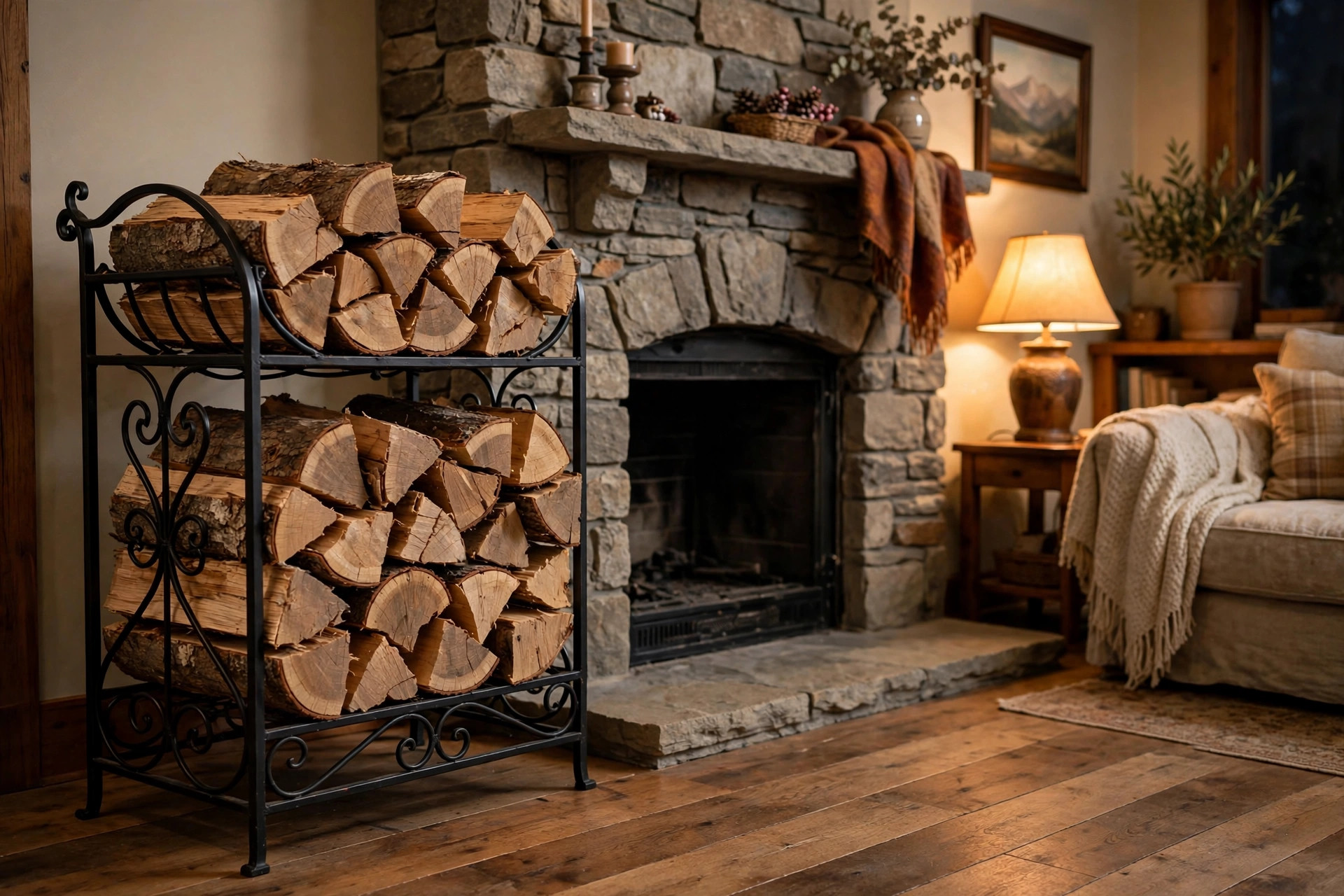
Log racks. These are rectangular frames with two rails and a base. Logs stack in rows between the rails. Racks hold a full evening of wood. They are stable and strong. Some include a lower shelf for kindling. Buyers checking where to buy fireplace grates in Colorado see similar steel frames built for heat duty.
Baskets and hampers. Woven baskets, wire baskets, and canvas totes carry wood by hand. They look warm and natural in a living room. Canvas totes with handles make trips to the woodpile easy. Baskets hold less wood and need lining to catch dirt.
Holder-and-tool sets. Many stores sell a holder bundled with a poker, tongs, brush, and shovel on a stand. These sets look neat. They cost more. Buyers who search for top rated childproof fireplace screens for sale often buy a tool set at the same time. It is worth comparing the price of the bundle to buying parts alone.
Materials Compared
Steel. The most common choice. Strong, heat-safe, and cheap. Powder coating stops rust. Plain black steel fits any decor.
Wrought iron. Heavier and dearer than steel. Looks fine in older and country homes. Very strong. Needs care to stop rust in damp rooms.
Wood. Some holders use wood frames with metal fittings. They look warm. They should never sit too close to the firebox. Keep at least three feet from an open flame.
Canvas and fabric. Used for tote-style carriers. Light and cheap. Not for storage beside the fire over days. They are best for carrying wood from porch to hearth.
Copper and brass. Pretty and dear. They show wear over time. Some owners like the aged look.
Cost and Price Ranges
Prices for the top rated indoor firewood holders for sale run in wide bands. A simple canvas tote costs 20 to 40 dollars. Basic steel ring stands cost 30 to 60 dollars. Sturdy log racks in powder-coated steel cost 50 to 120 dollars. Wrought iron racks and baskets cost 100 to 250 dollars. Large designer pieces in copper or bronze can pass 300 dollars.
Tool sets with a holder add 40 to 80 dollars to the rack price. Watch for holiday sales. Stores clear hearth goods in late winter and early spring. Prices drop by a third or more. Used racks show up at estate sales and online markets for a few dollars. Check welds and joints on any used piece before you buy.
Shipping is a cost to watch online. Steel racks are heavy. Some sellers add 15 to 25 dollars in freight. Look for free shipping offers on orders above a set total.
Care and Upkeep
A good holder lasts for years with small care. Empty it once a week during burning season. Brush out bark and chips. Wipe steel with a dry cloth. If rust shows, sand the spot and touch up with high-heat paint. Keep iron pieces dry. A damp porch or a leaky wall will start rust fast.
Canvas totes need washing now and then. Empty the dirt first. Machine wash on gentle and air dry. Do not put a damp tote beside a hot stove. Wood-frame holders benefit from a wipe with wood oil once a year. Check all bolts and screws each fall. Tighten what has loosened over the summer.
Store the holder in a dry place if you stop burning for the season. A garage shelf works fine. Cover it with a sheet to keep dust off.
Safety Around the Fire
Safety rules are plain and worth heeding. Keep the holder at least 36 inches from the firebox of a stove or the opening of a fireplace. Sparks can jump. Dry bark can catch. The U.S. Environmental Protection Agency notes that dry, seasoned wood burns cleaner and safer than green wood. Only load dry wood into your indoor holder. Green wood sheds water and breeds mold indoors.
Do not overfill. Logs should sit stable. A log that rolls off can crack a tile hearth or burn a rug. Teach children to stay clear of the holder. Store matches and lighters away from the hearth. Keep a fire extinguisher in the room. Readers who check fireplace glass doors reviews and buying guides often add a screen at the same time for extra safety.
If you burn in a stove, use the holder only for staging fuel. Do not stack logs against the stove body. Metal stoves throw heat in all directions. Give the stove its rated clearance on all sides.
How to Judge a Sale Listing
Online listings for the top rated indoor firewood holders for sale use the same words. “Heavy duty” and “large capacity” mean little without numbers. Look for stated dimensions in inches. Look for a stated weight capacity in pounds. Look for the material and finish by name. A listing that says “metal” without more detail may be thin wire.
Read the one- and two-star reviews. They tell you what breaks. Common complaints are bent rails, loose screws, and paint that chips in the first month. If many buyers report the same fault, pass on the model. Check the return policy. A holder that arrives bent should go back free of charge.
Retailers such as Home Depot and Lowe’s list holder specs in full and show store stock by zip code. Review sites such as Consumer Reports and Bob Vila rate hearth gear on build quality. Home guides at The Spruce, This Old House, and Family Handyman explain safe clearances and wood storage. Maker pages like Napoleon and Heatilator show how holders pair with stoves and fireplaces.
Frequently Asked Questions
How much wood should an indoor holder hold? Most owners keep a one- to two-day supply beside the fire. That is about one-eighth to one-quarter of a face cord for a steady burner. A holder that holds 50 to 100 pounds of wood suits most homes. Larger racks suit those who burn all day.
Can I keep the holder on a wood floor? Yes, with care. Use a holder with a tray or solid base. Place a hearth rug or mat under it. Wipe up bark dust often. Never drag a loaded rack across wood floors. Lift it or use felt pads under the feet.
Is a fabric log tote safe near a fireplace? A tote is safe for carrying wood to the fire. Do not leave a loaded canvas tote within three feet of an open fire for long. Canvas can smolder if a spark lands on it. Store the tote farther back once the fire is lit.
What size logs fit a standard holder? Most racks and baskets take splits up to 20 inches long. Ring stands suit shorter wood, often 14 to 16 inches. Measure your longest splits before you buy. Cut or split longer pieces to fit.
Do I need a holder with a cover? A cover is not needed indoors. Covers suit outdoor racks that face rain. Indoors, open designs work best. They let air reach the wood and make loading simple.
Can one holder serve both a fireplace and a stove? Yes. The holder is only a storage piece. What matters is the distance from the heat. Keep the same 36-inch clearance from any open flame or hot stove surface. Move the holder if you change which unit you burn in.
A Short Final Word
The top rated indoor firewood holders for sale share simple traits. They are strong enough for a full load. They fit the space beside the fire. They catch dirt. They look at home in the room. Start with your measurements and your floor type. Pick a sturdy steel or iron piece in a finish you like. Keep it at a safe distance from the flames. With that done, your wood stays tidy and your evenings by the fire stay easy.
References
Bob Vila. (n.d.). Home improvement advice. https://www.bobvila.com Consumer Reports. (n.d.). Product reviews and ratings. https://www.consumerreports.org Family Handyman. (n.d.). DIY home repair and maintenance. https://www.familyhandyman.com Heatilator. (n.d.). Fireplaces and fireplace products. https://www.heatilator.com Lowe’s. (n.d.). Home improvement products. https://www.lowes.com Napoleon. (n.d.). Fireplaces, grills, and heating products. https://www.napoleon.com The Home Depot. (n.d.). Home improvement products. https://www.homedepot.com The Spruce. (n.d.). Home and garden advice. https://www.thespruce.com This Old House. (n.d.). Home renovation guidance. https://www.thisoldhouse.com U.S. Environmental Protection Agency. (n.d.). Protecting human health and the environment. https://www.epa.gov
Was this guide helpful?

About Robert Taylor
The My Garden US editorial team writes practical, in-depth home and garden guides for American homeowners — tested advice, no fluff.
You May Also Like

Buy Chimney Liners Online in California: A Homeowner’s Guide
August 21, 2026 0 views
Smart Gas Fireplace Inserts for Sale: A Plain Guide for American Homes
July 7, 2026 0 views
Top Rated Propane Patio Heaters Buying Guide
February 20, 2026 0 views