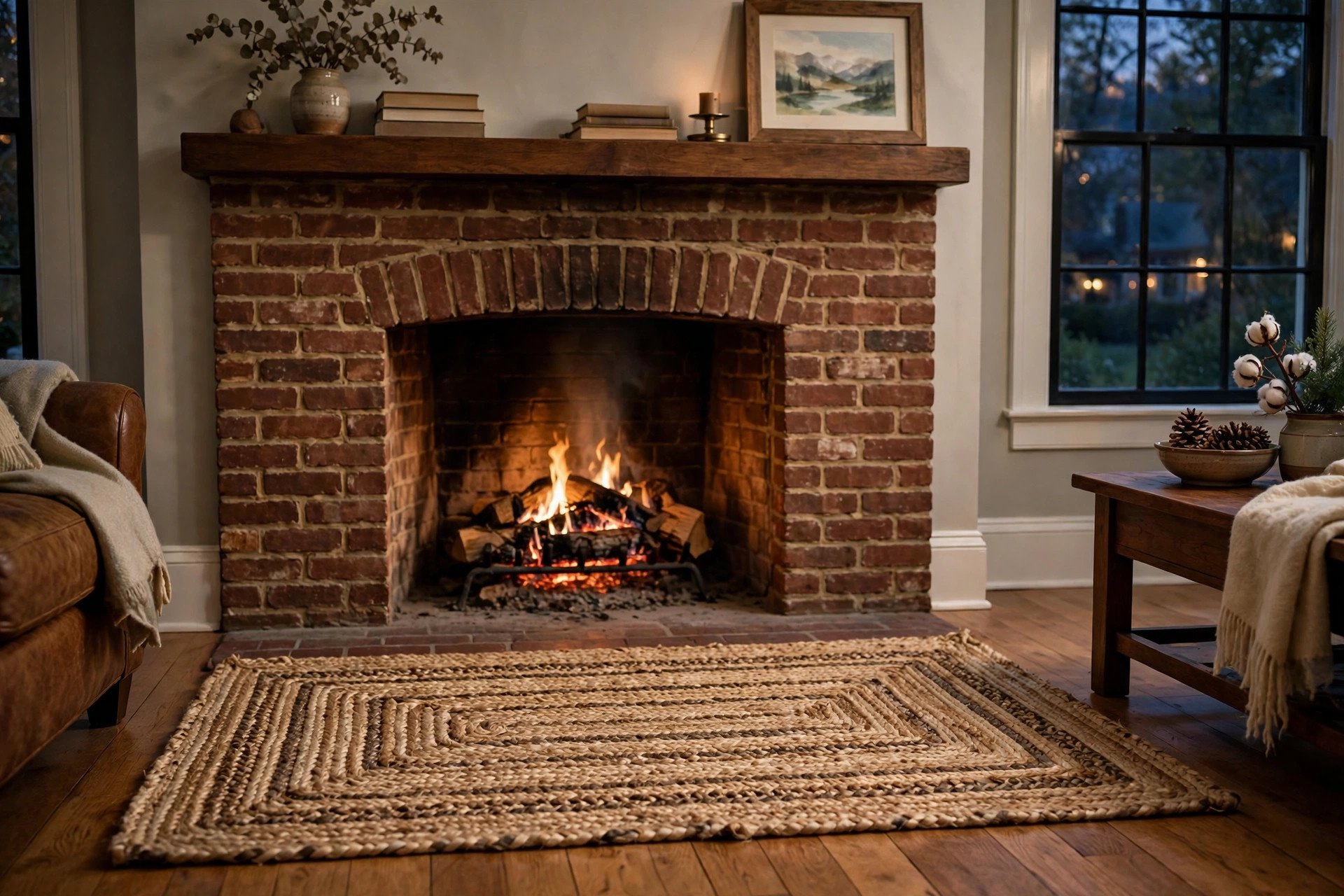

A home with a fireplace needs more than a good fire. It needs a safe place for sparks to land. When you look for affordable fireplace hearth rugs for sale, you want two things at once. You want a fair price. You also want real protection for your floor. This guide will help you shop with care. It covers sizes, materials, prices, cleaning, and safety. By the end, you will know what to buy and what to pass by.
Why a Hearth Rug Matters
A hearth rug sits on the floor in front of the fireplace. It catches the small sparks and hot embers that jump out of the fire. A wood stove or open fireplace can throw tiny coals several feet. Without a rug, those coals can burn a carpet or scar a wood floor.
Many homes use a hearth rug for looks as well. A good rug frames the fireplace. It can pull the whole room together. But the first job of the rug is safety. A pretty rug that burns easy is a poor choice. Look for rugs that list a clear fire resistance rating. Makers test these rugs against heat and flame. A rated rug will resist sparks and smoldering embers for a set time.
A fire resistant hearth rug also guards the floor from soot. Wood ash and smoke can stain carpet and darken wood over time. A rug in the right spot takes the wear so your floor does not. When the rug gets dirty, you can clean it or replace it. A floor costs far more to fix.
What to Look for When You Shop: Affordable Fireplace Hearth Rugs for Sale
Fire Resistance and Safety Ratings
Start with safety. Read the label or the product page with care. A true hearth rug should state that it meets a fire safety standard. Common terms include “fire resistant” and “spark resistant.” Some rugs carry a UL listing. UL is a known testing body in the United States. A UL listing tells you the rug passed set safety tests.
Check what the rating covers. A rug may resist sparks but still char under a long hot coal. No rug is a sure shield. It buys you time. It lowers the risk. Keep that in mind as you compare.
Some shops sell plain wool or cotton rugs as hearth rugs. Wool has some natural resistance to flame. But a plain rug without a rating is not a true hearth rug. The Consumer Product Safety Commission gives advice on home fire hazards, and its site can help you learn what to watch for around fireplaces (Consumer Product Safety Commission).
Size and Fit
Measure before you buy. A hearth rug should cover the full opening of the fireplace and stretch out on each side. A common guide says the rug should run at least six inches past each side of the opening. It should reach out from the front by at least eighteen inches. For a wide fireplace, a rug of four by six feet or larger works well.
Think about your stove or insert. If you run a freestanding wood stove, the rug must sit under the front of the stove too. Sparks and embers fall straight down when you open the door. Give that space full cover.
Shape matters as well. Half round rugs fit well in front of arched or round hearths. Rectangle rugs suit wide flat hearths. Some rugs come with a cutout for the hearth edge. Measure twice. A rug that is too small leaves bare floor near the fire. A rug that is too large may bunch up or block a walkway.
Material and Weave
The most common hearth rug materials are wool, fiberglass, and treated cotton. Each has its own strong points.
Wool rugs are thick and soft. Wool does not catch fire fast, and it tends to self smolder rather than burst into flame. Many high end hearth rugs use wool with a fire safe backing. They cost more, but they last long.
Fiberglass rugs are built for pure heat duty. They can take high heat without harm. They look less like a fine rug and more like a plain mat. Many are black or dark gray. They are often the best cheap fireplace hearth rugs for rough use.
Treated cotton and jute blends offer a middle path. Makers treat the fibers with a fire retardant. These rugs look more like home decor. They suit gas fireplaces and decorative fireplaces where sparks are rare. Check the label to see what the treatment covers and how long it lasts.
The weave also matters. A tight weave stops small embers from falling through to the floor. A loose weave may let a hot coal slip through the gaps. Press the fibers apart with your fingers. If you see the floor through the rug, it is too loose for a wood burning fire.
Common Types and Styles
Hearth rugs come in several styles. The right one depends on your fireplace and your taste.
Half round hearth rugs are the classic choice. They curve around the hearth and sit flat on the floor. They fit most standard fireplaces.
Rectangle hearth rugs give more cover. They work well in front of wide fireplaces and large wood stoves. Many have fringe on the ends. Fringe looks nice, but it can catch a stray spark. Tuck fringe under the rug or trim it short near the fire.
Corner hearth rugs fit fireplaces set into a corner. These are less common and may cost more. If you have a corner unit, measure the angle with care before you order.
Decorative styles range from plain to patterned. You will find solid colors, braided edges, and printed scenes of deer, bears, and cabins. A printed design can hide soot marks between cleanings. Dark colors hide ash stains best. Light rugs show every mark but can brighten a dark room.
Some hearth rugs come in sets with log carriers or glove pairs. These sets can save you money. They are worth a look if you need those items too.
Cost and Price
Affordable fireplace hearth rugs for sale can run from about twenty dollars to over two hundred. Most fair quality rugs fall between thirty and eighty dollars. What drives the price?
Material is the main factor. Fiberglass mats often cost the least. Treated cotton and jute blends sit in the middle. Wool rugs cost the most. Size also matters. A large rug uses more fiber and costs more to ship.
Brand and rating add to the price. A rug with a UL listing may cost more than a plain one. The listing is worth the small extra cost. It means a lab tested the product.
Watch for sales at large home stores. Both Home Depot and Lowe’s carry hearth rugs in stores and online. Prices often drop at the end of winter. You can find a solid rug for half price if you shop in March or April.
Shipping costs can change the true price of a cheap rug. A twenty dollar rug with fifteen dollars of shipping is not a deal. Look for free shipping or buy in store. Online marketplaces may list low prices, but check the seller’s rating first.
Do not chase the lowest price alone. A rug that fails in a real fire will cost you far more than you saved. Spend enough to get a rated rug from a known maker.
Care and Upkeep
A hearth rug needs regular care. Ash and soot build up fast in winter. Shake the rug outside once a week during heavy use. This keeps ash from grinding into the fibers.
Vacuum the rug with a brush head. Do not use a beater bar on a wool rug. It can tear the weave over time. For fiberglass mats, wipe with a damp cloth. Check the maker’s care label first. Some fiberglass mats shed tiny fibers when scrubbed hard.
Spot clean stains with mild soap and water. Test the soap on a small hidden spot first. Soot can leave a gray tint that does not wash out. Dark rugs hide this well.
Check the rug each month for worn spots. Look for thin areas near the fire opening. A rug that has thinned through is past its safe life. Replace it. Fire ratings wear out with age and heat. Most hearth rugs last three to five years with steady use.
Store a spare rug in summer. Roll it with the front side in. Keep it dry and away from moths if it is wool. A cedar block in the storage bag helps keep moths away.
If you also care for the rest of your hearth area, guides on The Spruce cover fireplace cleaning and upkeep in plain terms.
Safety Around the Hearth
A hearth rug is one part of a safe fireplace setup. It does not stand alone.
Keep the hearth area clear. Move firewood, kindling, and paper at least three feet from the fire opening. A hearth rug catches sparks, but a stack of paper next to it can still catch fire.
Use a fire screen or glass doors when you burn wood. Doors and screens stop most sparks before they reach the rug. You can learn more about fireplace glass doors and how they fit your unit. Makers such as Heatilator also publish safety and sizing guides for inserts and doors. For homes in warm states, marble fireplace surrounds can be paired with the right rug for both looks and safety, and shoppers often compare options for EPA certified marble fireplace surrounds for florida homes.
Never leave a fire burning when you leave the room or go to bed. This is the oldest rule of fireplace safety. A hearth rug cannot watch the fire for you.
Check your smoke and carbon monoxide alarms each month. The National Fire Protection Association gives clear advice on home fire safety (National Fire Protection Association). Its guides cover alarm placement and fireplace care.
If you burn wood, have your chimney swept each year. Creosote can build up and cause a chimney fire. A clean chimney burns safer and gives off less smoke.
Keep pets and small children away from the hot hearth. The rug marks the edge of the hot zone. Teach children that the rug is a line not to cross when the fire is lit.
For gas fireplaces and electric fireplaces for living rooms, a hearth rug is still a good idea. It guards the floor from heat and wear. You do not need the heaviest rating for a gas unit, but a rated rug still adds safety.
Frequently Asked Questions
Can I use a regular area rug in front of my fireplace?
It is not a good idea. A regular rug has no fire rating. It can catch a spark and burn fast. Some rugs have foam backs that melt in heat. Buy a true hearth rug with a stated fire resistance rating.
What size hearth rug do I need for a wood stove?
For most wood stoves, a rug of at least four by six feet works well. It should sit under the front legs of the stove and reach out past the door by eighteen inches or more. Measure your stove and the swing of the door. Add six inches on each side for safe cover.
Are cheap fireplace hearth rugs safe?
A low price does not always mean low safety. Some low cost fiberglass mats are well rated. The key is the label. Look for a clear fire resistance claim or a UL listing. Skip any rug that does not state its rating, no matter how low the price.
Do hearth rugs work for gas fireplaces?
Yes. A hearth rug for gas fireplace use guards the floor from heat, scuffs, and soot. You do not need the heaviest fire rating for a sealed gas unit. A standard rated hearth rug will do the job.
How often should I replace my hearth rug?
Most rugs last three to five years with regular winter use. Replace the rug sooner if you see thin spots, burn marks, or a worn backing. A rug that has taken a bad burn may look fine on top but be weak inside. When in doubt, replace it.
Can a hearth rug damage my wood floor?
Most hearth rugs are safe for wood floors. Some have rough backs that can scratch over time. Place a thin non slip pad under the rug if you are worried. Keep both the rug and the floor dry. Trapped damp can dull a wood finish.
A Final Word
Shopping for affordable fireplace hearth rugs for sale is simple when you know what counts. Pick a rated rug in the right size. Choose a tight weave in a material that suits your fire. Spend enough to get a real rating, and shop sales to keep the cost down.
Pair the rug with a screen or doors, a clear hearth, and working alarms. Clean the rug often and replace it when it wears thin. These small steps keep your fireplace both warm and safe.
If you plan more work around your fireplace, makers like Napoleon offer gas and wood units with full safety details. For step by step repair and upkeep guides, both This Old House and Family Handyman have large libraries of fireplace projects. The EPA also posts guidance on clean burning for wood stoves and fireplaces, which helps you burn with less smoke and less soot on your new rug.
References
Family Handyman. (n.d.). DIY home repair and maintenance. https://www.familyhandyman.com Heatilator. (n.d.). Fireplaces and fireplace products. https://www.heatilator.com Lowe’s. (n.d.). Home improvement products. https://www.lowes.com Napoleon. (n.d.). Fireplaces, grills, and heating products. https://www.napoleon.com National Fire Protection Association. (n.d.). Fire safety information and codes. https://www.nfpa.org The Home Depot. (n.d.). Home improvement products. https://www.homedepot.com The Spruce. (n.d.). Home and garden advice. https://www.thespruce.com This Old House. (n.d.). Home renovation guidance. https://www.thisoldhouse.com U.S. Consumer Product Safety Commission. (n.d.). Product safety information. https://www.cpsc.gov U.S. Environmental Protection Agency. (n.d.). Protecting human health and the environment. https://www.epa.gov
Was this guide helpful?

About Michael Thompson
The My Garden US editorial team writes practical, in-depth home and garden guides for American homeowners — tested advice, no fluff.
You May Also Like
Top Rated Fireplace Installation Services Reviews: A Homeowner’s Guide
August 29, 2026 0 views
Budget Friendly Chimney Caps and Covers Buying Guide
June 3, 2026 0 views
Buy Fireplace Glass Doors Online in Arizona: A Simple Buying Guide
March 16, 2026 0 views