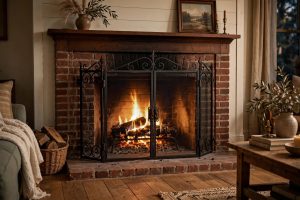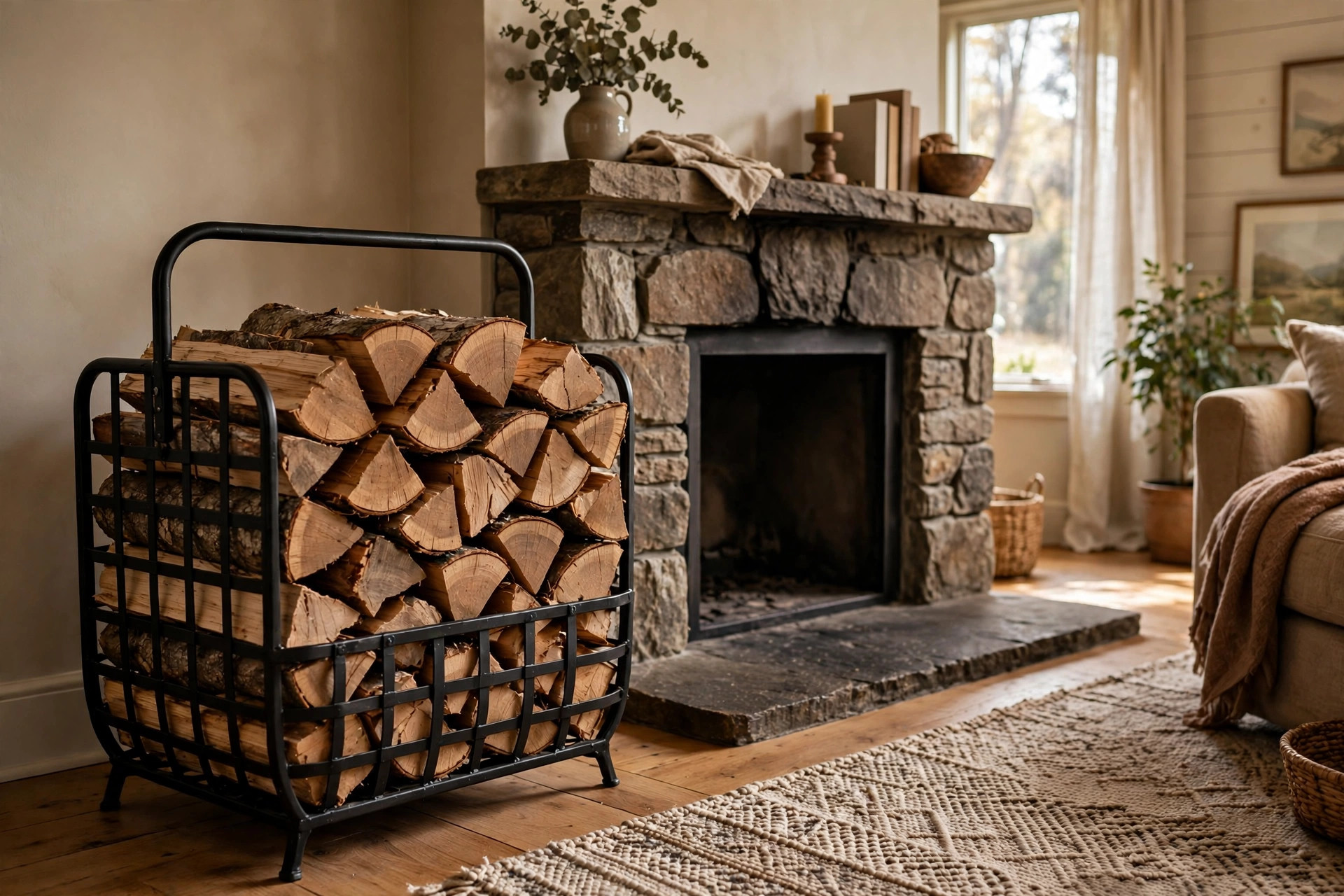

An indoor firewood holders price comparison usa guide starts with a simple fact. Prices in the United States swing wide. A basic metal ring can cost less than twenty dollars. A hand forged basket can cost over three hundred dollars. The gap is large. That is why a fair price comparison matters. This guide lays out the full range of prices. It also shows what drives them up or down. You will learn the main types of holders. You will see typical prices for each type. You will find tips on care and safety. By the end, you will know what a fair price looks like. You will also know which style fits your home.
Why an Indoor Firewood Holder Matters
Wood heat is honest work. Logs come in dirty. They leave bark on the floor. They can leave moisture on rugs. A good holder solves these small problems. It keeps the wood in one place. It lifts the logs off the floor. Air moves under the pile. The wood stays drier. Drier wood burns cleaner. It also lights faster.
There is also the matter of looks. A wood pile on the floor looks rough. A tidy basket or rack looks planned. It can sit beside a wood stove or fireplace. It becomes part of the room. Many buyers choose holders for looks alone. That is fine. Form matters in a living room.
Safety is the third reason. Loose logs can roll. A rolling log can hit a foot. It can knock into glass doors. A holder with a firm base keeps the pile still. Some styles have closed sides. These suit homes with children or pets. If you are pairing your holder with protective gear, look at guides on epa certified fireplace tool sets for sale for safe handling tips.
What to Look for When You Compare Prices: Indoor Firewood Holders Price Comparison Usa
Not all holders are built the same. Price alone can mislead. A cheap holder may use thin metal. It may bend under a full load. A strong holder lasts ten years or more. Here are the points to weigh before you look at price tags.
Size and Capacity
Think about how much wood you burn in a night. A casual user burns a few logs on weekends. A small basket holds one armload. A daily wood stove user needs more. A tall log rack can hold a two day supply. Bigger capacity means higher price. Measure the space beside your hearth. Leave room to open stove doors. Leave room for tools.
Material and Build
Steel is the common choice. It is strong and holds heat well. Cast iron is heavier and costs more. It suits big wood stoves. Leather and canvas slings look warm and soft. They carry wood well. They hold less weight. Wicker and rattan baskets fit farmhouse rooms. They cost little. They wear faster near heat. Look at weld joints on metal frames. Solid welds beat bent wire held by clips.
Finish and Style
Black powder coat is the standard. It hides soot. It matches most stoves. Oil rubbed bronze looks richer. Antique brass suits formal rooms. Wooden frames need care near sparks. The finish adds ten to thirty dollars to the price. Decide if looks are worth it.
Fire Rating and Heat Safety
Holders sit near live fire. Check the maker rating. Metal holders are safest near the hearth. Canvas and wicker should stay further back. A simple rule helps. Keep the holder at least three feet from an open flame. For deeper guidance on safe hearth setup, see where to buy fireplace grates in colorado, which covers hearth clearances too.
Types of Indoor Firewood Holders and Their Prices
The market offers six common types. Each has a price range. Prices below reflect 2026 United States retail. They come from major stores and specialty shops. For larger storage beyond the hearth, browse affordable firewood storage racks with free shipping.
1. Firewood Baskets
Baskets are the classic choice. They come in wire, wicker, and iron. Wire baskets run from fifteen to forty dollars. Wicker runs from twenty five to sixty dollars. Iron baskets run from forty to ninety dollars. Baskets carry one or two armloads. They look good in any room. Wire styles let bark fall through. Wicker keeps bark inside but needs a tray beneath.
2. Log Rings
A log ring is a simple iron hoop. Some come with a base tray. Prices run from twenty to seventy dollars. Rings hold logs upright in a circle. They show off the wood grain. They suit small spaces. They hold less than a basket of the same size. Plain steel rings are the cheapest. Hammered or twisted iron costs more.
3. Log Totes and Carriers
Totes carry wood from the porch to the hearth. Canvas totes run from fifteen to thirty five dollars. Leather totes run from forty to one hundred twenty dollars. They are not for long term storage. They are for moving wood. Many homes own a tote plus a basket. The pair costs less than fifty dollars at the low end.
4. Stacked Log Racks
These racks stack logs in rows. Small indoor racks hold a quarter face cord. Prices run from thirty to eighty dollars. Larger racks that hold a half face cord run from sixty to one hundred fifty dollars. Look for racks with side bars. Side bars keep the stack from sliding. Steel tube frames are the best value in this class.
5. Kindling Holders and Split Log Stands
Small stands hold kindling and short splits. Prices run from twelve to forty dollars. They suit people who burn a stove daily. Kindling sits near the stove for fast starts. Some designs combine a holder and tool stand. These run from forty five to one hundred dollars.
6. Decorative and Hand Forged Holders
Smith made holders are the top tier. Each piece is forged by hand. Prices run from one hundred fifty to four hundred dollars. Some custom work costs more. These are built for life. They suit fine homes. If budget allows, they are the best long term buy. They never need replacement.
Indoor Firewood Holders Price Comparison USA: The Numbers Side by Side
Here is the price picture in one place. Use it to spot a fair deal.
| Type | Budget range | Mid range | Premium range | |——|————-|———–|—————| | Basket | $15 – $40 | $40 – $70 | $70 – $150 | | Log ring | $20 – $45 | $45 – $60 | $60 – $90 | | Tote or carrier | $15 – $25 | $25 – $50 | $50 – $120 | | Stacked rack | $30 – $50 | $50 – $90 | $90 – $150 | | Kindling stand | $12 – $25 | $25 – $40 | $40 – $100 | | Hand forged | $150 – $200 | $200 – $300 | $300 – $400 |
What drives the spread? Steel gauge is first. Thick steel costs more and lasts longer. Finish is second. Powder coat is cheap. Hand rubbed patina costs more. Brand name is third. Big brands charge more for the same build. Size is fourth. More capacity means more steel and more cost.
Sale timing matters too. Fireplace goods sell highest in fall. Prices drop in late winter and spring. Big box stores clear stock in March and April. Online prices shift less. Watch for free shipping. Heavy iron racks can cost twenty dollars to ship. A listing with free shipping often beats a lower sticker price.
Retailers such as Home Depot and Lowe’s carry a wide range. They stock budget and mid range goods. Specialty hearth shops carry premium work. Stove makers like Napoleon and Heatilator list hearth goods too. Compare all three channels before you buy.
Care and Upkeep
A holder is simple. It needs little care. Brush out bark and dust each week. An old paint brush works well. Empty the tray under wire baskets. Bark holds moisture. Moisture can stain a wood floor.
Wipe steel frames with a dry cloth. If rust spots form, rub with fine steel wool. Touch up with high heat spray paint. Do this outside the house. Let the paint cure before use.
Canvas totes can be shaken out. Wash them rarely. Water weakens canvas over time. Leather totes need saddle soap once a year. This keeps the leather from cracking. Wicker baskets can be wiped with a damp cloth. Let them dry fully before use.
Keep a mat under the holder. A hearth rug or iron tray catches bark. It also shields the floor from moisture. Replace floor mats every few years. They take the wear so your floor does not.
Safety Tips for Indoor Wood Storage
Wood brings comfort. It also brings risk. These rules keep risk low.
Store only dry wood indoors. Green wood breeds mold. It also burns poorly. Keep a one or two day supply inside. Store the main stack outside under cover. Bring wood in as you need it.
Keep the holder three feet from open flames. This is the minimum. More distance is better for cloth and wicker. Metal holders can sit a little closer. Never let logs touch the stove body.
Do not overfill the holder. A tall unstable pile can topple. Fill to the rim and no higher. Cut long logs to fit. Logs that stick out can catch a sleeve.
Watch for insects. Wood can carry beetles and spiders. Shake each armload before you bring it in. Look for small holes in the bark. If you find bugs, burn that wood first. Keep the holder clean so bugs find no shelter.
Install a smoke alarm and a carbon monoxide alarm near the wood heat area. Test both each month. The EPA offers clear guidance on safe wood burning and home air quality. Helpful project guides appear at Family Handyman and This Old House. Decor and placement ideas can be found at The Spruce.
FAQ
How much should I expect to pay for an indoor firewood holder?
Most buyers spend between twenty and ninety dollars. This covers good baskets, rings, and small racks. Daily wood stove users spend fifty to one hundred fifty dollars for larger racks. Hand forged work starts near one hundred fifty dollars and can pass four hundred.
Which type is best for a wood stove?
Stacked steel racks are best for stoves. They hold a good supply close at hand. They lift wood off the floor. They stand up to daily use. Pair a rack with a canvas tote for hauling wood in.
Can I keep a large wood supply inside the house?
It is not wise. Large stacks hold moisture. They attract insects. They crowd the room. Keep one or two days of wood inside. Store the rest outside under a cover or in a shed.
Do cheap holders bend or break?
Very cheap wire holders can bend. They use thin metal and weak joints. Spend at least twenty five dollars on a metal holder. Check the weight rating. A good holder lists its load limit. Steel tube and cast iron frames do not bend under normal use.
Are wicker baskets safe near a fireplace?
Wicker is safe if placed far enough back. Keep wicker three feet or more from open flames. Never set wicker on a hot hearth. Use wicker for short term holding. Use steel for wood that sits near the fire for hours.
Where can I compare prices online?
Compare across three channels. Big box stores carry budget and mid range goods. Hearth specialty shops carry premium lines. Makers sites list full ranges. Read buyer reviews. Reviews reveal weak welds and thin metal. A fair price is one that matches build quality, not just the brand name.
A Short Final Word
An indoor firewood holders price comparison usa shopper should weigh more than price. Build quality decides how long the holder lasts. Size decides if it fits your routine. Finish decides if it fits your room. Set a budget first. Then match the type to the budget. For most homes, a mid range steel basket or rack is the sweet spot. It costs under one hundred dollars. It lasts many winters. It looks right beside the fire. Buy once, buy well, and keep the wood dry.
References
Family Handyman. (n.d.). DIY home repair and maintenance. https://www.familyhandyman.com Heatilator. (n.d.). Fireplaces and fireplace products. https://www.heatilator.com Lowe’s. (n.d.). Home improvement products. https://www.lowes.com Napoleon. (n.d.). Fireplaces, grills, and heating products. https://www.napoleon.com The Home Depot. (n.d.). Home improvement products. https://www.homedepot.com The Spruce. (n.d.). Home and garden advice. https://www.thespruce.com This Old House. (n.d.). Home renovation guidance. https://www.thisoldhouse.com U.S. Environmental Protection Agency. (n.d.). Protecting human health and the environment. https://www.epa.gov
Was this guide helpful?

About Jennifer Lee
The My Garden US editorial team writes practical, in-depth home and garden guides for American homeowners — tested advice, no fluff.
You May Also Like

Affordable Fireplace Mantel Shelves for Sale: A Plain Buyer’s Guide
February 6, 2026 0 views
The Best Gas Log Sets for Midwest Homes: A Simple Buying Guide
June 23, 2026 0 views
Where to Buy Corner Electric Fireplaces in California
February 20, 2026 0 views