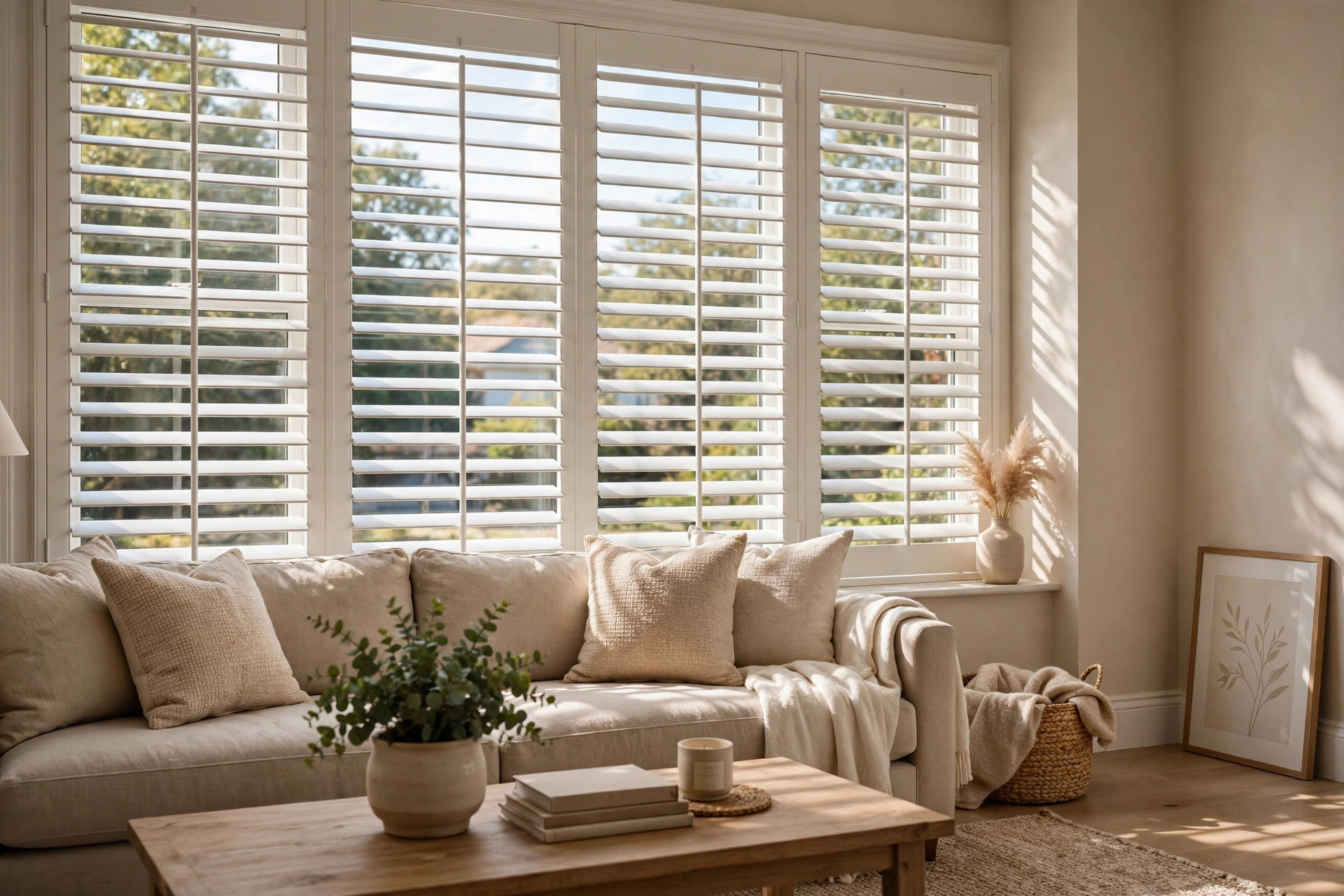

The top rated plantation shutters for Midwest homes must do more than look good. They must face bitter winter cold, hot and humid summers, and wide swings in temperature between seasons. Homeowners across Illinois, Indiana, Ohio, Michigan, Wisconsin, Minnesota, Iowa, and the Dakotas want window coverings that keep rooms warm in January and cool in July. Plantation shutters have earned a strong name in this part of the country. Their wide louvers give fine control over light and air flow. Their solid build adds a layer of insulation to every window. When you choose well, they last for decades and add real value to your home.
Why Plantation Shutters Suit Midwest Homes
The Midwest asks a great deal of any window covering. Winter winds off the Great Lakes can drive wind chill far below zero. Summer brings heat and damp air. Cheap blinds often warp, crack, or fade under such stress. Plantation shutters, by contrast, are built like furniture. A well-made shutter panel stands up to heat, cold, and daily use without complaint.
Insulation is one of their greatest gifts. A closed shutter forms a barrier between the glass and the room. The still air trapped in that gap slows heat loss on cold nights. Many owners report lower heating bills after installing shutters on large or drafty windows. For added guidance on window energy savings, the advice at energy.gov explains how coverings cut winter heat loss.
Plantation shutters also handle light with uncommon grace. In the morning you can tilt the louvers to let in a soft wash of sun. At midday you can close them against glare. In the evening they give full privacy with a simple turn of the tilt bar. Few other window treatments offer so much control with so little effort. Midwest families who work from home or have children who nap in the afternoon find this flexibility a true blessing.
Style is the third reason. Plantation shutters fit nearly every home, from farmhouses outside Des Moines to brick colonials in Columbus to modern builds near Minneapolis. Their clean horizontal lines suit both old and new interiors. They never clash with furniture, and they never go out of fashion. If you are comparing shutter types with other styles across the country, our guide to the best plantation shutters for sale gives a broader view of the market.
What to Look For When You Choose: Top Rated Plantation Shutters for Midwest Homes
Material comes first. Real wood shutters, often made from basswood or poplar, look rich and take paint well. They suit dry rooms such as living rooms and bedrooms. Faux wood shutters, made from PVC or composite blends, resist moisture and cost less. They are a wise pick for bathrooms, kitchens, and laundry rooms where steam and splashes are common. Composite shutters blend wood fiber with synthetic resins and offer a middle path of strength and price.
Louver size shapes the look and feel of the room. Traditional plantation shutters use wide louvers, often 3.5 or 4.5 inches across. Wider louvers let in more light when open and give a bolder, more modern look. Narrower louvers suit smaller windows and older homes. Measure your windows and study how each size would frame the view outside.
The finish matters too. White and off-white remain the most popular choices because they brighten rooms and match any trim. Stained finishes show the grain of the wood and warm up a space. Some makers offer custom colors to match your decor. A painted finish should be smooth and even, with no runs or thin spots.
Fit is everything with shutters. Unlike curtains, which hang loose, shutters are built to the exact size of each window. An inside mount sits within the window frame and gives a clean, built-in look. An outside mount covers the frame and works well for shallow or out-of-square openings. Check whether your windows are square before you order. Many owners consult the shutter buying advice offered by a large blinds retailer before they measure.
Hardware and tilt options come next. The classic tilt bar down the center of the panel gives the timeless plantation look. Hidden tilt, with the mechanism behind the panel, offers an unbroken view. Hidden tilt costs more but many buyers prefer its smooth face. Frames should feel solid, and hinges should move with no wobble.
Ratings and reviews help you sort the many brands. Look for makers with long warranties, often 25 years or more on materials and finish. Read reviews from owners in cold climates, since a shutter that thrives in Florida may not face the same dry winter air as one in Michigan. Consumer guides at consumerreports.org can help you judge durability claims with a clear eye.
Types and Options for Every Room
Full-height shutters cover the whole window with one or two panels. They are the classic choice and the easiest to use. Cafe-style shutters cover only the lower half of the window. They let daylight pour in from the top while keeping the lower half private. They suit kitchens and street-facing rooms where you want light but not the gaze of passersby.
Tier-on-tier shutters split into upper and lower sections that move on their own. You can open the top for light and keep the bottom closed for privacy. This design costs more but gives the greatest control. Double-hung windows pair well with this style.
Specialty shapes serve round, arched, and angled windows. Not every maker offers them, so ask before you set your heart on a custom arch. Sliding shutters ride on a track and work well for patio doors and wide openings. Bi-fold shutters fold like an accordion and suit closets as well as windows.
Material choice should follow the room. Faux wood stands up best in damp rooms. Solid wood shines in living areas and offices. For a humid bathroom, a PVC shutter will never swell or mold. The decor ideas at hgtv.com show how different shutter styles look in real rooms.
If you prefer to shop from home, many buyers now buy plantation shutters online and have them shipped to their door. Our notes on how to buy plantation shutters online in florida cover online measuring and ordering, and much of that advice applies in the Midwest too.
Cost and Price: What to Expect
Plantation shutters are an investment. Prices vary by material, size, and maker, but most American homeowners pay between 200 and 350 dollars per window for quality shutters. Faux wood usually costs less than real wood. Custom shapes and hidden tilt add to the bill.
A small bedroom window may cost as little as 150 dollars. A large living room window with two panels can run 500 dollars or more. A whole house with ten to fifteen windows often totals 2,500 to 5,000 dollars. These numbers sound high next to curtains or blinds, but shutters last far longer. A good set can serve for 25 years or more, while cheap blinds may need replacing every five.
Get quotes from at least two or three suppliers before you decide. Ask what the price covers: measuring, delivery, installation, and warranty should all be clear. Beware of prices that seem too low. Thin panels, weak paint, and flimsy hardware show their faults within a few years. Home improvement pricing at homedepot.com and lowes.com gives a useful baseline for comparison.
Professional measuring is worth the fee. A mismeasured shutter cannot be fixed with a trim saw. Many suppliers include measuring in the installation package. If you measure yourself, measure each window in three places and use the smallest width and height.
Installation: Hiring Help or Doing It Yourself
Most shutters arrive with clear mounting hardware and instructions. A handy homeowner can install a standard panel in under an hour with a drill, a level, and a screwdriver. Inside mounts need a window frame deep enough to hold the frame. Outside mounts need solid trim to anchor the screws.
That said, professional installation has real value. An installer spots out-of-square frames, handles heavy panels with ease, and adjusts hinges so every louver closes flat. If your windows are old or your openings are uneven, hire a pro. The cost of installation often runs 50 to 100 dollars per window. For help finding local help, see our piece on top rated shutter installation services for homeowners.
Before installation day, clear the area around each window. Move furniture and take down old blinds or curtains. Check that each shutter matches its window label before you drill. Work one window at a time so parts do not get mixed.
Care and Upkeep Through the Seasons
One of the great joys of plantation shutters is how little care they ask. A weekly dusting with a soft cloth or a vacuum brush keeps them clean. Tilt the louvers first one way, then the other, to reach both faces. A microfiber cloth picks up dust without scratching the finish.
For deeper cleaning, wipe with a damp cloth and mild soap. Dry the panels right away so no moisture sits in the joints. Never soak wood shutters or blast them with a hose. Faux wood panels can take more water, but gentle cleaning still serves them best.
Seasonal checks keep shutters working well. In the fall, look over hinges and tilt bars before the heating season. Tighten any loose screws with care. In the spring, check that winter dryness has not loosened any joints. Wood moves with humidity, so small shifts are normal. The home care tips at thespruce.com offer a steady routine for window treatments.
Repairs are rare but simple. A stuck louver often needs only a small drop of silicone at the pivot pin. A chipped paint spot can be touched up with a matching paint pen. Keep spare screws and a touch-up kit from your supplier.
Safety in Homes With Children and Pets
Safety deserves a full section of its own. Old-style cords on blinds have caused harm to small children, and federal safety rules now push the industry toward cordless designs. Plantation shutters are naturally safer than corded blinds because most designs use no hanging cords at all. A simple tilt bar or a hidden tilt rod moves the louvers. This is one more reason Midwest families with toddlers choose shutters for nurseries and playrooms.
Still, check every detail. Make sure tilt bars are firmly fixed and cannot pull loose. If your shutters use any cords for tilt, keep them short, out of reach, and fitted with cord cleats. Never place a crib or a child bed directly under a window with cords. The safety guidance at cpsc.gov explains current rules for window covering cords in plain terms.
Pets bring their own risks. Cats love to sit on wide sills and bat at tilt bars. Choose sturdy hardware and keep tilt bars in good repair. Dogs may push against lower panels on patio doors, so sliding shutters there should have strong tracks.
Fire safety matters too. Shutters should never block an escape window. Make sure every bedroom window can still open fully and that panels swing clear in an emergency. Practice the escape route with your family.
Frequently Asked Questions
Do plantation shutters really help with winter cold?
Yes. Closed shutters add an insulating layer over the glass. They slow the flow of heat from the room to the cold window. On very cold nights they can make a clear difference in comfort, especially on older single-pane windows.
How long do plantation shutters last?
A quality set lasts 20 to 25 years or more. Real wood and good faux wood both age well when cleaned and kept dry. The finish usually fails before the structure does, and many makers cover the finish with a long warranty.
Are shutters better than curtains for the Midwest?
Each has its place. Curtains add softness and can be changed with the seasons. Shutters give better insulation, cleaner light control, and a longer life. Many homes use both: shutters for daily function and side panels for warmth of style.
Can I install plantation shutters myself?
Yes, if you are comfortable with a drill and a level. Standard rectangular windows are the easiest. Arched windows, very large panels, and out-of-square frames are better left to a professional installer.
Do shutters raise home value?
Real estate agents often say yes. Shutters are seen as a permanent upgrade, like good flooring. Buyers in the Midwest notice them during showings. While no one can promise a dollar figure, shutters rarely hurt resale and often help.
What is the best louver size for a Midwest living room?
Most owners choose 3.5-inch louvers for living rooms. They admit plenty of light and suit medium to large windows. For very large windows, 4.5-inch louvers look grand. For small windows, 2.5-inch louvers keep the scale right.
A Final Word
The top rated plantation shutters for Midwest homes earn their place window by window. They tame harsh winters and bright summers alike. They give you light when you want it and privacy when you need it. Choose a solid material, measure with care, and buy from a maker with a strong warranty. Whether you pick classic wood or modern faux wood, full height or tier on tier, your shutters will serve your home for many years. Shopping inspiration at ikea.com and wayfair.com can round out your window treatment plans for the rest of the house.
References
Blinds.com. (n.d.). Window blinds, shades, and shutters. https://www.blinds.com Consumer Reports. (n.d.). Product reviews and ratings. https://www.consumerreports.org HGTV. (n.d.). Home and garden ideas. https://www.hgtv.com IKEA. (n.d.). Home furnishings. https://www.ikea.com Lowe’s. (n.d.). Home improvement products. https://www.lowes.com The Home Depot. (n.d.). Home improvement products. https://www.homedepot.com The Spruce. (n.d.). Home and garden advice. https://www.thespruce.com U.S. Consumer Product Safety Commission. (n.d.). Product safety information. https://www.cpsc.gov U.S. Department of Energy. (n.d.). Energy efficiency and renewable energy. https://www.energy.gov Wayfair. (n.d.). Furniture and home goods. https://www.wayfair.com
Was this guide helpful?

About Emily Rodriguez
The My Garden US editorial team writes practical, in-depth home and garden guides for American homeowners — tested advice, no fluff.
You May Also Like
Premium Zebra Dual Layer Shades Buying Guide
September 2, 2026 0 views
Blackout Curtains for Bedrooms: Reviews and Buying Guide
February 6, 2026 0 views
How to Buy Farmhouse Style Curtains Online in Florida
May 28, 2026 0 views