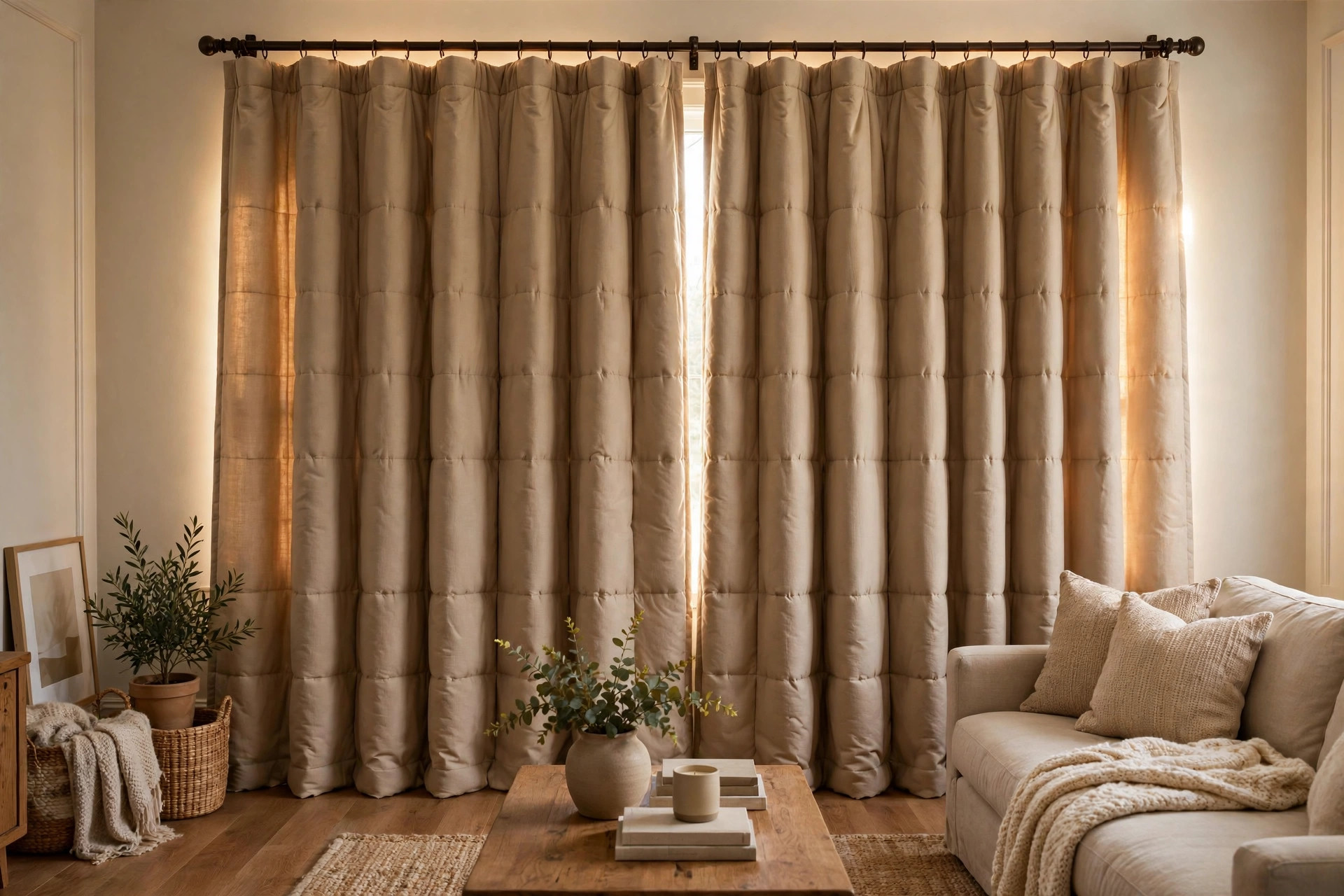
A thermal insulated curtains price comparison usa search can feel confusing at first. Prices run from a few dollars to well over one hundred dollars per panel. The range is wide because the products are not all the same. Fabric, lining, size, and brand all change the price. This guide walks through the subject in plain terms. It explains why these curtains matter, what to look for, the main types, fair prices, care, and safety. By the end, you will know how to compare panels side by side and pick the right ones for your home.
Why Thermal Insulated Curtains Matter
Windows lose more heat than most walls. In winter, warm air inside a room meets cold glass. The air cools and sinks. A draft forms near the window. The room feels cold even when the heater is running. In summer, the same glass lets in strong sun. The room heats up fast. The air conditioner must work harder.
Thermal insulated curtains slow this process. They place a thick layer between the glass and the room. Many panels have a special backing. The backing is often foam or a coated fabric. It traps air and blocks drafts. Some panels also reflect sun in summer. The result is a steadier room temperature.
Many buyers choose these curtains to cut energy bills. Heating and cooling cost a large share of a home budget. Anything that eases that load has real value. Buyers also choose them for comfort. A living room with cold windows is not a pleasant place to sit. Bedrooms gain another benefit. Many thermal panels also block light. They help people sleep when the sun is strong.
Renters like these curtains too. They hang on a normal rod. No tools are needed beyond a basic rod and brackets. They can move with the renter to a new place. If you live in custom thermal insulated curtains for small apartments, one good pair can change how a small room feels.
What to Look for When You Compare: Thermal Insulated Curtains Price Comparison Usa
Price alone does not tell the story. Two panels can cost the same and perform very differently. Look at the details below before you buy.
Fabric and Lining
The face fabric is what you see. Velvet, cotton blends, and polyester are common. The face matters for looks. The lining matters for performance. Check the back of the panel. A true thermal curtain has a visible coated or foam layer. It may feel slightly stiff. Plain curtains with no lining will not insulate well, even if the label uses the word “thermal” loosely.
Layer count is another clue. Triple-weave fabrics pack insulation into the cloth itself. Foam-backed panels add a separate layer. Both work. Foam backing tends to block more light. Triple weave tends to drape more softly.
Weight tells you something too. Heavier panels usually insulate better. But very heavy panels need a strong rod. Check that your rod can hold the weight before you order.
Size and Fit
Thermal curtains only work when they cover the window fully. Measure the window frame first. Add width on each side. Panels should extend past the frame by several inches. This stops air from slipping around the edges.
Length matters as well. Panels that reach the sill leave a gap below. Cold air sinks through that gap. Floor-length panels seal better. For the best result, the panel should touch the floor or fall just above it. In a bedroom, you may also want panels wide enough to overlap in the center. A gap in the middle lets light and cold through.
Watch for top rated blackout curtains for bedrooms for sale if light blocking is a goal. Many thermal panels double as blackout curtains. The product page should state this clearly.
Hanging Style
Grommet tops slide easily on a rod. They also leave small gaps at the top where air can pass. Rod pocket tops sit closer to the wall. Tab tops look soft but can bunch. Back tab styles hide the rod and give a clean look.
The key point is the seal. Any style works if the panel covers the window fully and hangs close to the wall. Some buyers add a wraparound rod. This style curves back to the wall at each end. It closes the side gaps and improves insulation.
Types and Options
Not all thermal insulated curtains are built the same. Here are the main types you will meet while comparing.
Foam-backed thermal curtains. These have a foam layer bonded to the back. They block drafts well and darken a room. They are often the best value. The foam can crack if the panel is washed in hot water. Follow care labels closely.
Triple-weave thermal curtains. The insulation is woven into the fabric. No separate backing shows. They look and feel like normal drapes. They are softer than foam-backed panels. They cost a bit more in most cases.
Thermal blackout curtains. These combine insulation with full light blocking. They suit bedrooms and home theaters. They are often heavier than standard thermal panels.
Thermal sheers. These are light and semi-clear. They offer mild insulation only. Do not expect strong results from them. They work as a decorative layer over a heavier panel.
Patio and door panels. Wide panels made for sliding glass doors. They cost more because they are large. The same rules apply. Check the lining and the fit.
If curtains do not suit your windows, look at cordless cellular shades price comparison usa. Cellular shades trap air in small pockets. They are another strong option for insulation.
Cost and Price in the USA
This is the heart of a thermal insulated curtains price comparison usa. Prices vary by size, brand, and store. The ranges below reflect typical USA retail prices for one pair of panels.
Budget panels: $15 to $35 per pair. Basic polyester panels with thin backing. They help a little. They are fine for mild climates or small windows. Check reviews for lining quality at this price.
Mid-range panels: $35 to $70 per pair. Better fabric and thicker lining. Many well-rated options sit here. This range suits most buyers. You can find good foam-backed and triple-weave panels in this band.
Premium panels: $70 to $150 per pair. Heavier fabrics, velvet faces, or designer brands. Custom sizes cost more still. Custom work can run $100 to $300 per panel, depending on fabric.
Large retailers such as The Home Depot and Lowe’s carry many mid-range options. Online sellers like Wayfair and IKEA offer budget and mid-range panels. Specialty shops such as Blinds.com focus on custom sizes.
Price per panel is not the whole picture. Think about the window count. A house with ten windows needs ten sets. A budget panel that fits well beats a premium panel that is too narrow. Also think about energy savings. A mid-range pair that cuts drafts may pay for itself in one heating season.
Watch for sales. Curtain prices drop in late winter and late summer. Holiday sales often include home goods. Compare the final price after shipping. Some stores offer free shipping above a set amount. That detail matters when you order many panels.
Read product pages with care. Check the listed size. Some prices are per panel. Others are per pair. This is a common source of confusion. A $25 panel is really $50 per window if sold singly. Also check whether the price includes a liner. Some sets include it. Others sell it apart.
Independent testers such as Consumer Reports review window treatments from time to time. Their ratings can help you judge quality claims. Design guides at The Spruce and HGTV show how these curtains look in real rooms. Energy tips from ENERGY STAR explain how window coverings fit into a lower-bill home.
Care and Upkeep
Thermal curtains last longer with gentle care. Always read the care label first. Many foam-backed panels cannot go in hot water. Hot water can crack or peel the foam layer. Cold or warm wash is safer. Use a mild detergent.
Some panels are machine washable. Others need spot cleaning only. Velvet faces often need dry cleaning. Check before you buy if easy washing matters to you.
Dry panels fully before rehanging. Damp foam backing can grow mildew. Hang them in open air if you can. A dryer on low heat works for some types. Again, the label is the guide.
Dust the panels often. A vacuum with a soft brush head works well. This keeps them fresh between washes. It also helps people with dust allergies.
Sun can fade face fabric over time. Rotate panels between windows now and then. This spreads the wear. Lined panels fade less than unlined ones.
Safety
Curtains are safe when used with common sense. Keep them away from heat sources. Do not let panels touch space heaters, radiators, or candles. Heavy fabric near heat is a fire risk.
Check cords on the rod or nearby blinds. The U.S. Consumer Product Safety Commission warns that window cords can harm small children. Keep cords out of reach. Use cordless hardware where you can. Anchor cords that cannot be removed.
Make sure rods are fixed firmly to the wall. Thermal panels are heavy. A weak rod can fall. Use wall anchors in drywall. Ask a hardware store for help if you are unsure.
If you rent, check your lease before drilling. Many landlords allow curtain rods. Some do not. Tension rods are an option where drilling is banned. They hold lighter panels well.
Frequently Asked Questions
Do thermal insulated curtains really lower energy bills?
They can help. They slow heat loss through glass. Savings depend on your climate, your windows, and how you use the curtains. Close them at night in winter. Open them on sunny winter days to let warmth in. In summer, keep them closed during hot hours. No curtain will fix a badly sealed window. Fix gaps with caulk or weather strips first.
How are thermal curtains different from blackout curtains?
The terms overlap. Blackout means the panel blocks light. Thermal means the panel resists heat flow. Many panels do both. But a panel can be blackout without strong insulation. Check the lining. If the back has foam or a thick coating, it likely insulates. If it is just dark fabric, it may only block light.
What size should I buy?
Measure the window. For width, buy panels that total one and a half to two times the window width. This gives full pleats. For length, floor length seals best. Sill length is fine for windows above furniture. Always cover the full frame.
Can I wash thermal insulated curtains?
Many can be washed, but rules vary. Foam-backed panels need cool water and gentle cycles. Some need spot cleaning only. Velvet often needs dry cleaning. Read the label before the first wash. Wrong washing can ruin the backing.
Are expensive thermal curtains worth it?
Sometimes. Premium fabric and stitching look better and last longer. But mid-range panels often insulate just as well. Pay for the lining quality and the fit, not the brand name alone. A well-fitted mid-range pair beats a poorly fitted premium pair.
Do they work in summer too?
Yes. Closed thermal curtains block sun and heat. Light-colored backs reflect more sun. This keeps rooms cooler and eases the load on air conditioning. In hot climates, this benefit can matter more than the winter one.
A Final Word
A careful thermal insulated curtains price comparison usa comes down to three things. First, check the lining. Second, get the size right. Third, compare the true price per window. Do these three things and you will find panels that keep your home warmer in winter, cooler in summer, and quieter all year. Start with one room. See the difference. Then decide how far to go.
References
Blinds.com. (n.d.). Window blinds, shades, and shutters. https://www.blinds.com Consumer Reports. (n.d.). Product reviews and ratings. https://www.consumerreports.org ENERGY STAR. (n.d.). Energy efficient products. https://www.energystar.gov HGTV. (n.d.). Home and garden ideas. https://www.hgtv.com IKEA. (n.d.). Home furnishings. https://www.ikea.com Lowe’s. (n.d.). Home improvement products. https://www.lowes.com The Home Depot. (n.d.). Home improvement products. https://www.homedepot.com The Spruce. (n.d.). Home and garden advice. https://www.thespruce.com U.S. Consumer Product Safety Commission. (n.d.). Product safety information. https://www.cpsc.gov Wayfair. (n.d.). Furniture and home goods. https://www.wayfair.com
Was this guide helpful?

About Jennifer Lee
The My Garden US editorial team writes practical, in-depth home and garden guides for American homeowners — tested advice, no fluff.