Shopping for a cordless cellular shades price comparison usa can save you real money. Prices for these honeycomb shades vary widely from store to store. A shade that costs thirty dollars at one shop may cost ninety at another. This guide lays out typical prices, what drives the cost up or down, and how to choose a safe cordless shade for your home. It uses plain words and simple facts. By the end, you will know what a fair price looks like for your windows.
Why This Comparison Matters
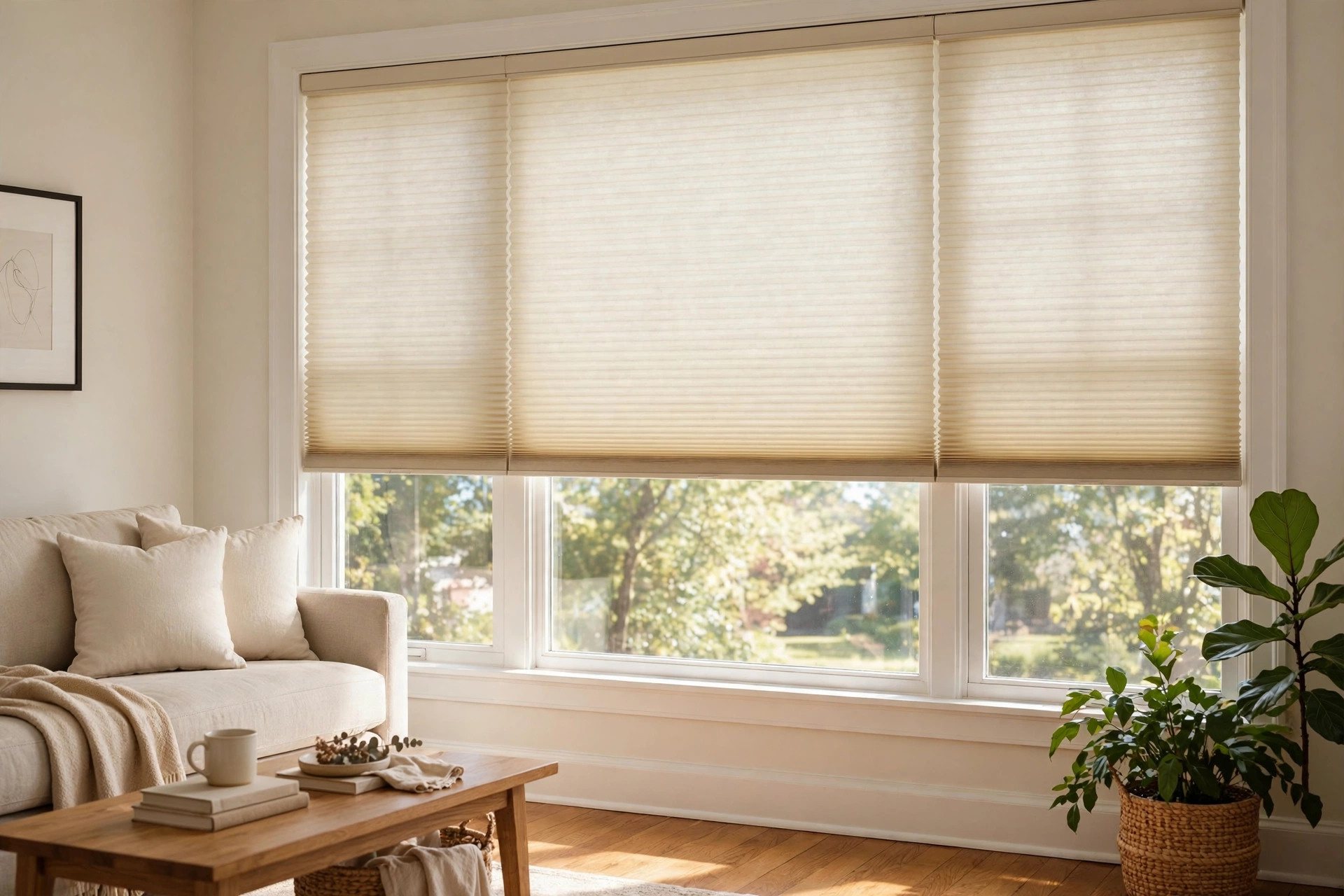
Cordless cellular shades are popular in American homes for two reasons. They block heat and cold, and they have no pull cords. The honeycomb cells trap air between the window and the room. This air layer works like a blanket. It keeps rooms warmer in winter and cooler in summer. The federal Energy Star program notes that window coverings can lower home energy use when chosen well.
The cordless lift matters for safety. Old cords have caused injuries to small children and pets. The Consumer Product Safety Commission has warned about corded window coverings for years. Many makers now sell cordless shades as the standard option. Comparing prices makes sense because the market has many sellers. Big-box stores, online shops, and custom dealers all carry cordless cellular shades. Their prices overlap but rarely match.
A fair cordless cellular shades price comparison usa starts with knowing the range. Expect basic stock shades to cost about twenty-five to sixty dollars per window. Semi-custom shades often run sixty to one hundred twenty dollars. Full custom shades can reach one hundred fifty to three hundred dollars per window. These are rough bands. Size, fabric, and brand move the price.
What Drives the Price: Cordless Cellular Shades Price Comparison Usa
Several factors shape what you pay for a cordless cellular shade. Know them before you shop.
Window size. This is the largest factor. A small bathroom window needs little fabric. A wide sliding door window needs a lot. Most makers price by width and height. Measure each window with a steel tape. Measure in three spots for width and three for height. Use the largest width and height as your rough size. A shade too small will let light leak at the edges.
Cell size. Cellular shades come in single-cell and double-cell designs. Single-cell shades have one layer of honeycomb. Double-cell shades have two layers. Double-cell shades block more heat and sound. They cost ten to thirty percent more than single-cell shades of the same size. For most bedrooms and living rooms, single cell is enough. For very cold climates, double cell pays off.
Fabric opacity. Shades come in sheer, light-filtering, room-darkening, and blackout fabrics. Sheer and light-filtering fabrics cost the least. They soften daylight but do not block it. Room-darkening and blackout fabrics have a coating or liner. They cost more. A blackout cordless cellular shade can cost twenty to forty dollars more per window than a light-filtering one of the same size.
Lift system. “Cordless” covers more than one design. The simplest type is the push-up, pull-down cordless lift. You push the shade up by hand and pull it down. It costs the least. The next step up is top-down, bottom-up. It opens from the top or the bottom. It adds about twenty to fifty dollars per shade. Motorized cordless shades run on a battery and a remote. They cost the most, often one hundred fifty to four hundred dollars per window.
Brand and custom work. Big names charge more than store brands. Custom shades made to exact measurements cost more than stock shades made in common sizes. Stock shades come in fixed widths like twenty-three, twenty-seven, or thirty-five inches. If your window fits a stock size, you save a lot.
Types and Options
Cordless cellular shades are not all the same. Here are the main types on the market.
Standard cordless cellular shades. These are the workhorse. Honeycomb fabric, cordless push-up lift, light-filtering or room-darkening. They suit most rooms. Reviews on sites like The Spruce often rate them as a good balance of price and function.
Top-down, bottom-up shades. These let light in from the top while keeping the bottom closed. They are popular for street-facing rooms and bathrooms. The price is higher, but the privacy is worth it for many buyers.
Motorized cellular shades. A small motor raises and lowers the shade. You use a remote or a phone app. Some work with smart home systems. They cost much more. Battery packs need charging or new batteries every year or two. They suit hard-to-reach windows.
Specialty shapes. Arched windows, angled skylights, and round windows need custom shades. These cost the most per square foot. For curved tops, many buyers pair a standard shade with an arched window treatment idea. Our guide to buy arched window shades online in the usa covers where to order them.
Where Prices Stand: A Cost and Price Guide
Here is a practical price picture for the United States. Prices are per window, before tax.
– Budget stock shades: $25 to $60. Found at Home Depot, Lowe’s, and IKEA. Common sizes only. Light-filtering fabrics. Simple cordless lift. – Mid-range shades: $60 to $130. Found at Blinds.com and Wayfair. More sizes, colors, and fabrics. Top-down, bottom-up options. Some room-darkening fabrics. – Custom shades: $130 to $300+. Ordered to exact measurements. Designer fabrics. Double cell. Motorized options. Sold by specialty dealers and some online shops. – Installation: $0 to $75 per window. Most cordless shades are easy to hang yourself. Two brackets and a screwdriver are all you need. Professional installers charge by the window. Many buyers skip this cost.
Cordless honeycomb shades prices have crept up in recent years. Material and shipping costs rose. Still, stock sizes remain a bargain. If eight windows all fit stock sizes, you can outfit a whole house for a few hundred dollars.
Independent testing groups like Consumer Reports review window coverings for ease of use and build quality. Their notes can help you weigh a cheap shade against a pricier one.
How to Compare Fairly
When you run your own cordless cellular shades price comparison usa, compare the same details across sellers. Check the fabric opacity, the cell type, and the lift system. A forty-dollar shade and an eighty-dollar shade may differ in all three. Look at the warranty. Cheap shades may carry a one-year warranty. Better shades often carry a lifetime limited warranty. Check shipping and returns. Some online sellers charge restocking fees on custom orders. Stock sizes can usually be returned free.
How to Choose the Right Shade
Follow these steps to pick well.
1. Measure twice. Measure the window frame where the shade will mount. For inside mounts, measure the exact opening. For outside mounts, add two to three inches on each side for coverage. Write down width first, then height. This order is the trade standard.
2. Pick opacity by room. Bedrooms do well with room-darkening or blackout fabrics. Living rooms suit light-filtering fabrics. Kitchens and baths do well with top-down, bottom-up for privacy. If you want the darkest room, read our blackout roller shades price comparison usa for a rival option.
3. Match the lift to the window. Push-up cordless works for most windows. Wide shades over fifty inches can be hard to lift by hand. For wide or tall windows, a continuous cord loop or motorized lift is easier. Tall windows over seventy-two inches strain a simple cordless lift.
4. Check the light gap. Inside-mounted shades leave a small gap at each side. Light slips through. If you need a dark room, choose an outside mount. The shade covers the trim and blocks edge light.
5. Compare brands on build. Read buyer notes on how the shade raises and lowers. The best shades move smoothly and stay level. Cheap shades may tilt or stick. If you want vetted picks, see top rated cordless cellular shades for american homes.
6. Order a sample. Many online sellers mail fabric swatches for a few dollars. Hold the swatch to your window. Check the color in daylight and at night. A color that looks cream in the store may look gray in your room.
Care and Upkeep
Cordless cellular shades are easy to keep. Dust them once a month with a feather duster or a vacuum with a brush attachment. Use low suction. The cells can crush if you press hard.
For spots, blot with a damp cloth and mild soap. Do not rub. Rubbing can fray the fabric edges. Do not soak the shade. Water can stain the pleats and weaken the glue lines.
Keep the lift clean. Cordless lifts work by friction and spring tension. Dust on the rails can make the shade stick. Wipe the headrail with a dry cloth once or twice a year. If the shade will not stay up, check that the mounting brackets are level. A crooked bracket is the most common cause.
Cellular shade prices per window stay low over time because repairs are rare. The most common fix is restringing, which some dealers do for a small fee. Many shades last ten to fifteen years in normal use. Sun-heavy windows wear fabric faster. Rotate which windows get the harshest sun if you can.
Safety
Cordless shades are the safer choice for homes with children and pets. The safety agency CPSC urges parents to replace corded shades or make them cordless. With no loop, there is nothing for a child to wrap around the neck.
Still, check a few points. Make sure the shade mounts firmly. A loose bracket can let the shade fall. Keep cords away from cribs and beds even with cordless models, since some shades have short internal cords at the back. Follow the maker's cleaning rules so the shade keeps its shape.
For motorized shades, keep remotes out of reach of small children. Button batteries in some remotes are a choking hazard. Store spare batteries high and locked away.
FAQ
How much do cordless cellular shades cost per window? Stock sizes cost about twenty-five to sixty dollars per window. Semi-custom shades cost about sixty to one hundred thirty dollars. Full custom shades cost about one hundred thirty to three hundred dollars or more. Wide windows, double-cell fabric, and motorized lifts raise the price.
Are cordless cellular shades worth the money? For most homes, yes. They cut heat gain in summer and heat loss in winter. They are safer than corded shades. They last ten to fifteen years. The energy savings and the safety gain justify the cost for most buyers.
What is the difference between single-cell and double-cell shades? Single-cell shades have one layer of honeycomb pockets. Double-cell shades have two layers. Double-cell shades block more heat, cold, and sound. They cost more. Single cell suits mild climates. Double cell suits very hot or very cold areas.
Can I install cordless cellular shades myself? Yes. Most shades hang on two or three brackets. You need a drill, a screwdriver, and a level. The job takes about fifteen minutes per window. Measure the opening first and follow the maker's bracket marks.
Do cordless cellular shades block light fully? Light-filtering shades do not. They glow softly in daylight. Room-darkening shades block most light. True blackout cellular shades block nearly all light but may still leak a little at the edges. An outside mount reduces edge gaps.
How do I clean honeycomb shades without damage? Dust monthly with a feather duster or a brush vacuum on low suction. Blot spots with a damp cloth and mild soap. Never soak the shade. Never rub hard. Keep water off the pleats to avoid stains.
Final Word
A smart cordless cellular shades price comparison usa comes down to honest matching. Match the shade to the room. Match the size to the window. Match the price to the features. Stock sizes from large stores give the best value for standard windows. Custom shades earn their price on odd sizes and tall windows. Measure well, order a swatch, and pick cordless for safety. Your windows will look clean, your rooms will feel calmer, and your energy bill may drop a little too.
References
Blinds.com. (n.d.). Window blinds, shades, and shutters. https://www.blinds.com Consumer Reports. (n.d.). Product reviews and ratings. https://www.consumerreports.org ENERGY STAR. (n.d.). Energy efficient products. https://www.energystar.gov HGTV. (n.d.). Home and garden ideas. https://www.hgtv.com IKEA. (n.d.). Home furnishings. https://www.ikea.com Lowe’s. (n.d.). Home improvement products. https://www.lowes.com The Home Depot. (n.d.). Home improvement products. https://www.homedepot.com The Spruce. (n.d.). Home and garden advice. https://www.thespruce.com U.S. Consumer Product Safety Commission. (n.d.). Product safety information. https://www.cpsc.gov Wayfair. (n.d.). Furniture and home goods. https://www.wayfair.com
Was this guide helpful?

About Robert Taylor
The My Garden US editorial team writes practical, in-depth home and garden guides for American homeowners — tested advice, no fluff.