
Why Homeowners Seek the Top Rated Cordless Cellular Shades
When people search for the top rated cordless cellular shades for american homes, they are usually looking for the same few things. They want window coverings that look clean and simple. They want shades that help lower heating and cooling bills. And they want window coverings with no cords, so homes with small children and pets stay safe. Cordless cellular shades answer all three needs at once.
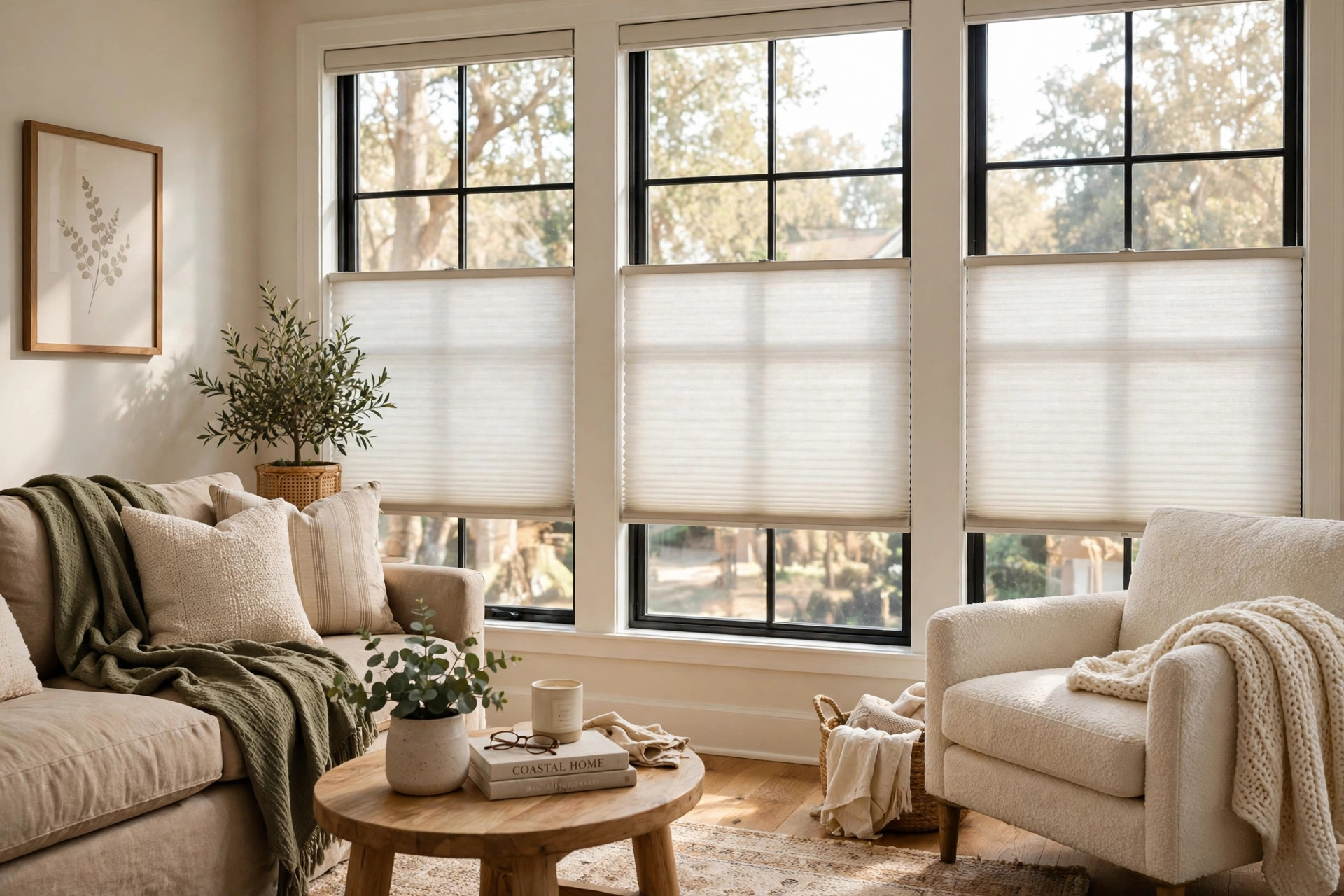
A cellular shade, sometimes called a honeycomb shade, is made of fabric folded into rows of small cells. These cells trap air between the window and the room. The trapped air works like insulation. In winter it slows heat from escaping through the glass. In summer it slows heat from coming in. The result is a room that feels more comfortable and a smaller bill from the power company.
The cordless part matters too. Older blinds and shades used pull cords that hang down the side. Those cords have caused real harm to children over the years. Safety groups have warned about them for decades. Cordless shades remove the cord entirely. You raise and lower the shade by hand, pushing up or pulling down on the bottom rail. Some models also work with a remote control or a phone app.
What to Look for When You Shop: Top Rated Cordless Cellular Shades for American Homes
Cell Size
Cellular shades come in different cell sizes, usually measured in fractions of an inch. Small cells, around three-eighths of an inch, fit most windows and look neat. Larger cells, around three-quarters of an inch, insulate better and suit wide windows. For a typical American home, the standard cell size is a safe choice. For very large patio doors or tall windows, ask about the larger size.
Single, Double, or Triple Cell
Many shades have one row of cells. Some have two or three rows stacked inside each other. Double and triple cell shades hold more air and insulate better. They also cost more. In very cold or very hot parts of the country, the extra insulation can be worth the price. In mild climates, a single cell shade does fine.
Light Control and Opacity
Cellular shades come in three main fabric types. Sheer fabrics let daylight through while softening the view. Light-filtering fabrics give privacy while still letting light in. These are the most popular for living rooms and kitchens. Blackout fabrics block most of the light and are best for bedrooms and media rooms. If you need darkness for sleep, a blackout cellular shade is a smart pick. For more on bedroom darkness, see our guide to top rated blackout curtains for bedrooms for sale.
Cordless Lift and Motorized Options
Basic cordless shades lift by hand. This is simple and reliable. Motorized shades lift with a remote or a timer. Some connect to home assistants so they open at sunrise and close at sunset. Motorized models cost more and need batteries or wiring. Families who want the most convenience choose motorized shades. People who want low cost and low fuss choose hand-lift cordless shades.
Fit: Inside Mount or Outside Mount
An inside mount fits the shade inside the window frame. It gives a neat, built-in look. An outside mount sits above the frame and covers it. Outside mounts block more light around the edges. Measure your windows with care before you order. Most sellers give clear measuring guides on their sites, such as the guides found at Blinds.com.
Types and Options Worth Knowing
Top-Down Bottom-Up Shades
This style opens from the top, from the bottom, or both. You can lower the top for daylight while keeping the bottom closed for privacy. Many buyers say this is the most useful feature in a cellular shade. It costs a bit more than a basic shade, but most owners find it worth it.
Day-Night Shades
Day-night shades combine two fabrics in one unit. One layer filters light during the day. The other is a blackout layer for the night. You slide between them with a touch. These are popular for bedrooms that double as offices.
Vertical Cellular Shades
Most cellular shades run across horizontal windows. Vertical versions cover sliding glass doors and tall windows. They keep the same honeycomb insulation but hang from a track like a curtain. They are a good choice for patio doors.
Continuous Loop Shades
Some larger cellular shades use a fabric loop instead of a hand lift. The loop stays in place and does not swing free. Look for loops that meet current safety rules. The U.S. Consumer Product Safety Commission keeps safety standards for window coverings and is a good source for current rules.
Cost and Price: What You Should Expect
Prices for cordless cellular shades vary widely. A basic stock-size shade for a small window can cost under fifty dollars. Custom-made shades for large windows often cost between one hundred and four hundred dollars each. Motorized and top-down bottom-up models cost more still.
Several things drive the price up:
– Custom size. Made-to-measure shades cost more than stock sizes. – Double or triple cells. Extra fabric and work add to the price. – Blackout fabric. Dense fabrics cost more than sheer ones. – Motorized lift. Motors, remotes, and wiring raise the cost by a large amount. – Brand and warranty. Well-known makers often charge more but stand behind their work with longer warranties.
To keep costs down, measure with care and order stock sizes where you can. Many big stores carry common window sizes in store or online. The Home Depot and Lowe’s both carry a wide range of cordless cellular shades, and sites like Wayfair and IKEA offer affordable options as well. Before you buy, read product reviews and check the warranty terms. Reviews at places like The Spruce and HGTV often compare popular models side by side.
Care and Upkeep
Cellular shades are easy to care for. The fabric holds its shape for many years with light cleaning. Follow these simple steps:
1. Dust often. Run a soft cloth or a vacuum with a brush head over the fabric every month or two. This keeps dust from settling into the cells. 2. Spot clean stains. Dab with a damp cloth and a small amount of mild soap. Do not soak the fabric. Too much water can warp the cells. 3. Keep hands clean. Oils from fingers can mark light fabrics over time. Wash your hands before you adjust the shade, or adjust it by the bottom rail. 4. Check the lift. Cordless lift systems last a long time, but springs can wear. If the shade will not stay up or slides down on its own, call the maker. Most warranties cover lift problems for several years.
Curtains and drapes near the shades need care too. If you ever need professional help with soft window coverings, you can read about premium curtain cleaning services near me.
Safety: Why Cordless Matters
Window cord safety is the main reason many families choose cordless shades. In past years, looped cords on blinds and shades caused strangling deaths among small children. The danger led to rule changes across the industry. Today, most new shades sold in stores are cordless or use cords that are out of reach.
A cordless cellular shade has no cord to tangle around a child or a pet. This makes it one of the safest window coverings you can buy. If you still have old corded blinds in your home, safety groups advise you to replace them or at least to cut looped cords and add safety devices. The guidance from the U.S. Consumer Product Safety Commission explains what to do with older products.
Keep furniture like cribs and beds away from windows as well. Children can climb and reach cords or small parts even on newer shades. Safety is a habit, not just a product choice.
Installation: What to Expect
Most cordless cellular shades are made for do-it-yourself installation. The package includes brackets, screws, and a short instruction sheet. A typical install takes twenty to forty minutes per window. You will need a drill, a level, and a tape measure.
The basic steps are:
1. Hold the brackets in place and mark the screw holes. 2. Drill small pilot holes and fasten the brackets. 3. Snap the headrail into the brackets. 4. Test the lift by raising and lowering the shade a few times.
If you are hanging shades on tall windows or you are not comfortable with tools, hire a handyman. The cost is usually modest per window. Guides from This Old House and Bob Vila walk through window shade installation in plain detail.
When you pair shades with curtain rods, fit matters. If you are adding drapes over your shades, our custom double curtain rod brackets buying guide can help you choose the right hardware.
Frequently Asked Questions
Do cordless cellular shades really save energy?
Yes, they can. The honeycomb cells trap a layer of air against the glass. Air is a poor conductor of heat, so the trapped air slows heat flow in both directions. The savings depend on your climate, your windows, and how you use the shades. Homes in very cold or very hot areas see the most benefit. Double or triple cell shades insulate best.
How long do cellular shades last?
A well-made cellular shade can last ten years or more. Sunlight slowly breaks down all fabrics, so shades on south-facing windows may wear faster. Regular dusting and gentle handling extend the life of the shade. The lift mechanism is often the first part to wear out, and most makers cover it under warranty.
Can I install them myself?
Most people can. The job needs only basic tools and takes less than an hour per window. Inside mounts are the easiest. If your windows are out of square or very large, consider professional installation to get a clean fit.
Are cordless shades harder to clean than blinds?
They are about the same. A vacuum with a brush attachment handles most dust. Unlike slatted blinds, cellular shades have no narrow slats to wipe one by one, so many owners find them faster to clean.
Will a cordless shade work on a wide window?
Yes, but check the maker’s size limits. Very wide shades may need a center support bracket to keep the headrail from sagging. For extra-wide openings, some makers suggest two shades side by side instead of one large unit.
Do motorized cellular shades need an electrician?
Most battery-powered models do not. You mount the shade, insert the batteries, and pair the remote. Hardwired models that connect to house power are more complex and may need an electrician. Battery models suit most homes.
A Short Final Word
The top rated cordless cellular shades for american homes earn their ratings for good reasons. They insulate windows, they look clean and modern, and they remove the cord danger that worried parents for years. Take time to measure well, choose the right fabric and cell type for your climate, and buy from a seller with a solid warranty. A little care keeps them looking new for many years. Whether you pick a simple hand-lift shade or a motorized model, you are making a sound choice for comfort, looks, and safety in your home.
References
Blinds.com. (n.d.). Window blinds, shades, and shutters. https://www.blinds.com Bob Vila. (n.d.). Home improvement advice. https://www.bobvila.com HGTV. (n.d.). Home and garden ideas. https://www.hgtv.com IKEA. (n.d.). Home furnishings. https://www.ikea.com Lowe’s. (n.d.). Home improvement products. https://www.lowes.com The Home Depot. (n.d.). Home improvement products. https://www.homedepot.com The Spruce. (n.d.). Home and garden advice. https://www.thespruce.com This Old House. (n.d.). Home renovation guidance. https://www.thisoldhouse.com U.S. Consumer Product Safety Commission. (n.d.). Product safety information. https://www.cpsc.gov Wayfair. (n.d.). Furniture and home goods. https://www.wayfair.com
Was this guide helpful?

About David Wilson
The My Garden US editorial team writes practical, in-depth home and garden guides for American homeowners — tested advice, no fluff.
You May Also Like

Buy Arched Window Shades Online in Arizona: A Plain Guide for Homeowners
April 17, 2026 0 views
Premium Valances for Windows for Sale: A Buyer Guide
January 14, 2026 0 views
Where to Buy Machine Washable Curtains in Texas
June 18, 2026 0 views