Few garden plants reward a small effort the way the morning glory does. This morning glory seeds american homes guide will help you buy the right seed, plant it at the right time, and keep the vines healthy through the season. Morning glories are annual vines that grow fast, flower from summer until the first frost, and ask for very little in return. A packet of seed, a sunny spot, and something to climb are enough to cover a fence or a mailbox post with trumpet-shaped blooms. This guide covers every step in plain language, from seed packet to fall clean-up.
Why Morning Glories Matter for American Homes
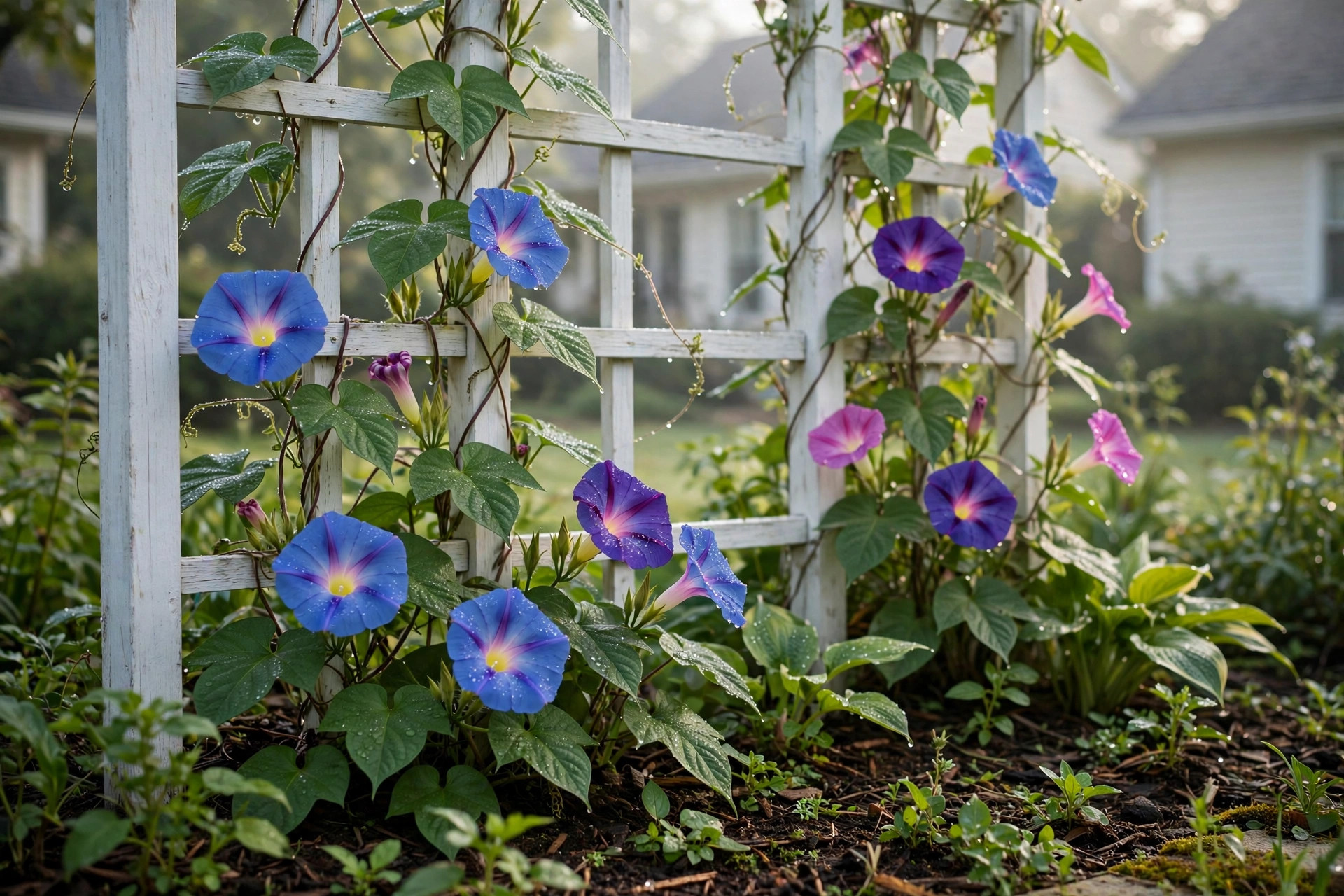
The morning glory has a long history in American gardens. Old farmhouses grew them on porch posts. City houses grew them on chain-link fences. The vine grows ten to fifteen feet in a single season, which means one planting can change the look of a yard by July. The flowers open at dawn in blue, purple, pink, red, and white. Most fade by afternoon, but each morning brings a fresh set of blooms.
They also serve a practical purpose. A morning glory vine on a trellis shades a west-facing window and cools a hot patio. On a fence, it screens a neighbor’s yard. Bees and butterflies visit the flowers all morning, which helps the whole garden. Few plants give this much color for this little money. A single seed packet often costs less than a cup of coffee, yet it can cover an entire arbor.
How to Choose the Right Seed: Morning Glory Seeds American Homes Guide
Not all morning glory seed is the same. Seed packets vary in variety, germination rate, and age. Fresh seed matters more than brand names. Morning glory seed stays viable for two to three years when stored in a cool, dry place. Check the packed-for year printed on the back of the packet. Seed older than that may still sprout, but the rate will be low.
Heirloom and Open-Pollinated Varieties
Heirloom types such as Heavenly Blue and Grandpa Ott have been grown for generations. Their flowers are large and their colors are deep. Open-pollinated seed comes true from saved seed, so gardeners can collect seed pods in fall and plant them the next spring. These varieties suit gardeners who like tradition and self-sufficiency.
Hybrid Varieties
Hybrid morning glories are bred for special traits. Some have larger flowers. Some bloom a few weeks earlier. Some, like the Moonflower, open at night and release a sweet scent. Hybrids may cost a little more per packet. They are a good choice for gardeners who want a certain color or a certain habit and are willing to buy fresh seed each year.
What to Look for on the Packet
Read the packet before you buy. It should name the species, usually Ipomoea purpurea or Ipomoea tricolor. It should give the days to germination, the plant height, and the sun needs. A good packet also lists the seed count. One packet of fifty to one hundred seeds is plenty for most home projects. If you plan to grow other flowers as well, a look at a morning glory seeds buying guide can help you compare seed sources side by side.
Types of Morning Glory for Home Gardens
Several types grow well from seed in American yards. Each has its own look and its own habit.
*Common morning glory (Ipomoea purpurea).* The classic type. Flowers are about three inches wide in blue, purple, pink, and white. Vines reach ten to fifteen feet. This is the best choice for beginners.
*Tall morning glory (Ipomoea tricolor).* Heavenly Blue belongs to this group. Flowers reach four to five inches across in rich sky blue with white throats. Vines grow twelve feet or more. They need a longer, warmer season, so they do best in zones with warm summers.
*Moonflower (Ipomoea alba).* White flowers six inches wide open at dusk and glow under porch lights. The vines grow fifteen feet or longer. Moonflowers suit evening gardens and patios where people sit after dark.
Cypress vine and cardinal climber. These have fine, fern-like leaves and small red star-shaped flowers. They climb by twining and attract hummingbirds. They are less common but easy to grow.
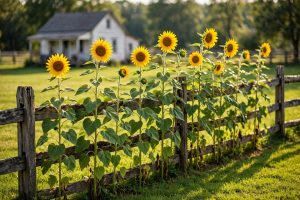
Seed companies such as Burpee and Park Seed carry all of these types in plain, affordable packets. A broader sunflower seed packs selection pairs well with morning glories in a cutting garden.
When and Where to Plant
Morning glories hate cold soil. Wait until all danger of frost has passed and the soil has warmed to at least 65 degrees. For most of the country, this means late April through May. Gardeners in the South can plant as early as March. Gardeners in the North may wait until early June. The Old Farmer’s Almanac publishes local frost dates that take the guesswork out of timing.
Choose a spot with full sun. Six hours of direct sun per day is the minimum. More sun means more flowers. Morning glories tolerate poor soil, but they flower best in average soil that drains well. Very rich soil with heavy fertilizer grows leaves at the expense of blooms. A light hand with fertilizer is the secret to heavy flowering.
How to Plant Morning Glory Seeds
The seed coat of a morning glory is hard. Water cannot reach the seed inside until the coat is broken or softened. This is why many gardeners see slow or patchy germination. Two simple methods solve the problem.
Nicking. Hold each seed and nick the coat with a small file or nail clipper. Nick just enough to let water in. Do not cut into the seed itself.
Soaking. Place nicked or unnicked seed in warm water for twelve to twenty-four hours. Seeds that sink have absorbed water and are ready to plant. Throw away seeds that still float after a full day.
Plant seeds one-half inch deep and six to eight inches apart. Water gently and keep the soil moist until seedlings appear, usually in five to fourteen days. Thin seedlings to twelve inches apart once they have two sets of true leaves. Young plants can also be started indoors in peat pots three to four weeks before the last frost. Gurney’s and other catalogs sell seed-starting supplies alongside their seed packets.
Supports and Trellising
Morning glory vines climb by twining. They wrap around anything thinner than about two inches. They cannot grip a flat wall, so they need a structure with bars, mesh, or strings.
Good supports include:
– Wooden or metal trellises against a wall or fence – Arbors over walkways and gates – Chain-link fences, which the vines cover completely – Bamboo poles arranged in a teepee – Mailbox posts, lamp posts, and downspouts with twine tied around them
Set the support in place before the vines start to climb. Install trellises at planting time so you do not disturb roots later. Guide the first tendrils onto the support by hand. After that, the vines find their own way. One packet of seed can cover an eight-foot fence panel by midsummer.
Cost and Price
Morning glories are among the cheapest flowers a home gardener can grow. Here is what to expect in the United States.
– Seed packets: one to six dollars for fifty to one hundred seeds. One packet covers most projects. – Bulk seed: five to fifteen dollars per quarter pound for large fences or community gardens. – Trellis or support: ten to forty dollars for a basic wooden trellis; more for cedar arbors or metal obelisks. – Soil amendments: five to ten dollars for a bag of compost, though morning glories need little. – Total for a typical fence project: about twenty to fifty dollars, including seed, one trellis, and twine.
Because one planting reseeds itself in mild climates, the cost drops to nearly zero in later years. Gardeners in warm zones often find volunteer seedlings each spring from seed that dropped the previous fall.
Care and Upkeep Through the Season
Morning glories ask for little once they are growing. A weekly routine keeps them at their best.
Water. Give the vines about one inch of water per week from rain or the hose. Water at the base in the morning. Too much water in heavy soil can cause yellow leaves.
Fertilizer. Skip high-nitrogen fertilizer. If the soil is poor, apply a balanced fertilizer at half strength once in early summer. That is enough.
Deadheading. Pick off spent flowers to keep the planting tidy and to slow self-seeding. This matters in states where morning glory can reseed aggressively. Deadhead weekly for the neatest look.
Pest watch. Aphids and spider mites are the main pests. A strong spray of water knocks aphids off. Insecticidal soap handles heavier cases. Japanese beetles may chew leaves in some regions; hand-picking works on small plantings.
Fall clean-up. After the first hard frost, the vines turn brown. Pull them down, cut them up, and compost them. Remove seed pods if you do not want volunteers next year. A layer of mulch over the bed protects the soil through winter.
For general seasonal advice on many garden plants, The Spruce keeps clear, plain guides that suit beginners. Research from university extension programs, supported in part by the National Institute of Food and Agriculture, also offers reliable, science-based guidance for home gardeners.
Safety and Responsible Growing
Morning glory seeds contain compounds that can cause nausea, cramps, and dizziness if eaten. Keep seed packets away from children and pets. Teach children to enjoy the flowers without eating the seeds or seed pods. This is standard practice for many garden plants, but it deserves a clear mention.
In some states, morning glory self-seeds so freely that it acts like a weed. Gardeners in the Southeast and in mild coastal areas should deadhead before seed pods mature. Check with a local extension office if you are unsure about your county. Plant only in beds where you can manage volunteers, and never plant near natural areas where the vine could escape into wild land.
Pets that chew garden plants should be kept away from seed pods on the ground in fall. A clean fall bed removes the risk.
Frequently Asked Questions
How long do morning glory seeds take to germinate? Nicked and soaked seed usually sprouts in five to seven days in warm soil. Untreated seed may take up to three weeks. Soil below 65 degrees slows germination a great deal.
Can I grow morning glories in containers? Yes. Use a pot at least twelve inches wide and deep with drainage holes. Place a small trellis or a few bamboo stakes in the pot at planting time. Container vines grow shorter, usually six to eight feet, but they flower just as well.
Do morning glories come back every year? In most of the country they are annuals and die with the first frost. In warm zones they reseed themselves so reliably that they seem perennial. Gardeners in zones nine and ten may see the same planting return for years.
Why are my morning glories all leaves and no flowers? Too much nitrogen fertilizer is the usual cause. Rich soil and lawn fertilizer runoff push leaf growth. Cut back on feeding, and make sure the plants get at least six hours of full sun.
Are morning glories poisonous to dogs and cats? The seeds can be harmful if eaten in quantity. Keep pets from chewing seed pods in fall. The vines themselves are less of a concern, but it is wise to supervise pets in the garden.
When should I collect seed for next year? Let a few pods dry on the vine in fall until they turn brown and papery. Pick them, crush them open, and store the seeds in a paper envelope in a cool, dry place. Label the envelope with the variety and the year.
A Final Word
Morning glories suit the American home garden because they ask for little and give a great deal. A packet of seed and a simple trellis become a wall of blue flowers by August. Plant at the right time, give them sun and something to climb, and they will do the rest. Gardeners who enjoy mixing annuals may also like wildflower seed mixes for meadow-style beds, and plant specialists such as White Flower Farm, Monrovia, and Proven Winners offer strong companion plants to grow beside your vines.
References
Burpee. (n.d.). Seeds, plants, and gardening supplies. https://www.burpee.com Gurney’s Seed & Nursery Co. (n.d.). Seeds, plants, and garden supplies. https://www.gurneys.com Monrovia. (n.d.). Plants for home gardens. https://www.monrovia.com National Institute of Food and Agriculture. (n.d.). Agricultural research and extension. https://www.nifa.usda.gov Park Seed. (n.d.). Seeds, plants, and gardening supplies. https://www.parkseed.com Proven Winners. (n.d.). Plants and gardening inspiration. https://www.provenwinners.com The Old Farmer’s Almanac. (n.d.). Gardening calendars and advice. https://www.almanac.com The Spruce. (n.d.). Home and garden advice. https://www.thespruce.com White Flower Farm. (n.d.). Plants, bulbs, and garden supplies. https://www.whiteflowerfarm.com
Was this guide helpful?

About Sarah Mitchell
The My Garden US editorial team writes practical, in-depth home and garden guides for American homeowners — tested advice, no fluff.