
This wildflower seed mixes buying guide usa walks you through every step of the purchase. A bag of wildflower seed sounds simple. In truth, the mix inside can vary a great deal from brand to brand. Some mixes suit the hot plains of Texas. Others suit the cool hills of New England. Some bags hold pure native seed. Others hold mostly filler and a few bright annuals. This guide helps you read the label, match the mix to your land, sow at the right time, and keep the flowers coming back year after year.
Why Wildflower Mixes Matter
Wildflowers do more than look pretty. They feed bees, butterflies, and hummingbirds at a time when many garden plants are done blooming. A well-chosen mix can turn a dry slope, a bare corner, or a whole lawn into living ground cover. That saves water. It cuts mowing. It lowers the need for fertilizer and weed spray.
A meadow of native flowers also asks less of you over time. Once the roots are deep, the plants handle drought, heat, and poor soil better than most lawn grass. You get color from spring to fall with far less work. For many home owners, that is the main reason to switch.
The wildflower seed trade has grown fast in the last ten years. With growth has come confusion. Bags may carry the words wild, meadow, native, and pollinator without much proof behind them. A careful buyer learns to look past the front of the bag and study the seed list on the back. This wildflower seed mixes buying guide usa shows you how.
How to Choose the Right Mix: Wildflower Seed Mixes Buying Guide Usa
Start with your region. The United States has many climate zones. A mix made for the Southeast will not act the same in the Pacific Northwest. Look for mixes that name a region on the label, such as Midwest, Northeast, Southwest, or Pacific Northwest. A national mix can still work, but a regional mix will give you more of the plants that belong where you live.
Next, study the species list. A good label names every plant by its common name and its Latin name. It should also show the percentage of each seed in the bag by weight. Avoid mixes that list only pretty names like country blend or butterfly mix with no plant names. If the maker will not tell you what is in the bag, do not buy it.
Check the seed date. Wildflower seed loses strength as it ages. Fresh seed from the current or last season gives the best sprout rate. The label may show a germination rate or a test date. Higher germination rates mean more flowers for your money.
Think about your soil and light. Most wildflowers want full sun, which means six or more hours of direct light each day. Some mixes suit partial shade. Some suit wet ground. Others suit dry, sandy soil. Match the mix to the spot you have, not the spot you wish you had.
The Almanac planting calendar can help you time your sowing. Fall sowing works well in many states because winter cold helps hard seeds wake up in spring.
Types of Wildflower Seed Mixes
Annual mixes
Annual wildflowers sprout, bloom, and die in one season. They give fast color in the first year. Cosmos, poppies, and plains coreopsis are common in these blends. Annual mixes cost less per pound. They work well if you want quick results for a party, a wedding field, or a bare patch. The drawback is plain. You must sow again each year.
Perennial mixes
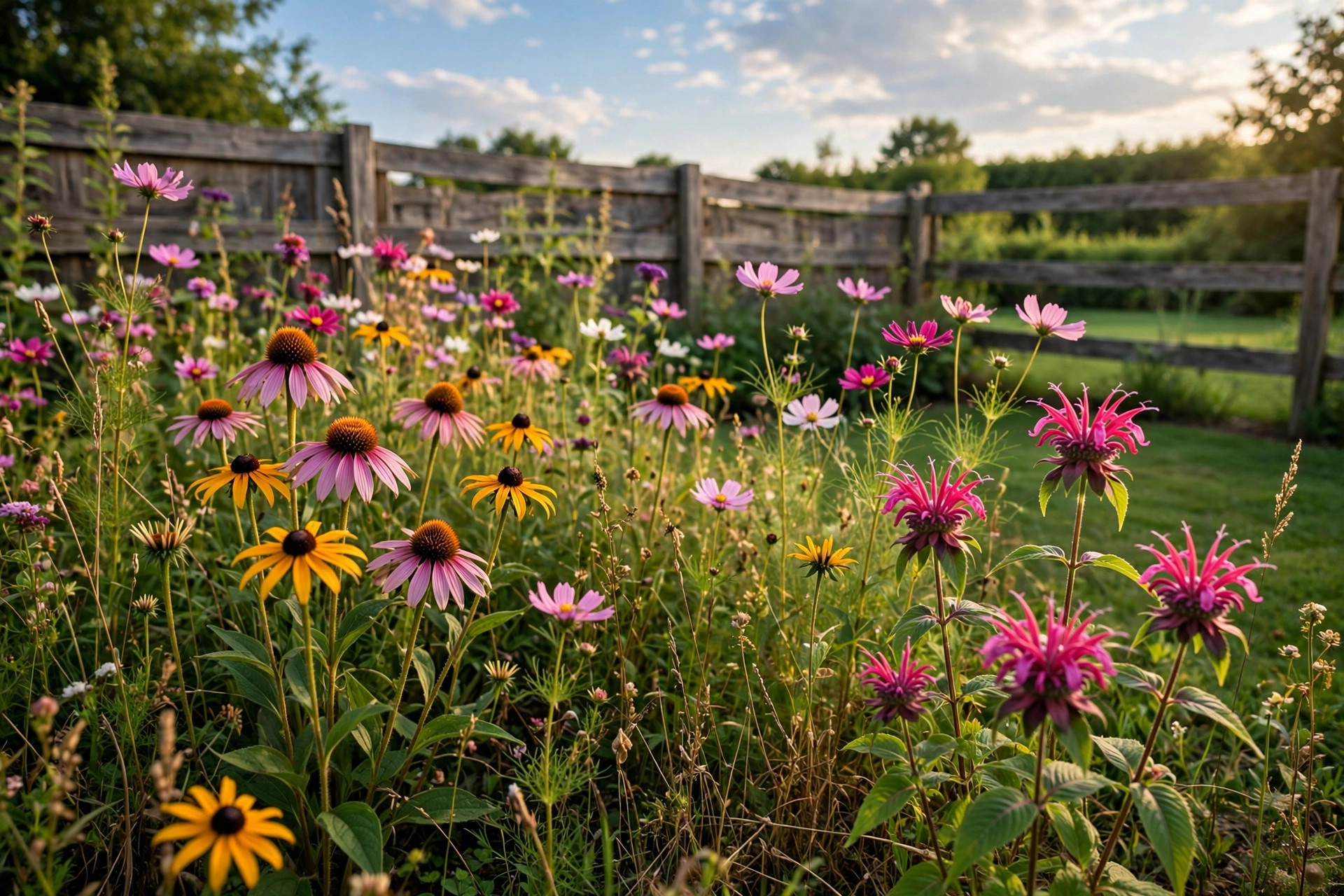
Perennial wildflowers live for several years. They often bloom lightly in year one and strongly in year two and beyond. Coneflowers, black-eyed Susans, and bee balm are typical members. The plant library at Monrovia shows how these perennials look at maturity. Perennial mixes cost more up front. Over time they cost less because they return on their own. Many buyers pick these for a lasting meadow.
Annual and perennial blends
Most bags sold in stores are blends of annuals and perennials. The annuals give color in year one while the perennials build their roots. This is the most common choice for home owners. It gives both fast reward and long life.
Native mixes
A native mix holds plants that grow wild in your region. Native plants feed local insects and birds best. They also need less water once settled. Look for the words 100 percent native or regional native on the label. Guides from the National Institute of Food and Agriculture explain why native plants matter for soil and water health.
Pollinator mixes
Pollinator mixes stress plants that make nectar and pollen for bees and butterflies. They often overlap with native mixes. If you keep bees or want more butterflies, this type is worth a look. The seed houses at Burpee and Gurney’s both carry blends aimed at pollinators.
Reading the Seed Label
The back label tells the true story. Here is what to read line by line.
Pure seed percentage. This shows how much of the bag is real seed. The rest may be coating, chaff, or inert matter.
Germination rate. This shows how much of the seed is expected to sprout. Anything above 80 percent is strong. Below 60 percent is weak.
Weed seed percentage. Good mixes show 0.00 percent weed seed. Some states allow a small amount. Less is better.
Other crop seed. This lists seed of other plants that is not weeds but not what you wanted. Again, less is better.
Species list. As noted above, every plant should be named. Watch for non-native plants in a mix sold as native. Watch for invasive plants too. A responsible brand will not include known invaders for your region.
Net weight. Mixes sell by the ounce or pound. Compare prices per ounce, not per bag, to judge value.
How Much Seed You Need
Coverage rates vary by mix. A common rule is one pound of wildflower seed per 1,000 to 2,000 square feet. Thick planting gives faster cover and fewer weeds. Thin planting saves money but leaves gaps.
Measure your site before you buy. A yard of 50 by 20 feet is 1,000 square feet. For that area, one pound of a pure wildflower mix is usually enough. If the bag includes filler or carrier such as rice hulls, you may need more by weight.
For small beds, packets of one to four ounces are fine. For a meadow of half an acre or more, buy in bulk pounds.
Do not over buy. Wildflower seed does not keep its strength forever. Buy what you can sow this season.
When and How to Sow
Timing matters. In most of the country, fall sowing is the best choice. Sow after the first hard frost but before the ground freezes. Winter cold and moisture break the dormancy of many native seeds. They sprout on their own when spring arrives.
Spring sowing works too. Sow as early as the soil can be worked. Some seeds need cold treatment first. You can chill them in a damp paper towel in the refrigerator for four to six weeks before spring planting.
Prepare the site well. This is the step most people skip, and it is the one that decides success. Remove existing grass and weeds first. You can smother the area with cardboard for a few weeks, or till lightly. Do not till deeply, or you will wake buried weed seeds.
Rake the soil smooth. Mix the seed with sand or sawdust to spread it evenly. Scatter half the seed walking one way and the other half walking across. Press the seed into the soil with a roller or by walking over it. Do not bury it deep. Most wildflower seed needs light to sprout.
After that, let nature take over in most regions.
For more step by step help, the how to guides at Gardening Know How cover soil prep and sowing in plain detail.
Cost and Price
Wildflower seed prices range widely. Small packets of common annual mixes may cost two to five dollars per ounce. Regional native perennial mixes may cost ten to twenty dollars per ounce. Bulk pounds of pure seed can run from thirty to one hundred dollars or more per pound, depending on the species.
Why such a spread. Rare native seed is hard to collect. Common annual seed is easy to grow in fields. A mix with many species costs more than a mix with five species. Organic and non GMO seed may carry a small premium.
Set a budget by site size. A 200 square foot bed may need only four to six ounces of seed. That keeps cost low even for a premium mix. A full acre meadow may need twenty to forty pounds. At that scale, buying bulk and choosing a simpler mix saves real money.
Watch out for false bargains. A cheap five pound bag that is mostly filler gives fewer flowers than a one pound bag of pure seed. Always compare the pure live seed per dollar, not the bag price alone.
Care and Upkeep
The first year is the hardest. Weeds will try to move in. Learn what your wildflower seedlings look like so you do not pull them by mistake. Hand pull weeds rather than spraying, since sprays kill wildflowers too.
Water during dry spells in the first summer. After the first year, most native mixes need no extra water except in severe drought.
Mow once a year in late fall or early spring. Cut the dead stems to about six inches. This lets light reach new growth and lets seed fall to the ground. Leave the cut stems on the ground or compost them.
Do not fertilize. Rich soil favors weeds and grasses over wildflowers. Wildflowers do best in ordinary or even poor soil.
Every three to five years, you may see grasses taking over. Mow a little earlier in the season to weaken the grass, or overseed bare spots with fresh seed.
Safety
Wildflower seed itself is safe to handle. A few points still deserve care.
Some wildflower species are toxic if eaten. Foxglove, larkspur, and lupine can harm people and pets if chewed in quantity. If small children or grazing animals use the area, choose mixes without the most toxic species. The pet safety notes at The Spruce list plants to avoid around dogs and cats.
Dust from large bags can irritate the lungs. Wear a dust mask when pouring and mixing bulk seed.
Check local rules. Some towns have weed ordinances that limit plant height in front yards. A meadow in the back yard is rarely a problem. A meadow in the front yard may draw complaints if it looks untended. A mowed edge around the meadow helps it look cared for.
Never sow mixes with known invasive species for your state. What is harmless in one state can crowd out native plants in another. When in doubt, choose a mix made only of plants native to your county or state.
Related Guides
If you are planning a larger landscape change, these related buying guides may help:
– Native grass seed buying guide for pairing meadow grasses with your wildflowers – Lavender seed packets buying guide for adding fragrant borders to a wildflower bed – Sunflower seed packs buying guide for tall annual color behind a meadow
The design ideas at Proven Winners can also help you plan color combinations through the seasons.
Frequently Asked Questions
How long does wildflower seed take to sprout?
Most annual wildflowers sprout in seven to twenty one days in warm, moist soil. Perennial natives are slower. Some take three to four weeks. A few need a full winter of cold before they wake up in spring. This is normal. Do not give up on a fall sowing until late spring has passed.
Can I just scatter seed on my lawn?
No. Grass will crowd out the seedlings. You must clear the grass first. Smother it with cardboard or black plastic for six to eight weeks, or remove the sod. Bare soil gives wildflower seed the light and space it needs.
Will wildflowers come back every year?
Annuals will reseed themselves if you let the seed heads stand through fall. Perennials return from their roots each spring. A blend of both gives the best chance of yearly color with little replanting.
How do I tell wildflower seedlings from weeds?
This is the hardest part for beginners. Keep the seed packet or a photo of the species list. Many sellers show seedling photos online. When in doubt, wait. A weed pulled by mistake is gone, but a wildflower left alone will soon show its true leaves.
Are wildflower mixes safe for pets?
Most common wildflowers are safe, but a few are toxic if eaten in quantity. Check the species list against a pet safety guide before you sow near areas where dogs roam. Fence the meadow during the first months so pets do not trample young seedlings.
Can I grow wildflowers in containers?
Yes. Choose compact varieties and a large pot with drainage holes. Use ordinary potting soil, not rich garden mix. Annual mixes work best in pots. Water when the top inch of soil is dry.
A Short Final Word
A bag of wildflower seed is a small purchase with a large reward. Take time to read the label. Match the mix to your region, your soil, and your light. Prepare the ground well and sow at the right season. The first year asks for patience and a little weeding. From the second year on, the meadow largely tends itself. Bees will find it. Butterflies will find it. You will find that a patch of wild color changes how a yard feels.
References
Burpee. (n.d.). Seeds, plants, and gardening supplies. https://www.burpee.com Gardening Know How. (n.d.). Gardening guides and plant care. https://www.gardeningknowhow.com Gurney’s Seed & Nursery Co. (n.d.). Seeds, plants, and garden supplies. https://www.gurneys.com Monrovia. (n.d.). Plants for home gardens. https://www.monrovia.com National Institute of Food and Agriculture. (n.d.). Agricultural research and extension. https://www.nifa.usda.gov Proven Winners. (n.d.). Plants and gardening inspiration. https://www.provenwinners.com The Old Farmer’s Almanac. (n.d.). Gardening calendars and advice. https://www.almanac.com The Spruce. (n.d.). Home and garden advice. https://www.thespruce.com
Was this guide helpful?

About David Wilson
The My Garden US editorial team writes practical, in-depth home and garden guides for American homeowners — tested advice, no fluff.
You May Also Like
Tulip Bulbs Fall for Sale USA: A Plain Guide to Buying and Planting
May 28, 2026 0 views
Heirloom Vegetable Seeds American Homes Guide: Growing Classic Varieties at Home
August 4, 2026 0 views
Succulent Variety Packs: An American Homes Guide
April 14, 2026 0 views