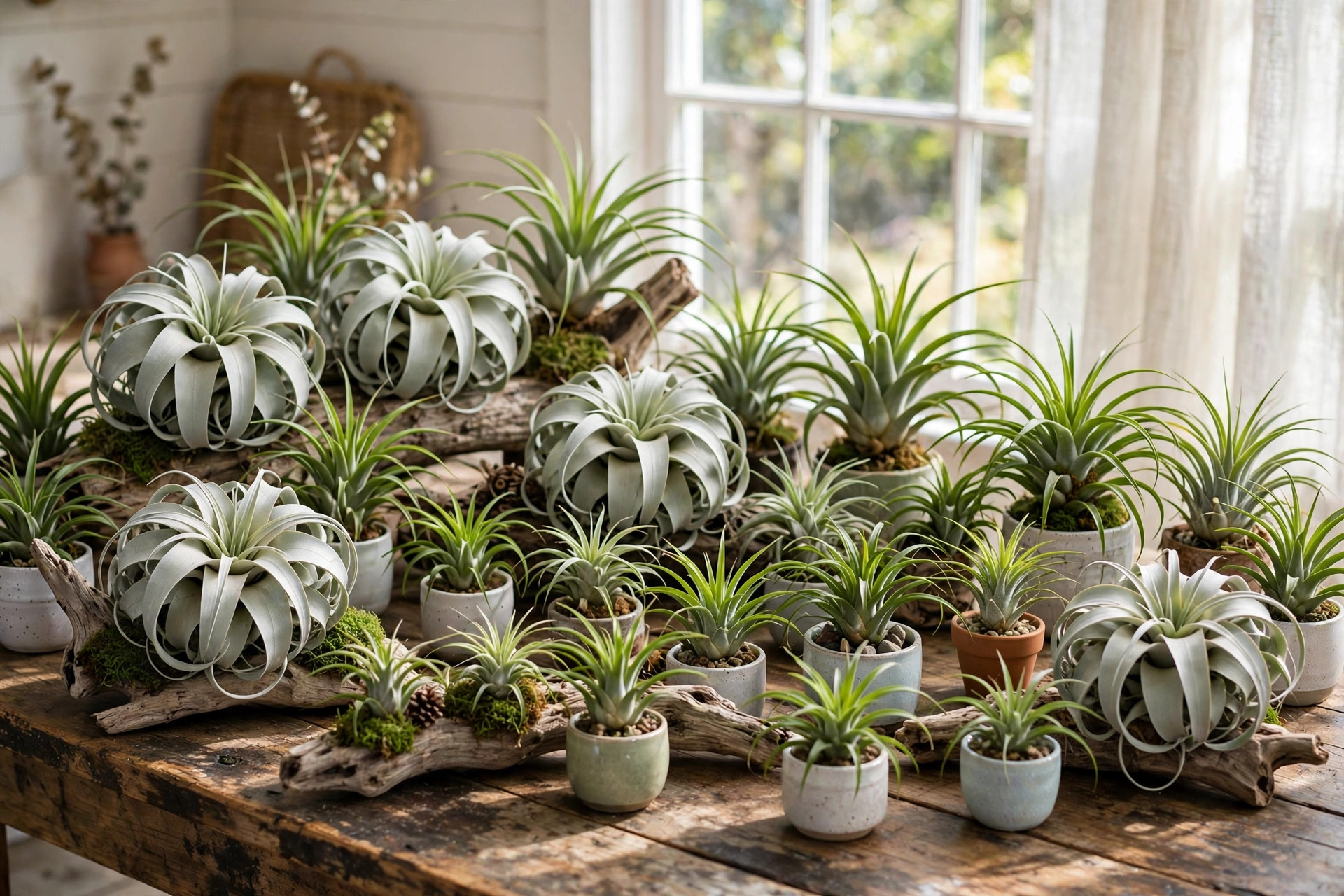

Air plants, or tillandsia, need no soil and little water. They hang on walls, sit on shells, or fill glass globes. An air plants bulk buying guide usa helps buyers who want more than a single plant. Wedding planners, craft makers, gift sellers, and home growers all buy in lots. Buying in bulk cuts the price per plant. It also brings risk. A bad lot may carry weak or damaged plants. This guide walks through the steps, in plain order, so the buyer gets value for the money.
Why It Matters
One air plant costs little. Fifty cost more, but the price per plant drops fast. That is why bulk buying matters. Event florists order two hundred for centerpieces. Teachers order forty for classroom terrariums. Shop owners order five hundred to stock shelves. In each case the unit price decides the profit.
Bulk buying also means uniform stock. A single seller sends plants of the same size and color. That matters for a wedding table where every piece should look alike. Mixing sellers gives mixed results. One lot may run large, the next run small. One guide from The Spruce notes that even care is easier when all plants share the same needs.
Timing matters too. Air plants ship best in mild weather. Cold snaps in winter and heat waves in summer hurt them in transit. A bulk order placed in spring arrives in good shape. This is why growers in the United States plan large orders around the season. A shopper who knows this avoids dead plants on arrival.
What to Look for When Buying in Bulk: Air Plants Bulk Buying Guide Usa
Healthy Leaves and Roots
Look at the leaves first. They should feel firm, not soft or papery. Green or silver-gray tones are good. Brown tips on a few leaves are normal. Wide brown patches are not. The base should be dry, not mushy. A mushy base means rot, and rot spreads in a closed box.
Some species keep small roots that cling to bark. Others shed roots and grow free. Neither is a fault. What matters is that the center of the plant holds tight. Pull gently at the inner leaves. If they lift out, the plant will not last. Sellers who grade honestly will say the lot is nursery grown and pest free. Ask for that in writing before you pay.
Honest Size Labels
Bulk lots are sold by size: mini, small, medium, large. A small ionantha may be one inch wide. A large xerographica may span ten inches. Ask for the range in inches, not just a label. A photo of a plant next to a ruler helps. The Burpee seed and plant guides show how size naming varies across the trade, and air plants are no exception.
Mixed assortments are common in bulk lots. The seller lists the species inside. Read the list. Some lots lean on cheap fillers and add only two or three showy kinds. Others give an even mix. Even mixes serve craft projects better. Buyers who plan a resale shelf should count how many premium species are in the mix.
Shipping and Packaging
Plants die in dark boxes that sit too long. Ask how the seller packs. Each plant should sit loose in paper, not sealed in plastic. Holes in the box give air. Tracking numbers let you follow the route. A seller who ships on Monday gives plants the shortest trip through the weekend.
Heat packs in winter and cool packs in summer cost the seller a little. Sellers who add them save you a lot. Ask for a live arrival promise. Many sellers replace dead plants if you send a photo within two days. That promise tells you the seller stands behind the lot.
Types and Options for Bulk Buyers
Common Bulk Species
Ionantha leads most bulk lists. It is small, hardy, and cheap. It blooms red and purple before it pups. Caput medusae has twisting leaves that look like hair. Xerographica is the large silver rosette that fills a table on its own. Bulbosa has dark green leaves and a bulb-like base. Harrisii grows long and soft, silver all over.
Nursery catalogs like Park Seed and Gurneys list plants by growing zone and habit, which shows how species differ in needs. The same holds for tillandsia. Ionantha wants bright light and a weekly soak. Xerographica wants less water and more air. A lot built of one species is simple to care for. A mixed lot needs notes on each kind.
Lots by Use
Craft lots hold small plants for terrariums and wreaths. The count is high, often one hundred to five hundred. Display lots hold medium plants for home decor. The count runs twenty to one hundred. Collector lots hold rare or large species. The count is low, ten to twenty, but the price per plant is high.
Some sellers build themed packs. A beach pack holds shell-ready plants. A wedding pack holds plants of one color tone. A beginner care page from Gardening Know How explains how new growers should start small, and themed packs follow that same idea. If you need plants for homes in a hot state, a guide on air plants bulk texas homes usa can help you pick heat-hardy kinds.
Cost and Price
Bulk prices fall into bands. Small lots of ten to twenty-five ionantha cost about one to three dollars per plant. Medium lots of fifty to one hundred cut that to under two dollars. Large lots of five hundred or more can drop below one dollar per plant for common species. Rare species cost more at every band. A xerographica may cost fifteen to forty dollars even in a lot of twenty.
Shipping adds to the true cost. A flat rate box may add ten to twenty dollars. Express shipping adds more. Divide the full bill by the plant count to find the real unit price. Compare that number across sellers. The lowest sticker price is not always the lowest real price.
Season sales help. Spring is peak season for wholesale air plants usa buyers, so spring sales move large volume at lower prices. Fall brings clearances as growers reduce stock before cold weather. Watch for free shipping thresholds. A lot of one hundred with free shipping can beat a lot of seventy-five with a fee.
Also budget for losses. Even a good lot may hold two or three weak plants. Plan to use ninety-five percent of the count. If you need exactly two hundred for an event, order two hundred and ten.
Care and Upkeep
Air plants need light, air, and water. Give them bright indirect light. A north or east window suits most species. Avoid long hours of direct noon sun, which scorches leaves. Turn the plants each week so all sides see light.
Water by soaking. Fill a bowl with room temperature water. Set the plants in for twenty to thirty minutes once a week. Shake off the extra water after the soak. Let them dry upside down on a towel for a few hours. Never let water sit in the center cup. Sitting water rots the plant. In dry homes, mist between soaks. In humid homes, soak less often.
Air flow matters as much as water. Do not seal plants in closed jars. Glass globes need a wide opening. Terrariums need a vent. A ceiling fan on low moves air fine. The Almanac garden notes remind growers that air circulation prevents fungal trouble, and the rule applies to tillandsia too.
Feed lightly. A bromeliad fertilizer at quarter strength, once a month in the growing season, helps blooms and pups. Rinse well after feeding. Dust the leaves now and then with a soft brush. Trim only dead brown tips with clean scissors.
After bloom, the mother plant makes pups. Leave pups until they are one third the size of the parent, then twist them off gently. One bulk lot can become two lots in a year. This is how many small sellers build stock without buying again.
Safety
Air plants are not toxic to people, dogs, or cats. The ASPCA plant lists of garden sources confirm tillandsia as a safe choice for pet homes. That said, keep plants out of reach of chewing pets. No leaf is food, and a chewed plant dies.
Watch the glue. Many craft projects glue air plants to wood or shells. Hot glue burns the base. Use a cool glue and keep it on the outer leaves, never the center. Wire holds are safer than glue for living displays.
Check local rules before ordering across state lines. Most tillandsia moves freely, but some states watch plant pests. A quick look at USDA plant resources shows which programs track plant movement. Reputable sellers know the rules and will not ship where they should not.
FAQ
How many air plants should I buy in bulk for a wedding? Count one per guest for favors, or three to five per table for centerpieces. Add ten percent extra for weak plants. For a hundred guests, a lot of one hundred and ten covers the plan.
Are bulk air plants good for resale? Yes, if you buy healthy stock and care for it well. Price your plants at two to three times the unit cost. Keep them in bright light and watered so they look fresh on the shelf. Dead or brown plants drive buyers away.
What is the cheapest way to buy air plants in bulk? Order large counts of one common species in spring. Split the shipping across the lot. Skip express shipping unless the weather is extreme. Compare the full landed price per plant, not the headline price.
How long do air plants live after shipping? With good care, years. The shipping trip is the hard part. Plants that arrive firm and dry settle in within a week. Plants that arrive soft or wet may not recover. That is why the live arrival promise matters.
Can I grow air plants outdoors in the USA? In frost-free zones, yes. Florida, south Texas, southern California, and Hawaii suit many species. Bring them inside when nights drop near freezing. An article on snake plants indoor usa online deals shows how indoor growers handle climate limits, and the same thinking applies here.
Do I need soil or pots for bulk lots? No soil is needed. Pots, shells, and wood mounts are for display only. Store bulk plants on trays in bright air until you place them. Keep them out of direct sun while they wait.
A Final Word
Buying air plants in bulk is simple when you know the steps. Pick a healthy species for your use. Ask for real sizes and a clear species list. Check the packing and the live arrival promise. Count the full landed cost per plant. Then give the plants light, air, and a weekly soak. Do that, and a bulk order turns into months of green decor, craft stock, or gift inventory.
Growers who also raise garden crops may like a guide to onion sets planting for sale usa for the spring bed. For plant variety notes, Proven Winners shows how breeders describe plant habits, which is a good model for reading any nursery catalog. Buy smart, store right, and the lot will pay for itself.
References
Burpee. (n.d.). Seeds, plants, and gardening supplies. https://www.burpee.com Gardening Know How. (n.d.). Gardening guides and plant care. https://www.gardeningknowhow.com Gurney’s Seed & Nursery Co. (n.d.). Seeds, plants, and garden supplies. https://www.gurneys.com Monrovia. (n.d.). Plants for home gardens. https://www.monrovia.com National Institute of Food and Agriculture. (n.d.). Agricultural research and extension. https://www.nifa.usda.gov Park Seed. (n.d.). Seeds, plants, and gardening supplies. https://www.parkseed.com Proven Winners. (n.d.). Plants and gardening inspiration. https://www.provenwinners.com The Old Farmer’s Almanac. (n.d.). Gardening calendars and advice. https://www.almanac.com The Spruce. (n.d.). Home and garden advice. https://www.thespruce.com White Flower Farm. (n.d.). Plants, bulbs, and garden supplies. https://www.whiteflowerfarm.com
Was this guide helpful?

About Michael Thompson
The My Garden US editorial team writes practical, in-depth home and garden guides for American homeowners — tested advice, no fluff.
You May Also Like
Dahlia Bulbs Bulk: Where to Buy in the USA
January 4, 2026 0 views
Tulip Bulbs Fall: Where to Buy in the USA
January 22, 2026 0 views
Daffodil Bulb Packs Where to Buy USA: A Plain Guide for Fall Planting
August 5, 2026 0 views