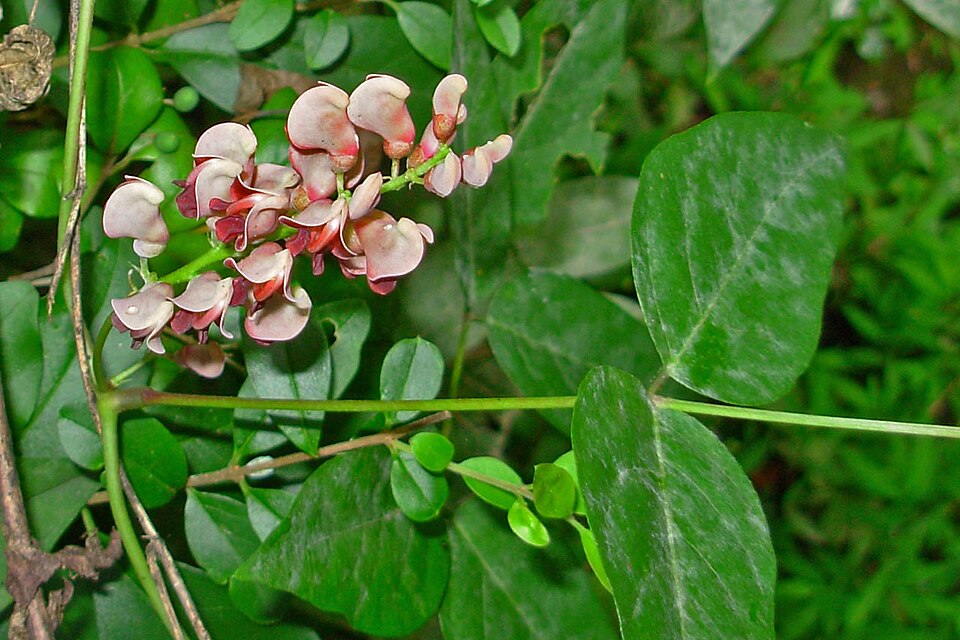
Apios is the native American tuber that history almost forgot. Also called the American groundnut or potato bean, it fed Indigenous peoples across eastern North America for thousands of years. It grows as a twining vine, fixes nitrogen like a bean, and produces chains of protein-rich tubers underground. Gardeners learning how to grow apios get a hardy perennial crop with deep roots in this continent's food history.
Table of Contents
Table of Contents
The plant's best trait is its patience-friendly nature. You plant a patch, give it a trellis, and mostly leave it alone. The first year builds the vines; the tuber chains swell in the second and third years. It is not a crop for the impatient, but it is one of the lowest-effort perennial vegetables you can grow.

Photo: Wikimedia Commons
Quick facts: Sun: full sun to part shade. Soil: moist, rich. Water: consistent moisture. Plant tubers 2 inches deep, 12 inches apart. Days to maturity: 150 to 200; best yields from the second year on. Hardy perennial in zones 3 to 8.
Choosing a Variety and Getting Started
When it comes to how to grow apios, getting the details right makes all the difference.
When it comes to how to grow apios, getting the details right makes all the difference.

Many homeowners find that how to grow apios is easier than they expected once they know the basics.
Apios grows from tubers, sold by native plant and perennial vegetable suppliers, usually just as apios or American groundnut. There are selected strains with larger tubers, worth seeking out if available. Buy firm, healthy tubers; each one grows into a twining vine.
Site it like a permanent planting, because that is what it is. A dedicated bed, a trellis along a fence, or a corner of the garden where the vines can climb undisturbed for years. The vines twine around anything nearby, so give each planting its own sturdy trellis and keep it away from plants you do not want climbed. Before planting, check your USDA zone planting dates on the planting calendar; apios suits zones 3 to 8.
As a native plant, apios belongs in the conversation about American food plants. The Lady Bird Johnson Wildflower Center profiles it among native edibles. If you have grown potatoes for tubers or peas for nitrogen-fixing vines, apios combines both habits in one perennial plant.
When and How to Plant
Many homeowners find that how to grow apios is easier than they expected once they know the basics.
The key to how to grow apios is choosing the right approach for your space and budget.
Plant apios tubers in spring, about a week after your last spring frost, once the soil can be worked. Set the tubers 2 inches deep and 6 inches apart in rich, moist soil, in full sun to part shade. Water them in well.
Give each plant a sturdy trellis from the start. The vines climb 6 to 10 feet and need support to yield well; sprawling on the ground, they make fewer tubers. A cattle panel, a strong fence, or stout poles with twine all work. Install it at planting time so you never disturb the developing tuber chains later.
The Old Farmer's Almanac covers spring planting timing. Apios fixes nitrogen like beans, so compost at planting is enough fertility; skip heavy feeding.
Soil and Sun
The key to how to grow apios is choosing the right approach for your space and budget.
With a little planning, how to grow apios can fit even a busy schedule.
Moist, rich soil in full sun to part shade. Apios likes its feet damp; a spot that stays moist without waterlogging is ideal. Dig in plenty of compost before planting. The plants are hungry in the establishment year, building both vines and the tuber chains that become the harvest.
Good drainage still matters. Rich and moist does not mean swampy. On heavy clay, plant on a slight mound or in a raised bed. Mulch to keep the soil moist and cool, which the shallow tuber chains appreciate. The Clemson Home & Garden Information Center covers bed preparation for perennial plantings.
Its background under Apios americana is listed in the USDA PLANTS Database. The University of Minnesota Extension includes native perennial crops in its gardening materials.
Watering and Feeding
With a little planning, how to grow apios can fit even a busy schedule.
Before you start, it helps to understand how how to grow apios works in real homes.
Water during dry spells the first year. Establishment is when apios needs you; a deep watering once a week in dry weather helps the young plants build strong roots and tuber chains. Once established, the plants are tougher and handle normal rainfall, but steady moisture still gives the best tuber yields.
Mulch to keep the soil moist and cool. A thick mulch of shredded leaves or straw does triple duty: holding moisture, suppressing weeds, and feeding the soil as it breaks down. Compost at planting is the main feeding; established plantings need little beyond the annual mulch.
Do not overfertilize. Apios fixes its own nitrogen, and excess fertility pushes vine at the expense of tubers. If the vines are vigorous and deep green, the plants are feeding themselves.
Care Through the Season
Before you start, it helps to understand how how to grow apios works in real homes.
A good plan for how to grow apios saves time, money, and frustration.
Weed carefully. The vines twine around anything nearby, including weeds, which makes weeding a delicate operation. Mulch heavily to suppress weeds in the first place, and hand pull what comes through. A clean bed in the establishment year pays off for the life of the planting.
Japanese beetles might chew the leaves; handpick them in the morning when they are sluggish. Otherwise, apios has few pests. Its native toughness serves it well. Train young vines onto the trellis; once they catch on, they climb eagerly.
Do not harvest the first year. This is the hard part. Let the plants build strong tuber chains undisturbed. The temptation to dig and check is strong; resist it. The second and third years are when the harvest begins in earnest, and early digging only sets the planting back.
Harvest
A good plan for how to grow apios saves time, money, and frustration.
For most people, how to grow apios comes down to a few smart choices.
Begin harvesting in the second or third year, when the foliage dies back in fall. Dig carefully with a fork; the tubers hang in chains along the roots and snap off easily. Work gently and follow each chain, gathering the tubers without breaking more than necessary.
Leave some tubers in the ground to regrow. This is the perennial cycle: harvest most, leave the rest, and the planting renews itself. A well-managed patch produces for many years with no replanting.
Cook the tubers thoroughly: boiling, roasting, or frying all work. Raw apios is unpleasant and hard to digest; heat transforms it into something rich and nutty, with more protein than potatoes. Stored like potatoes in a cool, dark place, the tubers keep for months. The flavor is earthy and satisfying, a genuine staple crop.
Cooking American Groundnuts
For most people, how to grow apios comes down to a few smart choices.
If you are new to how to grow apios, start with the simplest option and build from there.
Cook the tubers thoroughly; this is the essential rule. Raw apios is unpleasant and hard to digest, but heat transforms it completely. Boil the tubers until fully tender, roast them until crisp outside and creamy inside, or slice and fry them into chips. The flavor is rich, nutty, and earthy, with noticeably more protein than potatoes. A bowl of roasted apios with salt is simple food at its best.
They shine in hearty preparations. Add them to stews where they hold their shape, mash them with butter like potatoes, or roast them with winter vegetables. Their dense texture means they stand up to long cooking without dissolving. Season boldly; the earthy flavor takes on herbs, garlic, and spices well.
Store the harvest like potatoes, in a cool, dark place, where the tubers keep for months. Check them occasionally and use any that soften first. And keep the patch going: leave some tubers in the ground at each harvest to regrow, and the planting renews itself indefinitely. A patch planted with patience becomes a permanent part of the garden, feeding you for decades from a single planting.
Expanding the Apios Patch
If you are new to how to grow apios, start with the simplest option and build from there.
When it comes to how to grow apios, getting the details right makes all the difference.
Once your patch is producing, expanding it is easy and free. Every fall harvest gives you more tubers than you can eat, and the extras are planting stock. Tuck them into a new bed prepared the same way: rich, moist soil, compost dug in, and a sturdy trellis waiting. Space them as before and mulch well. A second patch doubles your harvest in a couple of years.
Apios also layers itself. Where a vine touches moist soil, it can root and form new tuber chains, slowly widening the colony. You can encourage this by pinning low vines to the soil with a stone; they root within weeks. It is the plant's own propagation system, and it works without any help.
Share the surplus tubers with other gardeners. Apios is still uncommon, and every new patch keeps this native food plant in cultivation. Pass along the key advice with the tubers: give them a trellis, do not harvest the first year, and cook the tubers thoroughly. A gardener who starts with your tubers and your guidance is a gardener who succeeds, and the patch you planted becomes the ancestor of many more.
Troubleshooting
When it comes to how to grow apios, getting the details right makes all the difference.
Many homeowners find that how to grow apios is easier than they expected once they know the basics.
Vines grow but tubers are tiny. The planting is too young. Apios needs two to three years to build productive tuber chains. Be patient and do not harvest the first year.
Vines twine around neighboring plants. They were not given their own trellis or were planted too close to other crops. Give apios a dedicated structure and space.
Japanese beetles defoliate vines. Handpick in the cool of the morning. Established plantings usually outgrow the damage.
Tubers are hard and unpleasant. They were undercooked. Apios must be cooked thoroughly; boiling until completely tender is the safe baseline.
Apios is the patient gardener's native crop: plant the tubers, trellis the vines, wait two years, and harvest protein-rich tubers for decades. For a quicker tuber harvest while you wait, potatoes fill the gap. More on native food plants is available from the Lady Bird Johnson Wildflower Center, and background through the USDA National Agricultural Library.
References
Many homeowners find that how to grow apios is easier than they expected once they know the basics.
Lady Bird Johnson Wildflower Center. (n.d.). Native plant database. https://www.wildflower.org/plants/
Old Farmer's Almanac. (n.d.). Growing unusual vegetables. https://www.almanac.com/
Clemson Cooperative Extension. (n.d.). Home & Garden Information Center. https://hgic.clemson.edu/
University of Minnesota Extension. (n.d.). Growing perennial vegetables in home gardens. https://extension.umn.edu/
Was this guide helpful?

About My Garden US
The My Garden US editorial team writes practical, in-depth home and garden guides for American homeowners — tested advice, no fluff.
You May Also Like
How to Grow Summer Savory: Peppery Herb
October 15, 2026 21 views
Dahlia Bulbs Bulk Buying Guide USA: Save Money and Grow Showy Flowers
June 14, 2026 23 views
Organic Herb Seeds Texas Homes USA: A Plain Guide for Texas Growers
June 17, 2026 18 views