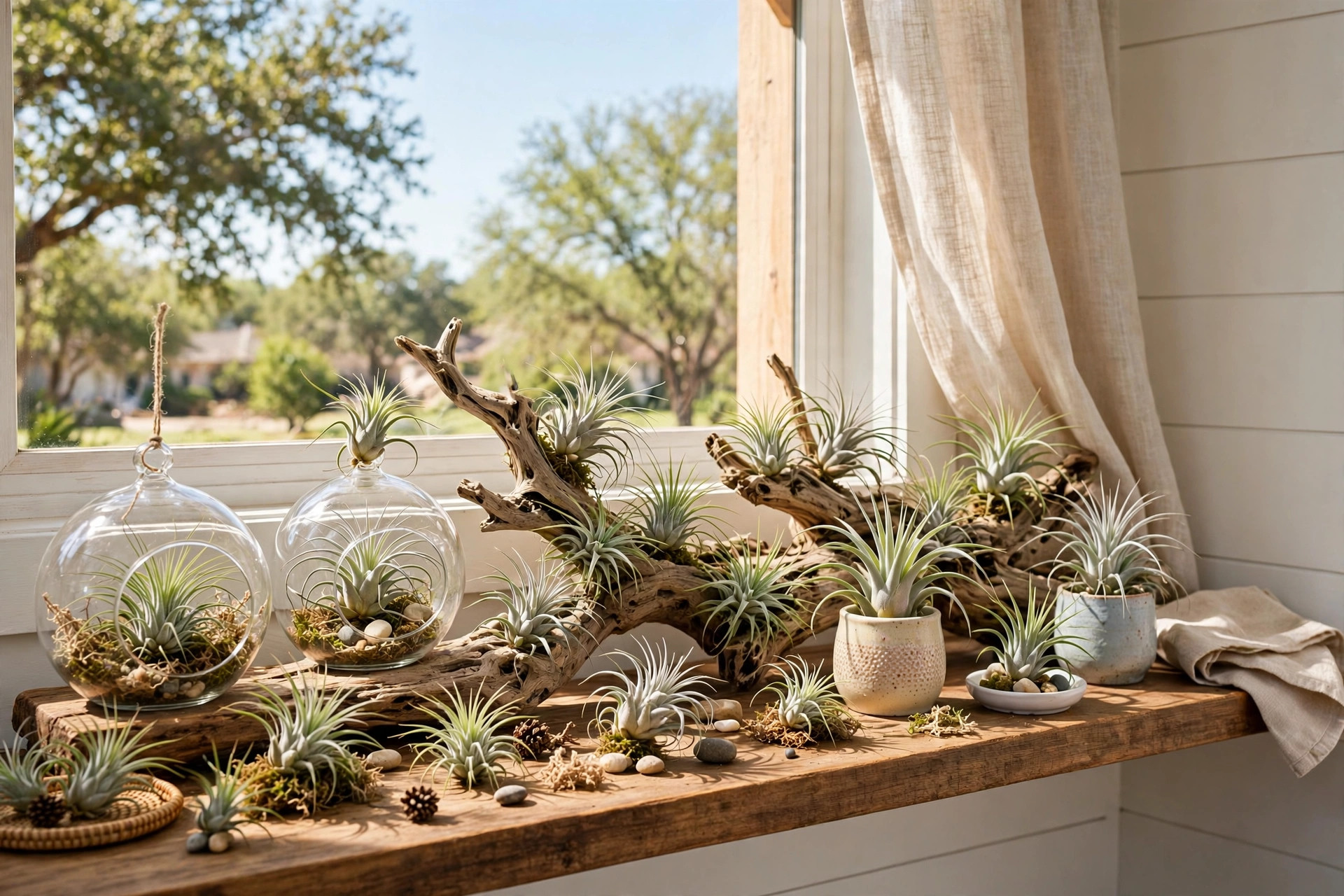

Air plants are small plants that grow without soil. They take water and food from the air through their leaves. Many people in Texas now search for air plants bulk texas homes usa because a bulk order gives many plants at a lower price per plant. You can place them in glass bowls, hang them near windows, or set them on shelves. They add green life to a home with very little work. This guide explains what air plants are, how to choose a bulk order, what they cost, and how to keep them healthy in a Texas home.
Why Air Plants Fit Texas Homes
Texas homes are often bright and warm. Air plants like both of these things. Most air plants come from warm parts of Central and South America. They are used to strong light and warm air. A Texas living room or kitchen often gives them what they need.
Air plants are also called Tillandsia. They do not need pots or soil. This makes them easy to place anywhere. A small plant can sit on a bookcase, hang from a curtain rod, or rest inside a glass globe. They work well in apartments and large houses alike.
Many Texas families enjoy growing popular indoor plants in American homes, and air plants are among the simplest of them. They need far less space than a fiddle leaf fig or a large fern. A dozen air plants can fit on one shelf. A bulk order can fill a whole room with green color.
Air conditioning is common in Texas. Cooled air can be dry. Air plants handle dry indoor air better than many leafy houseplants. They still need regular water, but they will not wilt the moment the air conditioner runs. This toughness is one reason Texas buyers like them.
They are also low in mess. There is no soil to spill and no pot to break. For homes with children or busy schedules, this is a real benefit. A parent can teach a child to mist the plants once or twice a week. It is a simple chore and a good first plant for a young gardener.
What to Look For When You Buy Air Plants in Bulk: Air Plants Bulk Texas Homes Usa
Buying in bulk means buying many plants in one order. Orders often run from ten to one hundred plants. The price per plant drops as the count rises. But a low price is not enough. You want healthy plants that arrive alive.
First, look at the seller. A good seller shows clear photos of the actual plants. The seller should list the plant sizes. Sizes are often given in inches, such as two to three inches. The seller should also say how the plants will ship. In Texas, summer heat can damage plants in a hot mail truck. Ask if the seller uses fast shipping or heat packs in winter and cool packs in summer.
Second, look at the leaves. Healthy air plants have firm leaves. The leaves may be green, silver, or gray. Silver leaves often mean the plant is a type that likes dry air. Avoid plants with brown, mushy bases. A mushy base often means rot. Rot is hard to fix.
Third, check the count and the mix. Some bulk packs are all one type. Others are a mix of types. A mix is good for decoration because the shapes look different. Make sure the seller states the exact count. A pack of fifty should hold fifty plants, not forty-eight.
Fourth, read the care note. A good seller sends a short care card with the order. It should tell you how to water and where to place the plants. Sellers who care about their plants want them to live in your home.
Guides from trusted plant sites can help you learn more. The plant experts at Burpee offer clear advice on plant care for beginners. You can also learn how Park Seed packs and ships live plants safely.
Types of Air Plants Commonly Sold in Bulk
Bulk packs often hold a mix of common types. Each type has its own look. Here are the types you will see most often.
Tillandsia ionantha is the most common air plant. It is small, with short spiky leaves. It often blushes red before it blooms. It is a good choice for beginners. It fits in small glass holders.
Tillandsia xerographica is large and round. Its wide silver leaves curl like ribbons. It is a showpiece plant. It costs more than small types. It does well in bright Texas rooms.
Tillandsia caput-medusae looks like a small octopus. Its thick leaves twist and curl. It likes bright light and good air flow. It is tough and forgiving.
Tillandsia stricta has soft green leaves and a neat round shape. It blooms with purple flowers. It likes regular misting.
Tillandsia bulbosa has a swollen base and thin wavy leaves. It looks wild and sculptural. It does best with good air movement around its base.
Tillandsia aeranthos has narrow gray-green leaves. It blooms often and grows small offsets, called pups. One plant can slowly become a clump.
When you order in bulk, ask which types are in the mix. A mix of three to six types gives the best look. Some sellers let you request certain types. If you want large plants only, say so before you order.
For more plant ideas, you can browse the collections at White Flower Farm and Monrovia. Both sites show many houseplants that pair well with air plants.
Cost and Price
Bulk air plants are sold by count. Small plants in packs of fifty often cost between one and two dollars per plant. A pack of ten may cost two to three dollars per plant. Large types like xerographica can cost five to fifteen dollars each, even in bulk.
Shipping adds to the cost. Live plants need fast shipping. In Texas, ground shipping may be fine in mild months. In July and August, fast shipping is safer. Some sellers add a few dollars for a heat shield or cool pack. This small charge can save your plants.
Watch for hidden fees. A low sticker price may not include shipping. Compare the full price with shipping before you buy. A pack that costs forty dollars with free shipping may be a better deal than a thirty-five dollar pack with twelve dollars of shipping.
Season matters. Prices often dip in spring, when growers have large stock. Prices may rise near the holidays, when air plants are popular gifts. If you plan ahead, you can buy in spring and save.
Bulk buying also saves on decoration costs. Ten small air plants can fill five glass globes. Twenty plants can decorate a whole mantel. Compared with cut flowers, which fade in a week, air plants last for years with basic care. Many buyers find this a strong value.
For price ideas on live plants in general, the seasonal catalogs at Gurney’s give a useful sense of the market.
Care and Upkeep in a Texas Home
Air plants are easy to keep, but they are not made of plastic. They are living plants. They need water, light, and air.
Water is the most important task. Most air plants do well with a weekly soak. Fill a bowl with room-temperature water. Place the plants in the bowl for twenty to thirty minutes. Then lift them out and shake off extra water. Set them upside down on a towel for a few hours. This step matters. Water that sits in the center of the plant can cause rot.
In hot Texas summers, you may need to water twice a week. Air conditioning dries the air. If your home is very dry, mist the plants between soaks. Use a spray bottle with plain water. Mist in the morning so the leaves dry by night.
Light should be bright but indirect. A spot near an east or west window is ideal. Texas sun through a south window can be too strong in summer. If the leaves look bleached or scorched, move the plant back a few feet. A sheer curtain can soften harsh sun.
Air flow helps the plants dry after watering. Do not seal air plants in closed jars with no holes. A glass globe should have a wide opening. Good air flow also keeps the leaves healthy. A ceiling fan on low is fine.
Fertilizer helps but is not required. You can buy a liquid fertilizer made for air plants or bromeliads. Use it once a month, mixed weak. Add it to the soak water. Do not use strong fertilizer. Too much food can burn the leaves.
Watch for pups. After an air plant blooms, it often grows small pups at its base. Leave them attached and you will get a clump. Or wait until a pup is one third the size of the mother plant, then gently twist it off. Now you have a new plant for free.
Texas heat waves need extra care. If your home loses power and the house gets very hot, move the plants to the coolest room. Do not leave them in a car. A closed car in Texas can kill any plant in minutes.
The plant care guides at Gardening Know How explain watering in more detail. Seasonal tips from The Old Farmer’s Almanac can also help you plan around Texas weather.
Safety
Air plants are safe for most homes. They are not toxic to people. They are also not toxic to cats and dogs, according to the ASPCA and most plant safety lists. This makes them a good choice for pet owners.
Still, take a few simple steps. Keep plants out of reach of small children who might pull them apart. Some types have stiff, pointed leaves. Place spiky types where no one will brush against them.
Do not eat air plants. They are not food. Wash your hands after handling fertilizer. Store liquid fertilizer where children and pets cannot reach it.
Mold is rare but possible. If a plant stays wet too long, gray mold can grow at the base. Throw away a moldy plant. Clean the holder with soap and water before you use it again. Good drying after each soak will prevent this problem.
The safety information at The Spruce covers pet-safe houseplants in depth. Gardeners who are starting seeds at home, such as those buying lavender seed packets, can find related beginner guides through trusted home garden sources.
Frequently Asked Questions
How long do air plants live?
Most air plants live for several years. A healthy plant may live three to five years or more. After it blooms, the mother plant slowly fades, but it leaves pups behind. The pups grow into new plants. In this way, one plant can last for many years through its offspring.
Can air plants live outside in Texas?
Yes, in mild weather. Air plants can hang on a shaded porch in spring and fall. Bring them inside when night temperatures drop below forty degrees. In summer, keep them out of direct afternoon sun. Texas sun is strong and can burn the leaves. Always bring them in before a freeze.
How many air plants should I order in bulk?
Start with the number you can place. Ten to twenty plants suit a small apartment. Fifty plants suit a large home or a party. If you are decorating for a wedding or event, count your holders first. Order a few extra in case one or two arrive damaged.
Do air plants need soil or pots?
No. Air plants grow without soil. You can set them in glass holders, on wood, or in hanging wire frames. Do not plant them in soil. Soil holds too much water against the base and can cause rot. Do not glue the base into a holder with strong glue, as this can harm the plant.
Why are my air plant leaves turning brown?
Brown leaf tips often mean the plant needs more water. Try soaking a little longer or misting more often. A brown, mushy base means rot from too much water. Improve drying after each soak. Trim dead brown tips with clean scissors. The plant can still recover if the center is firm and green.
A Final Word
Air plants are a simple way to bring green life into a Texas home. A bulk order gives you many plants at a fair price. Choose healthy plants, water them well, and give them bright light and fresh air. They will reward you for years. Whether you hang a few by the window or fill a whole shelf, air plants bulk texas homes usa is a search that leads to a lasting and low-cost hobby.
For more reading, the plant collections at Proven Winners and the garden guides for planting onion sets from trusted American garden sources offer ideas for pairing air plants with other easy greenery. The research shared by the National Institute of Food and Agriculture also supports good plant care habits at home.
Related guides on this site include heirloom vegetable seeds buying guide usa, organic herb seeds buying guide usa, and wildflower seed mixes buying guide usa.
References
Burpee. (n.d.). Seeds, plants, and gardening supplies. https://www.burpee.com Gardening Know How. (n.d.). Gardening guides and plant care. https://www.gardeningknowhow.com Gurney’s Seed & Nursery Co. (n.d.). Seeds, plants, and garden supplies. https://www.gurneys.com Monrovia. (n.d.). Plants for home gardens. https://www.monrovia.com National Institute of Food and Agriculture. (n.d.). Agricultural research and extension. https://www.nifa.usda.gov Park Seed. (n.d.). Seeds, plants, and gardening supplies. https://www.parkseed.com Proven Winners. (n.d.). Plants and gardening inspiration. https://www.provenwinners.com The Old Farmer’s Almanac. (n.d.). Gardening calendars and advice. https://www.almanac.com The Spruce. (n.d.). Home and garden advice. https://www.thespruce.com White Flower Farm. (n.d.). Plants, bulbs, and garden supplies. https://www.whiteflowerfarm.com
Was this guide helpful?

About Robert Taylor
The My Garden US editorial team writes practical, in-depth home and garden guides for American homeowners — tested advice, no fluff.
You May Also Like
Daffodil Bulb Packs Reviews: A USA Buying Guide
June 23, 2026 0 views
Fiddle Leaf Figs USA Online Deals: How to Buy the Best Trees for Less
June 19, 2026 0 views
How to Grow Dill: Leaves and Seed Heads
October 7, 2026 1 views