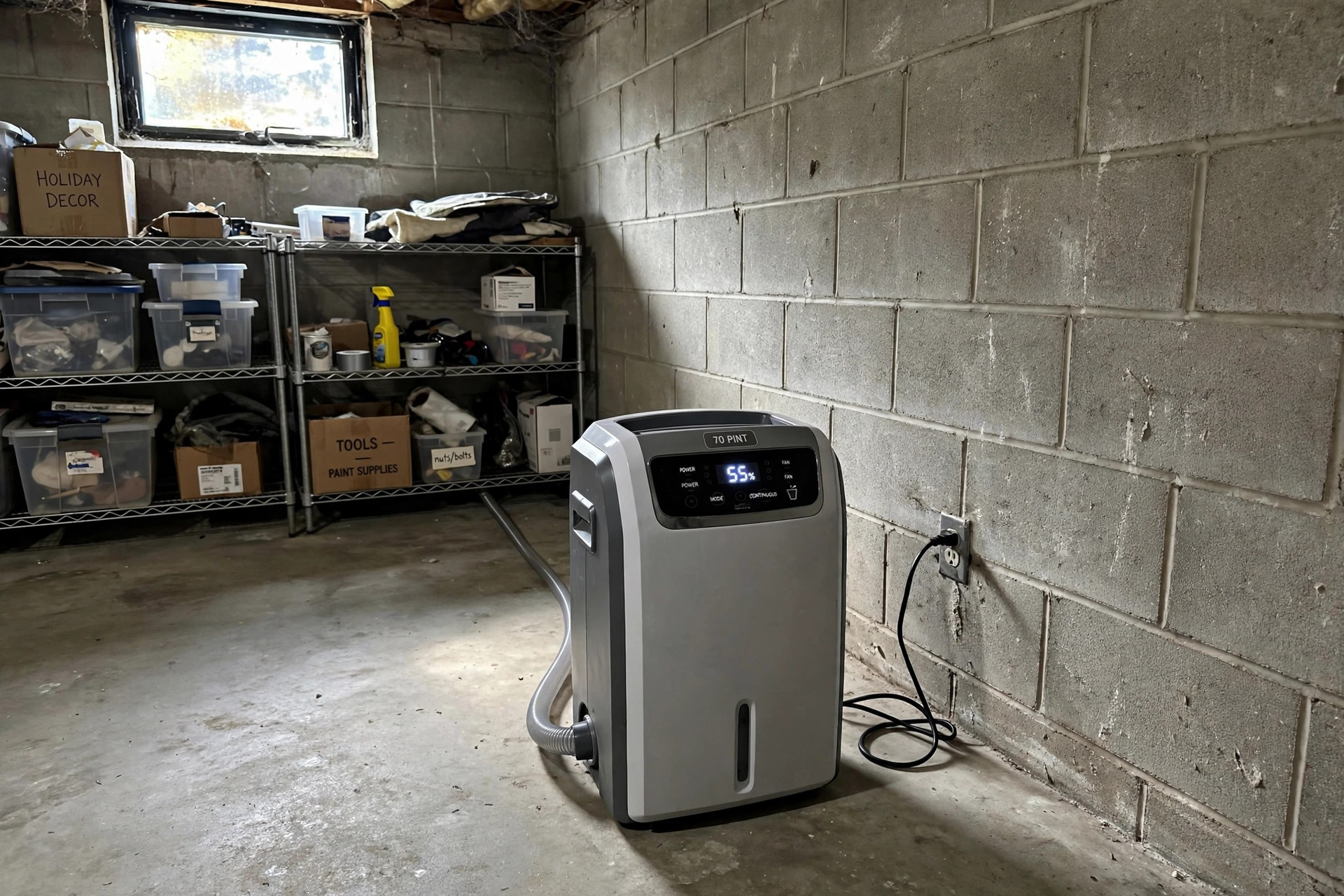

Reading 70 pint dehumidifier reviews for basements is the smartest first step before you spend money. Basements stay damp by nature. Moist air seeps through concrete walls and floors. That dampness can breed mold, rust tools, and ruin stored boxes. A 70-pint unit is built for this exact job. It can remove up to 70 pints of water from the air each day under standard test conditions. Reviews from real buyers tell you which models live up to that claim and which ones fall short.
This guide walks you through what matters, what to look for, what it costs, and how to keep the machine running for years. All in plain terms.
Why a 70-Pint Unit Fits a Basement
Basements are the dampest part of most American homes. Below-grade walls sit against soil that holds water after every rain. In summer, warm air sinks down and cools against the concrete. Cold air cannot hold as much moisture, so water beads on walls and floors. A small dehumidifier cannot keep up with that load.
A 70-pint dehumidifier suits spaces of about 1,200 to 2,000 square feet, depending on how wet the space is. That is the range of most finished and unfinished basements. Buyers in 70 pint dehumidifier reviews for basements often note that the machine pulls a full bucket of water in a single day during humid months. Smaller 30-pint models would run around the clock and still lose the fight.
The unit also protects what you store down there. Furniture, paper records, holiday decorations, and exercise gear all suffer in damp air. Wood swells. Metal rusts. Paper turns musty. Keeping humidity near 45 percent stops most of that damage.
It also helps the rest of the house. Damp basement air rises through floor gaps and stairways. That moisture makes the whole home feel clammy and can strain the air conditioner in summer. Drying the basement is often the cheapest way to improve comfort upstairs.
Health is another reason buyers cite. Mold spores thrive in damp air and can drift through vents and doorways. A dry basement means fewer spores. Allergy sufferers often notice the difference within weeks of running a 70-pint unit.
What to Look For When You Read Reviews: 70 Pint Dehumidifier Reviews for Basements
Reviews are useful only if you know how to read them. Here is what counts.
Water Removal Capacity
Check that the 70-pint rating is real. Some makers now rate their machines under newer Department of Energy test rules, which are stricter. A unit rated at 70 pints under the old method may test at 50 pints under the new one. Honest reviews will note how much water the bucket holds each day in practice.
Bucket Size and Drain Options
Most 70-pint units have a bucket that holds one to two gallons. A full bucket stops the machine until you empty it. That is fine if you pass by daily. Many buyers prefer a model with a built-in pump or a gravity drain hose. A hose lets the unit run for weeks without a visit. Reviewers who use basements as storage rooms call the pump their favorite feature.
Noise Level
Dehumidifiers make noise. There is no way around it. A fan must push air across cold coils. Most 70-pint models run between 48 and 55 decibels. That is about as loud as a normal conversation. If the basement sits under a bedroom, a quieter model matters. Reviews often complain about noise, so read those comments with care and compare numbers, not feelings.
Frost Control
Basements get cold. Below about 41 degrees, frost can form on the coils. Good machines shut off the cooling cycle on their own and melt the ice. This is called auto-defrost. Without it, the unit ices up and stops working. Buyers in the northern states praise this feature in their reviews.
Energy Use
A 70-pint dehumidifier draws real power, often around 700 watts while running. Look for the Energy Star mark. Certified models use about 15 percent less power than standard ones. Over a damp summer, that saves real dollars. The energy charts published at Energy Star help you compare yearly cost between models.
Portability
These units weigh 40 to 55 pounds. Wheels and side handles make them easy to move up steps or across the room. Check that the wheels work on concrete. A few reviewers grumble about stiff casters.
Types and Options Worth Knowing
Not every 70-pint machine is the same.
Portable compressor units are the common kind. They cool air to wring out water, then warm the air back up before sending it out. They work best between 41 and 95 degrees.
Desiccant units use a drying material instead of cold coils. They work better in very cold basements but are rare at the 70-pint size and cost more.
Whole-house units mount to your ductwork and dry the whole home, not just the basement. A whole house dehumidifier installation cost guide can help you weigh that bigger step against a portable model.
Buyers who want reviews for tighter spaces often compare notes in best dehumidifier for basement articles as well. These roundups cover smaller rooms and tighter budgets, so you can see how the 70-pint class stacks up against lighter-duty machines.
Cost and Price: What Reviewers Paid
Prices move around, but most 70-pint dehumidifiers sell between 230 and 330 dollars in the United States. Big-box stores such as Home Depot and Lowe’s carry the main brands side by side, which makes price checks easy.
Running cost is the second bill. At average electric rates, a unit that runs eight hours a day can add about 25 to 45 dollars to the monthly bill during humid months. Energy Star models sit at the low end. Sellers like Carrier and Rheem also publish efficiency data that helps you estimate cost before you buy.
Watch for sales in late winter. Stores clear stock before the spring damp season, and reviewers often note they saved 40 to 60 dollars by buying early.
Also plan for a drain hose or pump kit if your model does not include one. A simple gravity hose costs under 15 dollars. A built-in pump model costs about 60 to 100 dollars more than a basic unit. Many buyers say the pump paid for itself in saved trips up and down the stairs.
One more cost to keep in mind is the replacement filter. Most filters are washable, but a few models use replaceable filters that cost 10 to 20 dollars each. Washable filters win in the long run.
Care and Upkeep
A dehumidifier is simple to keep. Do these few things and it will last years.
First, clean the air filter every two to four weeks. Most filters slide out and rinse under a tap. A dirty filter forces the fan to work harder and pulls less water. The repair guides at Family Handyman show the steps for common brands.
Second, wipe the coils once or twice a year. Dust on the coils cuts performance. Unplug the unit first. A soft cloth and a mild cleaner are all you need. Never use sharp tools on the coil fins.
Third, check the drain hose for kinks. A kinked hose makes water back up into the bucket and shuts the machine off. Route the hose with a gentle slope so water flows on its own.
Fourth, store it upright in winter if you shut it down. Laying a compressor unit on its side can damage the cooling lines. If it must lie down for a move, let it stand upright for a few hours before you plug it in.
Fifth, wipe out the bucket once a month with a mild bleach mix. This stops mold from growing in the standing water and keeps the air in the room fresh.
Finally, keep the room above 41 degrees if you can. Very cold air forces constant defrost cycles and wears the machine faster. Practical heating advice from Energy.gov can help you keep a cold basement in a safe range.
Safety Notes for Basement Use
Electricity and water do not mix, so a few rules matter. Plug the unit straight into a wall outlet. Skip the extension cord if you can. If you must use one, use a heavy-gauge cord rated for the load.
Keep the machine a foot or more from walls and furniture so air flows freely. Never set it where a leak or flood can reach the plug. If your basement floods, unplug the unit before you step into standing water.
Empty or drain the bucket often in humid months. Standing water can grow mold inside the bucket itself. A drop of mild bleach in the rinse water once a month keeps it clean.
The safety checklists at This Old House cover basement appliance rules in more detail, and Consumer Reports publishes test-based guidance on humidifier and dehumidifier safety.
Where Buyers Compare Notes
Beyond store reviews, many shoppers read discussion threads and lab-test sites before they buy. The review sections on big retail sites carry thousands of owner reports. Lab-tested data from testing groups adds a second view that owner reviews alone cannot give. When you read both, you get the full picture: how the machine performs on day one and how it holds up in year three.
If your home also has a damp crawl space, owners of those spaces share their own lessons in crawl space dehumidifier reviews.
FAQ
Is 70 pints enough for my basement?
For most basements up to about 2,000 square feet, yes. If the space is very wet or larger than that, you may need a bigger unit or two machines. Measure the floor area first.
How long do these units last?
Most last five to eight years with basic care. Cheap filters and constant ice build-up shorten life. Cleaning the filter and coils on schedule is the best way to get the full life.
Can I run it all day?
Yes, but it does not need to run nonstop. Set the target humidity to 45 percent and let the built-in humidistat cycle the machine on and off. That saves power and wear.
Does it heat the room?
A compressor dehumidifier gives off a little heat as it works. Expect the basement to feel one or two degrees warmer. Most buyers call that a bonus in cool months.
What is the difference between the old and new pint ratings?
Older ratings used a test at 80 degrees and 60 percent humidity. Newer Department of Energy rules use harsher conditions, so the rated number is lower. A machine once sold as 70 pints may now be labeled 50 pints. The machine itself did not change, only the label.
Should I choose a model with a pump?
If you cannot empty the bucket daily, yes. A built-in pump pushes water up and out through a thin hose to a sink or floor drain. It costs more up front but saves daily trips down the stairs.
A Short Final Word
The 70-pint dehumidifier is the workhorse of basement drying. Read enough 70 pint dehumidifier reviews for basements and a clear pattern appears: buyers who sized the unit right, set a drain line, and cleaned the filter stay happy for years. Buyers who bought too small or ignored the noise ratings often wish they had read more first. Take your time, compare real numbers, and let the reviews guide you to a machine that keeps your basement dry season after season.
References
Carrier. (n.d.). Heating and cooling systems. https://www.carrier.com Consumer Reports. (n.d.). Product reviews and ratings. https://www.consumerreports.org ENERGY STAR. (n.d.). Energy efficient products. https://www.energystar.gov Family Handyman. (n.d.). DIY home repair and maintenance. https://www.familyhandyman.com Lowe’s. (n.d.). Home improvement products. https://www.lowes.com Rheem. (n.d.). Heating, cooling, and water heating. https://www.rheem.com The Home Depot. (n.d.). Home improvement products. https://www.homedepot.com This Old House. (n.d.). Home renovation guidance. https://www.thisoldhouse.com U.S. Department of Energy. (n.d.). Energy efficiency and renewable energy. https://www.energy.gov
Was this guide helpful?

About Michael Thompson
The My Garden US editorial team writes practical, in-depth home and garden guides for American homeowners — tested advice, no fluff.
You May Also Like

Best Space Heater for Large Room USA: A Simple Guide to Buying Right
July 19, 2026 0 views
Space Heater Safety Tips for USA Homes
January 15, 2026 0 views
Best Patio Heater for Winter Reviews USA: A Plain Guide to Warm Outdoor Nights
June 4, 2026 1 views