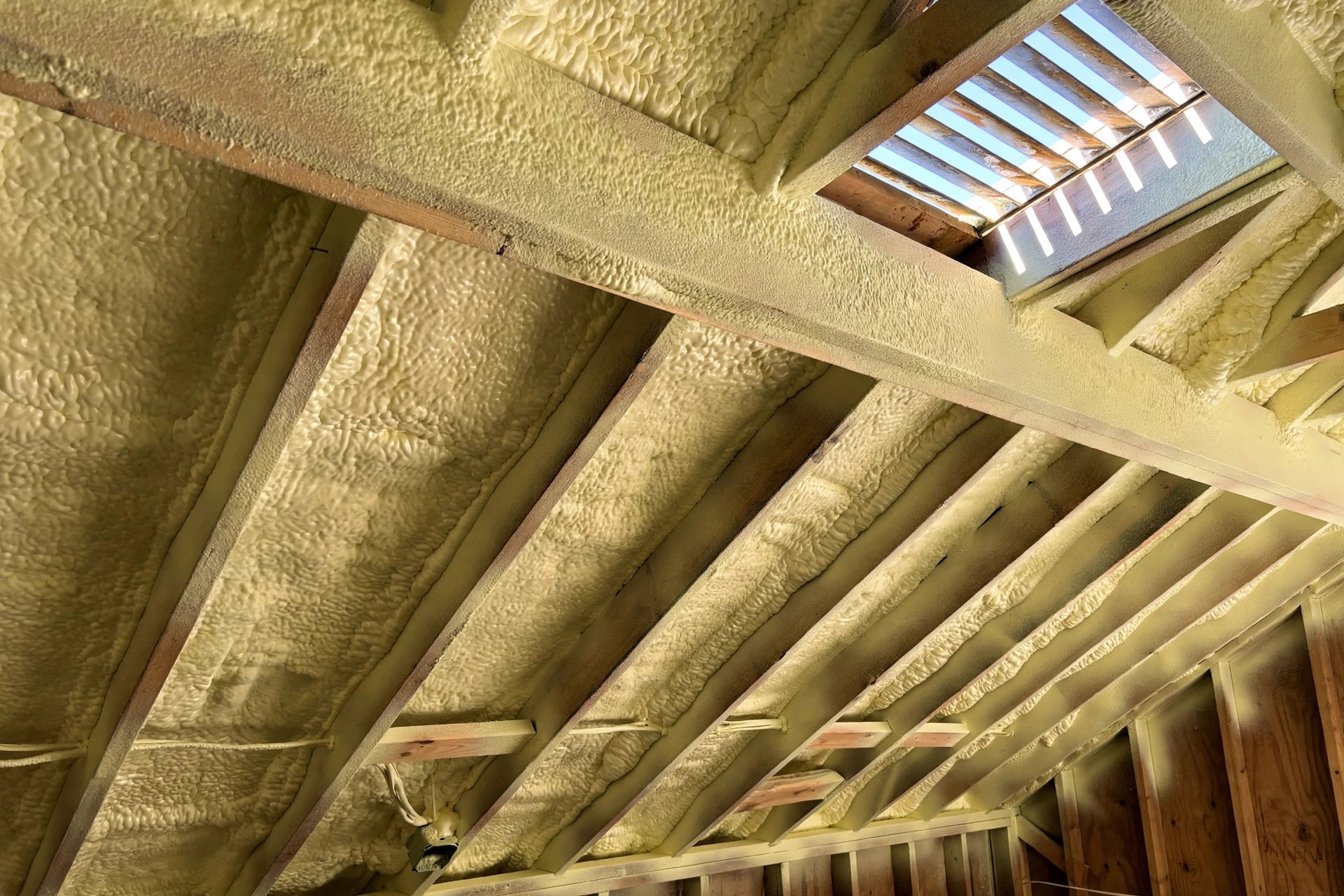

Most homeowners first ask one question when they start looking into foam: what is the spray foam insulation cost per square foot? In 2026, most jobs in the United States land between $1.00 and $5.00 per square foot of coverage, with open cell foam at the low end and closed cell foam at the high end. Once you know what sits behind the numbers, the range starts to make sense.
Insulation is not the part of a house that gets admired. Yet it is one of the hardest-working parts of any home. Old houses often have thin, tired insulation that has settled or fallen away from the studs. The result is high bills and rooms that never feel quite right. Spray foam fixes that in a way few other materials can. It goes on as a liquid and grows to fill cracks, gaps, and odd shapes. When it hardens, it stays put for decades.
This article walks through the real numbers. You will see what drives the spray foam insulation cost per square foot up or down, how the two main types differ, and what to ask a contractor before you sign anything.
Why It Matters
Money spent on insulation is money that pays you back every month. A house with poor insulation forces the furnace and the air conditioner to work longer and harder. Energy bills climb. Equipment wears out sooner. Rooms over the garage freeze while the living room bakes. Spray foam attacks all of this at once because it does two jobs: it insulates and it seals air leaks.
The U.S. Department of Energy states that heating and cooling make up a large share of home energy use, and air sealing is one of the best ways to cut that use. Foam sticks to wood, brick, and metal. It wraps around pipes and wires. It fills corners that batts cannot reach. Guidance shared by energy.gov notes that proper air sealing can trim energy waste in a meaningful way, which is why foam keeps showing up in retrofit work on older homes.
There is another angle that matters in 2026. Many utility programs and tax incentives reward energy upgrades. One popular pairing is insulation plus an efficient heat pump or energy efficient mini split for 1500 sq ft spaces. When the shell of the house holds heat well, the heating unit can be smaller and cheaper to run. The insulation work is often the smart first step.
What to Look For: How to Choose: Spray Foam Insulation Cost Per Square Foot
Not all spray foam is the same. The two main kinds are open cell and closed cell. They look alike when first sprayed, but they behave in different ways. Your choice shapes both performance and price.
Open cell foam is soft and light. When cut open, you can see tiny air pockets inside it. It expands a great deal, which makes it good at filling big open cavities in walls and attics. Its R-value sits near 3.5 to 3.7 per inch. It does not block moisture the way closed cell does, and it costs less. Most open cell jobs run from about $1.00 to $1.80 per square foot.
Closed cell foam is hard and dense. It resists water vapor and adds real strength to a wall or roof deck. Its R-value is higher, around 6 to 7 per inch, so you get more insulation in a thinner layer. That matters in tight spaces like crawlspace walls or rim joists. Closed cell work usually runs $2.00 to $4.50 per square foot.
When choosing, start with where the foam will go. For a big open attic, open cell often gives the best value per dollar. For a damp crawlspace or a metal roof, closed cell earns its keep. A good contractor will walk the house with you and point out which spots matter most. Be wary of anyone who quotes over the phone without seeing the work area. The job site tells half the story.
Ask about the R-value per inch and the total planned thickness. Ask whether the crew will protect floors, ducts, and fixtures before they spray. Names like those behind major Carrier and Lennox comfort systems may come up in the same conversation when you talk about matching insulation to new heating equipment. A straight, plain answer to each question is a good sign.
Types and Options
Beyond open and closed cell, there are a few more choices worth knowing about.
Low-rise and high-rise formulas
Most pros use high-rise foam for walls and attics. It expands fast and far. Low-rise foam expands less and is used for tight spots such as around windows and doors. Your contractor will pick the right one for each area. You do not need to decide this yourself, but it helps to know the words when you read a quote.
Two-part kits for small jobs
Small spray foam kits sold at home centers let a handy owner seal a rim joist or a small attic hatch. They cost far more per board foot than a pro job. They suit tiny repairs. They do not suit whole houses, which need pro rigs, fresh air gear, and a trained hand.
Foam plus batts: the hybrid wall
Some builders spray one or two inches of closed cell foam into wall cavities, then fill the rest with fiberglass batts. This hybrid wall gets the air seal of foam and the low cost of batts. It is a smart middle path when the budget will not stretch to full foam.
Blow-in and board foam as alternates
Not every house needs spray foam. Blown cellulose in an attic can cost $1.00 to $2.00 per square foot and works well on flat, open floors. Rigid foam board works well on exterior walls. Foam shines where air sealing is the main goal or where space is tight. An honest contractor will tell you when a cheaper method would do the job just as well.
Cost and Price
Now the heart of the matter. The spray foam insulation cost per square foot depends on several levers. Knowing them lets you compare quotes like-for-like instead of comparing apples to oranges.
Foam type. This is the biggest lever. Open cell runs roughly $1.00 to $1.80 per square foot. Closed cell runs roughly $2.00 to $4.50 per square foot.
Thickness. Foam is sold by the board foot, which is one square foot at one inch thick. A two-inch layer costs roughly twice what a one-inch layer costs in the same foam. Walls often get two to three inches. Attic roof decks may get five to six inches of open cell.
Job size. Big open jobs cost less per square foot than small fussy ones. A 1,500-square-foot attic floor with easy access sprays fast. A small crawlspace that a worker must belly-crawl through sprays slow.
Existing conditions. Old insulation must often come out first. Wet wood must dry. If your attic still holds its 1970s batts, budget for removal before the foam goes in.
Region and season. Prices run higher on the coasts and in big cities. Crews also stay busier in fall when everyone wants the house sealed before winter. Booking a shoulder season slot can sometimes shave a bit off.
Here is a quick table of typical installed prices in 2026:
| Job type | Typical range per sq ft | |—|—| | Open cell, walls or attic | $1.00 – $1.80 | | Closed cell, 2 inches | $2.00 – $3.00 | | Closed cell, 3+ inches | $3.00 – $4.50 | | Rim joist sealing (open cell) | $1.20 – $2.00 | | Full attic, open cell 6 in. | $1.80 – $2.60 |
How much does spray foam insulation cost for a whole house? A typical 2,000-square-foot home might run $3,000 to $8,000 for open cell in the key areas, or $6,000 to $14,000 for closed cell. Get three quotes. Make sure each one lists the foam type, the thickness in inches, and the total square footage. Without those three facts, you cannot compare two bids.
One more note on the budget. Foam is sometimes priced per board foot instead of per square foot. A board foot is a square foot one inch thick. To convert, multiply the board-foot price by the inches of thickness. Ask the contractor to show you the math.
Related upgrades often get priced in the same season. For example, many homeowners who seal the house also weigh an oil to gas boiler conversion cost usa estimate or shop modine hot dawg heater reviews for garage units for the workspace.
Care and Upkeep
One of the quiet perks of spray foam is how little it asks of you after it is in. It does not settle. It does not sag. It does not feed mold on its own. Fiberglass batts can slump in a wall over twenty years and leave cold stripes. Foam stays where it was sprayed for the life of the house in most cases.
Still, a little attention pays off.
– Check it once a year. Look at the foam. It should look firm and dry. New cracks or a sour smell can point to a leak behind the foam. – Keep it dry on the inside. Foam handles moisture well, but long soaking is bad for everything it touches. Fix plumbing leaks fast. – Do not carve into it blindly. Future wiring or plumbing work may need to cut through foam. Have the worker reseal the cuts afterward. Air leaks undo the very benefit you paid for. – Mind the heat. Keep foam away from high-heat items like flue pipes and recessed light cans that are not rated for contact. Code calls for clearances. – Vent the attic right. Some jobs spray the roof deck and turn the attic into conditioned space. That changes how the attic vents. Make sure the plan matches the HVAC design. Equipment makers such as Trane and Rheem publish guidance on balanced systems, and a good installer will think in whole-house terms.
If foam is ever damaged by a leak or a trade worker, patch it. Small damaged areas can be trimmed back and re-sprayed.
Safety
Spray foam is safe once it is cured. It is the installation that demands respect. During spraying, the chemicals release fumes. Crews wear full respirators, suits, and eye gear. The house should be empty of people and pets during the spray and for a stated re-entry time, often 24 hours. This is standard practice, not a warning sign.
After curing, the foam is inert and odor-free. But a few rules last.
– Cover it where code says so. Foam in living areas must usually sit behind a thermal barrier such as drywall. In an unfinished basement or attic storage area, code may call for an ignition barrier coating. The ENERGY STAR program and local building codes both point to these rules. Ask your contractor what barrier your job needs and get it in writing. – Check local code before you DIY. Some towns require permits and licensed installers for foam work. – Mind off-gassing windows. If you smell a strong chemical odor more than a day or two after the crew leaves, call the installer back. Cured foam should have no strong smell.
The theme across trusted outlets like Family Handyman and This Old House is the same: respect the chemistry during the install, and you get a safe, quiet, tight house for decades after. Manufacturers such as Goodman also stress that combustion appliances in foamed homes need proper venting, since a tighter house changes how air moves.
FAQ
Is spray foam worth the cost per square foot compared to fiberglass?
For many homes, yes. Foam costs two to four times more per square foot than fiberglass batts up front. But it seals air leaks that batts cannot touch. Lower bills, steadier room temperatures, and less noise are the payoff. In a house you plan to keep for ten years or more, the math usually favors foam in the key spots.
How long does spray foam insulation last?
Decades. Most makers say the foam holds its R-value for the life of the building under normal conditions. Unlike batts, it does not settle or slump. The main threats are long-term water soaking and physical damage from later remodeling work.
Can I spray foam over old insulation?
Usually not without prep. Old batts must come out so the foam can bond to clean wood or sheathing. Spraying over dusty, loose material gives a weak bond and traps moisture paths.
Does spray foam stop mice and bugs?
It helps a great deal. Foam closes the small gaps that mice and insects use as doors. It is not rated as a pest barrier, and a hungry rodent can chew through it, but a sealed shell removes most entry paths.
How thick should spray foam be?
It depends on the spot and the climate. Two to three inches of closed cell foam in walls is common. Attic roof decks often get five to six inches of open cell. Your local code sets minimum R-values by climate zone. The contractor should name the zone, the target R-value, and the planned thickness on the quote.
Will spray foam make my house too tight?
A tighter house is the goal, but it must breathe on purpose, not by accident. In a well-sealed home, the HVAC system should bring in fresh air in a controlled way. Talk to your contractor about ventilation.
A Short Final Word
The spray foam insulation cost per square foot is more than a price. It is a trade between foam type, thickness, and the quirks of your house. Open cell keeps budgets in check on big open areas. Closed cell earns its price where moisture and thin spaces rule. Get three detailed quotes, compare the same three facts on each one, and pick the crew that answers plainly. A tight, quiet, comfortable house is worth the homework.
References
Carrier. (n.d.). Heating and cooling systems. https://www.carrier.com ENERGY STAR. (n.d.). Energy efficient products. https://www.energystar.gov Family Handyman. (n.d.). DIY home repair and maintenance. https://www.familyhandyman.com Goodman. (n.d.). Heating and cooling equipment. https://www.goodmanmfg.com Lennox. (n.d.). Heating and cooling systems. https://www.lennox.com Rheem. (n.d.). Heating, cooling, and water heating. https://www.rheem.com This Old House. (n.d.). Home renovation guidance. https://www.thisoldhouse.com Trane. (n.d.). Heating and air conditioning. https://www.trane.com U.S. Department of Energy. (n.d.). Energy efficiency and renewable energy. https://www.energy.gov
Was this guide helpful?

About Emily Rodriguez
The My Garden US editorial team writes practical, in-depth home and garden guides for American homeowners — tested advice, no fluff.
You May Also Like
Best Crawl Space Dehumidifier 2026 USA: A Plain Guide for Homeowners
July 29, 2026 0 views
Dual Hose Portable AC Reviews 2026 USA: A Plain Buyer’s Guide
August 22, 2026 0 views
Inflation Reduction Act HVAC Rebates Explained
July 9, 2026 0 views