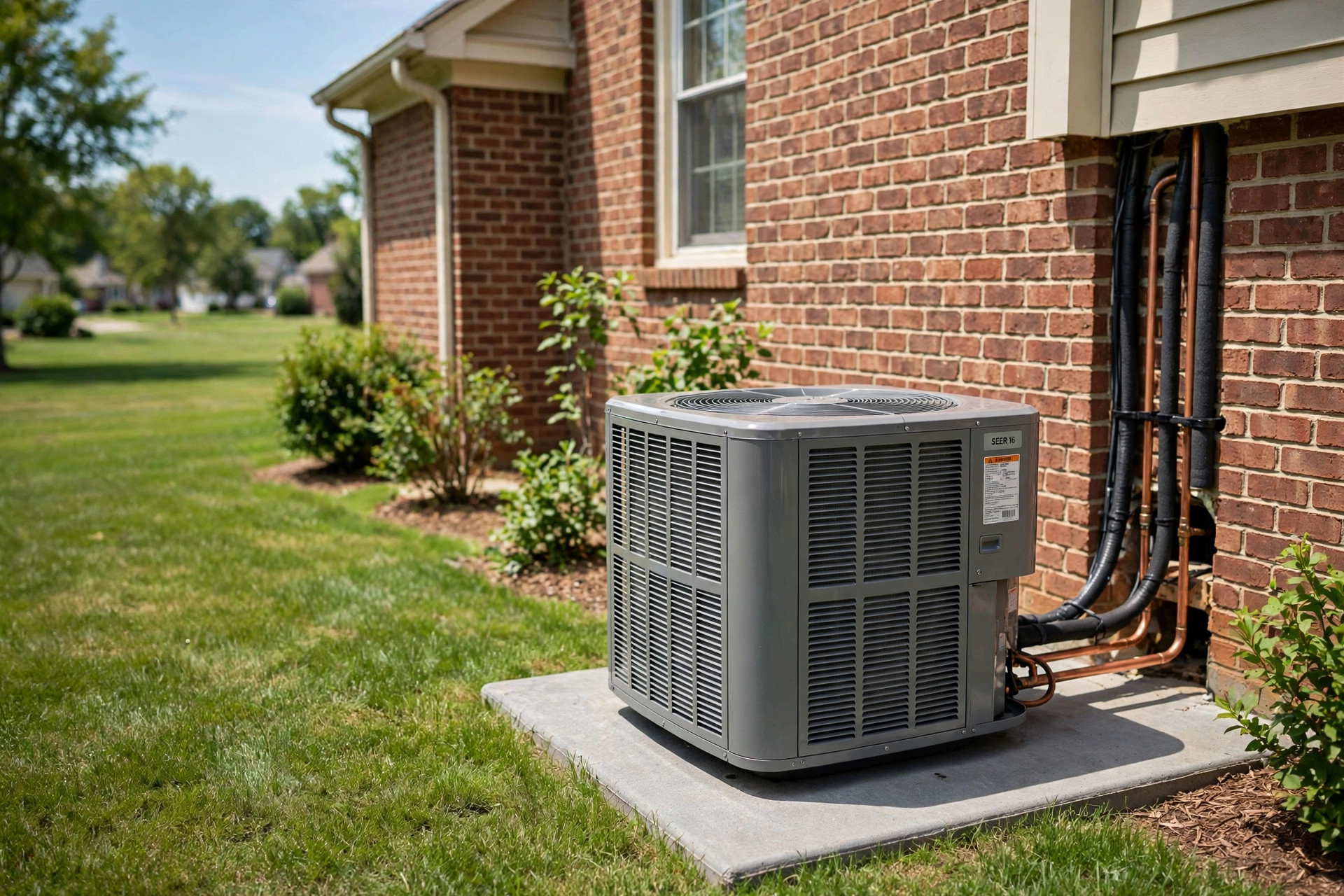

Why Getting the Size Right Matters
This how to size central ac unit usa guide begins with a simple point. The size of an air conditioner decides how well it works. A unit that is too small will run all day and never cool the house. A unit that is too large will cool the air too fast, then shut off, then turn on again. This short cycling leaves the air damp and the rooms uneven. Both mistakes cost money.
Many homes in the United States carry an AC unit that was sized in a hurry. The old rule of thumb said one ton of cooling for every 500 square feet. That rule is now too rough. New homes hold heat less. Old homes leak air more. Two houses of the same size can need very different units. A proper sizing uses math, not guesswork. It keeps bills low, guards the parts from early wear, and cools every corner of the house.
What “Size” Means in Air Conditioning: How to Size Central Ac Unit Usa Guide
Air conditioner size is not the size of the box outside. It is the cooling power of the system. The trade measures cooling in two units. The first is the British Thermal Unit, or BTU. One BTU is a small bit of heat. A home air conditioner moves thousands of them per hour. The second is the ton. One ton equals 12,000 BTU per hour. This word comes from the days when ice cooled rooms, but it is still the standard term.
Most home central AC units run from 1.5 tons to 5 tons. A small condo may need only 2 tons. A large two-story house may need 4 or 5 tons. Some homes need two smaller systems instead of one large one. The number printed on the nameplate tells the tons. On older units, the model number often shows it. A “36” in the model number can mean 36,000 BTU, which is 3 tons. Divide the BTU number by 12,000 to get the tons.
Size must fit the heat load of the house. Heat load means all the heat that enters or forms inside the home on a hot day. Sun through windows adds heat. Walls and the roof add heat. People, lights, and cooking add heat. The AC must move all of it out. A load sheet adds these heat sources up. That is what decides the tons.
The Old Rule of Thumb and Why It Fails
The old rule said 500 square feet per ton. A 2,000 square foot home got a 4-ton unit. This rule still floats around online, but pros now call it a rough guess. It misses too much.
Consider two homes of the same size. One sits in Maine with thick insulation and shade trees. The other sits in Phoenix with bare walls and west-facing glass. The Phoenix home may need twice the cooling. The rule treats them the same. That is why it fails.
The rule also misses the shape of the house. A two-story home with one unit has hot upstairs rooms. A ranch home with a dark roof pulls more heat. Ducts in a hot attic lose cooling before it reaches the vents. These facts change the size. A good plan counts them all.
Use the rule of thumb only as a first sketch. If a contractor sizes a system from this rule alone, ask for more work. The real answer comes from a full load study.
Manual J: The Right Way to Size a Unit
The right method has a name: Manual J. This is a set of steps drawn up by the Air Conditioning Contractors of America. It is the standard for home sizing in the United States. A careful contractor runs a Manual J load study before naming a size.
The study walks through the whole house. It notes the square feet of each room. It notes window sizes and which way they face. It notes the wall type, roof type, and how much insulation sits in each spot. It notes air leaks and duct paths. It even notes how many people live in the home and which way the front door faces.
Then it uses local weather data. Every town has a “design temperature.” This is the hottest day the system should handle. In Miami, it is high. In Chicago, it is lower. The study sizes the unit to hold 75 degrees inside on the design day. It does not size for the once-a-decade heat wave. That keeps the unit from being too large.
Many states now ask for Manual J with new installs. Building codes in much of the country point to it. Homeowners can ask for a copy of the load sheet. It should show each room, each heat gain, and the total in BTU. If the numbers are missing, the size is a guess.
Step-by-Step: How to Size Your Central AC Unit
You can make a first pass at sizing yourself. These steps give a rough range. They do not replace a Manual J study, but they help you talk with a contractor.
Step 1: Measure the Cooled Space
Walk the house with a tape measure. Find the length and width of each room that the AC will serve. Multiply to get the square feet. Leave out the garage, attic, and any room that has no vents. Add the rooms up. Write the total down. A typical American home runs 1,500 to 2,500 square feet of cooled space.
Step 2: Check the Climate Zone
The United States spans many climate zones. Hot humid states like Florida and Texas need more cooling per square foot. Mild coastal states need less. A home in Houston may need 400 to 500 square feet per ton. A home in Seattle may need 700 to 800 square feet per ton. The U.S. Department of Energy posts zone maps and cooling guidance that help set the right range.
Step 3: Note the Home’s Traits
Older homes with thin walls and single glass windows need more cooling. New homes with good insulation and low-e windows need less. Tall ceilings, dark roofs, and big west windows all add heat. Count these traits. Each one moves the number up a bit.
Step 4: Divide to Find the Tons
Take your square feet and divide by the per-ton number for your climate. A 2,000 square foot home in a hot state at 500 square feet per ton needs 4 tons. The same home in a mild state at 700 per ton needs about 2.9 tons, or a 3-ton unit. Write this as your rough size.
Step 5: Adjust for Ducts and Layout
Long duct runs in a hot attic waste cooling. Two-story homes cool best with zones or two units. If the home has weak ducts or a tough layout, note it. The contractor may shift the size or suggest duct work. This is where a Manual J study earns its fee.
Types and Options: Which Unit Fits
Once the tons are known, the kind of unit matters. Three main types fill the market.
Single-Stage Units
Single-stage units run at one speed. They are either fully on or fully off. They cost the least to buy. They work fine in steady climates. But they can cool the air too fast and leave the air damp. Many basic systems still use this design.
Two-Stage Units
Two-stage units run at low speed most of the time. They shift to high speed on very hot days. This gives steadier temps and better humidity control. They cost more than single-stage units. Many Carrier and Trane lines offer two-stage models for homes that want more comfort.
Variable-Speed Units
Variable-speed units can run at many speeds. They match the cooling output to the heat load almost all the time. They give the best humidity control and the quietest sound. They cost the most up front. Makers like Lennox and Rheem sell these as top-tier lines. Good value brands such as Goodman also offer them at lower prices.
The right choice links back to size. A slightly small variable-speed unit can cool well because it runs long and steady. Ask the contractor how the unit type fits the tonnage.
Cost and Price of a New Central AC
Size is a big part of price. A larger unit costs more to buy and install. Typical install prices in the United States run from about $4,000 to over $12,000. A 2-ton unit in a simple swap may cost near the low end. A 5-ton high-end system with duct work may cost near the top.
Labor and extras shift the price a lot. New ducts, a new line set, or a new breaker panel add cost. Pulling permits and passing inspection add fees. The SEER2 rating also moves the price.
To keep the bid fair, get three written quotes. Each should show the tonnage, the SEER2 rating, and the model numbers. Ask each contractor if they ran a Manual J study. A bid with no load study is a bid built on a guess.
Efficiency: SEER2 and What to Pick
Every new unit carries a SEER2 rating. This stands for Seasonal Energy Efficiency Ratio 2. It is the test score for cooling power per watt of power used. A higher number means less power for the same cooling. As of recent federal rules, new units must meet a set SEER2 floor that varies by region. The South and Southwest ask for higher minimums than the North.
For most homes, a 15 to 16 SEER2 unit gives solid value. In very hot states, 18 SEER2 or more can pay back over time. Shoppers in Texas can compare notes on best seer rating for texas homes 2026. ENERGY STAR lists models that beat the federal floor and can cut bills further. The label is worth a look before you sign.
Right sizing beats a high rating. A 20 SEER2 unit that is too large will still short cycle. A right-sized 15 SEER2 unit will often use less power in real life. Size first, then pick the rating.
Care and Upkeep for the Right Size
A right-sized unit needs steady care to stay right. Small jobs keep it at peak.
Change the filter on time. Most homes need a new filter every one to three months. A dirty filter chokes air flow. Low air flow can freeze the coil and hurt cooling. Keep spare filters on hand.
Clean the outdoor unit. Grass, leaves, and dust block the fins. Rinse the coil with a soft hose spray each spring. Keep two feet of clear space around the box. Do not stack items against it.
Clear the drain line. The unit pulls water from the air. The drain line can clog with slime. Pour a cup of vinegar down the drain port once a season. This stops clogs that can shut the unit down.
Book a yearly check. A tech should test the charge, clean the coil, and check the ducts. The Family Handyman site shows simple upkeep steps homeowners can do between visits, and This Old House runs through yearly tune-up lists that fit most systems. If the unit ever stops cooling, read homeowner guides on familyhandyman.com before calling for help.
Safety Notes
Air conditioners use high voltage and sealed coolant. Do not open the electrical panel of the unit. Turn off the breaker before any work near the wiring. Keep hands away from the fan blade, which can start without warning.
Coolant, called refrigerant, is not for home handling. Only a licensed tech with EPA clearance may add or recover it. If you see ice on the lines or hear hissing, call a pro. Do not try to top up the charge yourself.
Outdoor units also draw pests. Wasps nest in the housing. Snakes hide in the shade. Look before you reach. Wear gloves when you rinse the coil.
Frequently Asked Questions
What size central AC do I need for 2,000 square feet?
A 2,000 square foot home often needs 3 to 4 tons, but the climate decides. In a hot state like Texas, 4 tons is common. In a mild state, 3 tons may do. A Manual J load study gives the true number. Local pricing also helps: read about central ac replacement cost near me 2026 before you ask for quotes.
Can I use the old rule of 500 square feet per ton?
You can use it as a rough sketch, but do not buy from it. It misses insulation, windows, climate, and ducts. Two homes of the same size can need sizes a full ton apart. Ask for a Manual J study for the final answer.
What happens if the unit is too big?
A too-large unit cools the air fast and shuts off. It does not run long enough to pull dampness from the air. Rooms feel cool but clammy. The unit starts and stops too often, which wears parts fast. Bills can run higher than with a right-sized unit.
What happens if the unit is too small?
A too-small unit runs all day on hot days and never reaches the set temp. Rooms on the sunny side stay warm. The system wears out early from non-stop work. Bills run high because the unit never rests.
Should I trust the size of the old unit?
Not always. The old unit may have been sized wrong. The home may have new windows, new insulation, or an added room since it was installed. Treat the old size as a hint, not an answer. A fresh load study stands on its own.
Do I need a bigger unit if I add a room?
Maybe. An added room or a finished attic adds heat load. Have the contractor redo the Manual J with the new space. Guessing can leave the whole house uneven.
A Short Final Word
Sizing a central AC unit is not a guess. It is a short math job. Measure the space, note the climate, count the home’s traits, and let a Manual J study set the tons. Then pick the unit type and SEER2 rating that fit the budget. Shoppers comparing makers can start with lists of the best central air conditioner brands 2026 usa. Do that, and the system will cool steady, run quiet, and last long. A right-sized unit is the cheapest comfort a home can buy.
References
Carrier. (n.d.). Heating and cooling systems. https://www.carrier.com ENERGY STAR. (n.d.). Energy efficient products. https://www.energystar.gov Family Handyman. (n.d.). DIY home repair and maintenance. https://www.familyhandyman.com Goodman. (n.d.). Heating and cooling equipment. https://www.goodmanmfg.com Lennox. (n.d.). Heating and cooling systems. https://www.lennox.com Rheem. (n.d.). Heating, cooling, and water heating. https://www.rheem.com This Old House. (n.d.). Home renovation guidance. https://www.thisoldhouse.com Trane. (n.d.). Heating and air conditioning. https://www.trane.com U.S. Department of Energy. (n.d.). Energy efficiency and renewable energy. https://www.energy.gov
Was this guide helpful?

About Emily Rodriguez
The My Garden US editorial team writes practical, in-depth home and garden guides for American homeowners — tested advice, no fluff.
You May Also Like

Mini Split for Garage Heating and Cooling: A Practical Guide for Homeowners
July 29, 2026 0 views
How to Clean Mini Split Filters USA Guide: Step-by-Step Care for Cleaner Air
September 14, 2026 0 views
Central AC Replacement Cost Near Me 2026
September 19, 2026 0 views