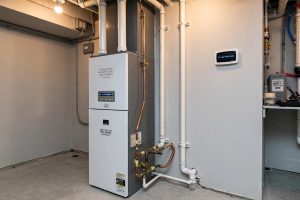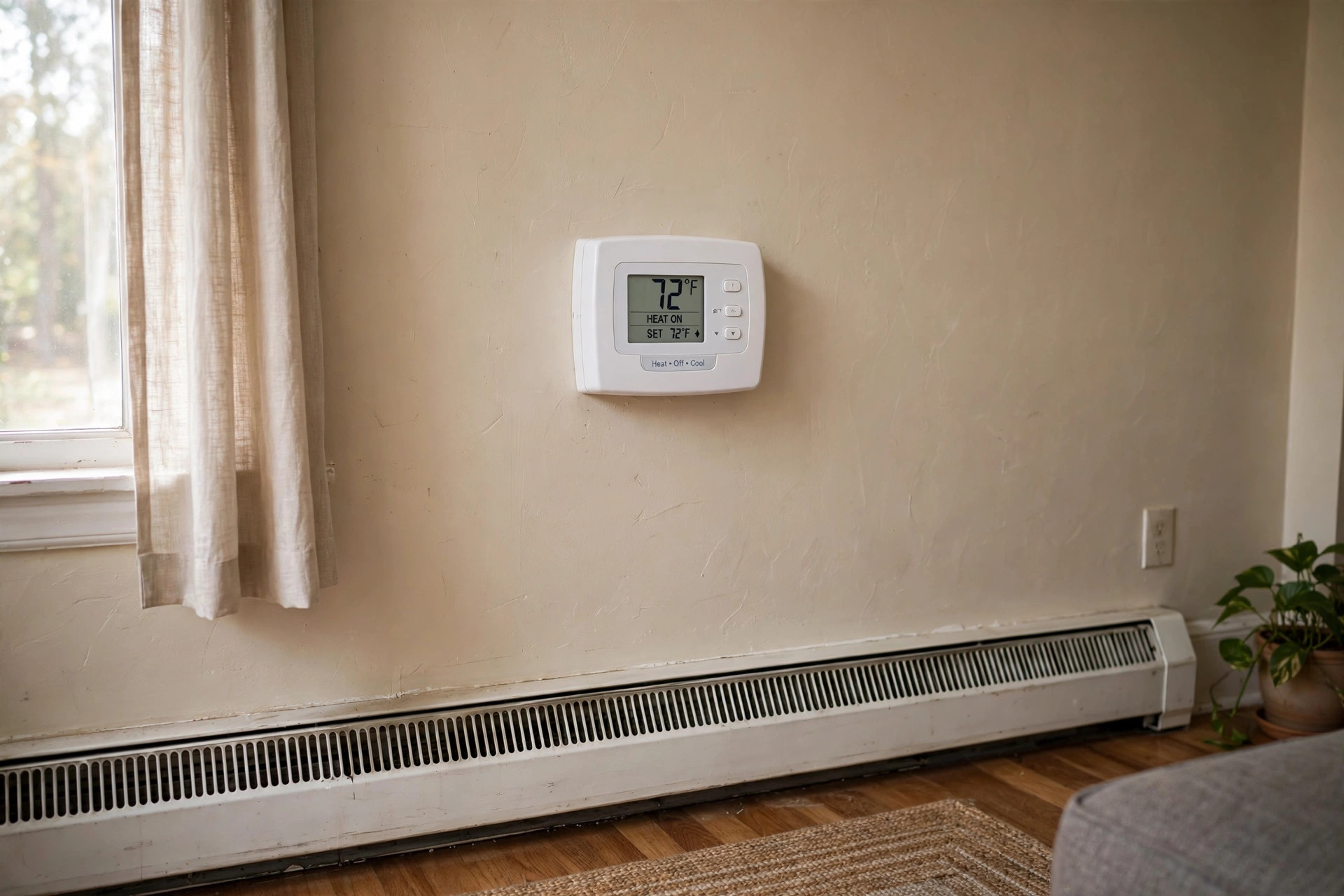

Anyone who heats with electric baseboard heaters soon learns that the thermostat matters more than the heater. The heater is a simple metal box. The thermostat is the brain. This guide to the best line voltage thermostat reviews usa gathers what matters most: how these controls work, which types suit which rooms, what real owners praise and complain about, and how much you should pay.
Why It Matters
Most American homes with forced air heat use low voltage thermostats. They run on a small 24 volt circuit and talk to a furnace or heat pump. Electric baseboard heat is different. It uses a line voltage thermostat. This device connects straight to the 120 volt or 240 volt circuit that feeds the heater. It switches the full current on and off. There is no middle device. There is no low voltage wire.
This design is simple and dependable. It is also unforgiving. A line voltage thermostat carries real current. Pick the wrong model, wire it wrong, or overload it, and you can melt a switch or start a fire. That is why reviews matter here more than in most product groups. A five star heater with a poor control will run hot, swing wide, and waste money all winter.
A good line voltage thermostat holds a room within one or two degrees of the set point. A poor one swings five degrees or more. You feel it as cold mornings and hot afternoons. Over a full heating season in a cold state, the difference shows up clearly on the electric bill. Reviewers in northern states often report the change after an upgrade. The room feels even. The bill drops. The heater cycles quietly instead of clicking loudly on and off.
What to Look for When You Choose: Best Line Voltage Thermostat Reviews Usa
Start with the voltage. Your heater runs at 120 volts or 240 volts. The thermostat must match. Most line voltage thermostats handle both. Check the label on the heater or the breaker panel before you buy. A 240 volt heater on a 120 volt control will fail fast. A 120 volt circuit with a 240 volt control is simply a waste of the control rating.
Next check the amperage rating. This is the maximum current the switch can carry safely. Common ratings are 15 amps and 22 amps at 240 volts. Add up the wattage of every heater the thermostat will control. Divide by the circuit voltage to get amps. For a 240 volt circuit, a 4,000 watt heater draws about 16.7 amps. That needs a thermostat rated above 16.7 amps. Never run a control at its limit. Leave head room. Reviewers who ignore this rule report melted housings and early failures. It is the most common mistake in the whole category.
Then choose single pole or double pole. A single pole thermostat breaks one side of the circuit. The heater keeps a low trickle path and can stay slightly warm when off. A double pole thermostat breaks both sides. It gives a true off position. Double pole models are safer and are required by some local codes. They cost a few dollars more. They are worth it. Many of the top rated models in the best line voltage thermostat reviews usa are double pole.
Accuracy is the next measure. Old mechanical models use a bimetal strip. They are cheap and tough, but they swing several degrees. Electronic models use a sensor and a relay. They hold temperature within about one degree. If you care about comfort, electronic wins.
Look at the temperature range and the minimum setting. Some rooms, like a cabin or a garage, need a thermostat that can sit at 45 or 50 degrees all winter. Not every model goes that low. Check the low end of the range if you heat a space you do not live in full time. A wifi thermostat for vacation home reviews usa model can pair well with this need when you want remote checks.
Finally, check the box and the wiring type. Line voltage thermostats need a deep electrical box and proper wire gauge. Four wire models wire in series with the heater. Two wire models replace an old single pole unit directly. If you are swapping an existing control, match the wire count. If you are starting fresh, let an electrician size the box and the wire.
Types and Options
Simple Mechanical Models
The mechanical line voltage thermostat is the oldest type. It has a dial, a bimetal coil, and a snap switch. You turn the dial to the temperature you want. The coil expands and contracts with room temperature. It snaps the switch on and off.
Reviewers like the price and the simplicity. These models sell for very little money and last for years. They need no batteries and no programming. They are a good fit for a workshop or a rental where you want something that cannot be misprogrammed.
Reviewers dislike the wide temperature swing and the loud click. A mechanical unit can let the room drift three to five degrees before it reacts. In a bedroom that swing wakes light sleepers. The click of the snap switch is also loud enough to hear through a thin wall.
Electronic Non-Programmable Models
Electronic non-programmable thermostats replace the bimetal coil with a sensor and a quiet electronic switch. There is no loud click. The temperature holds within about one degree. Most have a simple dial or up and down buttons.
These are the sweet spot for most buyers. Reviews are strong across brands. Owners report even heat, no clicking, and lower bills. The price sits in the middle range. Installation is the same as a mechanical unit.
Programmable Models
Programmable line voltage thermostats add a schedule. You set different temperatures for morning, day, evening, and night. Some have a separate weekend schedule. A few offer adaptive recovery, which starts heating early so the room is warm on time.
Reviews show that programmable models save the most energy when the house has a regular routine. Owners who leave for work each day report clear savings. Owners with irregular schedules report that they rarely use the programming. Be honest about your habits before you pay extra for this feature.
The Stelpro line and similar programmable electronic models get frequent mention in American reviews for baseboard systems. They hold temperature well and the programs are simple to set.
Smart and WiFi Models
Smart line voltage thermostats connect to your home WiFi. You change the temperature from a phone app. You can set schedules, see energy use, and get alerts. Some models work with voice assistants.
The best known smart models for baseboard heat are made by companies that built the product just for electric heat, such as Mysa and Sinope. Reviews praise the clean app, the tight temperature control, and the energy reports.
Reviewers also warn about limits. Smart models cost much more than simple ones. They need a strong WiFi signal at the wall. Some need a specific box depth. Read recent reviews, not just old ones, before you buy a smart model.
Models for Electric In-Floor Heat
In-floor radiant heat uses a special line voltage thermostat with a floor sensor. The sensor sits in the floor and reports the slab temperature. This stops the floor from overheating. A standard wall thermostat without a floor sensor is wrong for this job.
Reviews of floor sensing models focus on the sensor wire and the programming. Owners like the warm floor on a timer. The main complaint is the sensor lead, which must be run during floor installation. If you are adding this control to an old floor, check how the sensor gets in place before you buy.
Cost and Price
Prices for line voltage thermostats fall into clear bands. Simple mechanical models sell for the lowest price. Electronic non-programmable models sell in the middle band. Programmable models cost more. Smart WiFi models cost the most.
Installation cost is separate. Swapping a like for like unit is a simple job for anyone comfortable with a breaker panel. Many owners do it themselves in under an hour. Adding a new circuit, moving a box, or wiring a smart model with new requirements is a job for a licensed electrician. A service call of this type often costs a few hundred dollars, depending on the market.
Reviewers stress total cost. A cheap thermostat that swings five degrees can waste more in one winter than the price difference between it and a good electronic model. Look at the control as part of the heating system, not as a small accessory. For help with related heating questions, see our guide on thermostat for two zone system reviews usa, which covers multi zone control in more detail.
Care and Upkeep
Line voltage thermostats need very little care. Dust is the main enemy. Dust on a mechanical bimetal coil slows its response. Once a year, turn off the breaker, remove the cover, and blow out the dust with a can of compressed air. Do not use water or cleaners.
Check the wire connections every few years. Heat cycles loosen screws. A loose connection arcs and heats the wire. If you smell hot plastic or see discoloration around the thermostat, turn off the breaker and call an electrician. Do not keep using it.
For programmable and smart models, check the schedule once a season. Life changes. A schedule set for an old routine wastes energy. Batteries, where used, should be changed yearly even if the display still works.
Safety
Safety is the heart of this product group. A line voltage thermostat carries the full current of the heater. Respect it.
Always turn off the breaker before you touch the wiring. Test with a non contact voltage tester. Lock the panel or tape the breaker if others are home. This is not a low voltage doorbell circuit. It can kill.
Never exceed the amperage rating. Add up every heater on the control. Stay well under the rated amps. If you add a heater to a room later, recheck the math. Many house fires traced to electric heat start with an overloaded control or a loose wire, not with the heater itself.
Keep the thermostat away from heat sources. Do not mount it above the heater, near a stove, in direct sun, or behind a door. A control that reads warm air will shut off early and leave the room cold. Mount it on an inside wall, about five feet off the floor, in the normal air flow of the room.
Use a double pole model where you can. The true off position breaks both legs of a 240 volt circuit. It is safer to service and it meets stricter codes. The United States Consumer Product Safety Commission publishes guidance on home heating safety, and the CPSC home safety pages are a good starting point.
Manufacturer and retailer resources can help with selection. Carrier and Lennox publish clear explanations of how thermostats fit into home heating systems at Carrier and Lennox. Trane and Rheem cover controls for electric and heat pump systems at Trane and Rheem. Goodman explains basic heating equipment at Goodman.
For energy guidance, the federal Energy Star program rates smart thermostats and explains what certification means at Energy Star. The Department of Energy publishes thermostat and heating advice for American homes at Energy.gov. For hands on wiring and installation help, This Old House and Family Handyman both run large libraries of heating articles with clear photos.
FAQ
Can I use a regular smart thermostat with baseboard heaters? No. Regular smart thermostats, the kind made for furnaces, run on 24 volts. They cannot switch a 120 or 240 volt heater circuit. You need a smart thermostat built for line voltage. Using the wrong type will destroy the control and can start a fire.
How many baseboard heaters can one thermostat control? As many as the amperage rating allows. Add the wattage of all heaters, divide by the circuit voltage, and compare to the rating. Keep a safety margin.
What is the difference between single pole and double pole? A single pole unit breaks one side of the circuit and has no true off. A double pole unit breaks both sides and gives a full off. Double pole costs a little more and is safer. Many codes require it.
Do line voltage thermostats work with 120 volt heaters? Yes, if the model is rated for it. Most line voltage thermostats accept both 120 and 240 volts. Check the label.
Why does my room swing hot and cold? The usual cause is a mechanical thermostat with a wide differential, or a thermostat mounted in a bad spot. Above the heater, in the sun, or behind furniture will all fool the sensor. An electronic model with tight control often fixes the swing.
Are smart line voltage thermostats worth the price? They are worth it if you want remote control, schedules, and energy reports, and if your WiFi reaches the wall. For heater specific picks, see our baseboard heater thermostat reviews 2026 usa guide.
A Final Word
The best line voltage thermostat is the one that matches your voltage, stays under its amperage rating, and fits your habits. A simple electronic model serves most rooms well. A smart model serves the owner who wants control from anywhere. Wire it with care, and give it clean air to read. Do that, and your baseboard heat will run quiet, even, and cheap all winter.
References
Carrier. (n.d.). Heating and cooling systems. https://www.carrier.com ENERGY STAR. (n.d.). Energy efficient products. https://www.energystar.gov Family Handyman. (n.d.). DIY home repair and maintenance. https://www.familyhandyman.com Goodman. (n.d.). Heating and cooling equipment. https://www.goodmanmfg.com Lennox. (n.d.). Heating and cooling systems. https://www.lennox.com Rheem. (n.d.). Heating, cooling, and water heating. https://www.rheem.com This Old House. (n.d.). Home renovation guidance. https://www.thisoldhouse.com Trane. (n.d.). Heating and air conditioning. https://www.trane.com U.S. Consumer Product Safety Commission. (n.d.). Product safety information. https://www.cpsc.gov U.S. Department of Energy. (n.d.). Energy efficiency and renewable energy. https://www.energy.gov
Was this guide helpful?

About Sarah Mitchell
The My Garden US editorial team writes practical, in-depth home and garden guides for American homeowners — tested advice, no fluff.
You May Also Like

Best Portable AC for Bedroom Reviews USA: What Buyers Should Know
February 26, 2026 0 views
Linear Electric Fireplace Reviews for Living Room: What Buyers Should Know
March 2, 2026 0 views
Solo Stove vs Breeo Comparison Reviews USA
June 15, 2026 0 views