
This thermal grommet top curtains buying guide will help you choose window panels that keep cold out, keep heat in, and look neat on the rod. Many shoppers buy the wrong size or the wrong lining and end up with curtains that block no draft at all. The pages below explain what a grommet top is, which fabrics block heat best, how to measure, what prices to expect, and how to hang and wash the panels. Read the whole guide before you order. A few careful choices now will save you money on your heating bill for years.
Why Thermal Curtains Matter
Glass is a poor shield against cold. A plain single pane of glass lets heat move out of a room almost as fast as it warms up. Studies of heat loss in homes show that windows can account for a large share of winter heat loss. A thermal curtain adds a layer between the glass and the room. The heavy fabric, often with a coated back, slows the movement of air and cuts the cold draft you feel when you stand near a window.
Thermal curtains also help in summer. The same coating that reflects room heat back into the room in winter can reflect the glare of the sun away from the glass. Rooms with large west-facing windows stay cooler when the panels are drawn on hot afternoons. Over one year, that cuts both heating and cooling bills.
A third gain is comfort. Rooms with bare windows feel drafty even when the air is warm. Thick panels make the room feel still and quiet. They also dim street light and cut street noise a little. For bedrooms, that can mean better sleep.
Not every curtain sold as “thermal” works well. Some are only heavy cloth with no real insulation layer. This guide shows you how to tell the difference.
What Grommet Tops Are and How They Work: Thermal Grommet Top Curtains Buying Guide
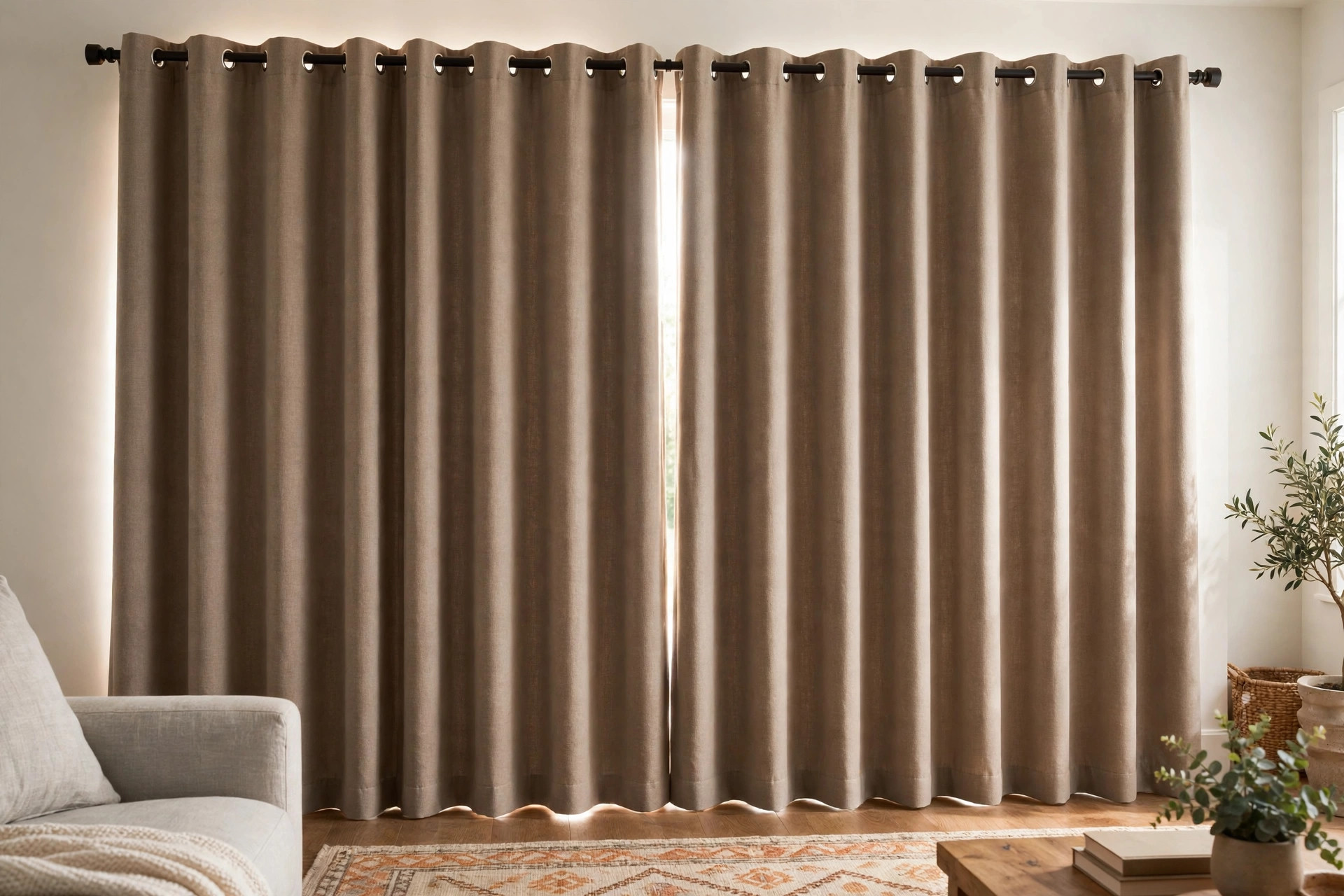
A grommet is a metal ring set into the top hem of the curtain. The curtain rod passes through the rings. When you push the curtain open, the rings glide along the rod and the fabric folds into neat, even waves.
Grommet tops suit many rooms because they look modern and hang straight. They slide with less effort than rod-pocket panels, so you can open and close them each day without tugging. That matters for thermal curtains. The curtains only save energy when you close them at night and on hot afternoons. A panel that slides with ease is one you will actually use.
The grommet rings come in finishes such as brushed nickel, bronze, black, and brass. Pick a finish that matches your rod and your room hardware. The rings add a small amount of metal near the top, so the top edge of the panel tends to keep its shape well.
One point to watch: the fold gaps between grommets can let a little air pass at the top. Mount the rod a few inches above the frame and let the panels hang wide enough to cover the full window plus the frame on each side. That closes the gaps and keeps the draft where it belongs, on the glass side.
What to Look For When You Buy
Fabric and Insulation Layer
The heart of a thermal curtain is the back coating or the middle layer. True thermal panels use one of three builds:
1. Foam-coated back. A layer of acrylic foam is bonded to the back of the fabric. It gives a soft white or beige backing that blocks light and slows heat. These are the most common and the least costly. 2. Bonded interlining. A sheet of thick fleece or flannel is sewn between the face fabric and the lining. It feels heavier and blocks more cold than foam. It also cuts noise better. 3. Triple-weave fabric. Three layers of yarn are woven in one cloth so no separate lining is needed. The middle layer is dark and dense. These panels look like ordinary fabric on both sides and drape well.
Face fabrics run from cotton and linen blends to polyester and velvet. Polyester holds its shape and resists wrinkles. Velvet adds weight and a rich look. Cotton and linen blends look natural but may need pressing after washing.
Light Blocking and R Value
Sellers often print a light-blocking percent on the label. A panel that blocks 85 to 90 percent of light suits most living rooms. For a bedroom, look for panels that block 95 to 100 percent. If you want full dark, pair the curtain with a top rated blackout curtains for bedrooms for sale set or use a double rod with a sheer panel behind.
Thermal curtains rarely list an R value the way wall insulation does. That is normal. Judge by weight and by the back coating. Heavier panels with a bonded layer block more cold than thin foam-coated ones.
Size and Fullness
Measure before you buy. Measure the rod width, not the window width. The panels should cover the rod width plus extra for folds. As a rule, buy panels whose total width is one and a half to two times the rod width. A 60-inch rod wants 90 to 120 inches of panel width in total.
For length, decide where the hem should land. The three common choices are sill length (hem meets the sill), below-sill length (hem rests four inches below the sill), and floor length (hem grazes the floor). For insulation, floor length or sill length works best, because short panels leave the cold glass of the lower window bare. Floor-length panels should hang one half inch above the floor so they do not drag and wear.
Grommet panels are sold in standard sizes such as 50 by 84 inches or 52 by 96 inches. If your window sits between sizes, take the next size up. Long panels can be hemmed. Short panels cannot be made longer.
Types and Options
Solid color panels. The most common. Neutrals such as cream, gray, taupe, and navy fit many rooms. Dark colors block more light. Light colors show dust less.
Patterned panels. Stripes, damask, and small prints add interest. The pattern sits on the face side. The back is still foam or lining, so the insulation is the same.
Thermal lined window treatments with valance tops. Some sets add a short valance panel at the top. The valance covers the rod and the grommets, which suits a formal look.
Insulated window panels for cold climates. Sold for the coldest rooms, these are extra thick and sometimes doubled. They weigh more, so check that your rod and brackets can hold them. A 96-inch pair can weigh as much as eight to ten pounds.
Energy saving drapes for living rooms. These are lighter builds meant for daily use. They block some draft and glare but hang with less weight. They suit rooms where you open the curtains each morning.
Noise reducing curtains for bedrooms. Thick bonded panels cut some outside sound. No curtain makes a room silent, but a heavy panel takes the edge off street noise. Shoppers who need full dark often compare these with top rated blackout curtains for bedrooms for sale before they decide.
If you like light filtering during the day, you can layer a sheer panel behind the thermal pair. A sheer lets soft light in when the heavy panels are open. Learn where to buy sheer voile panels in arizona by reading where to buy sheer voile panels in arizona, which lists regional sources and pricing tips.
Cost and Price
Thermal grommet top curtains range widely in price. A budget pair of 84-inch foam-coated panels costs about fifteen to thirty dollars. Mid-range bonded panels run thirty to sixty dollars a pair. Thick triple-weave or interlined pairs run sixty to one hundred twenty dollars. Custom widths cost more.
Price follows fabric weight, lining type, and brand. Foam-coated panels are the least costly. Bonded interlining costs more but lasts longer and blocks more cold. Velvet faces cost more than plain polyester.
Do not judge by price alone. A thirty-dollar pair with a true bonded back beats a fifty-dollar pair that is only heavy cloth. Read the product details for words like “thermal lining,” “foam backing,” or “triple weave.” Hold the fabric up to the light if you can. If bright light passes through the weave, cold air will pass too.
Buy two pairs at once if you have tall or wide windows. Pairs sold in one package may come from the same dye lot, so the color matches. Two separate orders can differ in shade.
Hanging the Panels
Use a rod that is at least one inch thick. Thin rods bow under heavy panels. Use brackets rated for the weight, and set one bracket every four feet at most.
Mount the rod four to six inches above the window frame. Extend the rod three to six inches past each side of the frame. This lets the panels stack on the wall, not on the glass, when open. The full glass shows and the room feels bright.
Thread the rod through the grommets from the back of the panel. Keep the same side of the fabric facing forward on both panels. Step back and check that the folds hang in even waves. If one panel twists, turn it around.
Close the panels each evening in winter. Open them on sunny winter mornings so the sun warms the room, then close them before dark. In summer, keep east windows closed in the morning and west windows closed in the afternoon. Daily use is what turns the curtain into real savings.
Care and Upkeep
Most thermal curtains can be machine washed on a gentle cycle with cold water. Use a mild soap. Skip bleach and fabric softener. Bleach can crack the foam backing. Softener can coat the fabric and dull the coating.
Tumble dry on low or line dry. Pull the panels out while still a little damp and hang them right away. The weight of the damp fabric pulls out most wrinkles.
Vacuum the panels with an upholstery brush once a month. Dust builds up on the top hem and the grommet rings. Wipe the rings with a damp cloth. Metal rings can spot if left dusty in a damp room.
Inspect the backing once a year. Foam coatings can crack after many washes. If the coating flakes, the panel still works as a heavy curtain but blocks less cold. Replace panels when the backing peels badly.
Safety
Grommet curtains hang from a fixed rod, so they carry fewer cord risks than blinds with pull cords. Still, keep these points in mind.
Hang heavy panels with brackets screwed into studs or wall anchors. A falling rod can hurt a child or break a lamp. Do not use adhesive hooks for thermal panels. The weight is too much.
Keep floor-length panels away from open heat. Radiators, space heaters, and fireplace sparks can set fabric alight. Leave at least three feet between a curtain and a portable heater.
Check the U.S. Consumer Product Safety Commission site for current guidance on window covering safety in homes with small children. Cordless shades are another safe choice for homes with toddlers; you can read about top rated cordless cellular shades for american homes if you want a full comparison.
Wash new panels before first use. Sizing chemicals on new fabric can irritate skin and eyes.
Frequently Asked Questions
Do thermal grommet top curtains really lower heating bills? They lower heat loss at the window, which is real, but the savings depend on your windows and your habits. A home with old single-pane windows and curtains closed each night will feel the gain. A home with new double-pane windows will feel less. Close them nightly to get the full value.
How do I know a curtain is truly thermal and not just heavy? Check the product details for a bonded lining, foam backing, or triple weave. Lift the panel. A true thermal panel feels heavier than its face fabric alone would suggest. Hold it to a lamp. Little light should pass through.
Can I hang them on a tension rod? No. Tension rods slip under the weight of thermal panels. Use a mounted rod with brackets screwed into the wall.
Will grommet curtains work on a bay window? Yes, with a bay window rod that bends at the corners. You will need three or more panels so each window section gets its own pair. Measure each section of the bay separately.
Do thermal curtains help with summer heat? Yes. The coated back reflects much of the sun’s heat away from the glass. Close the panels on the sunny side of the house during the hottest hours. Light-colored panels reflect more heat.
Can I cut a thermal panel to fit a narrow window? You can, but the cut edge will fray unless you hem it. Foam-backed fabric cuts cleanly with sharp shears. After cutting, fold the edge twice and sew or use iron-on hem tape.
A Final Word
Buying thermal grommet top curtains is a small job with a long payoff. Pick a true thermal build, measure twice, hang the rod wide and high, and close the panels each night. Shoppers who compare fabric types can find honest reviews at The Spruce and Blinds.com. Big-box stores like Home Depot and Walmart carry budget pairs, while IKEA, Target, Wayfair, and Amazon offer wide style ranges in every price band.
References
Amazon. (n.d.). Online shopping. https://www.amazon.com Blinds.com. (n.d.). Window blinds, shades, and shutters. https://www.blinds.com IKEA. (n.d.). Home furnishings. https://www.ikea.com Target. (n.d.). Retail store. https://www.target.com The Home Depot. (n.d.). Home improvement products. https://www.homedepot.com The Spruce. (n.d.). Home and garden advice. https://www.thespruce.com U.S. Consumer Product Safety Commission. (n.d.). Product safety information. https://www.cpsc.gov Walmart. (n.d.). Everyday low prices. https://www.walmart.com Wayfair. (n.d.). Furniture and home goods. https://www.wayfair.com
Was this guide helpful?

About James Carter
The My Garden US editorial team writes practical, in-depth home and garden guides for American homeowners — tested advice, no fluff.
You May Also Like
Affordable Window Film Privacy Tint Buying Guide
April 19, 2026 0 views
Where to Buy Sheer Voile Panels in Arizona
January 3, 2026 0 views
Buy Nursery Room Darkening Shades Online in Colorado: A Parent’s Guide
February 21, 2026 0 views