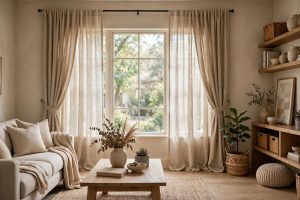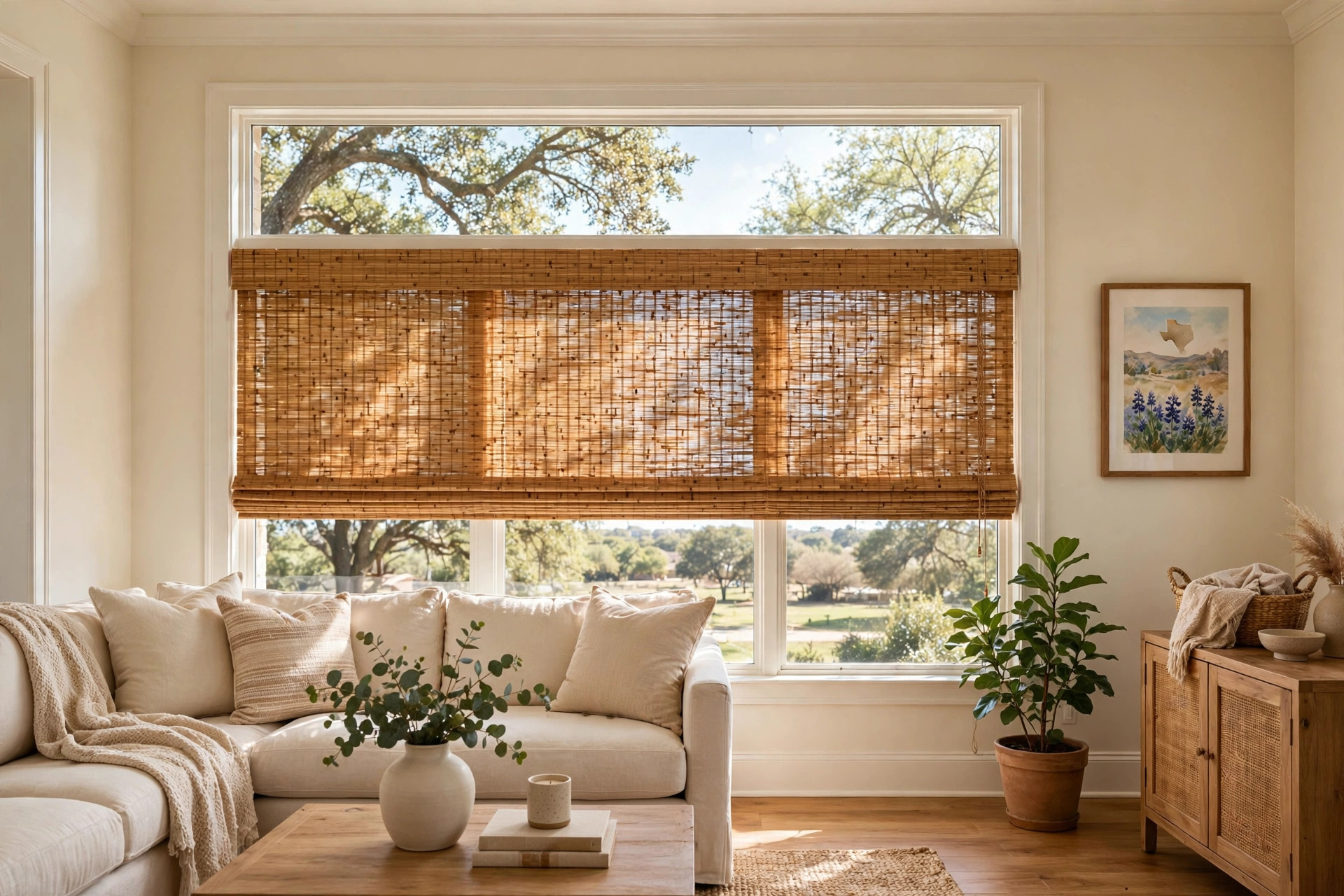

Many Texas homes sit near busy roads. Highways run past suburbs. Trucks rumble through the night. Air conditioners hum. Neighbors mow lawns at eight in the morning. Against all this noise, a thin curtain does little. That is why more homeowners now ask about noise reducing bamboo roman shades for texas homes. They want a window covering that looks natural, feels warm, and takes the edge off the sound from outside.
Bamboo roman shades do not work like foam panels in a recording studio. They will not make a room silent. But they do soften noise in a real, useful way. Thick woven bamboo absorbs some sound. When the shade hangs close to the glass, it breaks up the sound waves that pass through the window. Add a back liner, and the effect grows. Many people say the change is easy to hear. The sharp edge comes off traffic noise. Voices from the street feel further away. Sleep gets easier.
Texas adds its own demands. Summer sun beats through windows for months. Heat builds up in rooms that face west. A good bamboo shade must handle light and heat as well as sound. It must also stand up to dry air, strong sunlight, and, in parts of the state, real humidity. This guide walks through all of it: what the shades do, how to pick them, what they cost, and how to keep them in good shape for years.
Why It Matters
A quiet home is not a luxury. It affects rest, mood, and health. Studies of traffic noise have linked constant road sound to poor sleep and higher stress. In Texas cities, this is not a rare problem. New subdivisions often go up beside freeways. Older neighborhoods sit on bus routes. Even a quiet street can carry the sound of a barking dog or a lawn service crew.
Windows are the weak point. Walls block sound well. Glass does not. A single pane lets much of the street noise pass straight through. Double panes do better, but many Texas homes still carry older single-pane glass. Covering the glass with a dense woven layer is one of the cheapest ways to improve things.
Bamboo roman shades fit this job in a special way. Bamboo is dense for a plant fiber. Woven strands cross over each other and trap tiny pockets of air. These pockets slow sound down. The effect is small for one thin shade, but real. Tests by shade makers show that a heavy woven wood shade with a liner can cut several decibels of sound. That may not sound like much, but the human ear notices even small drops when the room is otherwise still.
There is also the way noise travels inside a room. Bare windows reflect sound. They bounce echoes back into the space. A fabric or woven shade on the glass softens those reflections. The room feels calmer. Voices sound warmer. Many people buy the shades for the look and keep them for this feeling.
What to Look For When You Buy: Noise Reducing Bamboo Roman Shades for Texas Homes
Not every bamboo shade blocks noise the same way. Some are thin and open. Some are thick and tight. Knowing the difference saves money.
Weave tightness. Hold the shade up to light before you buy. If you can see clear shapes through it, the weave is loose. A loose weave lets light and sound pass through. A tight weave looks nearly solid. For noise control, tight is better.
Material weight. Pick the shade up in your hand. Heavy shades block more sound than light ones. Woven wood shades made of bamboo, reeds, and grasses vary a lot. Some feel like paper. Some feel like cloth. Choose the heavier one.
Back liner. This is the single biggest upgrade. A liner is a cloth sheet sewn to the back of the shade. It fills the gaps in the weave. It adds weight. Some liners are simple cotton. Others are thick blackout cloth. For the best noise cut, choose a shade with a bonded blackout liner. The liner also blocks the fierce Texas sun, which keeps rooms cooler.
Mount style. An inside mount sits within the window frame. An outside mount covers the whole frame and overlaps the wall. For sound, the outside mount wins. It covers the edges where sound leaks in around the glass. The overlap acts like a seal. If you want the most noise reduction, hang the shade outside the frame and let it extend a few inches past each side.
Top treatment. The headrail at the top can leak sound. Look for a valance or a fabric-wrapped headrail. This covers the gap between the shade and the wall. It also looks finished.
Texas shoppers have many places to compare options. A visit to a large home store lets you hold shades in your hands. The window treatment section at Home Depot carries bamboo shades in many weaves and sizes, and you can check weight and tightness on the spot. The range at Lowe’s is also worth a look for side-by-side comparison. For made-to-measure options, the buying guides at Blinds.com explain liner choices and mount styles in plain terms.
Types and Options
Bamboo roman shades come in several styles. Each has strengths.
Classic bamboo roman shades. The fabric folds up in soft pleats when raised. When lowered, it hangs flat. This is the most common style. It looks good in living rooms and bedrooms.
Woven wood shades. Made from bamboo, rattan, reeds, and grasses woven together. They look rich and natural. They come in many tones, from pale honey to dark walnut. These are the heaviest option and often the best for noise.
Top-down, bottom-up shades. These lower from the top or raise from the bottom. They give privacy while letting light in at the top. They cost more. They work well in street-facing rooms where you want daylight without giving neighbors a view.
Cordless shades. These raise and lower with a gentle push or pull. No cords hang down. They look clean. They are also safer for homes with small children, a point the safety section covers below.
Motorized shades. A small motor raises and lowers the shade at the push of a button or on a timer. They cost much more. They suit tall windows that are hard to reach. Some Texas homeowners put them on west-facing windows and set them to close during the hottest part of the afternoon.
Light control matters as much as sound in Texas. Many shoppers pair shades with other treatments for bedrooms. If total darkness matters for sleep, read about the best blackout curtains for bedrooms in humid climates before you decide, since layering a shade with curtains gives both quiet and dark.
Cost and Price
Prices vary widely. A clear picture helps you budget.
Stock shades. Ready-made shades in standard sizes cost the least. Expect to pay about 30 to 80 dollars per window. These come in common widths. They suit standard Texas tract-home windows. The weave may be thin. A liner may not be included.
Semi-custom shades. These are cut to your width from a standard roll. They cost about 80 to 180 dollars per window. You get more weave choices. Many come with liner options. This is the sweet spot for most buyers.
Custom shades. Made to your exact measurements with your chosen weave, liner, and controls. Prices run from 180 to 400 dollars or more per window. Motorized versions cost still more. Custom is worth it for odd sizes or for a perfect outside mount.
Liners. Adding a blackout liner to a shade that does not include one costs about 20 to 50 dollars per window if you buy it with the shade. A separate liner panel costs about the same.
Installation. Hanging a shade is simple work. Most people do it themselves with a drill and a level. A handyman charges about 25 to 60 dollars per window. For a whole house, many pros offer a flat rate.
For a typical Texas home with twelve windows, a full set of semi-custom shades with liners runs about 1,200 to 2,500 dollars. That is less than replacing even two windows, and it improves both sound and heat.
If you are comparing window treatments across styles and budgets, a navy blue velvet curtains price comparison shows how fabric curtains stack up in cost, and notes on window film privacy tint price comparison cover a cheaper glass-level option some homeowners combine with shades.
Care and Upkeep
Bamboo shades last a long time with basic care. In Texas, sun and dust are the main enemies.
Dusting. Dust the shades every two or three weeks. Use a feather duster or the brush head on a vacuum. Work from top to bottom. Dust builds up fast near open windows, and a dusty shade looks dull.
Sun damage. Strong Texas sun can fade bamboo over time. West-facing windows cause the most harm. A UV-blocking liner slows fading. Rotating which shades stay lowered during peak sun also helps. If a shade starts to look pale on one side, that side faced the sun.
Humidity. Parts of Texas, especially the Gulf Coast, carry heavy humidity. Bamboo can absorb moisture and grow mold in damp air. Keep rooms aired out. Run the air conditioner. If you see spots of mold, wipe them with a cloth dampened with a mild soap solution, then dry the shade fully. Never soak a bamboo shade.
Cleaning stains. Blot spills at once with a dry cloth. For a set stain, use a cloth barely damp with water and mild soap. Test on a hidden corner first. Let the shade dry fully lowered so the weave does not warp.
Cord and mechanism care. Once a year, check cords for fraying. Raise and lower each shade fully to make sure the folds fall evenly. A drop of silicone spray on the moving parts of the headrail keeps the action smooth. Wipe off any extra.
Care guides from home experts go deeper on these routines. The home care library at The Spruce covers shade cleaning step by step, and project guides at Bob Vila include window treatment upkeep with older homes in mind. For style ideas that pair shades with room decor, the room tours at HGTV show bamboo shades in real settings, and Wayfair and IKEA both carry shade lines with care instructions worth reading before you buy.
Safety
Window coverings carry real safety concerns. The main one is cords.
Loose cords can strangle small children and pets. This danger is well known. Safety agencies have pushed for cordless designs for years. The cord safety guidance from the CPSC urges parents to choose cordless window coverings or to keep all cords out of a child’s reach.
For Texas families with young children, cordless bamboo shades are the smart choice. They cost a little more than corded versions. The price is worth it. If you already own corded shades, use cord cleats to wrap cords high on the wall, well above a child’s reach. Cut looped cords or fit them with breakaway tassels.
Fire safety matters too. Bamboo is a natural fiber and can burn. Keep shades away from open flames, candles, and heaters. Do not hang them where a space heater blows directly on them. Most building codes do not require flame treatment for home shades, but common sense still applies.
Mold, covered in the care section, is also a health point. In humid Gulf Coast homes, check shades each spring for musty smell or dark spots. Good airflow and steady air conditioning prevent most problems.
Frequently Asked Questions
Do bamboo roman shades really reduce noise? Yes, to a useful degree. They will not block noise like a new double-pane window. But a heavy tight-weave shade with a liner, mounted outside the frame, takes the sharp edge off traffic and street noise. Most owners notice the difference on the first night.
Are they good for Texas heat? Yes. Bamboo shades with a light-colored or reflective liner cut solar heat well. They work best on east and west windows where the sun hits hardest. They are not a full substitute for good insulation, but they lower the heat load on a room in a real way.
Can I hang them myself? Most people can. You need a drill, a level, a tape measure, and a pencil. Mark the bracket spots, drill pilot holes, fix the brackets, and snap the headrail in. An inside mount needs a frame at least two inches deep. Allow about twenty minutes per window.
How long do they last? With normal care, five to ten years. Sun-facing shades wear faster. Fading and brittle strands are the usual signs of age. A shade that still folds smoothly and shows even color has life left.
Do they work on sliding glass doors? Yes, with the right size. Wide vertical bamboo panels or extra-wide roman shades cover sliders. For doors that open often, choose a shade that stacks fully clear of the door path, or use two narrower shades that meet in the middle.
Will they block all light? No, not by themselves. The weave passes some light. For a dark bedroom, add a blackout liner or layer the shade with curtains. The liner also boosts the noise reduction, so it is a double win.
A Final Word
Noise reducing bamboo roman shades for texas homes answer several needs at once. They soften the sound of the street. They tame the glare of the afternoon sun. They bring a natural texture that suits Texas homes from ranch houses to city condos. They cost far less than new windows and hang in an afternoon.
Shop with care. Feel the weight. Check the weave against the light. Insist on a liner. Mount outside the frame for the best seal. Treat them kindly with regular dusting, and they will serve for years. In a state where the sun is strong and the roads are busy, a quieter, cooler room is worth every penny.
References
Blinds.com. (n.d.). Window blinds, shades, and shutters. https://www.blinds.com Bob Vila. (n.d.). Home improvement advice. https://www.bobvila.com HGTV. (n.d.). Home and garden ideas. https://www.hgtv.com IKEA. (n.d.). Home furnishings. https://www.ikea.com Lowe’s. (n.d.). Home improvement products. https://www.lowes.com The Home Depot. (n.d.). Home improvement products. https://www.homedepot.com The Spruce. (n.d.). Home and garden advice. https://www.thespruce.com U.S. Consumer Product Safety Commission. (n.d.). Product safety information. https://www.cpsc.gov Wayfair. (n.d.). Furniture and home goods. https://www.wayfair.com
Was this guide helpful?

About Jennifer Lee
The My Garden US editorial team writes practical, in-depth home and garden guides for American homeowners — tested advice, no fluff.
You May Also Like
Energy Efficient Custom Made Curtains Online for Sale
June 29, 2026 0 views
How to Choose Thermal Window Film Privacy Tint with Free Shipping
April 7, 2026 0 views
Best Solar Shades for Sunrooms Buying Guide
April 20, 2026 0 views