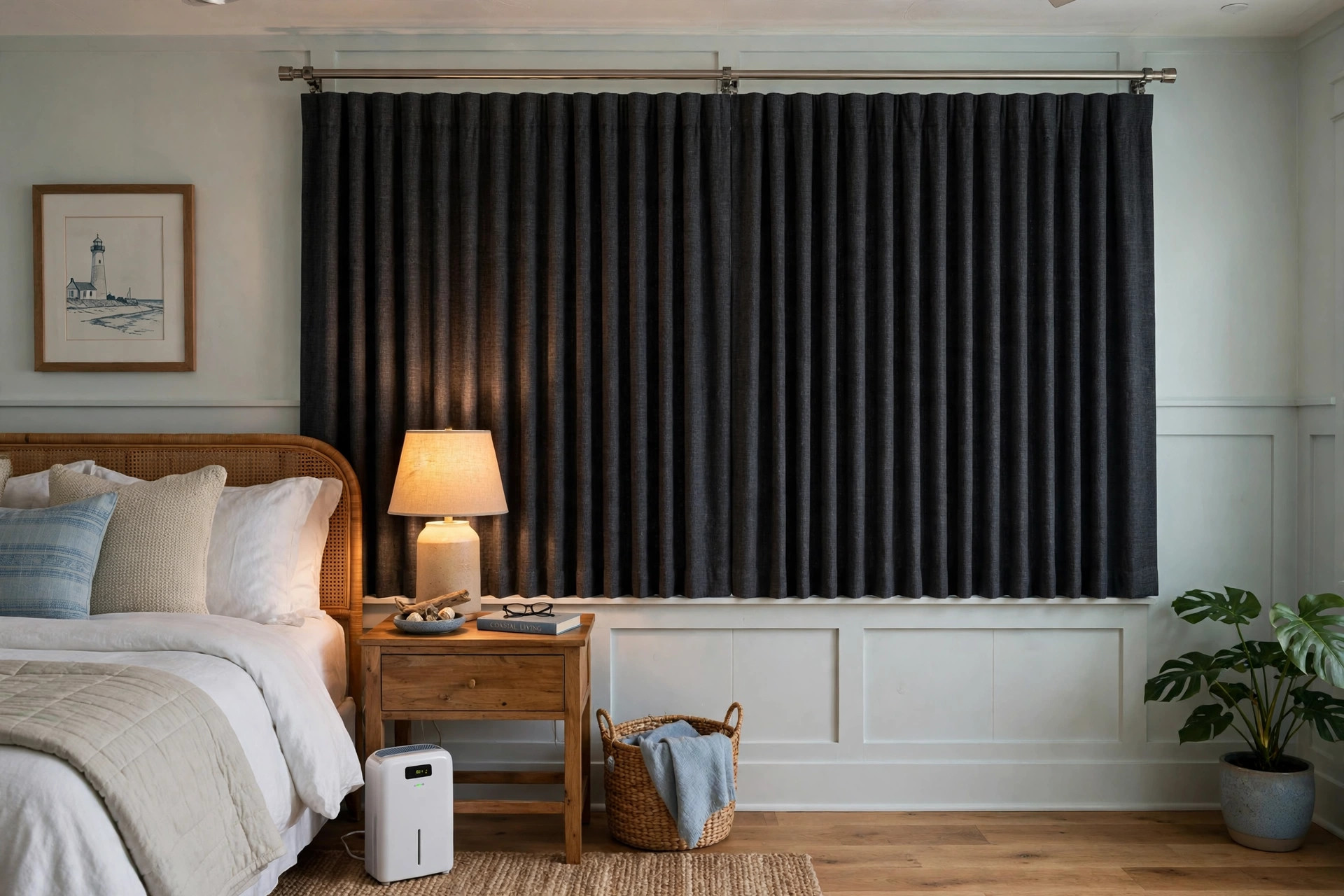
Sleep comes hard in a bright bedroom. In humid regions it comes even harder. Heat and damp air hang heavy at night, and thin curtains do little good. The best blackout curtains for bedrooms for humid climates solve both problems at once. They block the light that wakes you at dawn. They also stand up to moisture, mold, and mildew that grow fast in damp air. This guide explains what to look for, which fabrics last longest, what such curtains cost, and how to care for them so they stay fresh for years.
Why Blackout Curtains Matter in Humid Bedrooms
Humidity changes the way a bedroom feels. Moist air holds heat. It clings to the skin. It makes sheets feel damp by morning. It also feeds mold, which grows on fabric that never fully dries. In places like Florida, Louisiana, and the Gulf Coast, a bedroom can sit at high humidity for months at a time.
Light is the second problem. Many humid regions sit at low latitudes. The sun rises early and sets late. Street lights and parking lot lamps shine through thin windows. Even a small line of light can wake a person in the early morning.
Blackout curtains address both issues. The dense fabric blocks nearly all light. The tight weave also slows the flow of warm air around the window. In humid rooms this matters more than most people think. A window is often the warmest surface in the room. Hot glass warms the air near it, and that warm air can carry more moisture. Curtains that seal the window edge help keep that warm, damp air out of the sleeping area.
There is a third benefit. Damp rooms grow musty smells. Heavy cotton drapes absorb those smells and hold them. Curtains made for humid climates use fabrics and backings that resist that absorption. The bedroom smells fresher, and the curtains last longer.
How to Choose Blackout Curtains for Humid Climates: Best Blackout Curtains for Bedrooms for Humid Climates
Shopping for blackout curtains is easy. Shopping for ones that survive humidity takes more care. The fabric, the backing, the lining, and the fit all matter. Each one affects how the curtain handles damp air.
Choose the Right Fabric
Polyester is the workhorse fabric for humid rooms. It dries fast. It resists mold and mildew. It holds its shape when the air is wet. Most mid-range blackout curtains sold by large retailers use polyester, and it is a sound choice.
Cotton looks and feels nicer, but plain cotton drinks up moisture. If you love the look of cotton, choose curtains with a cotton face and a sealed lining behind it. The lining keeps the cotton away from the damp glass. Many shoppers compare top rated blackout curtains for bedrooms for sale to see which fabric blends balance looks and durability.
Avoid velvet and other heavy pile fabrics in damp bedrooms. They trap moisture deep in the fibers. Once damp, they dry very slowly. Slow drying is what allows mildew to take hold.
Check the Backing and Lining
The back of the curtain does most of the work. Blackout curtains use one of two methods. Some have a foam or acrylic coating on the back of the fabric. Others use a triple-weave fabric with a black yarn layer woven into the middle. Both block light well.
For humid climates, the triple-weave type is often the better pick. Coated backings can peel or grow sticky in damp heat. Woven blackout layers do not peel. They wash better. They also breathe a little, which helps them dry between humid nights. The guides at Blinds.com explain how these weaves are made and what to expect from each.
Pick Hardware That Resists Rust
Metal rods can rust in humid rooms. This is a small detail that ruins many setups. Rust stains bleed onto the curtain top and will not wash out. Look for stainless steel, aluminum, or powder-coated rods. Plastic or fiberglass rods work too and cost less. Mounting hardware is widely stocked at The Home Depot, where rust-proof options are easy to find.
Get the Fit Right
Blackout curtains work best when they seal the window. Measure the window width, then add eight to twelve inches of extra width. This allows the panels to overlap in the middle and to cover the frame edges. For length, floor-length panels block more light than short ones, since light leaks under a short hem. In very humid rooms, a panel that just grazes the floor dries faster than one that pools on the ground. A panel that sits on a damp floor will wick moisture upward.
Mount the rod four to six inches above the window frame and extend it three to four inches past each side. This pulls the fabric away from the glass. The gap lets air move between the curtain and the window, which keeps both drier.
Types of Blackout Curtains
Not all blackout curtains are built the same. The main types differ in how they block light and how they hang.
Triple-weave blackout curtains are the most common. Three layers of fabric are woven into one cloth, with a dark middle layer that stops light. They look like normal curtains from the front. They need no separate lining. They wash well and suit humid rooms.
Foam-backed blackout curtains have a light-blocking coating sprayed or rolled on the back. They block light completely, often better than woven types. But the coating can flake with age and stick to itself in heat. In humid bedrooms they need good air flow to stay in shape.
Lined blackout curtains pair a decorative front fabric with a separate blackout lining sewn behind it. These look the best. Luxury blackout curtains for bedrooms almost always use this design. The separate layers let each fabric do its own job. In humid climates, choose a lining made of polyester rather than coated fabric.
Thermal blackout curtains add an insulating layer. They keep heat out in summer and in during winter. Many buyers in humid states choose these for the energy savings alone. A related class of products, thermal energy efficient window treatments, works on the same idea with different hanging styles.
Grommet-top panels slide on a rod and hang in deep folds. Rod-pocket panels gather more tightly and leave smaller gaps. Back-tab panels hang flat and look tailored. For the darkest room, grommet panels mounted on a wraparound rod seal the edges best.
Cost and Price
Blackout curtains for humid bedrooms cost a little more than plain blackout panels, because the fabrics and backings that resist moisture cost more to make. Prices vary by size, brand, and fabric.
A standard pair of polyester triple-weave panels for an average bedroom window usually runs from twenty to sixty dollars. These cover the basics: full light block, fast drying, and easy care. Budget picks at Target and IKEA sit at the low end of this range and serve most bedrooms well.
Mid-range curtains, from sixty to one hundred twenty dollars a pair, add better linings, heavier fabrics, and nicer finishes. Cotton-faced panels with sealed backings live in this range. So do most thermal blackout sets. Shoppers who want design ideas along with their purchase often browse Wayfair and Pottery Barn for this tier.
Custom curtains cost two hundred dollars a pair and up. Custom sizing matters for wide or tall windows, where off-the-shelf panels leave gaps that leak light. A local workroom can also choose linings rated for damp rooms. For most bedrooms, however, standard sizes fit fine.
Do not forget the hardware. A rust-proof rod and brackets add fifteen to forty dollars. Mounting supplies and simple tools are easy to find at Lowe’s if you prefer to install the rod yourself.
As a rule, buy the best fabric you can afford. In humid rooms, a cheap curtain that molds in one season costs more than a good one that lasts five years.
Care and Upkeep in Damp Conditions
Care is what decides how long blackout curtains last in humid air. Damp rooms punish neglect. A few habits keep curtains fresh.
Wash curtains on a regular schedule. In humid regions, wash bedroom curtains every two to three months. Use cold water and a mild detergent. Skip the fabric softener. Softeners coat the fibers and slow drying. The Spruce offers clear step-by-step guides for washing lined and coated panels without harming the backing.
Dry curtains fully and fast. A dryer on low heat works for most polyester panels. For foam-backed curtains, line drying in moving air is safer, since high heat can damage the coating. Never hang a damp curtain back on the rod. A wet curtain pressed against a warm window is a perfect place for mildew to start.
Let air move behind the curtains. Pull the panels open during the day when the room gets sun. This lets the back of the fabric dry. A small fan near the window helps in rooms with poor air flow. A dehumidifier in the bedroom also helps, and it protects bedding and walls too.
Check for mildew spots once a month. Small dark spots on the backing or hem are the first sign. Treat them early with a mix of white vinegar and water, then dry the fabric fully in sunlight if you can. Sunlight kills mildew fast. If the spots return or spread, replace the curtain. Mildew deep in the fibers will not wash out.
Store spare curtains dry. If you rotate seasonal panels, store the off-season set in a sealed bag with a silica packet. Do not store curtains in a damp garage or attic.
Safety Notes
Window coverings carry a real safety issue: cords. Loose cords can strangle small children and pets. Choose cordless blackout curtains or panels with no pull cords. Most modern grommet and rod-pocket panels have no cords at all, which makes them safe by design.
If you keep an older corded shade or blind behind the curtain, tie the cords up high and out of reach. Better still, replace corded coverings with cordless ones. The U.S. Consumer Product Safety Commission warns against accessible cords and lists cordless options as the safe choice.
Fire safety matters too. Keep curtains away from portable heaters and open flames. Some buyers choose fabrics treated with flame retardants, though these treatments can wash out over time. Plain polyester is naturally slow to catch fire compared with untreated cotton.
Frequently Asked Questions
Do blackout curtains really block all light?
Good ones block nearly all of it. Triple-weave and foam-backed panels stop ninety-nine percent of outside light. A thin line of light may still leak around the edges if the panels are too narrow. Proper measuring and a wide rod fix that. In a dark test, the room should look close to night even at noon.
Will blackout curtains help with the heat in a humid bedroom?
Yes. They block the sun before it heats the room. A window in direct sun can pour heat into a bedroom all afternoon. Blackout curtains with a light-colored back reflect much of that heat. Thermal-lined versions do even better. Many owners see their air conditioner run less once the curtains are up.
What fabric is best for humid climates?
Polyester leads the list. It dries fast and resists mold. Polyester blends with a cotton face look nicer and still dry well. Avoid untreated cotton, linen, and velvet in very damp rooms. If you want natural fibers, keep them on the room side with a sealed polyester lining behind them.
How do I stop mildew from growing on my curtains?
Keep them dry. Wash them every few months. Open them daily so air reaches the back. Run a fan or dehumidifier in the room. Treat spots early with vinegar and sunlight. Replace any curtain where mildew keeps coming back. For styling ideas that pair well with these care habits, HGTV shows bedrooms that stay both dark and bright by design.
Can I use blackout curtains with blinds or shades?
Yes, and the pairing works well. A blackout curtain over a cellular shade gives two layers of light block and insulation. Just make sure the combined stack does not trap damp air against the glass. Leave the shade up during the day so the space can breathe.
How long should blackout curtains last in a humid home?
With good care, three to seven years. Polyester triple-weave panels last the longest. Foam-backed curtains wear out sooner in damp heat. When the backing flakes or the fabric smells musty after washing, it is time to replace them.
Final Word
The best blackout curtains for bedrooms for humid climates are not the cheapest or the prettiest. They are the ones built for damp air. Look for fast-drying polyester or sealed linings, triple-weave construction, rust-proof hardware, and a fit that seals the window. Wash them on schedule, dry them fully, and give them air every day. Do that, and your bedroom stays dark, cool, and fresh through the longest humid summer.
References
Blinds.com. (n.d.). Window blinds, shades, and shutters. https://www.blinds.com HGTV. (n.d.). Home and garden ideas. https://www.hgtv.com IKEA. (n.d.). Home furnishings. https://www.ikea.com Lowe’s. (n.d.). Home improvement products. https://www.lowes.com Pottery Barn. (n.d.). Furniture and home decor. https://www.potterybarn.com Target. (n.d.). Retail store. https://www.target.com The Home Depot. (n.d.). Home improvement products. https://www.homedepot.com The Spruce. (n.d.). Home and garden advice. https://www.thespruce.com U.S. Consumer Product Safety Commission. (n.d.). Product safety information. https://www.cpsc.gov Wayfair. (n.d.). Furniture and home goods. https://www.wayfair.com
Was this guide helpful?

About Emily Rodriguez
The My Garden US editorial team writes practical, in-depth home and garden guides for American homeowners — tested advice, no fluff.