Introduction
This two stage vs single stage AC comparison USA guide explains the two main kinds of central air conditioners sold in America today. Every summer, millions of homes depend on central air to stay cool. When an old unit fails, or when a family builds a new home, one question comes up fast: single stage or two stage? The answer affects your power bill, your comfort, and the life of the machine. This article compares how each system works, what each one costs, and how well each one cools, in plain English. By the end, you will know which questions to ask a contractor and which numbers matter most.
Why the Comparison Matters: Two Stage vs Single Stage Ac Comparison Usa
An air conditioner is one of the largest purchases a homeowner makes for comfort. A new central system can cost several thousand dollars and will run for 12 to 15 years, or longer, if it is cared for well. A poor choice means years of high bills and rooms that never feel right.
Most American homes with central air use one of two compressor designs. The single stage design has been the standard for decades. It is simple and cheap to buy. The two stage design costs more up front but runs in a gentler way. Buyers often hear sales talk but get few clear facts. A fair comparison cuts through that noise.
The stakes are real. Cooling uses a large share of household power in the South, the Southwest, and the Midwest. Even small gains in efficiency add up over ten years of hot summers. The right size and the right design work together, and you cannot judge one without the other.
How Each System Works
The Single Stage Air Conditioner
A single stage air conditioner works like a simple switch. It is either fully on or fully off. When the thermostat senses heat, the compressor starts at full power. It blasts cold air until the room reaches the set point, then shuts down. When the room warms again, it starts up at full power once more.
This on and off pattern causes short cycling when it happens too often. Each start draws a burst of power. Each stop lets humidity build back up in the room. The result is a room that swings between cool and less cool, and the air may feel clammy because the system does not run long enough to pull much moisture from it.
Single stage units are simple machines with fewer parts and a fixed speed compressor. They are the cheapest central air conditioners to buy and to install.
The Two Stage Air Conditioner
A two stage air conditioner has two levels of cooling. It runs at a low stage, about 60 to 70 percent of full power, most of the time. When the heat load is high, on a very hot afternoon, it shifts up to the high stage and runs at full power.
The low stage is the key to its value. It runs longer and gentler, which pulls more humidity from the air. There are fewer hard starts, so the machine wears less. Power use drops because the compressor rarely works at full strength.
Two stage systems need a thermostat that can speak to them. Modern units from makers like Carrier and Lennox pair the two stage compressor with variable speed indoor blowers that ramp up and down softly.
Comfort: How They Feel in a Real Home
Comfort is where the two designs differ most. Families that have lived with both say the same thing: the two stage unit feels calmer.
A single stage unit cools the air fast but leaves the moisture. On a humid day in Texas or Florida, the room can feel cold yet sticky. The system shuts off, the dampness returns, and the cycle repeats. Upstairs rooms may stay warm while the main floor feels fine.
A two stage unit on low speed moves air for longer stretches and wrings more water from it. The U.S. Department of Energy explains that longer run cycles remove more humidity, which lets you feel cool at a slightly higher thermostat setting. Many owners set the thermostat two or three degrees higher and still feel fine. Each degree saves real money over a summer.
Noise is another comfort factor. A single stage unit starts with a thump and runs at one loud level. A two stage unit spends most of its time on low, which is much quieter. If the outdoor unit sits near a bedroom window or a patio, the difference is easy to hear.
Energy Use and Power Bills
The U.S. government rates every central air conditioner with a SEER2 number. SEER2 stands for Seasonal Energy Efficiency Ratio 2. It is the standard test score used since 2023. A higher number means the unit turns power into cooling more cheaply.
Single stage units today usually rate from 13.4 to about 16 SEER2, the legal minimum in most states. Two stage units usually rate from 16 to about 18 SEER2, with the best models from Trane and Rheem reaching the high end.
What does that mean in dollars? A home that pays 16 cents per kilowatt hour might spend about $600 to $700 per cooling season on a 14 SEER2 single stage unit. A 17 SEER2 two stage unit doing the same work might cost $500 to $580. That is a saving of roughly $100 to $120 per year. Over a 15 year life, the saving can reach $1,500 to $1,800.
Real savings depend on climate. In hot states the air conditioner runs for many months, so the higher rated unit pays back faster. In cool states the run season is short, and payback takes much longer. A home cooling cost guide can help you weigh related upgrades too.
Also note that SEER2 is a lab test score. Real world savings shrink if the ducts leak, the filter is dirty, or the unit is the wrong size. The ENERGY STAR program advises buyers to check the ENERGY STAR label and proper sizing before trusting any rating alone.
Cost and Price: Up Front and Over Time
Price is the main reason most people still buy single stage units. A single stage central air conditioner, installed, often costs between $4,000 and $7,500 in the United States. Prices vary by region, brand, and house size.
A two stage unit of the same size often costs $1,500 to $3,000 more, installed. The added cost comes from the two stage compressor, the smarter controls, and often a better indoor coil and blower.
Which one wins on total cost? Do the simple math. Take the price gap and divide it by the yearly power saving. If the unit costs $2,000 more and saves $150 a year, payback takes about 13 years, which is near the end of the unit’s life. In that case the cheaper unit may be the wiser buy. If it saves $250 a year in a hot climate, payback takes 8 years, and the two stage unit earns its keep.
Repairs matter too. Single stage units are simple, with common and cheap parts. Two stage units have more complex controls, and a failed control board can cost more to replace. But the gentler low stage operation means less wear on the compressor, the most costly part of all. Makers like Goodman publish long parts warranties that can ease the risk.
Do not forget rebates. Some power companies offer rebates for high SEER2 systems. The heat pump tax credit 2026 requirements usa page covers federal incentives that may apply to efficient systems as well. Check with your local utility before you buy.
What to Look for When You Choose
Buying an air conditioner is not like buying a toaster. The box does not tell the whole story. Here are the points that matter.
First, get a proper load calculation. A good contractor measures your home and runs a Manual J load calculation. This gives the exact cooling size in tons or BTUs. A unit that is too large will short cycle and fail to dry the air. A unit that is too small will run all day and never catch up. Both single stage and two stage units fail when sized wrong.
Second, look at the SEER2 rating on the yellow Energy Guide label. Compare units at the same size.
Third, check the indoor equipment. A two stage outdoor unit needs a matching indoor coil and a blower that can vary its speed. Ask the contractor to quote a matched system, not just a box swap.
Fourth, ask about the thermostat. Two stage cooling needs a two stage capable thermostat and the right wiring. If your home has old two wire thermostat cable, the installer may need to run new wire. Ask about this cost up front.
Fifth, look at the warranty. Most makers offer 10 year parts warranties when the unit is registered on time. Ask who honors the labor warranty and for how long. A long labor warranty says the installer trusts their own work.
Guides from This Old House and Family Handyman both stress the same point: install quality matters as much as the brand on the box.
Care and Upkeep
Both kinds of air conditioners need the same basic care. Skip it, and even the best unit will run up your bills.
Change or clean the air filter every one to three months during the cooling season. A clogged filter chokes air flow. The system runs longer, cools less, and can freeze its coil.
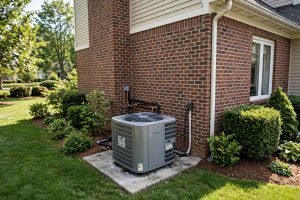
Keep the outdoor unit clear. Trim grass and bushes back at least two feet on all sides. Rinse dust and cottonwood fluff off the coil fins with a gentle hose spray each spring. Never use a pressure washer on the fins.
Have a technician service the system once a year, in spring before the heat arrives. The visit should include checking refrigerant charge, cleaning the indoor coil, clearing the condensate drain, and testing the controls. On a two stage system, the tech should confirm that both stages engage.
Watch the condensate drain line. Algae can clog it in summer, and a clogged drain can flood a utility closet or trip a safety switch. Pour a cup of white vinegar down the drain access monthly in the cooling season.
Safety
Air conditioners are safe machines when installed and kept well. Still, a few safety rules apply.
Only a licensed technician should open the sealed refrigerant circuit. Refrigerant can burn skin and harm the eyes. Since 2025, many new units use mildly flammable A2L refrigerants. These are safe in normal use, but they demand trained hands and proper leak checks during install.
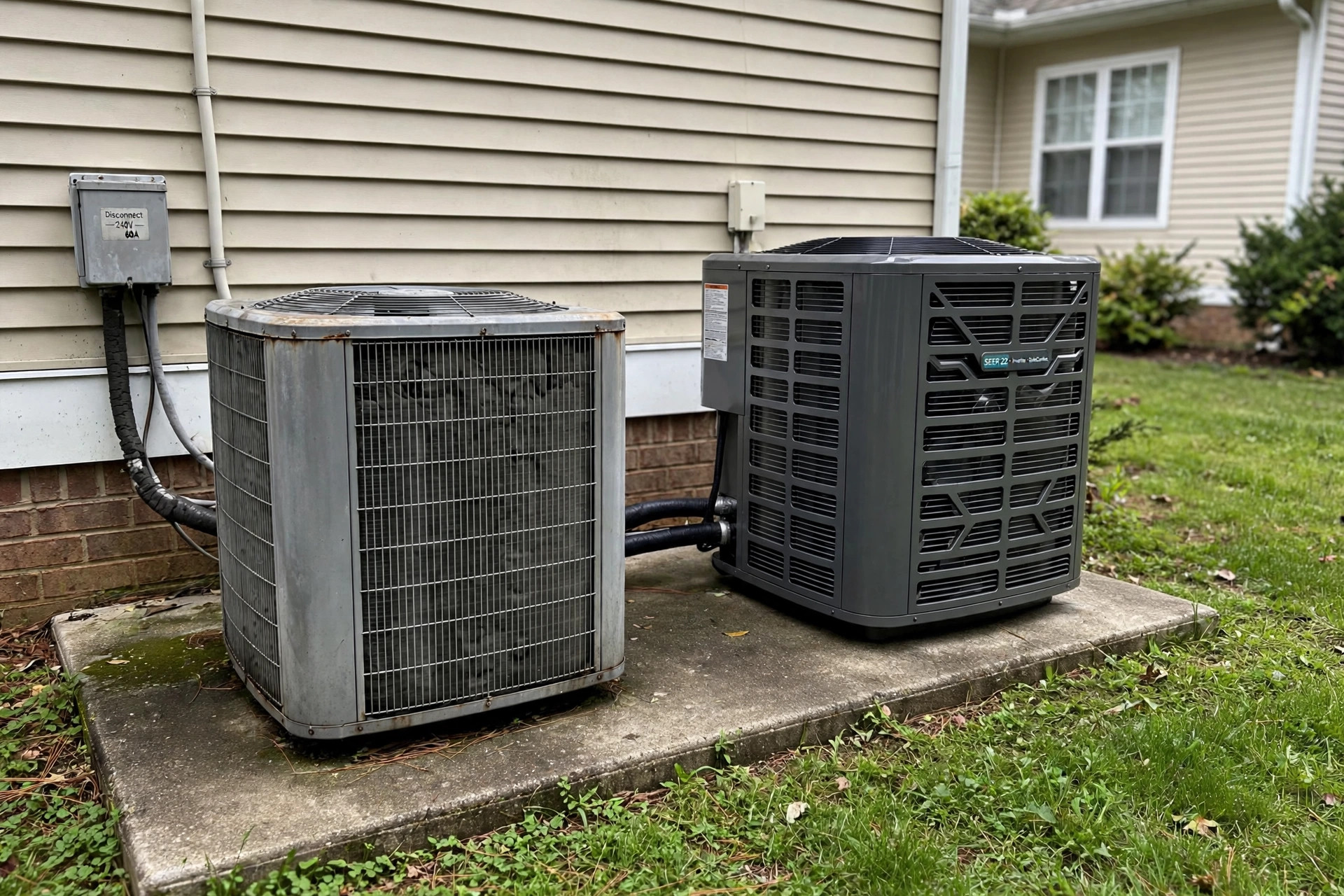
Keep the electrical disconnect within sight of the outdoor unit, as code requires. Never bypass a safety switch on the drain pan or the high pressure cutout.
If you smell a sweet chemical odor near the unit, or if thick ice forms on the lines in summer, shut the system off and call a technician. Do not keep running a unit that shows these signs.
For homes with fuel burning heat in the same closet, be sure combustion air rules are handled by the contractor. A tight house with a strong range hood can pull exhaust gases back down a flue. See our notes on makeup air unit for range hood cost usa, a job that often comes up during a full HVAC replacement.
Frequently Asked Questions
Is a two stage air conditioner worth the extra money?
It depends on your climate and your power rates. In hot states with long summers, the power savings often pay back the added cost within 8 to 10 years, and the added comfort is a daily bonus. In mild states with short cooling seasons, payback may take longer than the life of the unit. Do the math with your own electric rate before you decide.
Will a two stage unit cool my house faster on a hot day?
Not faster, and that is by design. On a very hot day it shifts to high stage and cools at full power, just like a single stage unit. On a mild day it stays on low stage and cools slowly and steadily. The goal is even temperature and dry air, not speed. A smart thermostat can start cooling before you return home.
Does a two stage air conditioner dehumidify better?
Yes. This is its clearest win. Longer run times on low stage pull more moisture from the air. Many owners report their home feels cooler at a higher thermostat setting because the air is drier. In humid regions like the Gulf Coast, this can be the main reason to choose two stage.
Should I replace my working single stage unit with a two stage unit?
Usually not, unless the old unit is failing or your bills are very high. A working unit that is paid for is hard to beat on pure cost. When the old unit dies, or when you plan a full system replacement, that is the right time to weigh the two stage option. Get three quotes and compare total 15 year costs, not just the install price.
A Short Final Word
The two stage vs single stage AC comparison USA homeowners face comes down to three things: climate, cost, and comfort. Single stage units are simple, cheap, and proven. Two stage units cost more up front, but they pay back in hot climates with lower bills, drier air, and quieter days.
Neither choice is wrong on its own. The wrong choice is the one made without numbers. Get a load calculation, compare SEER2 ratings at equal size, and ask for the full installed price with matching indoor gear. Then divide the price gap by the yearly saving. The math will point you home.
References
Carrier. (n.d.). Heating and cooling systems. https://www.carrier.com ENERGY STAR. (n.d.). Energy efficient products. https://www.energystar.gov Family Handyman. (n.d.). DIY home repair and maintenance. https://www.familyhandyman.com Goodman. (n.d.). Heating and cooling equipment. https://www.goodmanmfg.com Lennox. (n.d.). Heating and cooling systems. https://www.lennox.com Rheem. (n.d.). Heating, cooling, and water heating. https://www.rheem.com This Old House. (n.d.). Home renovation guidance. https://www.thisoldhouse.com Trane. (n.d.). Heating and air conditioning. https://www.trane.com U.S. Department of Energy. (n.d.). Energy efficiency and renewable energy. https://www.energy.gov
Was this guide helpful?

About David Wilson
The My Garden US editorial team writes practical, in-depth home and garden guides for American homeowners — tested advice, no fluff.