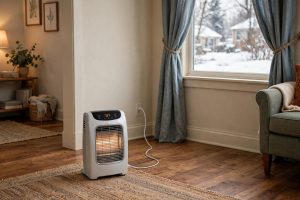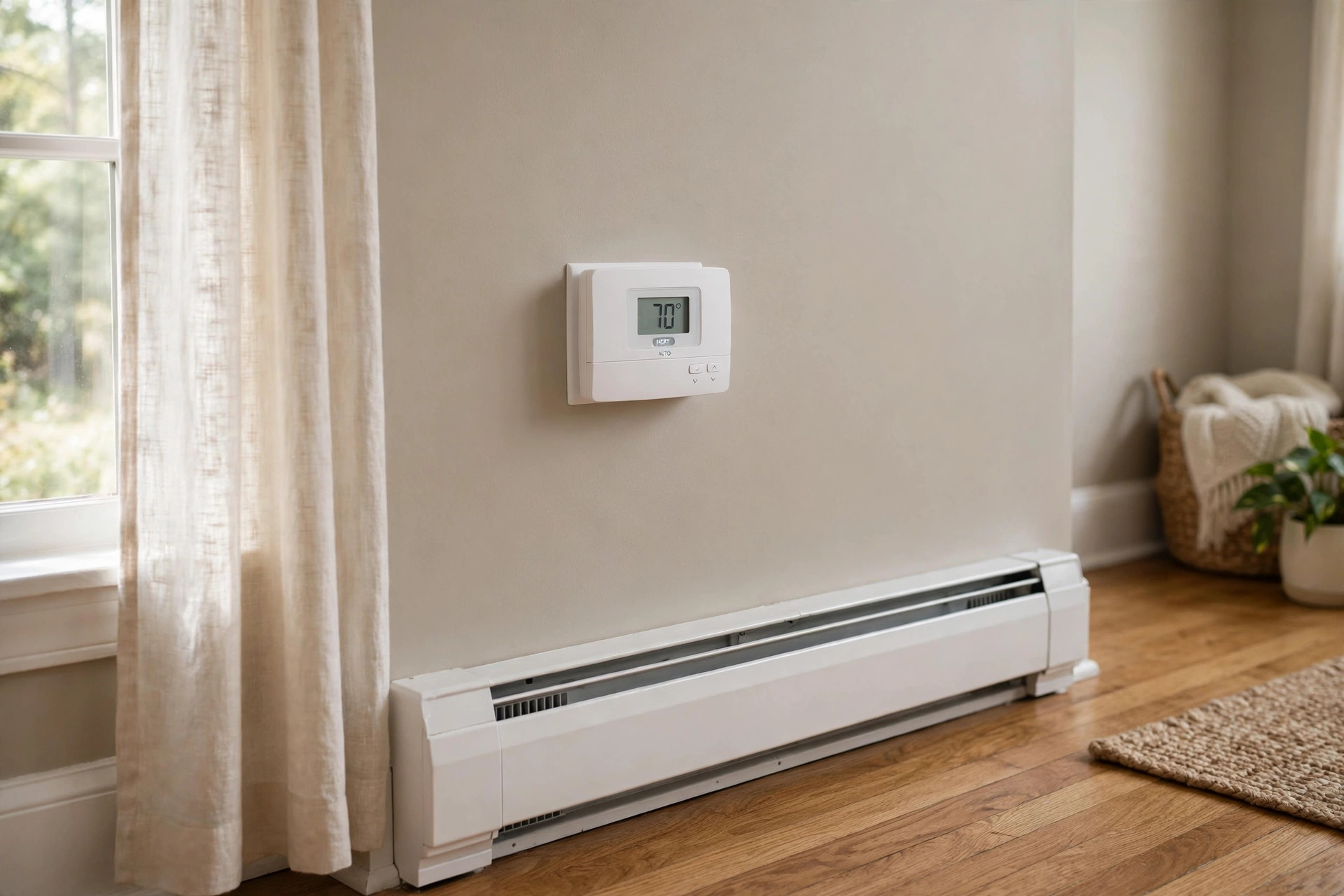

If you heat your home with electric baseboards, the thermostat matters more than the heater. The heater is a simple metal box with a wire inside. The thermostat is the brain. It decides when the heat turns on and off. A cheap or old thermostat can waste power and leave rooms cold at night and hot in the morning. This guide to baseboard heater thermostat reviews 2026 USA will help you pick a control that keeps each room at the right heat for the lowest cost.
Electric baseboard heat is common in older homes across the United States. It is also common in additions, cabins, and apartments where the owner did not run ductwork. Each room has its own heater. Each heater should have its own thermostat. When you read baseboard heater thermostat reviews 2026 USA, you will see two main kinds of thermostats and a wide range of prices. This article walks through what to look for, what they cost, and how to keep them working well.
Why the Thermostat Matters for Baseboard Heat
Baseboard heaters use a lot of electricity. A single unit can draw 1,000 to 2,500 watts, about the same as a hair dryer or a small oven. Most homes have several of them. When the thermostat is off by only a few degrees, the heaters run longer than they should. The power meter spins faster. The bill climbs.
An accurate thermostat cuts that waste. Modern electronic thermostats hold the room temperature within one degree of the setting. Older mechanical dial thermostats can drift by three or four degrees. That drift means the room gets too warm before the heater shuts off. It also means the heater kicks on too early when the room cools. Over a cold month, the difference can be easy to see on the bill.
Good control also means comfort. Nobody wants a bedroom that swings from cold to stuffy through the night. A steady temperature helps you sleep better. It also keeps pipes along cold walls from freezing. If you plan to read baseboard heater thermostat reviews 2026 USA before you buy, start with accuracy. It is the one feature that saves real money.
What to Look for When You Shop: Baseboard Heater Thermostat Reviews 2026 Usa
Shopping for a thermostat for baseboard heaters is not the same as shopping for a furnace thermostat. Baseboards use line voltage, which means the thermostat switches full household power, usually 120 or 240 volts. A low-voltage thermostat made for a furnace will not work and can be unsafe. Look for the words “line voltage” or “240 volt” on the box.
First, check the voltage and amperage of your heaters. Most whole-home baseboards run on 240 volts. Small units in a bathroom or entry may run on 120 volts. The thermostat must match or exceed the voltage and the total amperage of the heaters on that circuit. This rating is printed on the thermostat. If you are not sure about your wiring, ask an electrician before you buy.
Second, decide between a wall thermostat and a built-in knob. Wall thermostats mount on the wall and read the room air. Built-in thermostats sit on the heater itself. Wall units read temperature more truly, because heat rises off the heater and can fool a built-in sensor. Many homeowners prefer wall thermostats for that reason. You can read more about wall unit choices in our best line voltage thermostat reviews usa guide.
Third, think about programming. A programmable thermostat lets you set lower heat at night and while you are at work. This one habit can trim a winter heating bill by a large share. Some new models connect to Wi-Fi and let you change settings from a phone. That can help if you own a second home or a rental.
Fourth, look at the display and the controls. Big numbers and simple buttons matter in a hallway at night. Touch screens look modern, but plain buttons last longer and cost less to replace.
Types of Baseboard Heater Thermostats
Mechanical Line-Voltage Thermostats
The mechanical thermostat is the old dial on the wall. It uses a small metal coil that bends as the room warms and cools. A click tells you the heat has switched. These units are cheap, often under thirty dollars. They need no battery and no programming. They work for decades.
The weak point is accuracy. Mechanical thermostats can hold the room only within about three degrees. They also tend to drift as they age. They are a fair choice for a garage or a room you heat rarely. For rooms you live in all winter, an electronic unit is a better buy.
Electronic Non-Programmable Thermostats
Electronic thermostats use a sensor and a quiet electronic switch. There is no click. They hold the room within about one degree. They cost more than mechanical units, but they are still simple to use. You set the dial or press the buttons, and the unit keeps the room steady. Many models have a clear display that shows the room temperature.
These thermostats are a strong middle choice. They save power compared to mechanical dials. They suit bedrooms, living rooms, and any space where steady heat matters. If you want to learn how baseboard heat affects your monthly cost, see our breakdown of electric baseboard heat cost per month usa.
Programmable Line-Voltage Thermostats
Programmable models let you set a schedule. You can keep the bedroom at 68 degrees in the evening, drop it to 60 while you sleep, and warm it back up before the alarm. Some models let you set a different plan for weekends. This control fits people who keep regular hours.
A few programmable thermostats also learn how fast a room warms up. They start the heater early so the room is warm on time. That feature is called adaptive recovery. It adds to the price, but it adds comfort too.
Smart Wi-Fi Thermostats for Baseboards
Smart thermostats connect to your home network. You can change the heat from a phone app. You can see how long the heaters ran each day. Some models send an alert if the room gets too cold, which can warn you of a frozen pipe risk in a vacation home. Most smart line-voltage thermostats cost between eighty and two hundred dollars. They need a steady Wi-Fi signal where they are mounted.
Smart models make the most sense for rentals and second homes. For a full-time home with a steady routine, a plain programmable model often saves just as much for less money.
Cost and Price Ranges in 2026
Prices for baseboard heater thermostats in the United States stay in a clear range. Mechanical line-voltage thermostats cost about 20 to 35 dollars. Electronic non-programmable models cost about 40 to 80 dollars. Programmable line-voltage thermostats cost about 60 to 130 dollars. Smart Wi-Fi models cost about 90 to 220 dollars.
Installation cost is separate. A handy homeowner can swap a thermostat in under an hour with the breaker off. An electrician may charge 100 to 250 dollars per visit, depending on the area. If you are adding a new wall thermostat where only a built-in knob existed, the electrician must run wire. That job costs more, often 200 to 400 dollars per room.
When you compare models, weigh the price against the savings. An electronic thermostat can cut the heating cost of a room by ten percent or more compared to an old mechanical dial. In a cold climate, the unit can pay for itself in one winter. Reviews at Consumer Reports often test thermostat accuracy, and guides at This Old House walk through common wiring setups. Manufacturer pages from Carrier and Trane explain how controls fit into wider heating systems, while Lennox and Goodman publish clear specification sheets. For energy-saving habits, the U.S. Department of Energy and ENERGY STAR offer free checklists, and Rheem covers electric heat basics. Hands-on installation tips appear regularly at Family Handyman.
Care and Upkeep
Thermostats need little care, but a few habits keep them true. Dust the unit once or twice a year. Dust on the sensor can make it read wrong. Do not hang curtains or place tall furniture in front of a wall thermostat. Blocked air flow makes the sensor read a stale pocket of air instead of the room.
Check the batteries if your model uses them. Many electronic thermostats run on two AA batteries as a backup. Weak batteries can make the display fade or the schedule fail. Change them once a year, in the fall before heating season starts.
Once a year, test the setting against a simple room thermometer. Place the thermometer near the thermostat, away from the heater. If the two readings differ by more than two degrees, the thermostat may be aging or badly placed. A thermostat on an outside wall or above a heater will read wrong no matter how good the unit is. In that case, moving it to an inside wall helps more than buying a new one.
If you use a programmable model, check the schedule each fall. Routines change. A schedule that fit last year may waste heat this year. A quick review takes five minutes and can save real money through the winter.
Safety
Line-voltage thermostats switch full household power. That is the main safety point. Always turn off the breaker before you touch the wires. Test with a non-contact voltage tester before your fingers go near the box. If the old thermostat feels hot to the touch or smells of burning plastic, stop and call an electrician. Heat at the thermostat can mean loose wires or an overloaded circuit.
Keep the area around baseboard heaters clear. Curtains, bedding, and papers must stay at least twelve inches away from the front of the heater and six inches from the sides. Never drape clothes over a heater to dry. The thermostat cannot protect against blocked airflow or covered units.
Match the amperage rating with care. A thermostat rated for 16 amps must not control heaters that draw 20 amps. The rating plate on the heater shows its watts. Divide watts by volts to get amps. A 2,000-watt heater on 240 volts draws about 8.3 amps. Add up all heaters on the circuit and pick a thermostat rated above that total.
For renters, note that electrical work may need the landlord’s approval. In many states, only a licensed electrician may alter fixed wiring in a rental. Check local rules before you start.
Frequently Asked Questions
Can I use a regular smart thermostat with baseboard heaters?
Most popular smart thermostats, such as those made for furnaces, run on low voltage and will not work with baseboard heaters. You need a smart thermostat made for line voltage. A few brands now make them. Check the box for “line voltage” and the correct volt rating before you buy.
How many thermostats do I need for baseboard heat?
Plan on one thermostat per room, or per heating zone. Baseboard heat works best as zone heat. You keep the rooms you use warm and turn the rest down. One thermostat for the whole house defeats that benefit. If you want a single-wall control for a larger room with two heaters, one thermostat can serve both as long as the amperage rating covers the pair.
Why does my room get too hot even with a new thermostat?
The thermostat may sit in a bad spot. If it is above the heater, on an outside wall, near a sunny window, or behind a door, it reads the wrong air. Move it to an inside wall, about five feet off the floor, away from drafts and heat sources. Also check that the thermostat matches your heater voltage.
Do programmable thermostats really save money with baseboards?
Yes, in most cases. Dropping the heat by seven to ten degrees for eight hours a day, such as overnight and during work hours, can cut heating cost for those rooms by a large share. The savings are biggest in cold climates and in rooms you do not use all day. If your routine is steady, a simple programmable model pays for itself fast.
Should I replace a working mechanical thermostat?
If the room feels comfortable and the bill is fair, you can leave it. But if the room swings hot and cold, or the heater runs more than it should, an electronic replacement is a wise upgrade. The swap is cheap and quick. Many owners notice steadier heat within a day of the change.
What is the difference between a line-voltage and a low-voltage thermostat?
A line-voltage thermostat switches the full power that feeds the heater, usually 120 or 240 volts. A low-voltage thermostat switches a small signal, usually 24 volts, that tells a furnace or boiler what to do. The two are not interchangeable. Baseboard heaters need line-voltage controls.
A Short Final Word
Reading baseboard heater thermostat reviews 2026 USA is worth the time because the thermostat shapes both comfort and cost. Match the voltage and amperage to your heaters. Pick electronic control over an old dial for rooms you live in. Add programming or Wi-Fi only if your routine or your property needs it. With the right control on the wall, electric baseboard heat can be steady, safe, and far less costly than its old reputation suggests. If you are also weighing other electric options, our best electric wall heater reviews 2026 usa roundup can help you compare.
References
Carrier. (n.d.). Heating and cooling systems. https://www.carrier.com Consumer Reports. (n.d.). Product reviews and ratings. https://www.consumerreports.org ENERGY STAR. (n.d.). Energy efficient products. https://www.energystar.gov Family Handyman. (n.d.). DIY home repair and maintenance. https://www.familyhandyman.com Goodman. (n.d.). Heating and cooling equipment. https://www.goodmanmfg.com Lennox. (n.d.). Heating and cooling systems. https://www.lennox.com Rheem. (n.d.). Heating, cooling, and water heating. https://www.rheem.com This Old House. (n.d.). Home renovation guidance. https://www.thisoldhouse.com Trane. (n.d.). Heating and air conditioning. https://www.trane.com U.S. Department of Energy. (n.d.). Energy efficiency and renewable energy. https://www.energy.gov
Was this guide helpful?

About Jennifer Lee
The My Garden US editorial team writes practical, in-depth home and garden guides for American homeowners — tested advice, no fluff.
You May Also Like

How Much Attic Insulation Do I Need in the USA?
October 4, 2026 0 views
Best Attic Tent for Pull Down Stairs USA: A Practical Homeowner Guide
February 26, 2026 0 views
What a Whole House Humidifier Installation Costs in the USA
September 20, 2026 0 views