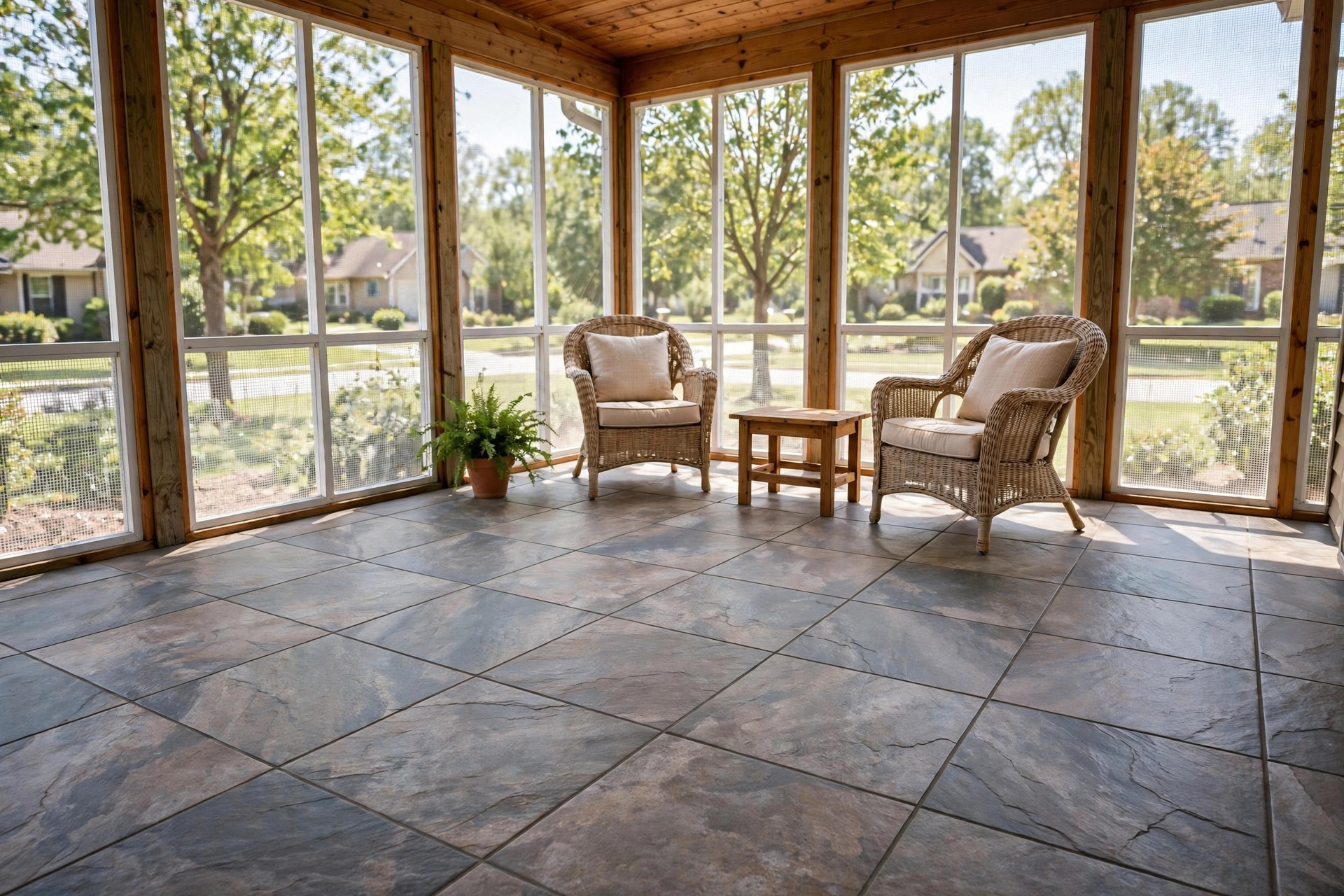

The best outdoor tile for screened porch usa projects is usually porcelain tile rated for outdoor use. It handles heat, rain, and foot traffic. It also comes in many styles that suit a porch. A screened porch sits between the house and the yard. It gets sun, wind, dust, and wet shoes. It needs a floor that is tough and easy to clean. Tile meets that need well. This guide walks through the choices, the costs, and the care. It helps a homeowner pick tile that looks good and holds up for years.
Why the Floor Matters on a Screened Porch
A screened porch takes more wear than most rooms. Screens keep bugs out, but they let in dust, pollen, and damp air. Rain can blow in during storms. Pets walk through with dirty paws. Furniture moves around and scrapes the floor. A wood floor can swell and fade in this setting. Carpet holds moisture and stains. Tile stays stable. It does not swell with damp air. It cleans with a mop and water.
Tile also sets the look of the space. Many owners use the porch as a second living room. They want a floor that feels finished, not rough. A stone-look tile gives a natural feel. A wood-look plank tile gives warmth without the upkeep of real wood. Light colors make a small porch feel open. Dark colors hide dirt between cleanings.
What to Look for When You Choose Porch Tile: Best Outdoor Tile for Screened Porch Usa
Frost and Water Resistance
Most screened porches in the United States are not heated. In cold states, the floor freezes and thaws. Tile that absorbs water can crack in this cycle. Look for tile rated for freeze and thaw use. Porcelain tile absorbs very little water. That makes it a safe pick in most states.
Slip Resistance
A porch floor gets wet from rain and spills. Smooth glazed tile can be slick underfoot. The slip rating is called the dynamic coefficient of friction, or DCOF. A value of 0.42 or higher is rated for wet areas. Matte and textured tiles usually meet this mark. This matters if children or older adults use the porch.
Strength and Wear Rating
Porch tile should stand up to chairs, tables, and planters. The PEI wear rating runs from 1 to 5. For a porch, PEI 4 or 5 is best. These grades handle heavy foot traffic and scuffs. Porcelain tile is fired at high heat. It is harder than ceramic tile and chips less.
Color and Size
Large tiles make a small porch look bigger. Sizes from 12 by 24 inches up to 24 by 24 inches are common on porches. They also mean fewer grout lines to clean. Rectangles laid in a brick pattern give a classic look. Square tiles laid straight give a clean, modern look.
Types of Outdoor Tile for Screened Porches
Porcelain Tile
Porcelain is the top choice for most screened porches. It is dense and hard. It resists water, stains, and scratches. Outdoor-rated porcelain comes in looks that copy slate, stone, travertine, and wood. It costs more than ceramic, but it lasts longer. Many lines carry a 10-year or longer wear rating from the maker.
Wood-look porcelain is popular on porches. It gives the warm look of planks with none of the rot or refinishing. The planks run 6 by 36 inches or wider. Laid tight, they read almost like a real wood floor. Stone-look porcelain copies slate, limestone, and marble at a lower cost than real stone.
Quarry Tile
Quarry tile is a classic porch floor. It is thick, unglazed, and very tough. Its earth tones of red, brown, and gray suit older homes. It is made for kitchens and entryways in heavy-use buildings. It grips well underfoot and hides wear. It can look dated to some buyers, but it lasts for decades.
Natural Stone Tile
Slate, travertine, and limestone give a porch a rich, natural feel. No two stones look the same. Slate has a rough surface that grips well when wet. Travertine is softer and lighter. Limestone is smooth and elegant. Stone needs sealing to resist stains and water. It also costs more to buy and to install. Homeowners who love a natural look may find the upkeep worth it.
Ceramic Tile
Ceramic tile costs less than porcelain. It works on a covered porch that stays dry and never freezes. It is softer than porcelain and chips more easily. Most outdoor projects do better with porcelain. Ceramic suits a budget job in a mild climate.
Brick Pavers
Thin brick pavers give an old-style look. They are thick and heavy. They need a strong subfloor and the right mortar. They can be dusty and rough on bare feet. Some owners love the rustic feel. Others find them hard to clean.
How to Choose for Your Porch
Start with the climate. In the North and Midwest, freeze-thaw rating is a must. In the South, heat and sun fade are bigger worries. Light colors stay cooler underfoot in hot sun. Dark colors show less dust.
Think about how you use the porch. A dining porch needs a flat, smooth floor so chairs slide easy. A play porch for kids needs grip and softness. A porch full of plants needs stain resistance, since soil and fertilizer spill.
Match the tile to the house style. A brick colonial suits quarry tile or brick pavers. A modern ranch suits large-format stone-look porcelain. A farmhouse suits wood-look plank tile. The porch floor should feel like part of the home, not an afterthought.
Cost and Price
Tile prices vary by type and brand. These are typical United States retail ranges:
– Ceramic tile: 1 to 5 dollars per square foot – Porcelain tile: 3 to 10 dollars per square foot – Quarry tile: 2 to 6 dollars per square foot – Natural stone: 5 to 15 dollars per square foot – Brick pavers: 3 to 8 dollars per square foot
Labor adds 5 to 15 dollars per square foot in most areas. A porch with slopes or curves costs more to tile. Large tiles cut faster and can lower labor cost. Small mosaic tiles raise it.
For a 200-square-foot porch, a mid-range porcelain job often lands between 2,000 and 4,000 dollars with labor. Budget jobs with basic ceramic can come in under 1,500 dollars. High-end stone jobs can pass 5,000 dollars. A look at current tile installation cost per square foot usa figures helps set a fair budget.
Keep extra boxes. Tiles change shade between production runs. Buying 10 percent extra covers cuts and future repairs. Store the spares in a dry place.
Installation Basics
A screened porch floor must be flat, dry, and strong. Many porches sit on a concrete slab. The slab should be clean and free of cracks. Old paint and glue must come off so the mortar bonds. A crack in the slab needs filling before tile goes down.
Wood subfloors need a backer board. Tile cannot bond straight to wood in a damp porch. Cement backer board adds stiffness and a good bond surface. The floor should slope slightly away from the house so water runs off. A dead-flat floor can hold puddles.
Use outdoor-rated mortar and grout. Standard indoor mortar can fail with damp air and temperature swings. Sanded grout suits wide joints. Unsanded grout suits narrow joints. Seal the grout after it cures. Sealed grout resists stains and mildew.
Leave an expansion gap where the tile meets walls and posts. Tile and concrete move with heat. Without room to move, tile can buckle. The gap hides under baseboard or trim.
Most homeowners hire a tile setter for this job. A pro levels the floor and gets the layout right. If you tile it yourself, rent a wet saw and plan the layout on paper first. Start from the center of the porch so cut tiles land evenly at the edges.
Care and Upkeep
Porch tile is easy to keep. Sweep or vacuum often. Dust and grit scratch tile if they sit. Mop with warm water and a mild cleaner. Avoid harsh acids and bleach on grout and stone. Rinse well so soap does not film.
Sealed stone needs resealing every one to two years. Test the seal by dropping water on the stone. If the water beads, the seal is fine. If it soaks in and darkens the stone, it is time to reseal.
Grout lines collect dirt. A grout brush and a mild cleaner bring them back. Dark grout hides soil better than white grout. Some owners choose a grout color close to the tile. It looks cleaner between scrubbings.
In fall, clear leaves off the porch. Wet leaves stain tile and grout. In winter, do not use rock salt on tile. Salt can pit the surface. Use sand for traction, then sweep it up.
Outdoor tile is tougher than many indoor floors. Still, drop a heavy pot and it can chip. Keep a few spare tiles for repairs. A single broken tile can be cut out and replaced without redoing the whole floor.
Safety on the Porch
A safe porch floor is flat, firm, and not slick. Choose tile with a wet-area slip rating. Check that transitions between the house and the porch are level. A raised edge trips people and blocks wheelchairs.
Keep the porch floor dry where you can. Fix roof leaks and torn screens. Water that blows in should drain off, not pool. Planters should sit on saucers so water does not spread. Rugs add comfort, but pick outdoor rugs that drain. A rug that holds water can stain the tile under it.
Light the porch well. Steps and edges need clear light at night. A dark porch with a slick floor is a fall risk. Solar lights work where wiring is hard to run.
Matching Tile With the Rest of the Home
The porch floor sets the tone for rooms near it. If the kitchen opens to the porch, the two floors should get along. They do not need to match exactly. Similar tones tie them together. Some owners run the same tile from the kitchen onto the porch for one smooth look. That works when the tile is rated for both indoor and outdoor use.
For bathroom projects, the rules shift toward water and slip safety. A guide on waterproof laminate flooring for bathrooms usa covers those choices. For living areas, comfort and style lead. Reviews like luxury vinyl plank flooring reviews 2026 show how other hard-surface floors compare. Each room has its own best floor. The porch is no different.
FAQ
What is the best tile for a screened porch?
Porcelain tile rated for outdoor use is the best choice for most screened porches. It resists water, freezing, stains, and scratches. It comes in stone and wood looks. Quarry tile is a strong second choice for classic homes. Natural stone suits owners who want a one-of-a-kind look and accept the upkeep.
Can I use indoor tile on a screened porch?
Only if the porch stays dry and warm year-round. Most screened porches see damp air and temperature swings. Indoor ceramic tile can crack or loosen in that setting. Outdoor-rated porcelain is the safer pick. Check the tile’s rating on the box before you buy.
Is porcelain or ceramic better for a porch?
Porcelain is better for most porches. It is denser, harder, and absorbs less water. It handles freeze and thaw cycles. Ceramic costs less but chips more and suits only mild, dry porches. For a floor you want to last 15 years or more, porcelain wins.
What size tile works best on a screened porch?
Tiles from 12 by 24 inches to 24 by 24 inches suit most porches. Large tiles make a small porch feel bigger and cut cleaning time. Plank tiles around 6 by 36 inches give a wood-floor look. Avoid tiny tiles on a porch floor. They add grout lines that trap dirt.
How much does it cost to tile a screened porch?
A 200-square-foot porcelain porch often costs 2,000 to 4,000 dollars with labor. Budget ceramic jobs can run under 1,500 dollars. Natural stone can pass 5,000 dollars. Prices shift by region and by the shape of the porch. Get two or three written quotes before you commit.
Do I need to seal outdoor tile?
Porcelain and quarry tile do not need sealing, though sealing the grout is smart. Natural stone needs sealing every one to two years. Unsealed stone stains and absorbs water. A simple water-drop test tells you when resealing is due.
A Short Final Word
The best outdoor tile for screened porch usa homes comes down to climate, use, and taste. Porcelain tile fits most cases. It is tough, easy to clean, and comes in every look from slate to wood. Quarry tile serves classic homes well. Natural stone rewards owners who enjoy its upkeep. Pick a tile rated for the weather it will face. Hire a careful installer. Keep spare boxes for repairs. Do that, and the porch floor will look good for many years.
For more background, see The Home Depot, Lowe’s, and LL Flooring. For more background, see Shaw Floors, Mohawk Flooring, and Daltile. Buying guides are also published by This Old House and The Spruce.
References
Daltile. (n.d.). Ceramic and porcelain tile. https://www.daltile.com LL Flooring. (n.d.). Hardwood, vinyl, and tile flooring. https://www.llflooring.com Lowe’s. (n.d.). Home improvement products. https://www.lowes.com Mohawk Flooring. (n.d.). Flooring products. https://www.mohawkflooring.com Shaw Floors. (n.d.). Flooring products. https://www.shawfloors.com The Home Depot. (n.d.). Home improvement products. https://www.homedepot.com The Spruce. (n.d.). Home and garden advice. https://www.thespruce.com This Old House. (n.d.). Home renovation guidance. https://www.thisoldhouse.com
Was this guide helpful?

About David Wilson
The My Garden US editorial team writes practical, in-depth home and garden guides for American homeowners — tested advice, no fluff.
You May Also Like
Peel and Stick Floor Tile Over Concrete USA: A Simple Guide
August 8, 2026 0 views
Best Flooring for Home Gym Basement USA: A Practical Guide
January 12, 2026 0 views
Berber vs Frieze Carpet: A Full Comparison for USA Homes
September 9, 2026 0 views