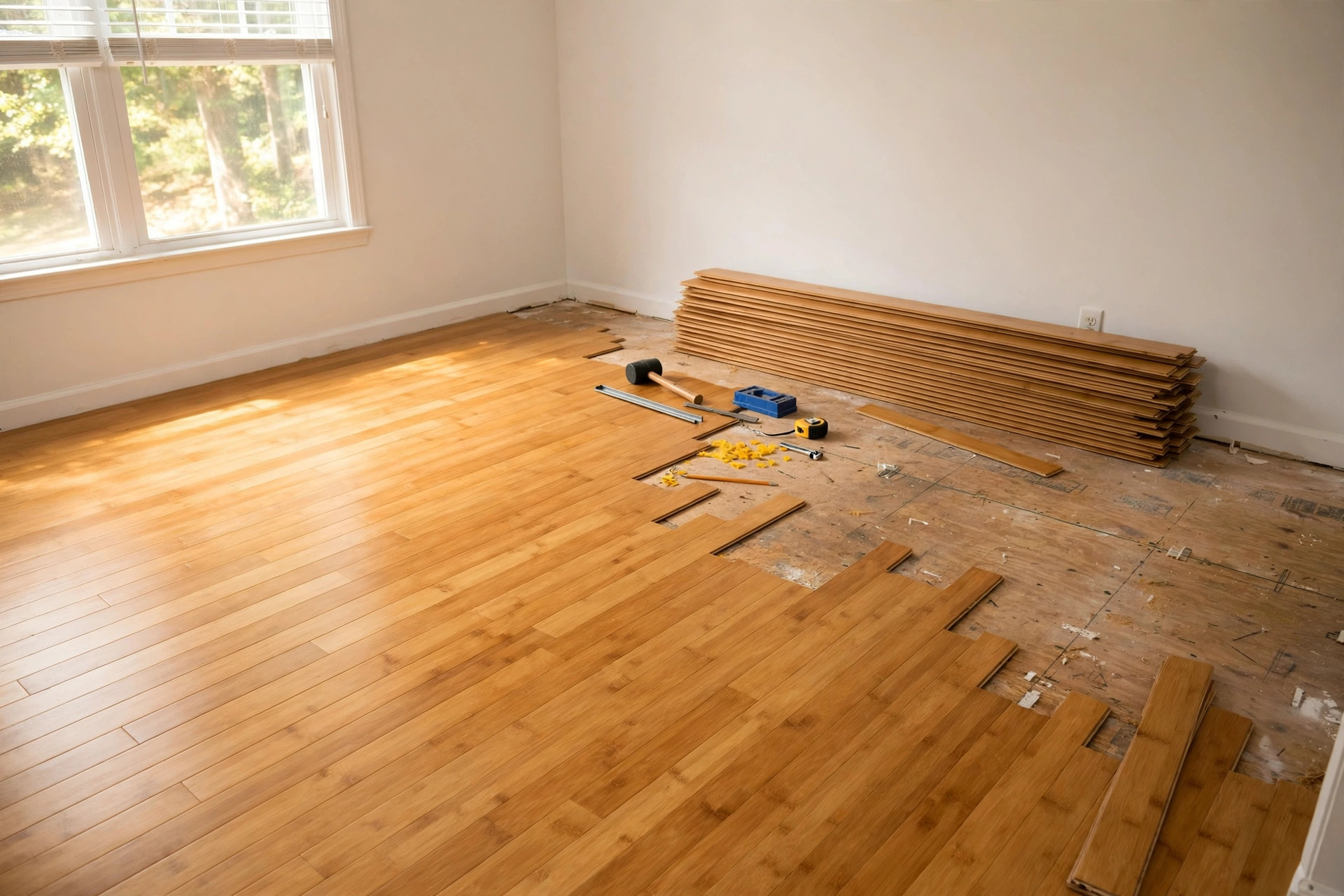
The debate over solid vs engineered bamboo flooring usa buyers face is simpler than it looks. Both floors are made from real bamboo. Both wear a hard, wood-like surface. The difference lies in how the planks are built, and that single difference shapes price, moisture resistance, and how the floor behaves in a real home. A shopper who understands the build can choose with confidence.
Bamboo flooring entered the American market in force during the 1990s. It was sold as a green choice because bamboo grass grows back in five to seven years while hardwood trees need decades. Early floors had mixed reviews. Some cupped in humid rooms. Others scratched too fast. Manufacturing has improved since, so today both builds start from a stronger product. The task now is matching the right build to the right room.
Why This Choice Matters
Flooring is not a small purchase. A family may spend thousands of dollars and live with the result for twenty years. Bamboo adds one more choice to an already long list. Unlike oak or maple, bamboo swells and shrinks with water more than many buyers expect. Picking the wrong build can lead to gaps in winter, cupping in summer, or a floor that fails in a basement.
The question matters most in three cases. The first is moisture. Kitchens, bathrooms, and basements test a floor. The second is installation. The third is budget. Solid planks usually cost more up front, while engineered planks may save on installation and subfloor prep.
Time spent here pays back twice. A correct pick lasts longer and costs less over its life. A wrong pick means replacement, and replacement costs far more than the price gap between the two builds.## Solid Bamboo Flooring: What It Is
Solid bamboo flooring is bamboo all the way through. Strips of bamboo are glued together under high pressure to form a plank. The plank is then milled with a tongue and groove edge, sanded, and finished. Every layer is bamboo. Nothing else sits inside.
How It Is Made
Makers cut mature bamboo stalks into strips. The strips are boiled or steamed to remove sugars, which lowers the risk of mold. Then they are dried and pressed together with adhesive. The pressing method sets the grain style. Horizontal pressing stacks the strips flat and shows the wide grain of each strip. Vertical pressing stands the strips on edge for a narrow striped look. Strand woven pressing shreds the strips into fibers and fuses them under extreme pressure. Strand woven solid bamboo is about twice as hard as red oak.
Strengths of Solid Bamboo
Solid bamboo can be sanded and refinished. A floor that grows dull after ten years can be sanded down and given a new finish, much like solid hardwood. This gives it a long service life in dry rooms. Solid bamboo also feels dense and steady underfoot.
Weaknesses of Solid Bamboo
The main weakness is moisture movement. Solid bamboo expands when it takes in water and contracts when it dries. In a dry winter home, planks may shrink and leave thin gaps. In a humid summer, they may push tight and cup. Solid bamboo is a poor pick for basements, bathrooms, and rooms below grade. Most makers void the warranty if solid bamboo is installed where moisture collects.
Engineered Bamboo Flooring: What It Is: Solid vs Engineered Bamboo Flooring Usa
Engineered bamboo flooring uses a bamboo top layer glued to a core made of plywood or fiberboard. The top layer is real bamboo, usually two to six millimeters thick. The core gives the plank its stability. The result looks like solid bamboo from above but behaves differently below the surface.
How It Is Made
The maker bonds the bamboo wear layer to a cross-layered core. The cross layers resist the push and pull of moisture because each layer moves against the grain of the next. This is the same idea used in engineered hardwood, a product explained well by flooring makers such as Shaw and Mohawk.
Strengths of Engineered Bamboo
Stability is the main win. Engineered bamboo moves far less than solid bamboo when humidity shifts. It handles kitchens and hallways with more grace. Many engineered products are approved for installation over concrete slabs, which opens up basements and ground floors in slab homes.
Installation is simpler too. Many engineered bamboo floors are made as click-lock floating floors. The planks snap together and rest on an underlayment without nails or glue. A handy homeowner can install a room in a weekend.
Weaknesses of Engineered Bamboo
The wear layer sets the limit. A thin two-millimeter wear layer can be screened and recoated once at most. It cannot be sanded down the way solid bamboo can. A thicker five or six-millimeter wear layer allows one or two full sandings, but such planks cost more. Buyers should read the wear layer thickness on the box.
Side-by-Side Comparison
Durability and Hardness
Strand woven solid bamboo is the hardest of the bunch. It resists dents from dropped pans and pet claws better than most hardwoods. Horizontal and vertical solid bamboo are softer, near the level of red oak. Engineered bamboo with a strand woven top matches solid strand woven in surface hardness, since the top layer is the same material. In a test of dents, the top layer matters more than what sits below it.
Moisture Resistance
Engineered bamboo wins here. The balanced core holds its shape when humidity swings. Solid bamboo moves with the seasons and can cup or gap. Neither build is truly waterproof. Standing water will harm both. But engineered bamboo forgives more. In a kitchen where spills are wiped fast, either works. In a basement or bath, engineered is the only sensible choice.### Cost and Price
Solid bamboo usually costs more per square foot for the material. Engineered bamboo often costs less to install, since click-lock floating installation is fast. Total project cost can come out close. The real price gap shows in the subfloor. Solid bamboo often needs a wood subfloor for nailing, while engineered bamboo floats over concrete with a simple moisture barrier. Retail price lists at The Home Depot and Lowe’s let shoppers check current numbers for both builds in their zip code.
Installation
Solid bamboo is nailed, stapled, or glued to a wood subfloor. It needs a skilled installer and a full acclimation period. Engineered bamboo offers three paths: click-lock float, glue-down, or staple-down. The floating method is the friendliest for do-it-yourself work. Old hands at remodeling still prefer glue-down for a quieter, firmer feel, a method covered in detail at This Old House. Where bamboo meets tile in kitchens and baths, plan the transition height early. Tile lines from makers such as Daltile show how thick the adjoining floor may run.
Looks
From across the room, the two look alike. Both come in natural blond, carbonized amber, and stained tones. Up close, solid bamboo shows its pressed strips along the plank edge, while engineered shows a thin bamboo line over the core. Wide planks suit open living rooms. Shoppers can browse both styles at dealers such as Floor and Decor. All bamboo darkens a little in strong sun.
How to Choose: What to Look For
Start with the room. Above grade and dry, both builds work. On a slab or below grade, choose engineered. Then look at the wear layer. For engineered, ask for at least three millimeters of bamboo on top. Thicker is better if the floor may need refinishing one day.
Check the Janka hardness rating. Strand woven bamboo rates near 3,000, far above red oak at 1,290. Horizontal and vertical bamboo rate near oak. The number is printed in product specs at dealers such as LL Flooring.
Read the warranty with care. Look for the moisture language. A warranty that covers installation over concrete and in kitchens signals a maker that trusts its build. Also check whether the finish is factory-finished. Factory finishes with aluminum oxide resist scratches better and need no curing time.
Think about the subfloor. Nailing solid bamboo to concrete is not possible, so a slab home should plan on engineered bamboo or a plywood subfloor over the slab, which adds cost. Also plan for transitions where bamboo meets tile or carpet at doorways. The store sells reducer strips to match.
For buyers who want to compare real owner experience before they commit, bamboo flooring reviews for usa homes collects long-term reports from American households. Brand research helps too, and best bamboo flooring brands usa 2026 ranks the makers most often stocked in the states. Shoppers weighing a different wood product can read engineered hardwood flooring cost per square foot for a useful price benchmark.
Cost and Price in the USA
Prices move by region, but 2026 ranges are fairly steady. Solid bamboo material runs about four to nine dollars per square foot for standard planks. Strand woven solid bamboo runs six to twelve dollars per square foot. Engineered bamboo material runs three to ten dollars per square foot, tied to wear layer thickness and core quality.
Installation adds two to five dollars per square foot for professional work. Floating click-lock installation sits at the low end. Glue-down and nail-down sit higher. A one-thousand-square-foot project in solid strand woven bamboo with pro installation may total eight thousand to fifteen thousand dollars. The same area in mid-range engineered bamboo with floating installation may total six thousand to twelve thousand dollars.
Budget ten percent extra material for cuts and waste, and fifteen percent for rooms with odd angles. Underlayment, moisture barriers, and transition strips add a few hundred dollars. Old floor removal adds one to three dollars per square foot.
One cost trap is cheap product. Bamboo at two dollars a square foot often has thin wear, weak adhesive, and no real warranty. Mid-range product from an established maker is the better value almost every time.
Care and Upkeep
Bamboo floors need simple, steady care. Sweep or vacuum with a hard-floor head once or twice a week. Sand and grit are the main enemies. They grind into the finish and dull it. A good doormat at each entry cuts the grit load in half.
Damp-mop with a well-wrung mop and a cleaner made for wood floors. Never flood the floor. Water left on the joints will seep in and swell the edges. Wipe spills at once. Many bamboo warranties ban steam mops, and the heat can cloud the finish.
Felt pads under chair and table legs stop scratches. Pet nails should be trimmed short. Rugs in high-traffic paths spread wear, but rubber-backed rugs can trap moisture, so choose breathable pads. Repair and upkeep how-tos at Bob Vila cover the small fixes that keep a floor in good shape. Direct sun will darken the floor over months, so rotate rugs now and then for even color.
Refinishing keeps a floor young. Solid bamboo can be sanded and refinished two or three times in its life. Engineered bamboo with a thick wear layer can be sanded once. Thin engineered bamboo can only be screened and recoated. Care guides on The Spruce cover the cleaning routines that keep wood-type floors looking new.
Safety
Bamboo flooring is safe when it is made well, but buyers should check two things. The first is formaldehyde. The adhesive used to press bamboo strips can give off formaldehyde gas. Look for products certified to CARB Phase 2 or TSCA Title VI, the rules that limit formaldehyde in wood products.
The second is slip resistance. Bamboo with a glossy finish can be slick in socks, a real concern for older buyers. A matte or satin finish gives better grip. Area rugs on stairs and in hallways add safety.
Install safety matters too. Nail-down installation means a nail gun and hearing protection. Glue-down means fumes, so ventilate the room and keep pets and children out until the glue cures.
Frequently Asked Questions
Is bamboo flooring good for kitchens? Yes, with care. Engineered bamboo suits kitchens better than solid because it moves less with humidity. Wipe spills fast and use a mat by the sink.
Which lasts longer, solid or engineered bamboo? In a dry room, solid bamboo often lasts longer because it can be sanded and refinished several times. In a damp or slab room, engineered bamboo lasts longer because it resists moisture movement. The room decides the winner.
Can bamboo flooring be installed over concrete? Engineered bamboo can, in most cases, with a moisture test and a proper barrier. Solid bamboo should not be installed on or below grade concrete. Test the slab first. A reading above the maker’s limit means the slab needs sealing before any floor goes down.
Does bamboo flooring increase home value? A well-installed bamboo floor reads as an upgrade to most buyers, much like hardwood. Strand woven bamboo in a natural tone has the broadest appeal. Poor installation adds nothing, so install quality matters as much as the material.
How long does bamboo flooring last? A quality bamboo floor lasts twenty to thirty years with normal care. Solid bamboo sits at the top of that range, engineered in the middle. Standing water and skipped maintenance shorten the life.
Is bamboo flooring truly eco-friendly? Bamboo regrows fast, which is a real plus. But the full picture includes the adhesive, the shipping from Asia, and the finish. Look for FSC-certified bamboo and low-formaldehyde adhesives.
A Final Word
The solid vs engineered bamboo flooring usa choice comes down to the room and the plan. Solid bamboo suits dry, above-grade rooms where a floor may be refinished for decades. Engineered bamboo suits slabs, kitchens, and busy homes where stability and simpler installation matter more. Both reward the buyer who reads the specs, respects moisture, and hires a careful installer.
References
Bob Vila. (n.d.). Home improvement advice. https://www.bobvila.com Daltile. (n.d.). Ceramic and porcelain tile. https://www.daltile.com Floor & Decor. (n.d.). Tile, wood, and stone flooring. https://www.flooranddecor.com LL Flooring. (n.d.). Hardwood, vinyl, and tile flooring. https://www.llflooring.com Lowe’s. (n.d.). Home improvement products. https://www.lowes.com Mohawk Flooring. (n.d.). Flooring products. https://www.mohawkflooring.com Shaw Floors. (n.d.). Flooring products. https://www.shawfloors.com The Home Depot. (n.d.). Home improvement products. https://www.homedepot.com The Spruce. (n.d.). Home and garden advice. https://www.thespruce.com This Old House. (n.d.). Home renovation guidance. https://www.thisoldhouse.com
Was this guide helpful?

About Michael Thompson
The My Garden US editorial team writes practical, in-depth home and garden guides for American homeowners — tested advice, no fluff.