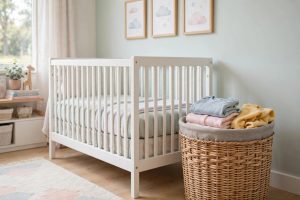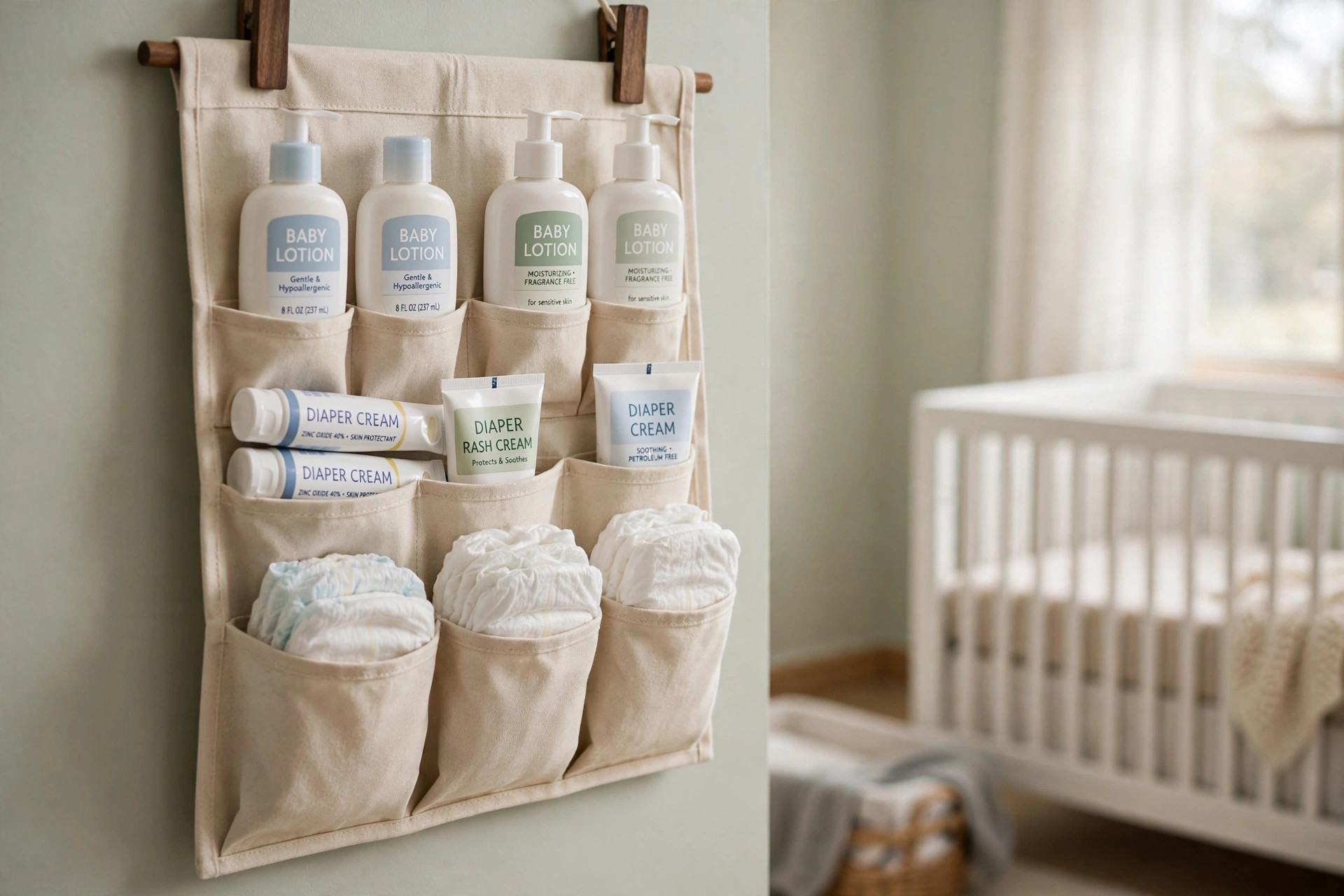

A nursery wall organizer for diapers and lotion is one of the simplest tools a new parent can buy. It hangs on the wall beside the changing table. Its pockets hold diapers, lotion, cream, wipes, and powder. Everything stays within arm’s reach. Change time becomes calmer and safer, because a parent never has to step away from the baby to fetch a missing item. For many families, this small piece of fabric is the most-used item in the whole nursery.
Why It Matters
A baby is changed six to ten times a day. That is more than two thousand changes a year. Each change calls for the same short list of things: a clean diaper, a wipe, a cream or lotion, and a safe place to put the soiled one. When these things live in scattered spots, each change takes longer. A parent must turn away from the table. That is the moment accidents happen. A baby who can roll can roll off a table in a second.
A wall organizer fixes this by putting every item on the wall, right beside the changing surface. It also clears the dresser top. A clear dresser top is a safer dresser top, with nothing to knock over or pull down. In a small room, it frees space that would have gone to a bulky cart or bin.
There is a quiet benefit too. New parents are tired. Tired hands drop things. A pocket that holds each bottle upright means fewer spills on the floor at three in the morning. Some organizers have a small shelf for a phone or a night-light, which keeps late-night changes calm and dim.
Many parents pair the organizer with other space-saving nursery gear. A good convertible crib for a small nursery room and a toddler bed with storage for toys follow the same idea: every inch of the room works hard.
What to Look For: Nursery Wall Organizer for Diapers and Lotion
Not all organizers are alike. A good one suits your wall, your table, and your habits.
Size and Pocket Count
Count what you store. A basic set needs about eight to ten pockets: diapers in two sizes, wipes, lotion, diaper cream, powder or balm, nail clippers, a thermometer, and a spare pacifier. If you keep clothing changes nearby, add pockets for onesies and socks. A common size is about 24 inches wide by 36 inches tall. That fits beside most dressers without covering the wall.
Material
Look for heavy canvas, twill, or thick cotton. Thin fabric sags under a full load. The backing should be stiff enough to hang straight. Pockets with a stiff lip or a sewn divider stay open, which makes it easier to pull out a wipe with one hand. Mesh pockets help you see what is inside. Solid pockets hide clutter.
How It Hangs
Most organizers use two or three metal grommets and hang on wall hooks or screws. This is the most secure choice. Some use adhesive hooks. Adhesive can fail under weight, so screws into a stud are better. Measure your wall before you buy. The organizer should hang flat, with its lowest pockets still above the reach of a standing toddler.
Washability
Spills happen. Lotion tubes leak. Cream gets on everything. A machine-washable organizer lasts far longer than one that must be wiped down. Check the label. If it is spot-clean only, choose a light pattern that hides stains.
Depth and Bottle Size
Measure your lotion and cream bottles. American standard pump bottles are about 6 to 8 inches tall. Pockets should be at least 7 inches deep so bottles do not tip out. Wide pockets hold a stack of six to eight diapers without bulging.
Types and Options
Hanging Pocket Panel
This is the classic style. One flat panel, rows of pockets, hung on the wall. It is cheap, simple, and fits almost anywhere. It works best beside a dresser or changing table mounted to the wall.
Crib-Side or Table-Side Caddy
Some organizers hang from the side of the crib or the changing table itself, held by long straps or loops. These keep items even closer to your hands. Check that the straps fasten tightly and cannot loosen. The U.S. Consumer Product Safety Commission offers guidance on nursery safety that every parent should read (cpsc.gov).
Wooden Shelf with Pockets
Some organizers combine a small wooden shelf on top with fabric pockets below. The shelf holds a lamp or a wipe warmer. These look tidy but cost more and need stronger wall anchors.
Over-the-Door Style
If the nursery is very small, an over-the-door organizer works. It hangs from hooks on the closet or room door. It holds far more, but it sits farther from the table, which defeats part of the purpose. Use this for stock, not for change-time supplies.
Rolling Cart
A small rolling cart is not a wall organizer, but some parents use one beside the table. It works if the wall has no free space. It also rolls, which means a toddler can push it. Wall-mounted storage stays put.
For nursery layout ideas beyond the changing station, sites like Pottery Barn Kids and What to Expect show how other families arrange small rooms.
Matching Sets
Some brands sell the organizer as part of a matching set with a diaper stacker and a toy bin. Sets look neat and often cost less than buying each piece alone. Check that each piece earns its place. A matching stacker is only worth it if you need the extra capacity. If not, buy the panel alone and spend the savings on diapers.
Cost and Price
A simple fabric panel costs between ten and thirty dollars at large retailers like Amazon, Target, and Home Depot. Mid-range models with wooden dowels, extra pockets, or a wipe holder run thirty to sixty dollars. Premium versions with a shelf or a name embroidery cost sixty dollars or more.
Price does not decide safety or usefulness. A fifteen-dollar panel that hangs straight and holds its shape will serve you better than a sixty-dollar one with shallow pockets. Check return policies before you buy. If the fabric sags once loaded, send it back.
If money is tight, a plain canvas shoe organizer costs under ten dollars and works the same way. Hang it sideways so the pockets face up, or cut the bottom row shorter if it drags on the floor. Many parents start with the cheapest panel and upgrade only if it wears out.
Watch for sales. Nursery gear drops in price during spring and around the holidays. Buying the organizer with the crib can save on shipping.
Care and Upkeep
A wall organizer needs little care, but small habits extend its life.
Empty it once a week. Throw out dried-out wipes and expired creams. Check lotion bottles for leaks. Wash the panel on a gentle cycle once a month, or more often if it stands near a humid bathroom. Hang it to dry so the stiffeners do not melt in the dryer.
Restock before you run out. Keep one open pack of diapers in the organizer and one sealed pack in the closet. When the open pack drops to a handful, open the sealed one. This two-pack rhythm prevents a midnight scramble.
Rotate contents as the baby grows. Newborn pockets hold small diapers and gas drops. Later, they hold size four diapers, sunscreen, and a sippy cup. The organizer stays useful well past the diaper years. Many parents later store toys in it, or hang it in the bathroom for bath supplies. A nursery storage ottoman for toys is a natural next step for toy storage once diapers are done.
Check the hanging hardware twice a year. Screws loosen in drywall. If the organizer sags, move the anchors into a stud or add wall anchors rated for twenty pounds.
Organization specialists at The Container Store and home guides at Bob Vila suggest labeling pockets with simple pictures. A bottle drawing on the lotion pocket helps a grandparent or sitter find things fast.
Safety
Safety is the first job of any nursery item. Follow these rules.
– Mount it securely. Use screws into a stud or rated anchors. The organizer must not fall if a child tugs it. – Keep it out of the baby’s reach. Hang the lowest pocket above the height of a standing toddler. Little hands will grab bottles and squeeze them. – Lock or remove small items. Thermometers, nail clippers, and nose aspirators are choking or injury hazards. Store them in the highest pockets, or in a latched box on the shelf. – Keep medications up high. Never store diaper rash creams with numbing agents within reach of older siblings. Read every label. – Check cords and strings. Long hanging strings near a crib are a strangulation risk. Trim them or tie them out of reach.
Health and safety groups such as HealthyChildren.org, run by pediatricians, publish clear nursery safety checklists. Read one before you set up the room. If you are unsure about mounting, ask the handyman desk at Lowe’s for anchor advice. Check the product for recalls on the CPSC website before you buy, and keep the packaging in case a recall notice appears later.
Frequently Asked Questions
Where is the best spot to hang a nursery wall organizer?
Beside the changing table, at the height of your elbow when you stand at the table. That puts pockets within reach without a step or a stretch. If the table is a dresser against the wall, hang the organizer on the wall to the side of the dresser, not behind it.
How many diapers should it hold?
Enough for a full day plus a margin. For a newborn, that is ten to twelve diapers. For an older baby, eight to ten. A wide center pocket sized for a diaper stack keeps them neat.
Can it hold cloth diapers?
Yes. Cloth diapers are bulkier than disposables. Choose an organizer with deep, wide pockets, at least 8 inches wide and 8 inches deep. Fitted cloth diapers and inserts fit well in open mesh pockets.
What about lotion bottles that pump?
Pump bottles are tall and tip easily. Pick pockets with dividers or elastic loops that grip each bottle. If your organizer lacks them, cut a strip of cardboard to separate bottles inside a wide pocket.
Is fabric or plastic better?
Heavy fabric breathes, washes well, and looks soft in a nursery. Clear plastic lets you see contents but can tear and looks less warm. Fabric is the better choice for most families.
When should I take it down?
When the baby becomes a toddler who pulls on it despite the height, or when diapers are no longer needed. Move it to the bathroom for bath toys and towels, or pass it to another family.
Final Word
A nursery wall organizer for diapers and lotion is a small buy with a large daily payoff. It keeps the change table safe, the room tidy, and the tired parent one step ahead of the next change. Choose heavy fabric, deep pockets, and secure hardware. Mount it where your hands already go. Then forget about it, because the best nursery tools are the ones you never have to think about. Home decor writers at Apartment Therapy call this kind of storage “quiet organization,” and that fits: it works in the background while you do the important work, which is holding your baby.
References
Amazon. (n.d.). Online shopping. https://www.amazon.com American Academy of Pediatrics. (n.d.). HealthyChildren.org. https://www.healthychildren.org Apartment Therapy. (n.d.). Home design ideas and inspiration. https://www.apartmenttherapy.com Bob Vila. (n.d.). Home improvement advice. https://www.bobvila.com Lowe’s. (n.d.). Home improvement products. https://www.lowes.com Pottery Barn Kids. (n.d.). Kids furniture and decor. https://www.potterybarnkids.com Target. (n.d.). Retail store. https://www.target.com The Container Store. (n.d.). Storage and organization products. https://www.containerstore.com The Home Depot. (n.d.). Home improvement products. https://www.homedepot.com U.S. Consumer Product Safety Commission. (n.d.). Product safety information. https://www.cpsc.gov What to Expect. (n.d.). Pregnancy and parenting guidance. https://www.whattoexpect.com
Was this guide helpful?

About Lisa Anderson
The My Garden US editorial team writes practical, in-depth home and garden guides for American homeowners — tested advice, no fluff.
You May Also Like
The Best Nursery Bedding Set for Baby Girl: A Simple Buying Guide
April 22, 2026 0 views
Kids Wall Decal Growth Chart for Measuring Height: A Complete Guide
September 18, 2026 0 views
Best Kids Bed Rail for Top Bunk Safety: A Parent’s Guide
February 17, 2026 0 views