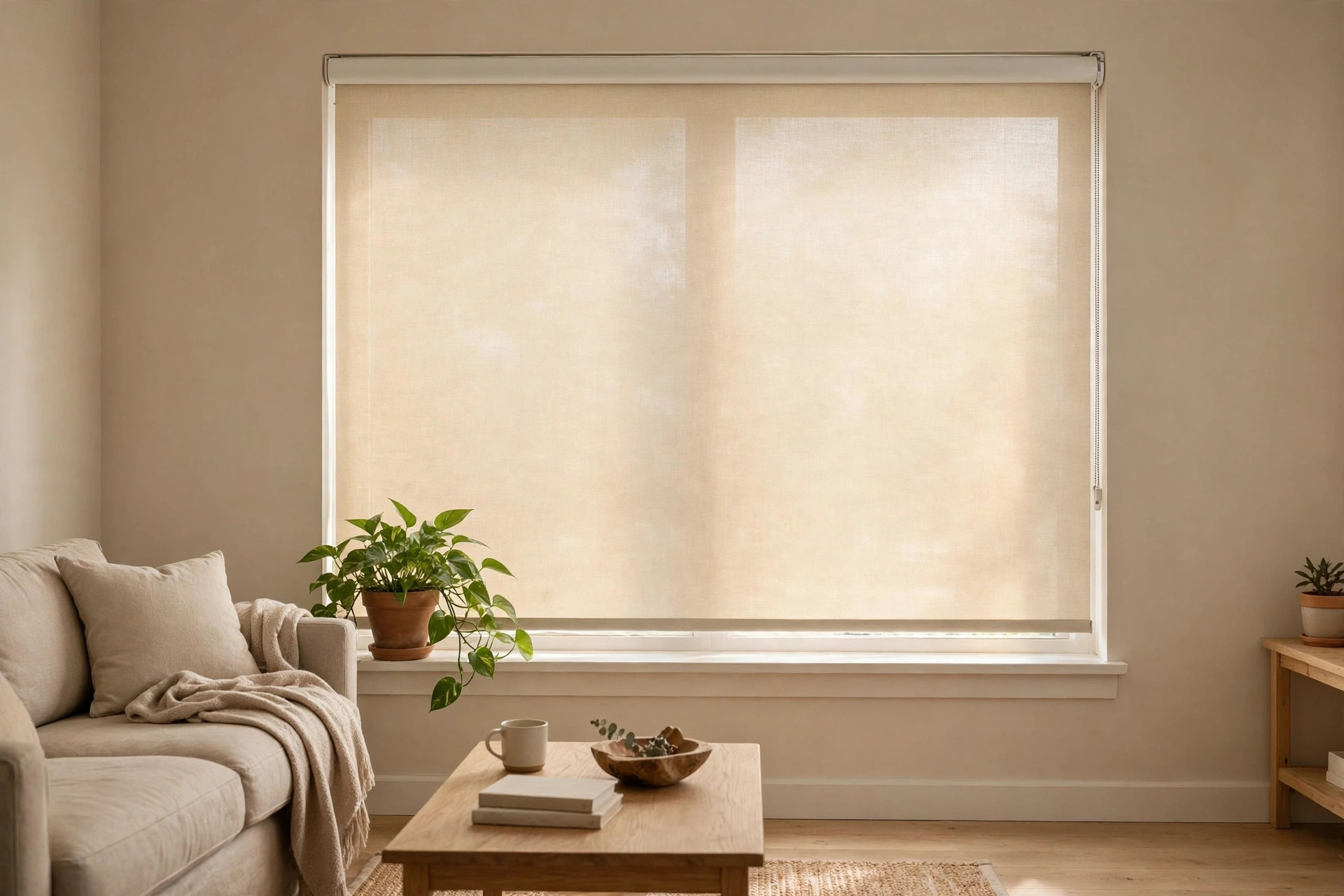

This affordable light filtering roller shades buying guide will help you shop with confidence. Light filtering roller shades are one of the simplest ways to cover a window. They let soft light through while they block harsh glare and keep your home private. They cost less than many other window treatments. That makes them a strong choice for first time home buyers, renters, and anyone who wants a fresh look without a large bill.
You will learn what light filtering means, how to pick the right fabric, how to measure your windows, what price to expect, and how to care for your shades after they are hung. Read on for the full guide.
Why Light Filtering Roller Shades Matter
A bare window gives you light, but it also gives you glare, heat, and a full view in from the street. Heavy drapes fix the privacy problem, yet they can make a room feel dark and small. Light filtering roller shades sit in the middle. They turn harsh sunlight into a soft glow. The room stays bright enough to read by during the day, but no one outside can see in clearly.
This balance matters in living rooms, kitchens, and home offices. You keep your view of the sky and the trees while you cut the blinding rays that wash out a television screen. In bedrooms, light filtering shades work well for people who wake with the sun but want privacy at night. For rooms where you need true darkness, a blackout layer can be added on top. If you need full darkness instead, read our blackout roller shades price comparison usa to weigh your choices.
Light filtering shades also protect your home. Sunlight fades wood floors, carpets, and sofa fabric over time. A shade that spreads the light reduces that damage. It can also trim heat gain in summer, which eases the load on your air conditioner. The U.S. Department of Energy window tips explain how window coverings help control heat and light in a home.
What “Light Filtering” Really Means: Affordable Light Filtering Roller Shades Buying Guide
The term confuses many shoppers. Light filtering does not mean blackout. It does not mean sheer either. It means the fabric passes softened daylight while it blocks a clear view through the window.
Think of it like a frosted glass. You see light and vague shapes, but not details. Most light filtering fabrics block about 90 to 95 percent of direct light rays, yet the room stays bright. Sheer fabrics let more light and more view through. Blackout fabrics let almost no light through.
Check the product label for the opacity grade. Sellers often rate fabric as sheer, light filtering, room darkening, or blackout. For daytime living areas, light filtering is the sweet spot. It keeps the room usable and warm. For more on roller shade fabric opacity, look through detailed roller shade sizing guides from major shade retailers.
How to Choose the Right Shades
Good buying starts with clear answers to a few simple questions. Answer them before you open your wallet.
Which room is it for? Living rooms and kitchens suit light filtering well. Bedrooms may need a blackout layer for sleep. Bathrooms need fabric that handles moisture.
How much light do you want? If you work on a computer near the window, a denser weave cuts glare better. If you love bright rooms, a lighter weave keeps the cheer.
What is your window size? Standard sizes cost less. Odd sizes need custom orders, which cost more. Measure first, as shown below.
What is your budget? Basic stock shades cost very little per window. Custom fabrics and motorized lifts cost more. Set a per-window budget before you shop.
Who will install them? Most roller shades are simple to mount with basic tools. If you are not handy, budget for a pro installer.
Cordless options are worth a look too, since they look clean and are safer around children. See our top rated cordless cellular shades for american homes for ideas on safe, cord-free window coverings.
Types and Options
Standard Roll-Up Shades
This is the classic type. A fabric panel rolls up around a tube at the top of the window. A chain, cord, or spring lift raises and lowers it. Standard shades are the most affordable choice and suit almost any room.
Cordless Roller Shades
Cordless shades lift by hand with a gentle push or pull on the bottom rail. There are no hanging cords. They look tidy and meet modern safety standards for homes with young children and pets. They cost a bit more than chain-operated shades, but many buyers find the clean look worth it. The window cord safety standards explain why cordless designs are recommended for homes with small children.
Solar Shades
Solar shades are a type of light filtering shade made from woven screen fabric. They cut glare while they keep a partial view of the outdoors. They are popular for living rooms with a nice view and for home offices. They come in openness factors from 1 percent to 10 percent. A lower number means less light and more privacy.
Dual or Day-Night Shades
These shades combine two fabrics in one roll. One layer filters light. The other layer darkens the room. You pick which one is down at any time. They cost more, but they give you full control over light through the day.
Motorized Shades
Battery or plug-in motors raise and lower the shade at the touch of a button or by voice. Motorized shades are the priciest option, but prices have fallen in recent years. They suit hard-to-reach windows above stairs or tall glass doors.
For a warmer, more textured look in the same rooms, our woven wood shades reviews and buying guide covers natural fiber alternatives.
Fabric and Color Choices
Fabric sets the look and the light level. Polyester blends are the most common and the most affordable. They resist stains and hold their shape. PVC-coated fabrics wipe clean and suit kitchens and baths. Natural fiber blends add texture but cost more.
Color changes how much light passes through. White and cream fabrics glow brightly in sunlight. Dark fabrics block more light and give a cozier feel. A medium gray or beige works in most rooms.
Patterns can add style, but plain fabrics are safer for resale value and for matching other rooms. If your walls are busy, pick a plain shade. If your room is plain, a subtle pattern adds interest. When you shop, order free swatches when you can. Hold them up to your window at different times of day before you decide.
Measuring Your Windows
Wrong measurements are the top reason shades get returned. Take your time and measure twice.
Inside mount. The shade fits inside the window frame. Measure the width in three places: top, middle, and bottom. Use the smallest number. Measure the height in three places: left, center, and right. Use the largest number. Your frame needs enough depth for the roll, usually two to three inches.
Outside mount. The shade covers the frame and the wall around it. Measure the full width you want to cover, then add three to four inches on each side for full coverage. Measure from the top of the mounting point to the sill, then add a few inches at the bottom.
Write each measurement down as width by height. Check the seller’s rounding rules before you order. Many stock shades come in half-inch steps. For odd sizes, a custom order is the safe path.
Cost and Price
Prices vary by size, fabric, and brand. As a rough guide in the United States:
– Basic stock light filtering roller shades: about $15 to $40 per window. – Better stock shades with cordless lift: about $40 to $80 per window. – Custom-sized shades: about $80 to $200 per window. – Motorized shades: about $150 to $400 per window.
The word “affordable” means different things to different buyers. A smart way to keep costs down is to use stock sizes where you can and reserve custom orders for only the odd windows. Buy all shades for one room at the same time so the fabric dye lots match.
Watch for sales at big retailers. Window treatments often go on sale around holidays. You can compare in-store stock and budget options and installation tools to plan the full cost of the project, including brackets and screws. A wide range of budget window coverings is also worth a look if you like simple modern styles. Read customer reviews to learn how a shade holds up after a year of daily use.
Do not forget small extras in your budget: mounting brackets, a level, a drill, and possibly a handyman fee. These small costs add up across many windows.
Installation Basics
Most roller shades take 15 to 30 minutes per window to install. You will need a tape measure, a pencil, a level, a drill, and a screwdriver.
Mark the bracket spots with a level so the shade hangs straight. Drill pilot holes, then fix the brackets. Snap or slide the shade into the brackets. Test the lift a few times. That is all there is to it.
For inside mounts, check that the roll clears the window crank or handle. For outside mounts on drywall, use wall anchors so the brackets hold firm. If your windows are very wide, ask the seller whether a center support bracket is needed to stop the tube from sagging.
Renters should check their lease before drilling. Some landlords allow small holes that can be filled later. Others prefer tension-mounted or adhesive options that leave no marks.
Care and Upkeep
Light filtering roller shades need little care, but a small routine keeps them looking new for years.
Dust them once a month with a soft cloth or a vacuum brush head. Work from top to bottom so dust falls away from the clean area. For spots, dab with a damp cloth and mild soap. Do not soak the fabric. Do not use bleach or strong cleaners, which can weaken the coating.
Roll the shade up fully once in a while to check the mechanism. If the spring lift feels weak, most brands sell simple fixes or spare parts. Keep the fabric dry in humid rooms. In bathrooms, pick a moisture-safe fabric from the start.
Pets and small children can pull on the bottom rail. A cordless design removes the main hazard, but teach children not to hang on the shade. A bent tube is hard to fix, so gentle use matters. You can find expert how-to articles on cleaning and caring for many types of window coverings.
Safety
Window covering cords have caused injury to small children. The safest choice is a cordless shade or a motorized shade with no reachable cords. If you already own corded shades, keep cords out of reach of cribs and beds, and use cord cleats to wrap long cords high on the wall.
The federal safety agency publishes window cord safety standards with clear guidance for parents and landlords. Many states and cities now expect cordless designs in rentals and child care spaces. When you shop, look for the safety label on the package. It is a small mark that brings real peace of mind.
Frequently Asked Questions
Do light filtering roller shades give privacy at night? They give good daytime privacy. At night, when indoor lights are on, people outside may see shapes through the fabric. For full night privacy, add a blackout liner or a second shade.
Can I see through light filtering shades from outside during the day? In daylight, the fabric blocks a clear view in. You may see vague movement near the glass, but not details. This is why they suit street-facing living rooms so well.
Are these shades good for a home office? Yes. They cut screen glare while they keep the room bright. A solar shade with a low openness factor works best if your desk faces the window.
How long do roller shades last? A good shade lasts 7 to 12 years with normal use. Cheap stock shades may wear sooner. Sun-facing windows age fabric faster, so rotate which shades take the noon sun if you can.
Can I cut a roller shade to fit? Some stock shades can be trimmed at home, but it is risky. A bad cut ruins the roll and the lift. It is safer to order the right size or pay for a custom cut. For style ideas while you plan, browse decor ideas for rooms like yours.
Do they help with energy bills? They help a little. By cutting heat gain in summer and adding a thin insulating layer in winter, they ease heating and cooling loads. They work best as part of a wider plan with good windows and sealing.
A Short Final Word
Affordable light filtering roller shades are a simple, honest upgrade. They soften harsh sun, protect your floors and furniture, and give you privacy without turning the room dark. Measure with care, pick a fabric that suits the room, and favor cordless designs for safety. Shop the sales, read the reviews, and order swatches before you commit. Done right, this small project pays you back every sunny day for years to come.
References
Blinds.com. (n.d.). Window blinds, shades, and shutters. https://www.blinds.com ENERGY STAR. (n.d.). Energy efficient products. https://www.energystar.gov HGTV. (n.d.). Home and garden ideas. https://www.hgtv.com IKEA. (n.d.). Home furnishings. https://www.ikea.com Lowe’s. (n.d.). Home improvement products. https://www.lowes.com The Home Depot. (n.d.). Home improvement products. https://www.homedepot.com The Spruce. (n.d.). Home and garden advice. https://www.thespruce.com U.S. Consumer Product Safety Commission. (n.d.). Product safety information. https://www.cpsc.gov Wayfair. (n.d.). Furniture and home goods. https://www.wayfair.com
Was this guide helpful?

About Robert Taylor
The My Garden US editorial team writes practical, in-depth home and garden guides for American homeowners — tested advice, no fluff.
You May Also Like
Premium Custom Drapery Services Near Me: A Homeowner’s Guide
March 6, 2026 0 views
Buy Rod Pocket Curtains Online in Texas
March 12, 2026 0 views
Affordable Stained Glass Window Film With Free Shipping: A Plain Buyer’s Guide
March 17, 2026 0 views