
Many Texas homeowners want real wood blinds. They ask one simple question: where to buy real wood blinds in texas. The answer is not one store. It is a mix of local blind shops, large home improvement stores, and online dealers. This guide walks through each option. It also covers what real wood blinds cost, how to pick the right wood, and how to care for them in the hot Texas climate.
Why Real Wood Blinds Still Matter
Wood blinds have been around for decades. In Texas homes they are common in living rooms, dens, and bedrooms. People like them for three plain reasons.
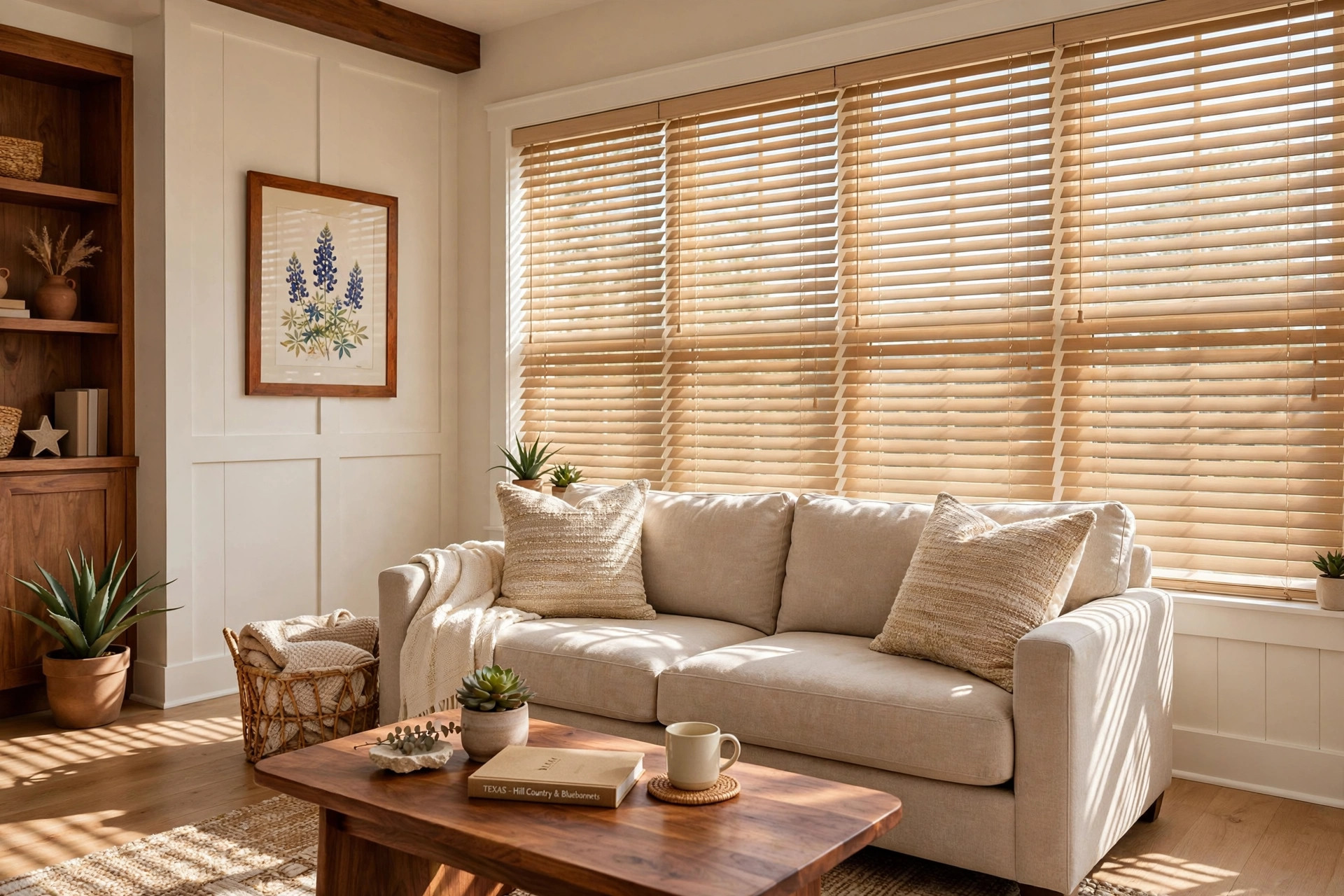
First, real wood looks rich. The grain shows through the stain. No plastic or vinyl copy can match the feel of true basswood or hardwood. When light hits the slats, the room feels warm.
Second, wood blinds are strong. A good set can last fifteen to twenty years. They do not yellow the way cheap plastic blinds do. They do not bend out of shape under normal use.
Third, they add value to the home. Many buyers in Texas expect quality window coverings. Real wood blinds signal care. They help a home look finished and solid.
There is one drawback. Real wood can warp in high moisture. That matters in Texas bathrooms and in Gulf Coast homes. In those rooms, faux wood is the safer pick. Everywhere else, real wood holds up well.
What to Look for Before You Buy: Where to Buy Real Wood Blinds in Texas
Not all wood blinds are equal. A few details separate a good blind from a poor one.
The type of wood
Basswood is the most common real wood for blinds. It is light, straight-grained, and takes stain evenly. It comes from the linden tree. Most blinds sold as “real wood” in Texas are basswood.
Some shops sell hardwood blinds from poplar, oak, or ramin. These are heavier and often cost more. For most homes, basswood is the right choice.
Watch out for the phrase “wood look.” That often means a plastic or vinyl blind with a wood print. If you want real wood, ask for the wood species by name.
Slat size
Wood blind slats come in one inch, two inch, and two and a half inch widths. Two inch slats are the standard. They fit most windows and give a classic look. Two and a half inch slats look bolder and work well on large Texas picture windows. One inch slats are rare now. They are used mainly on narrow doors.
Finish and stain
Real wood blinds are stained or painted. Popular stains in Texas include warm oak, walnut, cherry, and white. White painted wood blinds suit modern and coastal homes. Stained blinds suit ranch and craftsman styles. Ask for a free sample. Hold it against your trim and furniture before you order.
Cord or cordless
Cordless blinds are safer for homes with small children and pets. You lift and lower them by hand. Corded blinds cost less. Some buyers still prefer cords for tall windows. The federal safety group at CPSC has pushed cordless designs for years because cords can strangle young children. For a family home, cordless is the wise pick.
Where to Buy Real Wood Blinds in Texas
Now the main question. Here are the main places Texans can shop.
Local blind and shutter shops
Every large Texas city has independent blind shops. Dallas, Houston, Austin, San Antonio, Fort Worth, and El Paso all have stores that sell and install real wood blinds. These shops send a person to your home. They measure the windows. They bring sample books. They install the blinds when they arrive.
This is the easiest path. You pay more, but you get exact fit and service. Search for dealers near you, such as the best blinds installation companies near me options in your town. Many local dealers carry the same national brands sold at big-box stores, plus custom lines the big stores do not stock.
Local shops also sell top rated shutter installation services for homeowners if you later want plantation shutters instead.
Big-box home improvement stores
Home Depot and Lowe’s have stores all over Texas. They sell real wood blinds in stock sizes and custom order. Stock blinds are cheaper and you can take them home the same day. Custom blinds take two to three weeks.
The staff can cut stock blinds to width in the store. This works for standard windows. For odd sizes, order custom. Both retailers list wood blind lines on their sites, and you can compare styles at Home Depot or Lowe’s before you drive over.
The trade-off is service. The store staff know the basics, but they will not visit your home. You measure the windows yourself. If the fit is wrong, you fix it.
Specialty blind retailers online
Sites like Blinds.com sell real wood blinds with free samples and free shipping. You measure at home. They build the blinds to your numbers. Prices often run below local shops. Many Texas buyers use these sites for bedrooms and offices, then use a local shop for the main living areas.
Online dealers work best when you are sure of your measurements. Measure each window in three places. Use the smallest width and the largest length for inside mounts. The site guides at Blinds.com explain the steps with diagrams.
Furniture and decor stores
IKEA and Wayfair sell window treatments too. Their real wood blind lines are small. IKEA stocks mainly simple shades and curtains, which you can browse at IKEA. Wayfair lists wood blinds from many brands in one place; see their window treatment pages at Wayfair. These stores suit buyers who want a fast, low-cost option and do not mind a smaller range.
Wholesale clubs and discount outlets
Costco and Sam’s Club in Texas sometimes carry wood blind programs through their websites. Prices can be good. The range is narrow. Check their sites in the spring and fall when window treatment deals appear.
Types and Options Compared
It helps to see the choices side by side.
Real wood blinds are the classic pick. They are made from basswood or hardwood slats. They look best and last longest. They cost the most.
Faux wood blinds are made from PVC or a wood-plastic mix. They look close to real wood from a few feet away. They resist moisture. They cost less. Many Texas buyers put faux wood in bathrooms and kitchens and real wood in the living areas.
Woven wood shades use bamboo, reeds, and grasses. They give a natural, airy look. A Texas favorite is noise reducing bamboo roman shades for texas homes, which add texture without the weight of wood slats. They do not block as much light as wood blinds.
Plantation shutters are a step up in price. They are wood or poly frames with wide louvers. They suit large windows and add strong resale value. They are not blinds, but many shoppers compare the two.
Cost and Price in Texas
Real wood blinds cost more than most other blinds. Here is what to expect.
Stock wood blinds at a big-box store run about forty to ninety dollars per window. Sizes are standard. Colors are limited. Quality is fair.
Custom wood blinds from a dealer run about one hundred to two hundred fifty dollars per window. Wide windows and tall windows cost more. Premium stains and cordless lifts add to the price.
Full-service shops in cities like Dallas and Houston may charge more than the ranges above. You pay for measuring, delivery, and install. Many buyers find the service worth the extra cost.
Installation adds fifty to one hundred dollars per window if you hire it out. Many stock blinds come with brackets and screws. A handy homeowner can hang a blind in twenty minutes.
Ask about sales. Window treatment dealers run discounts in January and July. Big-box stores cut prices around holiday weekends. A little timing can save a lot.
How to Measure for a Fit That Works
Good blinds start with good numbers. You can measure in five minutes with a steel tape.
Decide inside mount or outside mount. Inside mount sits within the window frame. It looks clean. The frame must be at least two inches deep. Outside mount covers the frame and the wall around it. It works when the frame is shallow or crooked.
For inside mount, measure the width in three spots: top, middle, bottom. Write down the smallest number. Measure the length in three spots and write down the largest number. Do not subtract anything. The factory leaves room for the brackets.
For outside mount, measure the width of the area you want to cover. Add three inches. Measure the length the same way and add three inches.
Measure every window. Do not assume two windows are the same. In older Texas homes, frames can differ by half an inch.
Care and Upkeep
Real wood blinds are easy to keep. Dust them once a week with a soft cloth or a feather duster. Close the slats one way and wipe. Open them the other way and wipe again.
For stuck dirt, use a cloth that is barely damp. Wring it well. Wipe each slat. Dry at once with a second cloth. Do not soak wood blinds. Water can warp the slats and dull the finish.
Never use harsh sprays. Avoid ammonia and bleach. A drop of mild soap in water is enough for greasy kitchen blinds.
In humid Gulf Coast homes, run the air conditioner or a dehumidifier. Wood blinds do best when indoor humidity stays below sixty percent. If a slat warps, you can often order a single replacement slat from the dealer.
Restringing is a common repair. Cords wear out after years of sun. A local shop can restring a blind for a small fee. This is much cheaper than buying new.
Safety in Texas Homes
Two safety points matter most.
Cords are the first. The federal safety agency has warned for years that blind cords can harm small children. Cordless blinds remove the risk. If you keep corded blinds, tie cords up high with a cleat. Keep cribs and beds away from windows. Read the cord safety advice at CPSC before you buy.
Heat is the second. Texas sun is strong. Dark stained blinds on a west-facing window can get hot to the touch. This is normal. It does not hurt the blind. But keep small children from pressing hands on hot slats in the late afternoon. Light-colored blinds stay cooler.
Energy use is a bonus point. Closed wood blinds block summer heat. They can cut the load on your air conditioner. The federal energy office notes that window coverings are a simple way to save energy; see the tips at Energy.gov. In a Texas summer, that saving shows on the power bill.
Frequently Asked Questions
Are real wood blinds good for Texas heat?
Yes. Real wood blinds handle Texas heat well. They do not melt or sag in the sun. Dark stains can get warm, but the blinds hold their shape. The main risk is moisture, not heat. Keep them dry and they last for years.
How much do real wood blinds cost per window in Texas?
Stock blinds cost forty to ninety dollars per window. Custom blinds cost one hundred to two hundred fifty dollars per window. Install adds fifty to one hundred dollars per window when you hire it out. Prices run higher in large cities and lower at big-box stores.
Can I buy real wood blinds at Home Depot or Lowe’s in Texas?
Yes. Both chains have Texas stores that sell real wood blinds. You can buy stock sizes off the shelf or order custom sizes. Stock blinds can be cut to width in the store. Custom orders take two to three weeks to arrive.
What is the difference between real wood and faux wood blinds?
Real wood blinds use true basswood or hardwood slats. They show natural grain and feel solid. Faux wood blinds use PVC or a wood-plastic mix. They resist moisture and cost less. From across the room they look much alike. Up close, real wood has a depth that copies cannot match.
Should I pick cordless wood blinds?
Cordless blinds are safer for children and pets. They also look cleaner because no cords hang in front. They cost a bit more than corded blinds. For bedrooms and playrooms, cordless is the clear pick. For tall windows that are hard to reach, some buyers still choose cords.
Where can I see real wood blind styles before I buy?
You can browse ideas at The Spruce and HGTV, which show wood blinds in real rooms. For hands-on advice, the guides at Bob Vila explain measuring and install step by step. Then order free samples from an online dealer or visit a local shop to see the stains in person.
A Short Final Word
The question of where to buy real wood blinds in texas has no single answer. Local shops give the best service. Big-box stores give the best price on stock sizes. Online dealers give wide choice and fair prices. Pick the path that fits your budget and your windows. Measure with care. Ask for samples. Choose cordless when children are in the home. With those steps, your wood blinds will look good and work well for many Texas summers to come.
References
Blinds.com. (n.d.). Window blinds, shades, and shutters. https://www.blinds.com Bob Vila. (n.d.). Home improvement advice. https://www.bobvila.com HGTV. (n.d.). Home and garden ideas. https://www.hgtv.com IKEA. (n.d.). Home furnishings. https://www.ikea.com Lowe’s. (n.d.). Home improvement products. https://www.lowes.com The Home Depot. (n.d.). Home improvement products. https://www.homedepot.com The Spruce. (n.d.). Home and garden advice. https://www.thespruce.com U.S. Consumer Product Safety Commission. (n.d.). Product safety information. https://www.cpsc.gov U.S. Department of Energy. (n.d.). Energy efficiency and renewable energy. https://www.energy.gov Wayfair. (n.d.). Furniture and home goods. https://www.wayfair.com
Was this guide helpful?

About Lisa Anderson
The My Garden US editorial team writes practical, in-depth home and garden guides for American homeowners — tested advice, no fluff.
You May Also Like

Buy Skylight Blackout Blinds Online in Florida: A Complete Guide
January 14, 2026 0 views
Thermal Energy Efficient Window Treatments for Sale
June 16, 2026 0 views
Noise Reducing Machine Washable Curtains for Sale: A Complete Buyer’s Guide
August 31, 2026 0 views