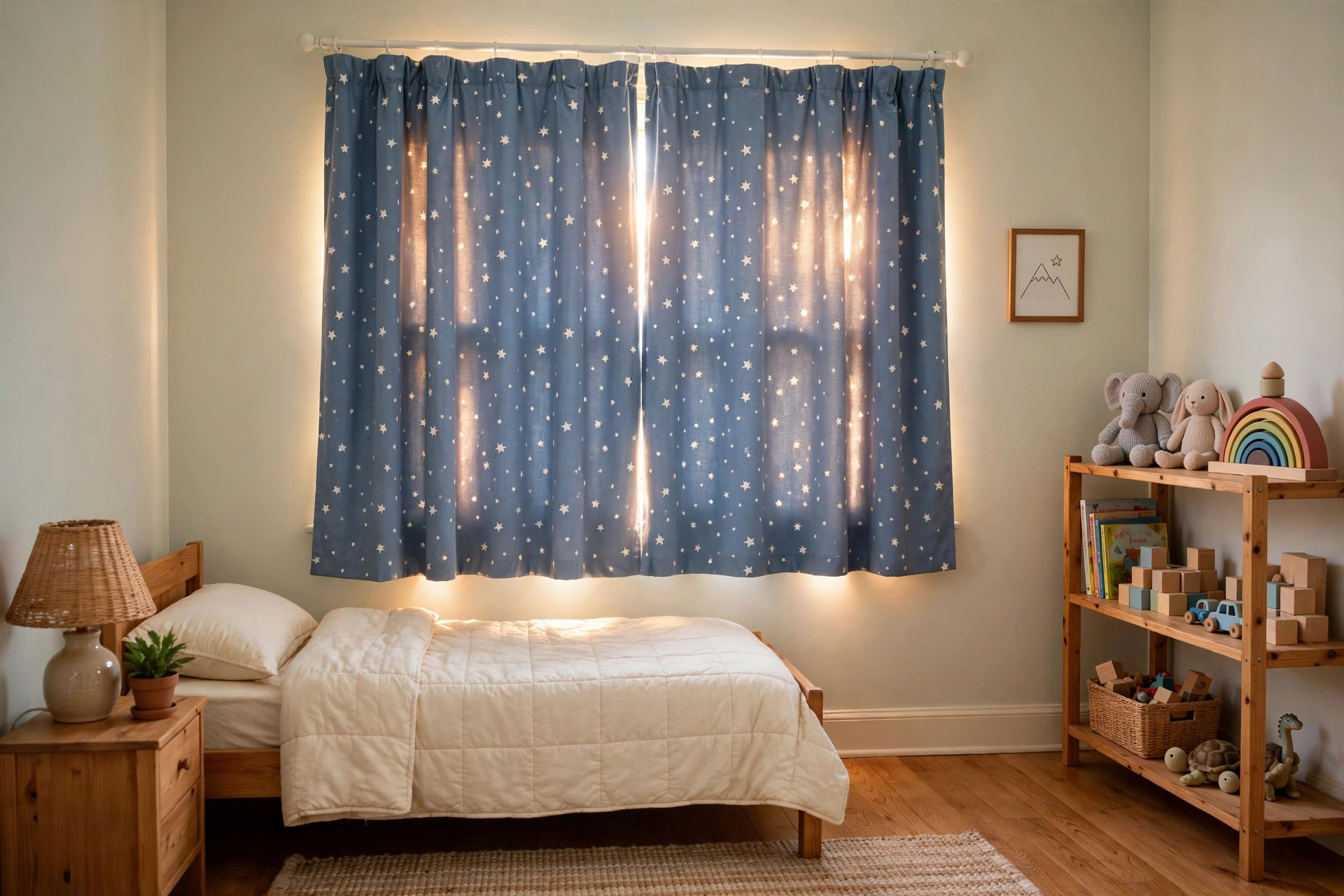

Parents who look for kids room curtains for privacy and style want two things at once. They want a room that feels private and safe. They also want a room that looks warm and inviting. Good curtains can do both jobs at the same time. They block the view from outside. They soften harsh light. They add color and pattern to plain walls.
This guide explains how to choose curtains for a child’s room. It covers fabric, length, color, price, and safety. It also answers common questions. By the end, you will know exactly what to buy and how to hang it.
Why Privacy and Style Both Matter in a Kid’s Room
A child’s bedroom is a place for sleep, play, and rest. Privacy helps with all three. When curtains close fully, no one outside can see in. This matters for houses close to a street or a neighbor’s windows. It also helps children feel secure at night. A dark, closed room signals that it is time to sleep. Many child sleep experts note that a dark room supports better sleep habits for young children.
Style matters too. Children spend hours in their rooms. The room should feel like their own space. Curtains are large. They catch the eye right away. A plain white panel looks clean but dull. A panel with stars, stripes, or animals makes the room feel alive. Many parents match curtain color to bedding or wall paint. This small step ties the whole room together.
Good curtains also solve practical problems. Sunlight can fade toys and bedding. Street lamps can shine into the room at night. Thin shades alone often leave gaps at the edges. Curtains hung wide of the window frame close those gaps. The result is a room that stays dark at bedtime and cool on hot days. Even a simple pair of lined panels can make a small room feel finished.
How to Choose Curtains for Your Child’s Room: Kids Room Curtains for Privacy and Style
Choosing the right curtains takes a little planning. Start with the window, then think about the child, then pick the fabric.
Measure First
Measure the window before you shop. Write down three numbers: the width of the window frame, the height from the top of the frame to the floor, and the height from the top of the frame to the sill. Curtains look best when the rod sits four to six inches above the frame. The rod should extend three to five inches past each side.
For full privacy, panels must be wide enough to meet in the middle with no gap. A good rule is to buy panels that are one and a half to two times the width of the window. Two panels often look fuller and more even than one wide panel.
Pick the Right Fabric
Fabric controls light, privacy, and feel. Heavy fabrics block more light. Light fabrics let soft light pass through. For a child’s room, most parents want strong light control. Look at these common fabrics:
– Cotton: soft, easy to wash, and comes in many prints. Good for most rooms. – Polyester: resists wrinkles and fading. Often cheaper than cotton. – Velvet: very heavy and blocks much light. Feels warm but can look dark. – Linen: light and airy. Better for rooms that need only light privacy. – Blackout fabric: lined or coated to block nearly all light. Best for naps and early bedtimes.
If you want full darkness for a baby’s nursery, pair blackout panels with a simple blind behind them. Many parents who compare options start with a search for best blackout curtains for nursery windows usa to see what is available.
Think About the Child’s Age
A baby’s room needs calm colors and full darkness. A toddler’s room can use fun prints and patterns. A school-age child may want to pick the design. Let older children help choose. They will feel proud of their room. They will also take better care of it.
Types and Options
Curtains come in several types. Each type serves a different need.
Blackout Curtains
Blackout curtains block most or all outside light. They use a tight weave or a special lining. They are the top choice for children who nap during the day. They also help in summer when the sun sets late. Blackout panels often reduce outside noise a little. This is a bonus for rooms near busy streets. Many nursery guides recommend them as the first upgrade for a baby’s room.
Sheer Curtains with Panels
Sheers are thin and let light through. They soften the room but give little privacy at night. Some parents use sheers in the middle and heavier panels on the sides. During the day, they pull the panels open and let sheers filter the sun. At night, they close the panels for full privacy. This two-layer look adds style and depth to the window.
Printed and Patterned Curtains
Patterns add fun to a child’s room. Stars, moons, animals, cars, and flowers are popular. Small prints look neat and tidy. Large prints make a bold statement. If the walls are plain, bold curtains work well. If the walls already have decals or bright paint, choose a calmer print. A night light for the nursery with a soft glow pairs nicely with calm curtain colors.
Valances and Short Curtains
Valances cover only the top of the window. They add style but give no privacy. Short cafe curtains cover the lower half. They work in playrooms where full darkness is not needed. For a bedroom, floor-length panels are usually the better choice.
Ready-Made Versus Custom
Ready-made curtains come in set sizes. They fit most standard windows. They cost less and ship fast. Custom curtains fit odd windows. They cost more and take weeks. For most families, ready-made panels work fine. Check the size label before you order.
Cost and Price
Curtain prices vary by fabric, size, and brand. Here is a simple guide:
– Budget panels: ten to twenty-five dollars per panel. Thin fabric, basic prints. – Mid-range panels: twenty-five to sixty dollars per panel. Better fabric, blackout lining, nicer prints. – Premium panels: sixty to one hundred fifty dollars per panel. Heavy fabric, custom prints, thermal lining.
Most children’s windows need two panels. A rod and rings cost ten to forty dollars. The Home Depot sells rods, brackets, and rings in most stores. Simple brackets work fine. You do not need an expensive rod for a child’s room. Plan to spend fifty to one hundred fifty dollars total for a good mid-range set. Online shops like Wayfair and Target carry many options at fair prices. Pottery Barn Kids offers higher-end designs made for children’s rooms.
Care and Upkeep
Curtains in a child’s room get dusty and dirty. Children touch them. Pets brush past them. Sun fades them. Plan to clean them a few times a year.
Most cotton and polyester panels can go in a washing machine. Use cold water and a gentle cycle. Hang them to dry or tumble on low heat. Heavy blackout panels may need dry cleaning. Check the care label before you wash.
Dust the tops of curtains with a vacuum brush once a month. This keeps the room air cleaner. If your child has allergies, wash curtains more often. Washable fabric is a smart pick for families with pets or allergies. A quick shake outside before washing removes loose dust and pet hair.
Check the rod and brackets twice a year. Children pull on curtains. Screws can loosen over time. Tighten them with a screwdriver. A falling rod can hurt a small child.
Safety
Safety comes first in any child’s room. Curtains can be safe when hung with care. Follow these rules.
Avoid long cords. Window blind cords and long curtain ties can wrap around a small child’s neck. This is a real danger. The U.S. Consumer Product Safety Commission warns parents about corded window coverings. Choose cordless styles. If you already have cords, cut looped cords and add safety tassels, or replace the coverings with cordless ones.
Mount rods firmly. Use wall anchors in drywall. A rod must hold the curtain weight plus a child’s pull. Do not rely on weak adhesive hooks alone.
Keep ties high. If you use tiebacks, place them high on the wall, out of a toddler’s reach. Never let a loop hang at child height.
Choose flame-safe fabric. Most home fabrics meet basic safety rules. Keep curtains away from heaters, radiators, and candles. A few inches of space is enough.
Check for small parts. Some decorative curtains have beads, tassels, or buttons. Small parts can break off and become choking hazards for babies and toddlers. Skip heavy trim in a nursery.
HealthyChildren.org offers clear guides on making a child’s sleep space safe. The Spruce also publishes plain home safety tips that many parents find useful. For affordable kids’ decor ideas, IKEA lists many child-safe room products. Parenting guides at What to Expect cover nursery setup step by step.
FAQ
What is the best curtain length for a kid’s room?
Floor-length curtains work best for most children’s bedrooms. They cover the full window and block the most light. Hang the rod high and let panels just touch the floor. Avoid puddling fabric on the floor. Pooled fabric collects dust and can trip a small child.
Do kids need blackout curtains?
Not every child needs them. They help babies and toddlers who nap in daylight. They help children in rooms with bright street lights. They help in summer when sunset comes late. If your child sleeps well already, simple lined panels may be enough. Many parents upgrade to blackout later if sleep becomes a problem.
How many panels do I need?
Most windows need two panels. Two panels close in the middle and look balanced. One wide panel can work for a narrow window. For very wide windows, use four panels. The panels should total one and a half to two times the window width.
What colors work best in a child’s room?
Soft blues, greens, and warm neutrals calm a room. They suit babies and toddlers. Bright reds, oranges, and bold patterns energize a room. They suit play areas and older kids. Match the curtain color to the bedding for a pulled-together look. A soft nursery bedding set for a baby girl in pink or cream pairs well with white or blush curtains.
Can I hang curtains without drilling?
Yes. Tension rods fit inside the window frame and need no screws. They work for light panels only. Adhesive hooks can hold a light rod on smooth walls. For heavy blackout panels, drilling is safer. A firm mount keeps the rod from falling on a child.
How often should I replace kids’ curtains?
Replace them when the child outgrows the design. A baby theme looks wrong in a teen’s room. Replace them if the fabric fades, tears, or no longer blocks light. Most families update curtains every three to five years. Good rods and hardware can last much longer. Store old panels in a clean bag in case a spare is ever needed.
A Short Final Word
The right kids room curtains for privacy and style are not hard to find. Measure the window. Pick a washable fabric. Hang the rod high and firm. Keep cords away from small hands. Match the color to the room. Do these five things and the room will feel private, safe, and welcoming. Your child gets a better place to sleep and play. You get a room that looks finished and warm.
References
American Academy of Pediatrics. (n.d.). HealthyChildren.org. https://www.healthychildren.org IKEA. (n.d.). Home furnishings. https://www.ikea.com Pottery Barn Kids. (n.d.). Kids furniture and decor. https://www.potterybarnkids.com Target. (n.d.). Retail store. https://www.target.com The Home Depot. (n.d.). Home improvement products. https://www.homedepot.com The Spruce. (n.d.). Home and garden advice. https://www.thespruce.com U.S. Consumer Product Safety Commission. (n.d.). Product safety information. https://www.cpsc.gov Wayfair. (n.d.). Furniture and home goods. https://www.wayfair.com What to Expect. (n.d.). Pregnancy and parenting guidance. https://www.whattoexpect.com
Was this guide helpful?

About Robert Taylor
The My Garden US editorial team writes practical, in-depth home and garden guides for American homeowners — tested advice, no fluff.
You May Also Like
The Best Kids Bed With Storage Drawers Underneath: A Simple Buying Guide
July 30, 2026 0 views
Kids Wall Clock for Learning Time Decor: A Parent’s Guide
January 10, 2026 0 views
Nursery Rocking Chair Wooden for Classic Look
June 21, 2026 0 views